FAA meltdown sparks $50b push to ditch outdated networks
The gist
A meltdown in the FAA’s ancient telecom backbone just triggered the biggest U.S. flight disruption since 9/11—and now Washington is racing to spend $50 billion replacing it before the next aviation crisis.
What to know
- Outdated FAA routers and switches were overwhelmed, flooding the network with 1,000 connections every four to five seconds and causing chaos nationwide.
- A risky copper-to-fiber transition left 30% of FAA sites exposed—when the system buckled, 622 flights were canceled in Atlanta alone as delays spread coast to coast.
- Officials say patchwork fixes are done: the FAA is demanding $50 billion for a full modernization, warning the network will 'continue to break' if legacy tech isn’t replaced.
Aging Tech Cripples FAA Core
The FAA’s communications backbone collapsed under modern traffic, exposing how deeply outdated telecom systems still underpin critical flight operations.
What made the outage consequential was not just that equipment failed, but that the FAA’s communications backbone behaved like a brittle legacy network under modern traffic stress. Sean Duffy said routers and switches were overloaded and began returning inconsistent data, while Reuters described the breakdown as “the latest and most dramatic sign of strain” in a system burdened by aging technology, equipment and communications problems; the telecommunications network involved also carried critical radio frequencies used by controllers to talk with pilots, showing how deeply old telecom dependencies remained embedded in core operations.
The failure pattern also exposed technical debt in the transition itself: during the copper-to-fiber change, Duffy said, “Every four or five seconds, the central system gets flooded and goes unstable and the country stops flying.” Acting FAA CTO Rebecca Guy said the agency saw “A thousand connections over every four to five seconds,” and that the FAA “disabled both of those right away and were able to stabilize our network and that they're now doing a root cause analysis.” Duffy blamed Congress for failing to fund “a new system that he said could prevent such outages,” and called for “$50 billion to modernize it,” while the White House and Department of Transportation urged Congress to

Hybrid Network Leaves System Exposed
Mixing old copper and new fiber overwhelmed legacy routers, turning the modernization rollout itself into a high-risk bottleneck for the nation’s air traffic.
What failed was not simply a piece of equipment but a transition architecture that asked a legacy telecom backbone to carry modern traffic before it was ready. Sean Duffy said “old switches, old routers” and a “data overload” were behind the breakdown, while the FAA’s FTI network was already in a multi-year effort to replace decades-old copper with fiber-optic lines, meaning the outage hit precisely where old routing and switching gear had to coexist with a more demanding digital network.
That made the fiber buildout itself a stress test of technical debt: patching in new equipment while the old network stayed live exposed how little headroom the system had. Markwayne Mullin said “The new technology was overwhelming the older system” and “The patchwork doesn’t work,” and the mixed environment was substantial, not marginal—L3Harris said “Seventy percent of FAA sites have been upgraded to fiber,” and in May it said it had completed “50 percent of its modernization project,” leaving a hybrid network vulnerable to overload.


Atlanta Meltdown Shows Ripple Effect
Hundreds of canceled flights at a single hub triggered a nationwide domino effect, stranding passengers and disrupting schedules across the entire U.S. aviation network.
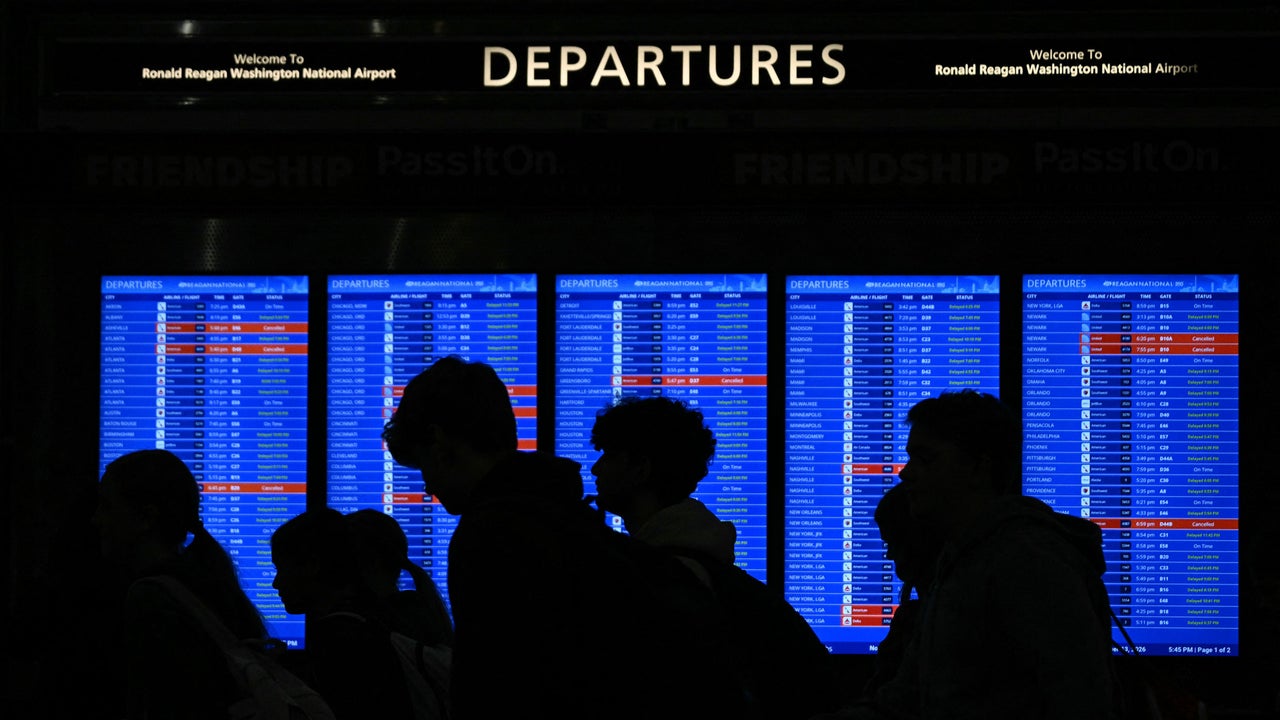
The breadth of the disruption was visible not just in national departure boards but in the way it overwhelmed major hubs all at once, turning a systemwide pause into a daylong passenger crisis. FOX 5 Atlanta captured that scale in one stark local measure: its headline reported that “622 flights canceled Saturday at Atlanta Airport after FAA ground stop,” a figure large enough at a single airport to show how quickly the stoppage rippled into missed connections, stranded travelers, and delays that spread far beyond the initial halt.
That kind of cancellation volume at one of the country’s busiest airports helps explain why the event ranks among the most severe U.S. aviation disruptions since 9/11. When hundreds of flights disappear from a single hub’s schedule in one day, the damage is not confined to that city; aircraft, crews, and passengers are displaced across the network, compounding delays and cancellations nationwide and leaving travelers across the country stuck in terminals, rebooked onto later departures, or unable to fly at all.
Billions Sought After Repeated Failures
FAA leaders argue that years of underfunded upgrades have left the system dangerously fragile, warning Congress that only full-scale replacement can prevent future breakdowns.
The political and financial pressure now building around FAA communications is coming from officials who are explicitly arguing that patchwork fixes are no longer enough. Transportation Secretary Sean Duffy said the failure stemmed from “old” legacy communications gear rather than newer equipment, and he used that distinction to press Congress for more money, saying modernization should “transcend partisan politics” because the agency cannot stabilize the network without replacing the systems still carrying critical traffic.
That argument is sharper because FAA leaders are pairing the latest breakdown with a longer record of failed or incomplete upgrades, warning that the network will keep failing until it is fully replaced. FAA Administrator Bedford has warned the communications system will “continue to break” without a fix, while Duffy noted the FAA “had received $15 billion for modernization efforts over the past 25 years, with little to show for it,” and Fast Company noted that in 2023 the FAA’s NOTAM system “came offline, after contractors accidentally deleted files that disrupted the program’s core technology.”