FCC crackdown and billionaire takeovers gut U.S. newsrooms, fueling independent media’s rise
The gist
A fierce FCC crackdown and billionaire-fueled media shakeups are gutting U.S. newsrooms, forcing independent outlets into the spotlight as guardians of what’s left of press freedom.
What to know
- FCC Chairman Brendan Carr, with Trump’s backing, is threatening broadcasters like ABC and Disney with license revocations and using regulatory muscle to enforce partisan agendas.
- Billionaire Larry Ellison’s $111 billion media empire and sweeping corporate mergers have triggered newsroom purges, self-censorship, and the gutting of critical investigative journalism by early 2026.
- Independent outlets such as Raw America and Let’s Address This are rising fast, as analysts warn the U.S. is mirroring authoritarian tactics that endanger the First Amendment and democracy itself.
Regulators as Political Enforcers
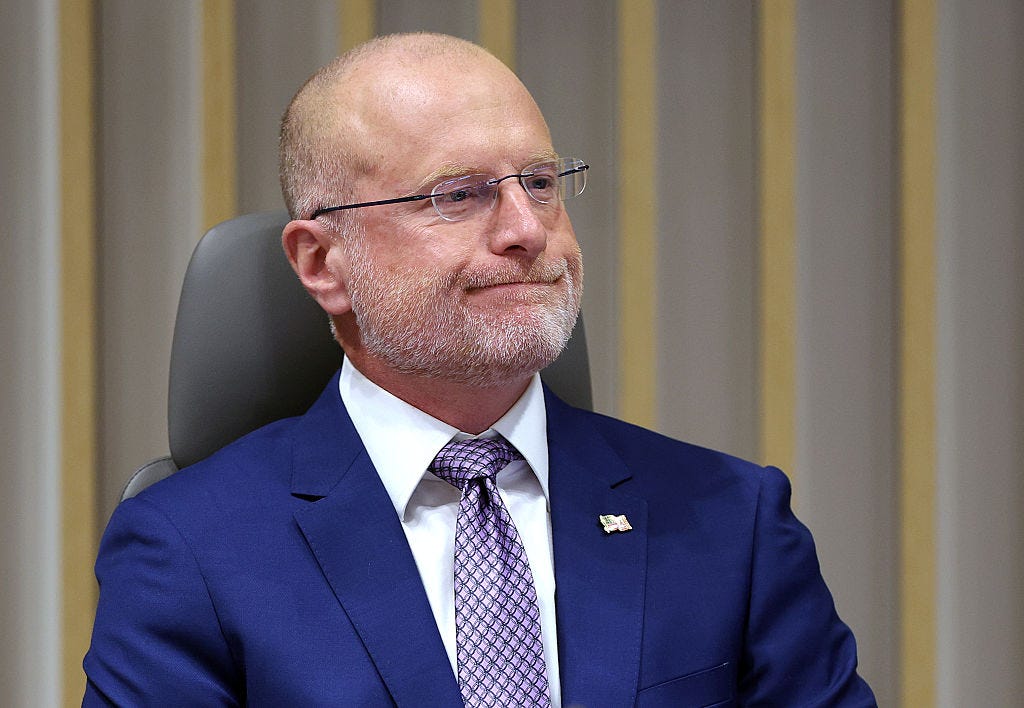
FCC Chairman Carr has transformed the agency into a partisan weapon, using license threats and merger leverage to coerce broadcasters and punish dissent, sparking legal and constitutional backlash from both inside and outside the FCC.
FCC Chairman Brendan Carr has aggressively wielded the agency's regulatory authority as a blunt instrument to pressure broadcasters, notably targeting ABC and Disney through threats of license revocation and early renewal demands. By framing broadcast licenses as conditional privileges rather than 'sacred cows,' Carr has signaled a willingness to revoke or withhold licenses to enforce a politicized interpretation of the public interest standard, including the rarely invoked news-distortion rule. This approach has extended to leveraging license approval processes to influence corporate mergers, such as holding Skydance Media’s acquisition of Paramount Global hostage until CBS News settled a lawsuit with Trump, illustrating how regulatory power is intertwined with political objectives and corporate coercion.
Carr’s tenure marks a stark departure from the FCC’s traditional hands-off stance on broadcast content, as he openly aligns with former President Trump’s grievances against liberal media figures and uses the agency to amplify partisan agendas. His public warnings against broadcasters airing so-called 'hoaxes and news distortions'—particularly regarding Iran war coverage—have been criticized as unconstitutional attempts to police truth in journalism, contravening Supreme Court precedents that protect even false speech. These threats function less as enforceable legal actions and more as chilling tactics that compel broadcasters to self-censor, evidenced by companies preempting shows like Jimmy Kimmel’s to avoid jeopardizing license renewals amid ongoing FCC investigations.
The FCC’s regulatory maneuvers under Carr have sparked widespread legal and constitutional challenges, with critics decrying the politicization of the agency and its transformation into a tool for media control aligned with Trump-era objectives. Actions such as ordering early renewal applications for Disney’s ABC stations—ostensibly over Diversity, Equity, and Inclusion policies but widely viewed as retaliatory harassment following political pressure from Trump and Melania—have drawn bipartisan condemnation, including from Senator Ted Cruz and the National Association of Broadcasters. Internal dissent within the FCC, exemplified by Commissioner Anna Gomez’s vocal defense of First Amendment protections, underscores the deep institutional unease with Carr’s tactics that threaten to undermine free speech and established broadcasting norms.
Beyond direct threats to broadcasters, Carr’s regulatory strategy extends to investigations targeting public media outlets like NPR and PBS, contributing to their defunding and reflecting a broader campaign to suppress dissenting voices. His efforts to revive archaic rules such as the equal time and news-distortion policies serve as tools to intimidate and control editorial content, creating a pervasive chilling effect across the media landscape. Observers warn that these FCC actions are a 'test balloon' for future regulatory overreach into internet platforms, signaling an alarming trend where regulatory power is weaponized to stifle free speech and reshape media narratives in service of political propaganda.




Billionaires and Newsroom Purges
Ellison’s sweeping media acquisitions and Trump-aligned FCC tactics have triggered mass journalist departures, self-censorship, and editorial capitulation as corporate media scrambles to survive regulatory and financial threats.
By early 2026, political figures such as Donald Trump and FCC Chair Brendan Carr have weaponized regulatory authority to coerce media outlets into favorable coverage, threatening license revocations as leverage. Carr’s public framing of these threats as a mandate to 'tell the truth' masks a strategic effort to suppress dissent and enforce propaganda, with Trump openly praising these tactics on platforms like Truth Social. This politicization of the FCC, exemplified by Carr’s alignment with Trump’s messaging and aggressive actions against broadcasters like ABC and CBS, underscores a coordinated campaign to undermine independent journalism under the guise of public interest enforcement.
Corporate consolidation under figures like billionaire Ellison intensifies media suppression by fostering environments hostile to journalistic independence. Ellison’s $111 billion acquisition of Warner Bros. Discovery and ownership of CBS have precipitated leadership changes, including Bari Weiss’s appointment, which triggered veteran journalist departures and a demoralized newsroom. This corporate capitulation to political pressures is further illustrated by Paramount’s firing of Stephen Colbert amid merger approvals and CBS’s self-censorship to avoid regulatory backlash, revealing how financial and regulatory incentives drive media entities to sacrifice editorial integrity.
The regulatory and political assault on media freedom extends beyond broadcast licensing to include targeted investigations and access restrictions, exemplified by FCC probes into ABC and Comcast/NBC Universal over compliance issues and the Pentagon’s barring of independent photographers after unflattering coverage. These actions, defended by officials like Pentagon spokesperson Kingsley Wilson, form part of a broader strategy to control narratives and intimidate journalists, creating a chilling effect that pressures outlets toward self-censorship without overt license revocations. FCC Commissioner Anna Gomez’s vocal dissent highlights internal regulatory tensions and the constitutional stakes involved.
The targeting of high-profile media figures such as Jimmy Kimmel epitomizes the convergence of political vendettas and regulatory enforcement to silence critical voices. Following Kimmel’s jokes, Trump and Melania Trump publicly condemned him, while Brendan Carr expedited FCC license renewal demands on Disney’s ABC, citing investigations into diversity initiatives as a pretext for retaliation. Despite Disney’s robust pushback, including legal defenses and CEO Josh’s resistance, these coordinated pressures reflect a broader pattern of dehumanization and delegitimization tactics employed by Trump and allies to intimidate media, with commentators lamenting insufficient pushback from the wider political and corporate spheres.
Newsrooms Gutted by Fear
A climate of intimidation and political pressure has decimated investigative teams and local news, forcing major outlets to silence critical voices and leaving the public with a distorted, shrinking information landscape.
Since late 2025, FCC Chairman Brendan Carr has wielded regulatory power as a blunt instrument to intimidate broadcasters, openly aligning with political interests and threatening license revocations over vaguely defined 'public interest' violations. Carr’s warnings—such as telling ABC affiliates to 'change conduct' on Jimmy Kimmel’s critical segments or face 'additional work for the FCC'—have fostered an environment where newsrooms preemptively self-censor to avoid punitive actions, effectively conditioning editorial content on political loyalty. This intertwining of regulatory authority and partisan enforcement has transformed the FCC’s rarely used news-distortion policy into a tool of intimidation, undermining journalistic independence despite constitutional protections against government censorship.
By early 2026, the chilling effect extended beyond altered coverage to tangible newsroom upheavals, exemplified by the turmoil at CBS’s 60 Minutes where sustained political and regulatory pressure—largely attributed to President Trump’s attacks—precipitated the firing of senior journalists like Sharyn Alfonsi and a wave of staff departures. Described by insiders as 'gutted' and 'like a funeral,' the newsroom’s destabilization signals a broader pattern where critical reporting is suppressed or disappears altogether, as experienced personnel are replaced and editorial priorities shift under duress, severely compromising journalistic integrity and the depth of investigative content.
The cumulative impact of regulatory intimidation, political manipulation, and corporate retrenchment has accelerated a crisis in news coverage marked by widespread newsroom closures, layoffs, and the erosion of specialized reporting beats. Nearly 40% of local newspapers have vanished over two decades, CBS News Radio shuttered in May 2026, and the Associated Press cut 20 journalists recently, while outlets like The Washington Post have gutted critical teams such as climate change reporters. This contraction not only diminishes the quantity of news but also distorts public understanding, as right-wing media selectively omit significant stories—Fox News ignoring Trump’s dismissal of Americans’ financial struggles during Iran negotiations—further skewing the information landscape.
Technological shifts compound these challenges by reducing news visibility and archival access, with AI-driven search engines like Google’s diminishing website traffic and hundreds of outlets blocking the Internet Archive’s Wayback Machine to prevent AI scraping. This digital gatekeeping restricts both public and journalistic access to historical reporting, accelerating the disappearance of critical news content and deepening the chilling effect on media freedom. Combined with regulatory and political pressures, these market and tech forces create a perfect storm undermining the integrity, availability, and diversity of news in the United States.
Independent Media Fills the Void
As billionaire consolidation erodes trust and local journalism collapses, independent outlets and new media networks are building resilient communities that prioritize public trust and accountability over corporate interests.
By early 2026, independent media outlets have risen as a crucial counterforce to the steep decline in public trust toward corporate news, which Gallup polling shows has plummeted to just 28% for national media and local journalism decimated by 75% since 2002. This erosion, exacerbated by billionaire consolidation—figures like Larry Ellison, the Murdochs, Jeff Bezos, and Patrick Soon-Shiong controlling nearly 80% of cable news—has created a vacuum that independent platforms such as Raw America and Let’s Address This are filling by prioritizing editorial independence and public trust over corporate or billionaire interests.
The emergence of independent media networks is not only a response to declining trust but also a sign of a vibrant new media ecosystem once thought improbable. Events like Crooked Media’s unofficial White House Correspondents’ weekend and Substack’s New Media gathering illustrate how independent creators—journalists, lawyers, and advocates—are building communities around a radical proposition: earn the trust of the people or lose everything. These gatherings symbolize a strengthening infrastructure that supports press freedom by fostering transparency and accountability outside traditional corporate frameworks.
Independent outlets like Let’s Address This are carving out essential roles by covering human rights issues that corporate media often ignores or suppresses, thereby preserving press freedom and holding power accountable. Their sustainability hinges on public support, with platforms like Raw America urging readers to become paying subscribers to maintain editorial freedom and resist corporate influence. Ultimately, the future of a free press depends on whether the public refuses to stay silent amid institutional complicity and chooses to back independent journalism that champions courage over convenience.

America’s Authoritarian Media Playbook
Analysts warn U.S. media suppression now mirrors authoritarian regimes, with regulatory intimidation and oligarchic takeovers threatening First Amendment protections and the very foundation of democratic discourse.
By mid-2026, analysts have drawn stark parallels between the Trump administration's media suppression tactics and those employed by Vladimir Putin during his early consolidation of power, particularly targeting comedians and mainstream outlets under pretexts like "boring, low ratings." As Andrei Soldatov observed, both regimes leveraged indirect state power—through regulatory agencies like the FCC and corporate pressures rather than overt force—to induce self-censorship among media companies, exemplified by Paramount's cancellation of Colbert’s show amid merger approvals. This coordinated approach signals a profound threat to democratic discourse, as Roman Dobrokhotov and David Remnick warn that such erosion of free speech protections could replicate Russia's descent into repression, undermining the First Amendment and public trust in independent journalism.
Expanding the comparative lens, commentators highlight how the current U.S. media landscape mirrors historical authoritarian playbooks, from Hitler and Mussolini to Putin and Orbán, who systematically dismantled press freedom through legal harassment and oligarchic takeovers. The Trump administration, alongside figures like FCC Chair Brendan Carr and billionaire media owners such as the Murdoch family and Sinclair’s proprietors, are executing a similar script—weaponizing regulatory bodies and corporate consolidation to silence dissent and reshape news narratives. This assault extends beyond censorship to the gutting of journalistic institutions, as seen in the acquisition and degradation of CBS and 60 Minutes by a Trump-adjacent billionaire nepo-baby, threatening the integrity of the independent press essential for a functioning democracy.