Fed doubles down on rate hikes despite oil price plunge, markets whipsaw on warsh’s data-driven gamble
The gist
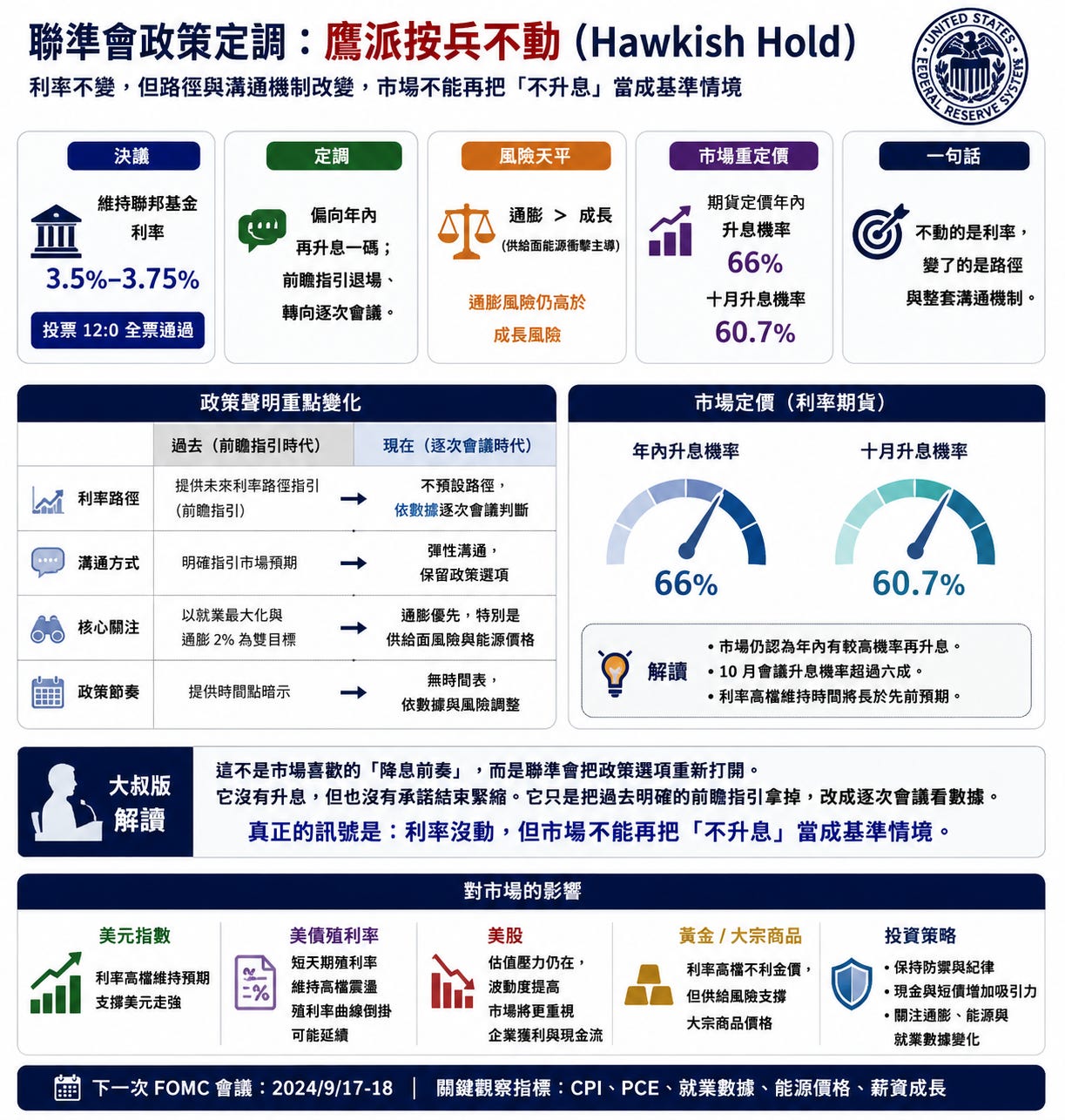
**Oil prices are plunging after the Iran breakthrough, but the Fed is doubling down on rate hikes—leaving markets whipsawed and inflation stubbornly high.**
What to know
- Crude oil prices tumbled from nearly $120 to $76–$80 per barrel as the Strait of Hormuz reopened, but full supply recovery could take 6–12 months.
- Fed Chair Kevin Warsh scrapped forward guidance and signaled multiple rate hikes into 2026 and beyond, citing sticky inflation above 4% and a strong labor market.
- Markets are now pricing in no rate cuts and possible hikes through 2028, with short-term Treasury yields and the dollar surging on every new economic data point.
Oil Relief, Inflation Sticks
Even as oil prices plunge, slow supply recovery and sticky core inflation keep the Fed’s inflation fight far from over.
The resolution of the Iran conflict and the reopening of the Strait of Hormuz have led to a notable decline in crude oil prices—from highs near $120 to around $76–$80 per barrel—significantly easing a major inflationary risk that had concerned hawkish Federal Reserve officials like Kevin Warsh. This shift has removed a key variable complicating inflation control, with President Trump and economists such as Torsten Slok highlighting the disinflationary impulse as energy prices, particularly gasoline, dropped rapidly, influencing headline inflation and consumer sentiment.
Despite the encouraging drop in oil prices, the normalization of crude oil supply is unfolding gradually, with experts like Bob Iaccino and Jan Hatzius emphasizing that full restoration of production—especially from previously shut-in Iraqi wells—could take 6 to 12 months. This slow recovery delays the easing of inflation pressures, causing core inflation to remain sticky as corporations pass through higher input costs with a lag, thereby prolonging inflation persistence beyond energy prices themselves.
The interplay of easing geopolitical tensions and lingering supply disruptions has created a complex inflation outlook: while inflation is expected to peak around May or Q2 2026 due to falling energy prices and fading tariff pass-through effects, analysts like Jordi Visser and Goldman Sachs’ Jan Hatzius caution that inflation remains elevated and sticky, with about 40% of the CPI basket running above 3%. This persistence complicates the Federal Reserve’s policy path, as the economy remains hot enough to sustain inflation pressures despite the recent oil price relief.
Energy prices, shaped by the Iran conflict’s resolution and the reopening of critical supply routes, have become a dominant force influencing not only inflation but also global bond markets and broader asset classes reliant on easy financial conditions. As Matt Hornbach from Morgan Stanley notes, the market may be overly confident that crude prices will stay structurally elevated, while the Federal Reserve’s reaction could vary significantly depending on whether oil stabilizes near $80 or spikes back toward $110, underscoring ongoing uncertainty in inflation and monetary policy forecasts.




Warsh’s Unpredictable Fed
Kevin Warsh’s data-first, guidance-free approach ditches predictability, fueling volatility as the Fed doubles down on hawkish policy tools.
Under Chair Kevin Warsh’s leadership, the Federal Reserve has adopted a distinctly hawkish stance, signaling multiple rate hikes through 2026 and beyond despite initially being perceived as a dovish appointee. At his first FOMC meeting, the Committee unanimously paused rates, yet half of the Summary of Economic Projections (SEP) participants anticipated hikes by year-end, reflecting a shift driven by persistent inflation above 4% and a robust labor market. Warsh’s approach emphasizes reacting to evolving economic data rather than fixed forward guidance, as evidenced by his removal of the dot plot and forward guidance from Fed communications, aiming to increase policy flexibility while maintaining a firm commitment to returning inflation to the 2% target.
Warsh’s data-driven methodology is underscored by the creation of multiple task forces focused on reviewing Fed communication, balance sheet management, inflation frameworks, and reliance on data sources, signaling a methodical recalibration of policy tools without altering the inflation target. This recalibration comes amid complex economic challenges including a war-driven oil shock, sticky services inflation, and resilient labor markets, which collectively sustain upward pressure on inflation and justify the Fed’s hawkish posture. Despite some easing of geopolitical tensions and falling oil prices, Fed officials like Cleveland’s Beth Hammack continue to advocate for potential rate hikes, citing persistent inflation risks amplified by new pressures from AI-driven energy consumption and chip shortages.
While Warsh’s strategy enhances the Fed’s agility and responsiveness, it also reduces policy predictability, leading to increased market volatility and risk premiums as investors must now interpret daily economic data and committee votes rather than rely on explicit Fed guidance. This shift has prompted a significant market repricing, with the odds of a rate hike in 2026 rising to nearly 50%, complicating expectations for aggressive rate cuts and underscoring the Fed’s prioritization of inflation control over economic support despite a resilient U.S. economy. The Fed’s cautious communication amid uncertain conditions ensures that short-term Treasury yields remain highly sensitive to each new data release, reflecting the evolving balance between hawkishness and flexibility in Warsh’s tenure.
Despite Warsh’s hawkish messaging and the expectation of several 25 basis point hikes in late 2026, significant policy shifts remain contingent on consensus within the Federal Open Market Committee and the eventual departure of Jerome Powell, limiting Warsh’s unilateral influence. The Fed’s projections now anticipate inflation remaining elevated at around 3.6% through 2026, with interest rates rising slightly before declining in subsequent years, reflecting a pragmatic, conditional approach that balances the risks of prolonged supply shocks and financial market corrections against the imperative to restore price stability.





Markets Reprice on a Dime
A sharp oil price crash and Warsh’s flexible Fed have markets scrambling, shattering rate cut hopes and amplifying short-term yield swings.
Markets have significantly repriced Federal Reserve rate paths in response to evolving economic data and Fed communications, with nine out of 18 officials now forecasting at least one rate hike in 2026 and the median dot plot projecting increases of 50 basis points in 2027 and 30 basis points in 2028. This hawkish shift, reinforced by stronger-than-expected retail sales—0.9% month-over-month versus a 0.5% consensus—has driven Treasury yields up by 15-16 basis points on the front end and boosted the dollar by 1%, while commodities and cryptocurrencies showed mixed reactions, reflecting market uncertainty amid rapid economic shifts.
Chair Kevin Warsh’s data-driven, independent approach has heightened market uncertainty and complicated the pricing of aggressive rate cuts, as the Fed delays a return to 2% inflation until 2028 and maintains a hawkish stance despite easing geopolitical risks and falling oil prices. This has led to volatile short-term Treasury yields and a cautious market that now prices in no rate cuts and only one hike in 2026, with officials emphasizing that rate reductions are unlikely until labor market conditions deteriorate significantly.
The dramatic 22% plunge in oil prices below $80 per barrel shortly after the FOMC meeting has rapidly reshaped market expectations, undermining the Fed’s recent hawkish dot plot and pushing Fed funds futures to move the anticipated rate hike from January to September. Apollo’s Torsten Slok highlights that this swift market repricing validates Chair Warsh’s decision to withhold forward guidance, underscoring the challenges of forecasting amid volatile commodity prices and sticky core inflation metrics, such as a core PCE rise to 129.63, which complicate the Fed’s policy path.
While some market participants anticipate that cooling economic indicators—like softer consumer spending, housing weakness, and slower payroll gains averaging 113,000 per month—may eventually prompt unwinding of rate hike expectations, the prevailing view among Fed officials and economists remains hawkish. The global economics team now forecasts three 25 basis point hikes in the latter half of 2026, driven by a firm labor market and persistent inflation tracking toward 3.5% core PCE, with Chair Walsh’s restrained communication strategy leaving short-term Treasury yields highly sensitive to incoming data rather than Fed rhetoric.