Ford’s ‘assembly tree’ turbocharges fathom EV production
The gist
Ford is flipping the script on electric pickups with its $28K Fathom and a radical new ‘assembly tree’ system that slashes build time and costs, aiming to undercut Tesla and storm the mass market.
What to know
- The new Fathom midsize electric truck starts at $28,350 and targets an underserved EV market under $30,000 with advanced features like BlueCruise and Apple Maps EV routing.
- Ford’s $2 billion overhaul of its Louisville plant introduces the ‘assembly tree’—parallel sub-assembly lines that cut build time by 40% and reduce parts by 20%.
- Innovations like single-piece aluminum castings and pre-assembled battery packs pave the way for Ford to hit EV profitability within a year, directly challenging Tesla and Chinese rivals.
Affordable EV, Premium Features
Ford’s Fathom truck targets non-traditional buyers with advanced tech, aggressive pricing, and a strategic push into the North American market, aiming to disrupt the entry-level EV segment without sacrificing amenities.
Ford strategically positions the Fathom as an affordable entry-level midsize electric pickup with a starting price of $28,350, targeting a market gap for utility trucks under $30,000. This pricing aims to directly challenge Tesla and Chinese EV rivals by offering a competitively priced electric truck that appeals to non-traditional truck buyers seeking utility without premium costs. The Fathom’s affordability is underscored by its availability in the Canadian market at approximately 38,690 Canadian dollars after federal rebates, signaling Ford’s intent to capture a broad North American audience.
Unlike the higher-cost F-150 Lightning, the Fathom is built on Ford’s Universal Electric Vehicle (UEV) architecture, designed specifically for lower-cost EVs, enabling the company to focus on manufacturing efficiencies and cost reductions. This approach, coupled with the innovative 'assembly tree' production method that assembles major vehicle sections in parallel, is expected to allow Ford to achieve profitability within roughly a year of launch. This shift represents a strategic reset from premium electric trucks to affordable, efficient EVs aimed at disrupting the pickup segment while maintaining competitive features.
Ford ensures the Fathom remains competitive not only on price but also on technology and features, equipping it with a large touchscreen featuring Apple Maps EV routing, wireless smartphone connectivity, BlueCruise compatibility, bidirectional charging, a digital key, and a front trunk. This comprehensive feature set demonstrates Ford’s commitment to delivering value without stripping down the vehicle to meet its aggressive price point, thereby appealing to buyers who expect modern amenities alongside affordability.
While the Fathom’s name is intended to convey a distinct identity aimed at customers who diverge from traditional truck buyers, its impact on purchase decisions is uncertain compared to the more critical factors of price and functionality. Additionally, the absence of disclosed range figures for the standard battery and the lack of eligibility for the $7,500 federal EV tax credit may temper its market disruption potential, suggesting that affordability alone may not guarantee dominance in the competitive EV pickup landscape.



Reinventing the Assembly Line
Ford’s ‘assembly tree’ system slashes parts, boosts worker efficiency, and transforms its Louisville plant into a high-tech hub for rapid, ergonomic EV production.
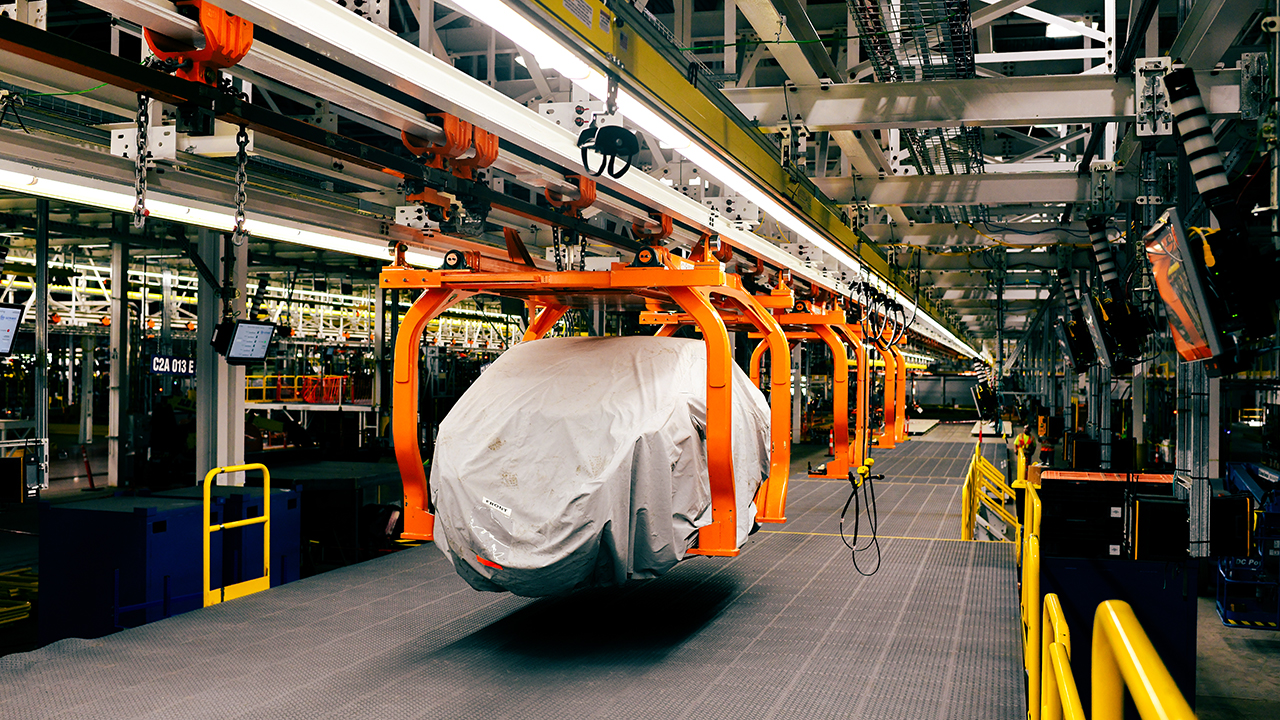
Ford's $2 billion transformation of the Louisville Assembly Plant marks a radical departure from the traditional moving assembly line it once pioneered, introducing the innovative 'assembly tree' manufacturing system. This approach divides the Fathom midsize electric truck into three major sections—the front, rear, and structural battery pack with integrated interior components—built simultaneously on parallel sub-assembly lines before merging into a single vehicle. By enabling concurrent construction, Ford achieves a 40% faster assembly process, significantly reducing complexity and worker strain while streamlining production.
The 'assembly tree' system leverages large single-piece aluminum unicastings to replace dozens of stamped and welded parts, cutting the vehicle’s part count by 20% and fasteners by 25%. This simplification, combined with pre-kitted components and a structural battery pack that arrives pre-assembled with seats and carpeting, not only accelerates assembly by 15% but also reduces wiring harness length by over 4,000 feet and weight by 10 kilograms. These innovations enhance labor efficiency and ergonomics, with Ford’s chief manufacturing officer Bryce Currie highlighting an 84% reduction in worker reaching motions, underscoring a holistic approach to operational efficiency.
Beyond mechanical redesigns, Ford’s overhaul includes extensive technological upgrades that triple Wi-Fi access points to 1,080 and implement the highest level of final assembly automation across its global factories. Innovations such as software module flashing before installation and private 5G connectivity enable real-time quality checks during assembly, further boosting efficiency and product quality. This comprehensive plant modernization involved stripping the facility to its shell, removing nearly 25,000 gross tons of scrap metal, and pouring 230,000 square feet of new concrete foundations to support cutting-edge equipment, signaling Ford’s commitment to a future-ready EV production ecosystem.

Cost Leadership by Design
Ford’s modular UEV platform, parallel assembly, and U.S.-sourced LFP batteries combine to undercut both new and used Teslas, setting a new benchmark for affordable, mass-market electric trucks.
Ford’s strategic pivot centers on delivering an affordable electric pickup that undercuts not only new Tesla models but also the depreciated value of used Teslas, aiming for a lower five-year total cost of ownership than a three-year-old Tesla Model Y. This cost leadership is enabled by the innovative Universal Electric Vehicle (UEV) platform, which radically simplifies vehicle architecture by reducing parts count by about 30% and adopting a modular assembly approach that separates the front, middle, and rear sub-assemblies. Such design efficiencies, including integrating the structural battery pack as a load-bearing floor with pre-installed interior components, enhance both manufacturing integration and vehicle performance, positioning Ford to disrupt the entry-level EV truck market.
Ford’s breakthrough 'assembly tree' manufacturing system at the Louisville plant replaces the century-old moving assembly line with three parallel sub-assembly lines, delivering substantial operational efficiencies—20% fewer parts, 25% fewer fasteners, 40% fewer workstations, and 15% faster assembly time. This innovation directly targets cost reduction and margin improvement, addressing the profitability challenges that hampered the F-150 Lightning, and exemplifies Ford’s commitment to lean, flexible production that can outpace rivals like Tesla and Chinese EV makers.
To further insulate itself from geopolitical supply risks and comply with evolving U.S. federal EV tax incentives, Ford has chosen lithium iron phosphate (LFP) battery chemistry for the Fathom, sourcing cells domestically from BlueOval Battery Park Michigan rather than relying on nickel- and cobalt-heavy supply chains dominated by China. This strategic supply chain localization not only reduces costs but also enhances Ford’s competitive positioning against Chinese EV manufacturers such as BYD, aligning with CEO Jim Farley’s vision of a 'Model T moment' where affordability and innovation converge to capture the mass-market EV segment.
The Fathom’s unique market positioning as the only sub-$30,000 electric pickup combines affordability with advanced technology and practical utility, filling a niche that neither Tesla nor other budget EV makers currently occupy. Features like a large touchscreen with Apple Maps EV routing, BlueCruise compatibility, bidirectional charging, and a digital key enhance its appeal, while the focus on operational efficiency and profitability signals Ford’s broader strategic reset away from premium electric trucks toward sustainable, disruptive market leadership in affordable EVs.