From AI add-ons to AI orchestrators: enterprises race to embed multi-agent systems, but ROI remains elusive
The gist
Enterprises are racing from basic AI add-ons to deeply embedded, orchestrated multi-agent systems, but real bottom-line gains remain frustratingly out of reach.
What to know
- By late 2025, companies like Pigment, Atlan, and Zuora automated up to 80% of workflows and slashed feature deployment times from weeks to minutes using autonomous AI agents.
- The Model Context Protocol (MCP) has become the backbone for secure, permission-aware AI integration, with Microsoft and others adopting it to scale AI from demos to mission-critical operations.
- Despite 88% of enterprises using AI, only 39% saw measurable EBIT impact—highlighting that without deep workflow integration and robust governance, AI’s ROI remains elusive.
AI Pilots Hit Reality Check
Enterprises raced to trial AI agents but hit barriers in data quality, security, and workflow readiness, revealing a wide gap between AI hype and operational reality.
Early AI adoption in enterprises like Pigment showcased a pragmatic approach focused on operational efficiency rather than broad expansion. Pigment’s deployment of internal AI agents in finance and revenue operations—such as variance analysis, expense tracking, and sales forecasting—demonstrated tangible productivity gains, including automating 80% of RFP responses to boost solutions consultants’ output. Leadership’s structured reviews of these pilots in mid-2025 reflected a deliberate, measured experimentation phase aimed at identifying scalable AI integration points within existing workflows.
Despite the enthusiasm around AI agents, enterprises in late 2025 were largely experimenting with limited forms like chatbots and co-pilots rather than fully autonomous agents. Major vendors such as Salesforce and ServiceNow encountered significant hurdles including high costs, cybersecurity risks from 'shadow AI,' and a lack of adequate training, underscoring a gap between AI hype and practical readiness. Foundational prerequisites like effective search for unstructured data and semantic layers for structured data emerged as critical enablers, while enterprises grappled with data quality and workflow redesign to prepare for meaningful AI integration.
By early 2026, enterprise AI pilots predominantly operated in a human-in-the-loop mode where AI recommended actions—such as ticket classification and lead scoring—but humans retained control over execution. This assisted AI stage yielded early ROI yet faced slow scaling due to trust, governance, and integration challenges, creating a bottleneck between assistance and autonomous action. As Brad Lightcap of OpenAI noted, AI had not yet deeply penetrated enterprise business processes, despite strong consumer adoption and growing enterprise interest facilitated by platforms like OpenAI’s Frontier.
The public release of accessible generative AI models like ChatGPT in 2023 catalyzed widespread enterprise experimentation, shifting AI from a researcher-centric domain to broad user engagement and innovation. However, early pilots often lacked clear problem definitions, with organizations adopting AI to 'sprinkle AI on your roadmap' rather than targeting specific business challenges, complicating ROI justification. Initial use cases remained niche—focused on content generation, summarization, and code generation—until the emergence of AI agents capable of API integration with legacy systems promised to extend AI’s reach across entire business operations, igniting renewed enterprise excitement.





Modernization Gets an AI Engine
Autonomous AI agents are slashing legacy IT migration costs and accelerating secure integration, letting latecomer markets leapfrog directly to AI-native operations.
The rapid modernization of legacy enterprise systems has been revolutionized by autonomous AI agents, which drastically reduce the traditionally high one-time migration costs by automating complex integration and orchestration tasks once handled by costly consulting firms. This transformation is especially pronounced in countries with newer IT infrastructures, allowing them to leapfrog legacy constraints and implement AI-native operations more swiftly and cost-effectively, signaling a global shift in enterprise modernization strategies.
Governance frameworks have become foundational to scaling AI deployments securely and responsibly, as exemplified by Zuora’s three-stage AI governance process that balances open experimentation with stringent security and compliance reviews. This approach, coupled with strong IT and AI team partnerships, fosters a culture of trust and literacy around AI tools, preventing risks like shadow agents and ensuring that AI adoption is both innovative and controlled across the enterprise.
The emergence of the Model Context Protocol (MCP) marks a pivotal advancement in AI-native infrastructure by standardizing how AI systems connect to external data, tools, and workflows. Companies like Microsoft, Greenhouse, and Cloudinary leverage MCP to enable seamless, permission-aware integrations that enhance auditability and trust, effectively turning AI from isolated demos into scalable, governed components of enterprise operations. MCP’s analogy as a 'universal fire hydrant fitting' underscores its role in creating interoperable, secure AI ecosystems without bespoke integration overhead.
Enterprise-grade AI infrastructure now hinges on sophisticated orchestration layers and observability frameworks that manage agent fleets with governed autonomy, ensuring reliability, security, and compliance at scale. Platforms like Appian and RapDev exemplify this trend by integrating continuous monitoring, audit trails, and human-in-the-loop governance to remediate AI errors before impact, while startups from Y Combinator’s 2025 batch focus heavily on evaluation, debugging, and cost-efficient AI operations. This shift from hype to hard infrastructure reflects the industry's recognition that trusted, scalable AI deployments require deep integration with existing systems, rigorous governance, and robust context engineering.



Orchestrators Redefine Workflows
Multi-agent AI systems are transforming business by decomposing complex tasks, parallelizing execution, and requiring organizations to rethink roles, hiring, and leadership engagement.
By late 2025, pioneering companies like Pigment, Atlan, and Zuora exemplified the transition from AI augmentation to AI-native operations by embedding autonomous, agentic AI systems deeply within core workflows. Pigment’s deployment of multi-agent systems automated up to 80% of RFP responses and orchestrated AI across finance and revenue operations, while Atlan restructured its organizational chart to integrate over 150 AI agents supporting human roles, dramatically compressing processes and enabling capabilities like mid-call briefings. Zuora further accelerated operational efficiency by reducing feature deployment times from 14 days to 10 minutes through AI-driven workflows, underscoring a shift from layering AI onto existing processes to reimagining workflows fundamentally around AI capabilities.
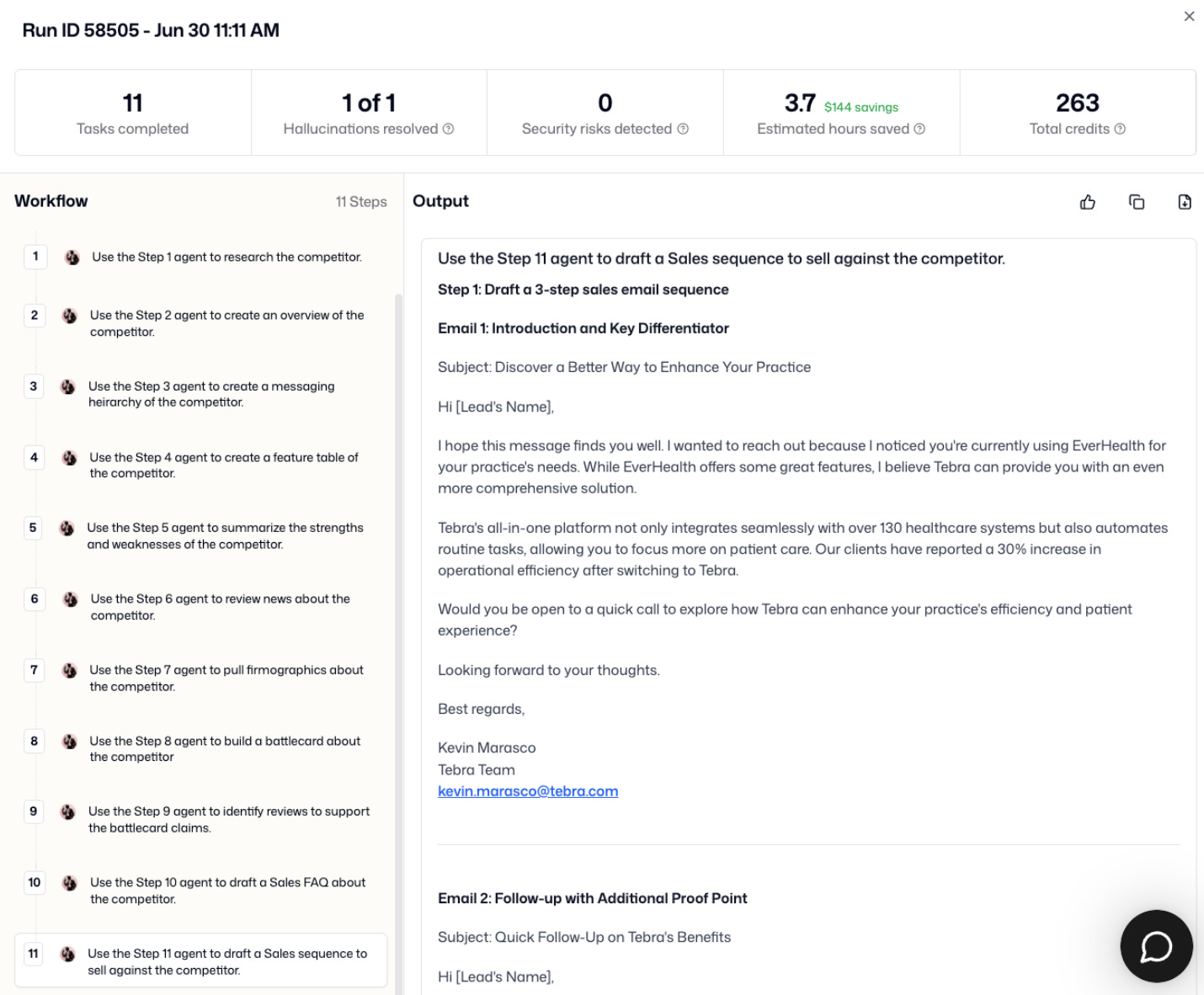
The orchestration of multi-agent AI systems has emerged as the linchpin of AI-native operations, enabling complex workflows to be decomposed, delegated, and autonomously executed at scale. Companies like Tebra and Zapier have demonstrated how chaining specialized agents—11 in Tebra’s case and over 800 at Zapier—can automate end-to-end processes such as sales enablement and engineering triage, effectively treating AI agents as synthetic colleagues that require onboarding, context, and governance. This orchestration layer not only reduces error amplification by approximately 75% compared to independent agent topologies but also creates multiplicative value by redesigning workflows to parallelize tasks and catch cross-domain errors, making the orchestrator agent the core of enterprise AI productivity gains.
The enterprise-wide shift to AI-native operations necessitates profound cultural and structural changes, including upskilling, AI-centric hiring practices, and redefining human roles from task executors to supervisors of AI agents. Atlan’s approach of requiring candidates to demonstrate AI fluency live during interviews and Pearson’s emphasis on evolving career pathing highlight the human capital transformation underpinning AI adoption. Leadership engagement is equally critical; Block’s CTO Dhanji Prasanna credits an internal AI manifesto and executives’ daily AI use as catalysts for embedding agentic AI at scale, while Zapier’s leadership models hands-on AI adoption to drive organizational transformation beyond mere tool deployment.
By early 2026, agentic AI adoption has reached a tipping point, with surveys indicating 100% of enterprises planning to expand usage and orchestrating multi-agent systems that automate an average of 31% of workflows. However, challenges remain around data readiness, talent shortages, and the complexity of multi-tool AI workflows, prompting a strategic focus on building production-ready, secure, and open-source-based AI intelligence layers that serve as the new internal software. This AI intelligence layer enables seamless collaboration across teams by sharing workflows and learning collectively, as seen in companies like BriteCore and Jump, which embed AI copilots within insurance and financial advisor workflows to drive substantial productivity gains while maintaining governance and integration standards.



ROI Beyond the Hype
Case studies across industries show that embedding AI deeply into workflows—not just piloting tools—yields dramatic productivity gains, cost savings, and new revenue streams.
By late 2025, pioneering companies like Zuora and Tebra showcased AI's tangible business impact through dramatic productivity gains and operational efficiencies. Zuora's AI agent workflows instantly resolved thousands of service requests, freeing teams to focus on strategic initiatives, while Claude Code slashed feature deployment times from 14 days to 10 minutes. Meanwhile, Tebra’s innovative chaining of 11 specialized AI agents automated competitive battle card creation, reducing a process that once took days to mere minutes, and integrated this capability directly into Slack, enabling real-time sales enablement. These examples underscore how embedding AI deeply into workflows—not just piloting isolated tools—delivers measurable ROI across finance, sales, and operations.
Entering 2026, enterprise AI adoption matured into strategic transformation, with firms like Snowflake centralizing data teams to break silos and accelerate AI-driven sales operations, and LangChain achieving a 250% increase in lead-to-qualified-opportunity conversion within four months. This momentum is reflected broadly: a CrewAI survey found 75% of enterprises reporting high time savings and 69% citing operational cost reductions from agentic AI, while McKinsey research identified reimagining end-to-end workflows as the top catalyst for AI ROI. Yet, organizations increasingly recognize that sustainable impact hinges not just on ROI but on foundational priorities like security, governance, and seamless integration, signaling a shift toward AI-native operations that scale reliably across complex systems.
Real-world case studies from diverse sectors illustrate AI’s measurable ROI and transformative potential. For example, a major US insurer cut claim processing time from 27 to 3 minutes by deploying AI agents, while an oil and gas company saved over $350 million in six months by automating invoice analysis and compliance checks. Similarly, Microsoft’s MCP protocol enables up to 650,000 automated actions in Dynamics 365, driving productivity gains in operations, sales, and supply chain management. These deployments demonstrate that AI is not only enhancing individual productivity—such as Shopify’s mandated AI usage enabling 20-40% growth despite headcount cuts—but also fundamentally reshaping enterprise workflows to unlock new revenue streams and operational precision.
Despite widespread AI adoption—88% of enterprises use AI in at least one function—only 39% report measurable EBIT impact, highlighting a gap between usage and value realization. This discrepancy arises because individual productivity gains do not automatically translate into organizational throughput or quality improvements without systemic integration. As Gartner’s 2025 supply-chain survey found, time saved per worker diminishes at the team level without corresponding output gains. Consequently, enterprises are focusing on embedding AI benefits into end-to-end workflows and governance frameworks to ensure that AI-driven acceleration leads to sustainable business impact rather than isolated enhancements.



Culture Is the Real AI Catalyst
Lasting AI impact depends on leadership-driven cultural change, robust governance, and business-led strategies, as most enterprises struggle to scale pilots into production.
The journey from AI experimentation to strategic, enterprise-wide adoption demands embedding AI fundamentally into organizational culture, workflows, and structures rather than merely layering technology atop existing processes. Companies like Atlan and Block exemplify this evolution by instituting AI taskforces, embedding AI proficiency into hiring criteria, and redesigning roles to integrate specialized AI agents—transformations that have yielded dramatic productivity gains, such as Atlan’s customer success managers supported by nine AI agents reducing processes from hours to under one hour. Leadership engagement is critical; as Dhanji R. Prasanna at Block emphasizes, executives must actively use AI tools daily to drive cultural change and adoption across all functions, underscoring that organizational transformation often hinges more on evolving culture than on technology alone.
Strategic AI adoption is increasingly recognized as a business-led imperative requiring robust governance, security, and observability frameworks integrated from the outset to manage AI’s probabilistic nature and expanded attack surfaces. Industry leaders like Appian and ServiceNow advocate for embedding AI within structured business processes supported by audit logs, permissions, and human override mechanisms, ensuring mission-critical reliability and compliance, especially in regulated sectors. This approach aligns with the emerging discipline of AgentOps, which leverages continuous monitoring, reasoning traceability, and CI/CD-style workflows to iteratively improve AI agents, thereby transforming AI from static tools into dynamic, accountable enterprise capabilities.
Despite rapid AI adoption—with 88% of organizations using AI regularly and 65% deploying AI agents automating nearly a third of workflows—many enterprises struggle to scale beyond pilots due to persistent challenges in data readiness, talent shortages, and governance maturity. Surveys from Deloitte and CrewAI reveal that only about a quarter of companies have moved significant AI pilots into production, while concerns about operational complexity, cost escalation, and security vulnerabilities continue to hinder broader integration. This widening gap between bottom-up AI enthusiasm and top-down organizational readiness underscores the urgent need for cross-functional, business-centric AI strategies that prioritize measurable ROI, continuous talent development, and cultural evolution to sustain competitive advantage.
Looking ahead, the future of AI-native operations hinges on orchestrated, governed AI ecosystems that integrate multiple specialized agents under centralized coordination layers acting as 'captains' to decompose tasks, assign subtasks, validate outputs, and synthesize results. This orchestration layer is the strategic locus of value creation, as highlighted by Camunda and Google-DeepMind-MIT research showing centralized architectures reduce error amplification by 75% compared to decentralized models. Enterprises face a pivotal choice: to lead as orchestrators capturing nonlinear value through workflow redesign or to remain as substitutable specialist agents. This shift from augmentation to autonomous, continuous AI-driven workflows signals AI’s emergence as a core enterprise capability that drives new business models, operational transformations, and sustained competitive advantage.