From AI frenzy to energy euphoria: Wall street’s great rotation upends market playbook
The gist
Wall Street’s turbocharged pivot from AI darlings to energy giants is rewriting the market playbook as tech stumbles and oil gushes to new highs.
What to know
- By early 2026, investors dumped mega-cap AI stocks like Nvidia and the Magnificent 7—wiping out nearly $2 trillion—while energy, industrials, and consumer staples soared as safe-haven favorites.
- The US-Iran conflict sent oil prices above $100 per barrel, catapulting energy stocks such as ExxonMobil and Chevron to record highs and making the sector a must-have hedge against market chaos.
- Small-cap and international stocks surged, with the Russell 2000 breaking above 2600 and global markets like Japan and Europe gaining steam as investors chased value and diversified away from U.S. tech.
Tech Unwinds, Old Economy Rises
A brutal tech selloff—fueled by automation breakthroughs and hyperscaler cutbacks—sparked a flight to energy, defense, and industrials, as even Bitcoin crashed and only select chipmakers avoided the carnage.
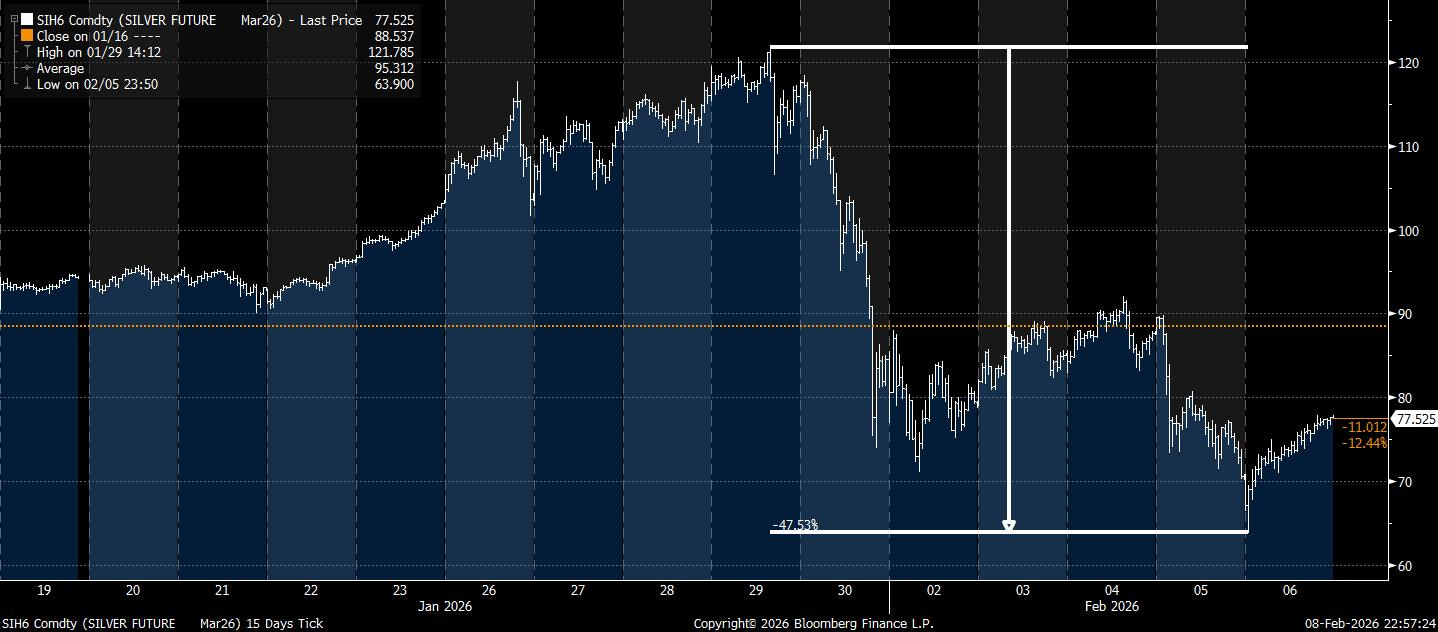
By early 2026, investor sentiment decisively shifted away from mega-cap tech and software stocks, ignited by the release of Anthropic’s new automation tools and hyperscalers’ aggressive spending cuts, which exacerbated an already fragile market. This de-risking was less a smooth rotation and more a broad deleveraging, as volatility spilled into crowded trades like crypto and silver, with Bitcoin plunging over 50% from its October peak, signaling a widespread retreat from growth sectors.
Amid this turmoil, old-economy sectors such as energy, defense, staples, and industrials began to outperform, buoyed by geopolitical tensions and their relative insulation from AI disruption. The Dow’s milestone break above 50,000 underscored this shift toward balance-sheet stability and pricing power, as investors sought refuge in asset-heavy industries that AI cannot easily replace, with energy surging 36% year-to-date and materials, utilities, and staples also posting solid gains.
Within tech, the rotation was nuanced rather than uniform: while 70% of software stocks hit three-month lows reminiscent of Covid-era selloffs, certain semiconductor equipment suppliers like Lam Research and KLA demonstrated steadier performance, avoiding the parabolic spikes seen in peers like Micron. This selective movement highlighted a departure from the 1999 tech boom, reflecting investors’ growing preference for companies with defined revenue streams—exemplified by Apple, Intuit, Alphabet, and ServiceNow—over high-growth AI and semiconductor names struggling amid soaring capex concerns.
Despite the tech sector’s dramatic selloff—where the Magnificent 7 lost nearly $2 trillion in market cap, marking one of the weakest relative returns for technology in half a century—underlying earnings told a different story. Goldman Sachs noted that IT earnings per share were still projected to grow 44% in Q1 2026, accounting for 87% of index EPS growth, revealing a stark disconnect between market punishment and fundamental earnings potential during this early phase of rotation.




Small-Caps and Value Surge
Fundamental earnings growth and AI-fueled productivity powered small-cap and global value stocks, while tech valuations faltered and geopolitical shocks drove investors to safer, income-generating sectors.
By early 2026, the market rotation accelerated sharply as small-cap stocks demonstrated robust fundamental improvements, with Morgan Stanley highlighting a sharp rise in forward EPS since summer and KKR noting an inflection in real revenue per worker for the small-cap index. This fundamental shift was broadly supported across major markets—except China—where net margins turned upward, driven in part by AI-enhanced productivity gains, especially in healthcare, according to Schroders. Investors responded by reallocating capital away from tech growth stocks into sectors like industrials, emerging markets, and Japan, reflecting a strategic pivot amid rising technical and macro uncertainties.
Throughout February and March 2026, the rotation intensified as investors aggressively sold off high-flying technology and software stocks—S&P 500 software and services lagged the broader market by about 24%, down 25% from their October peak—while pouring funds into value-oriented sectors such as energy, financials, and industrials. Despite the appeal of cash flow and dividend yields, these value sectors experienced valuation expansions that, while cheap relative to the overall market, were expensive compared to their own historical norms. This dynamic was compounded by the S&P 500’s failure to sustain new highs and a shift toward distribution, signaling corrective market pressures amid elevated volatility.
Geopolitical tensions, particularly the outbreak of the US-Iran conflict in early March 2026, acted as a catalyst that further accelerated the rotation into energy and materials sectors. President Trump’s announcement of major combat operations, coupled with missile attacks on U.S. military installations, triggered a spike in oil prices and heightened market volatility. This geopolitical backdrop reinforced the shift away from AI chip stocks—exemplified by Nvidia’s nearly 7% weekly decline despite strong earnings—toward traditional industrial and value sectors, with companies like Corning and Qnity Electronics posting double-digit gains following blockbuster earnings.
Investor skepticism about the massive AI-driven capital expenditures, particularly the $650 billion planned by the MAG 7 hyperscalers, intensified the rotation by fueling concerns over credit risk and uncertain returns. Fund managers increasingly viewed this capex surge as a potential source of a future credit crisis, with about 30% identifying it as the likeliest trigger and a quarter labeling the AI boom a bubble. This skepticism, combined with rising treasury yields post-US-Iran conflict that raised discount rates and disproportionately pressured high-growth tech valuations, led to a dramatic reduction in tech exposure—from a 19% overweight to just 5%—while small caps reached their highest relative overweight since 2021, solidifying the rotation’s momentum amid mounting macro and technical uncertainties.





Oil’s Geopolitical Windfall
Military conflict and Middle East supply fears sent oil prices soaring, transforming energy stocks into the market’s premier hedge and catapulting oil majors to historic highs.
By early 2026, escalating geopolitical tensions, particularly the U.S.-Iran conflict marked by military strikes and retaliations, triggered a sharp surge in oil prices due to fears of Middle East crude supply disruptions. This conflict, including attacks on critical infrastructure like Kharg Island which handles 90% of Iran's oil exports, has created a sustained geopolitical risk premium that underpins oil prices and market volatility, making energy stocks an essential hedge amid rising uncertainty.
The energy sector has dramatically outperformed in 2026, surging between 21.5% and 28% year-to-date, fueled by the dual catalysts of geopolitical risk and soaring AI-driven power demand. Phil Rose highlights that energy stocks uniquely combine upside participation with downside protection, as AI infrastructure’s massive energy needs create structural demand while Middle East conflicts impose supply constraints, reinforcing energy equities as a compelling hedge.
Integrated oil majors such as ExxonMobil, Chevron, Marathon Petroleum, and Valero have attracted renewed investor interest, benefiting from rising oil prices that enhance production profitability and cash flows. ExxonMobil’s stock, for example, reached a record high trading at 25 times earnings—surpassing tech giant Nvidia—reflecting the unexpected strength of oil prices amid geopolitical tensions and AI demand. Additionally, refineries capable of processing heavy crude have gained strategic importance, underscoring the sector’s critical role in navigating complex supply dynamics.
Despite the energy sector’s historic shrinkage to just 2% of the S&P 500, its recent surge amid one of the fastest oil price spikes in history has repositioned it as a vital market hedge and beneficiary. This momentum-driven rally parallels the 1990 Gulf War oil shock, with oil prices hitting new highs around $102 per barrel and energy stocks reaching record levels, signaling that the market bottom has yet to be reached. However, investors are cautioned that the energy cycle can turn abruptly, favoring only elite companies with scale and operational efficiency in the long term.



From Mag 7 to Main Street
Mega-cap tech darlings crumbled as investors pivoted to asset-heavy sectors and diversified globally, rewarding dividend payers and cyclicals while punishing high-valuation growth names.
By early 2026, investors have decisively rotated away from the high-flying 'Mag 7' tech giants—such as Nvidia, Microsoft, and Amazon, which saw year-to-date declines of up to 17%—toward heavy-asset, low-obsolescence sectors like energy, consumer staples, industrials, and utilities. This shift is underscored by the remarkable outperformance of these sectors, with 96% of energy stocks and 92% of staples outperforming the S&P 500, reflecting a strategic preference for companies with stable cash flows and tangible assets that are less vulnerable to AI disruption. Household names in tech and software, including Netflix and Coinbase, have suffered steep losses between 40% and 73%, signaling investor wariness of high-valuation, rapidly evolving sectors amid uncertain AI returns.
Concurrently, there is a pronounced diversification trend as investors broaden their exposure beyond large-cap tech by embracing small-cap stocks, equal-weight indices, and international equities. The Russell 2000 index’s breakout above 2600, targeting 3300, exemplifies this momentum, fueled by smaller value stocks beginning to integrate AI to enhance productivity. International markets, especially Europe, Japan, and emerging markets like Korea and Taiwan, are also attracting capital due to their cyclically oriented, value-driven companies and AI-related hardware exposure, offering a geographic and sectoral hedge against U.S. tech concentration. This diversification is further supported by inflows into dividend-paying stocks and healthcare sectors, reflecting a tactical rebalancing amid market volatility.
Investor caution around tech and software stocks remains high due to concerns over uncertain returns on AI infrastructure investments, delayed enterprise spending, and looming regulatory risks, particularly if Democrats gain control of Congress. This has prompted portfolio managers to reduce tech exposure drastically—from a net 19% overweight to just 5% within a month—and to screen rigorously for capital discipline, favoring companies with improving cash flow and strong balance sheets like Evolve Technologies. While some investors selectively add to beaten-down software names at 52-week lows, the prevailing strategy emphasizes rebalancing toward value and defensive sectors rather than chasing growth amid heightened volatility and political uncertainty.
The overarching portfolio adjustment reflects a sustained rotation into 'HALO' stocks—those characterized by heavy assets and low obsolescence—that offer resilience against AI disruption and market turbulence. Companies like Exxon Mobil within the energy sector exemplify this trend, benefiting not only from oil price dynamics but also from rising metals prices supporting large industrial firms. Investors are not simply moving to cash during downturns but redeploying capital into these durable, often century-old businesses, creating a barbell market structure with distinct winners and losers. This strategic shift is further reinforced by growing allocations to sectors favored by potential Democratic policies, such as renewable energy and healthcare, underscoring a nuanced approach to managing political and economic risks in 2026.




Rotation’s Winners and Losers
Beneath headline market shifts, defensive sectors and AI-adapted value stocks thrived, while speculative favorites and undisciplined tech names faced steep losses and investor skepticism.
Beneath headline market shifts, defensive sectors and AI-adapted value stocks thrived, while speculative favorites and undisciplined tech names faced steep losses and investor skepticism.
Tech’s Resilience and Reckoning
Despite geopolitical shocks and valuation resets, tech’s earnings strength persists—but with investors bracing for a decade of stagnation and shifting capital toward industries immune to AI disruption.
By early 2026, despite geopolitical tensions such as the US-Iran conflict, market strategists like Stephanie from JP Morgan Asset Management emphasize that the fundamental growth outlook for major technology companies remains robust and closely tied to demand rather than external disruptions. She highlights that tech valuations have contracted meaningfully, making equities cheaper relative to earnings, which have even climbed during the conflict, suggesting that the market has absorbed geopolitical risks without altering capital expenditure or growth expectations.
Looking ahead, Jordi Visser offers a sobering long-term perspective, predicting that the S&P 500 will likely stagnate over the next decade, ending up around the same level as today despite AI-driven productivity gains. He underscores that current market valuations are historically elevated, with the S&P 500’s market capitalization more than twice the size of the economy—a record not seen since the Great Depression—implying limited upside in traditional equity markets amid this backdrop.
Visser also points to a nuanced dynamic within the AI disruption narrative: while software companies have experienced stock price declines despite strong earnings, this reflects investor anticipation of significant future disruption rather than fundamental weakness. He explains that Silicon Valley insiders are actively discounting the massive progress of AI, leading to a strategic reallocation of capital away from vulnerable software sectors toward hard asset industries such as energy and commodity producers, signaling a broader wealth redistribution trend catalyzed by technological transformation.
Finally, physical constraints in AI infrastructure, particularly compute shortages, may impose limits on adoption rates and returns on investment, potentially fueling inflationary pressures or slowing growth in AI-driven sectors. This bottleneck adds complexity to the investment landscape, suggesting that while AI remains a transformative force, its economic benefits might be tempered by tangible resource limitations, further influencing the evolving market rotation and long-term capital flows.