From astronauts to spielberg: UFO disclosure sparks culture clash and institutional stonewalling
The gist
As astronauts, politicians, and Hollywood heavyweights clash over UFO disclosure, entrenched secrecy and cultural shockwaves threaten to upend science, faith, and the very stories we tell ourselves.
What to know
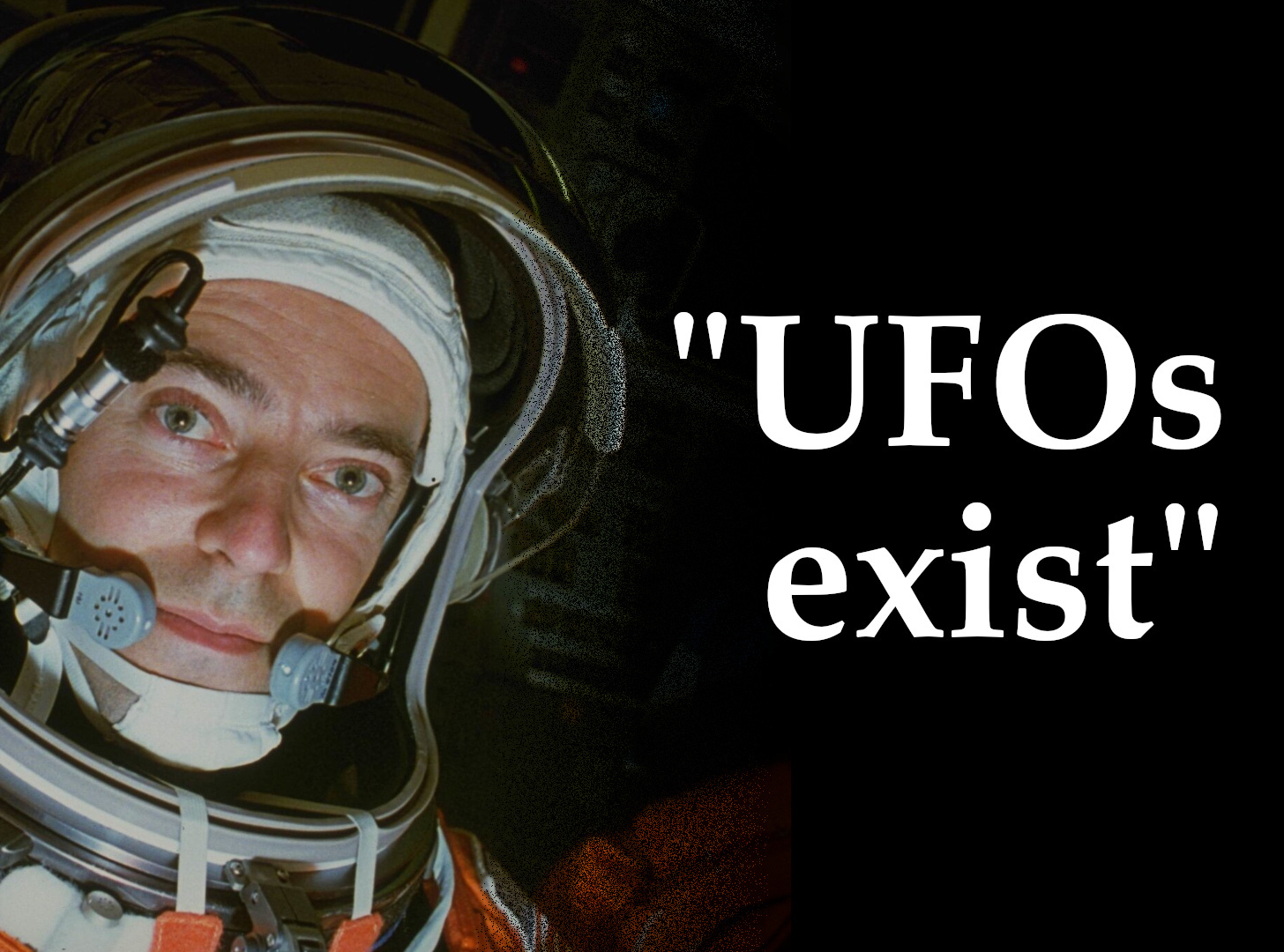
- Astronaut Jean-François Clervoy affirms UAPs are real and NASA’s reluctance stems from budget rivalries and decades-old institutional suppression.
- The 2026 PURSUE program promises multi-agency UAP disclosure, but legal loopholes like the Atomic Energy Act and contractor secrecy still keep key data under wraps.
- Spielberg’s new film ‘Disclosure Day’ and public statements warn of a cultural and religious reckoning if alien existence is fully revealed—while Hollywood and intelligence agencies continue blending fact with fiction.
Astronauts Break the Silence
Veteran astronauts and abductees reveal a hidden culture of denial, secret sightings, and complex non-human encounters that challenge both scientific orthodoxy and institutional self-preservation.
By early 2026, astronaut Jean-François Clervoy unequivocally affirmed the reality of UAPs, emphasizing that the phenomenon is a proven fact supported by eyewitness accounts, pilot reports, and radar traces. Yet, he underscored the complexity in interpreting their origins, suggesting that while extraterrestrial intelligence might be the simplest explanation, it is paradoxically the least likely, urging openness to a spectrum of possibilities beyond conventional imagination. Clervoy also highlighted an institutional conflict of interest within NASA, noting that acknowledging extraterrestrial craft already present on Earth could render ongoing space-based life searches—and their budgets—obsolete, thus explaining the agency's limited incentive to finance such research.
Clervoy further revealed a long-standing culture of official denial and suppression surrounding UAPs, tracing back to NASA’s predecessor, NACA, which explicitly prohibited discussions of flying saucers despite astronauts’ firsthand sightings. He described how UAPs remain a topic of informal astronaut discourse but lamented the cyclical nature of public disclosures, which tend to resurface every decade with sensational but ultimately unsubstantiated announcements, reflecting a persistent institutional reluctance to confront the phenomenon transparently.
Whitley Strieber’s extensive personal encounters paint a far more intricate portrait of UAPs, portraying them not merely as physical crafts but as manifestations involving both physical and non-physical non-human intelligences. His experiences, spanning over seventy years, include abductions, missing time, and telepathic communications, which have profoundly altered his consciousness and challenged conventional notions of reality. Strieber warns of a multifaceted phenomenon that includes manufactured beings and telepathic entities with potentially malevolent motives, suggesting long-term manipulative relationships aimed at genetic or social interference to impede human progress.
Strieber’s narrative confronts widespread skepticism about UAP occupants by revealing a deeply intimate and often disturbing relationship between humans and these intelligences, including the unsettling reality that some entities may physically inhabit the crafts. He connects these encounters to broader themes such as military secrecy, genetic manipulation, and artificial intelligence-like entities, underscoring the phenomenon’s multifaceted and enigmatic nature. His reflections on crop circle warnings and Roswell-linked speculation further illustrate the complex web of cultural, psychological, and possibly strategic dimensions entwined with UAP realities.


Legal Barriers Stall Disclosure
The PURSUE program’s unprecedented transparency push is hamstrung by arcane laws, redactions, and contractor loopholes, keeping millions of crucial UAP records shielded from public view.
The PURSUE program, unveiled in early April 2026 by former President Trump and the Pentagon, marks a watershed institutional effort to systematically disclose previously classified UAP files through a coordinated, multi-agency approach involving the White House, ODNI, DOE, NASA, FBI, and the Pentagon’s AARO. This initiative, inspired by prior calls for transparency from both Trump and Obama, is designed as a rolling disclosure rather than a one-off event, signaling a significant shift toward openness despite the ongoing nature of document analysis and release.
Congressional demands for highly specific classified UAP files—including high-resolution videos identified by exact dates and platforms—reflect a growing impatience with low-quality evidence and a push for substantive transparency on incidents with national security implications, such as the alleged 2023 F-16C shootdown over Lake Huron. However, institutional opacity persists, maintained through deliberately fragmented programs and entrenched legal barriers like the 'born secret' classification under the Atomic Energy Act of 1954, which restricts presidential authority to declassify certain nuclear-related information without congressional approval.
Despite the formal disclosure efforts under PURSUE, transparency remains limited due to extensive legal and bureaucratic constraints, including redactions in 108 of 162 released files to protect witnesses and sensitive military sites. Key agencies and contractors such as the Department of Energy, NRO, NSA, CIA, Lockheed Martin, and Northrop Grumman have notably withheld contributions, reflecting structural limitations imposed by classification laws and the fact that private contractors are not subject to FOIA. As Luis Elizondo highlights, tens of millions of potentially relevant documents remain undisclosed, constrained by legal frameworks protecting covert actions and nuclear secrets.
By mid-2026, the White House has intensified preparations for an official alien and UAP disclosure, registering domains like aliens.gov and issuing executive orders aimed at further declassification, buoyed by public acknowledgments from former Presidents Obama and Trump. This momentum coincides with unprecedented billionaire investor interest in extraterrestrial phenomena, surpassing even AI in fascination, though experts caution that public enthusiasm may wane rapidly following initial announcements, underscoring the complex interplay between political will, elite curiosity, and societal engagement in the evolving UAP narrative.


Science vs. Secrecy Showdown
Decades of bureaucratic inertia and covert legacy programs have systematically blocked open scientific investigation, as agencies and contractors operate above congressional oversight and outside FOIA reach.
By early 2026, a profound tension had crystallized between the imperative for rigorous scientific inquiry into UAPs and entrenched institutional secrecy that stifles such efforts. Despite NASA holding valuable satellite intelligence and archives, the agency has notably refrained from advancing research following a $100,000 independent audit panel's call for action, reflecting a reluctance rooted partly in the fear that confirming extraterrestrial presence would undermine NASA’s current missions and budget priorities focused on distant space exploration. This institutional inertia echoes historical policies dating back to NACA days, where engineers like Paul Hill were explicitly barred from acknowledging flying saucers, perpetuating a culture of denial even as astronauts like J.F. Clervoy affirm the phenomenon’s reality.
The US government's longstanding cover-up of non-human intelligent life has been sustained through secret 'Legacy Programs' operating beyond Congressional and White House oversight since the 1940s, complicating open scientific investigation. This clandestine framework encompasses the recovery of crashed UAP craft with alleged non-human bodies and a covert technology race involving the US, China, and Russia to reverse-engineer such advanced technology. While some disclosure efforts—such as former President Trump’s declassification directive—have surfaced, significant information remains tightly controlled, with political motives and agency controls continuing to obstruct full transparency and rigorous public understanding.
The interplay of political sensitivity and institutional secrecy has made UAPs a rare bipartisan issue in Washington, yet the path to open scientific inquiry remains fraught. High-level insiders reveal that longstanding disinformation campaigns and fears of political fallout have historically silenced officials, while recent document releases expose legal and structural barriers that limit transparency. As Luis Elizondo highlights, legal constraints prevent even presidential disclosure of covert actions, and agencies like the Department of Energy and AARO tightly control data triage, ensuring that key players—including the Department of Energy, NRO, NSA, CIA, and major contractors like Lockheed Martin and Northrop Grumman—remain outside the scope of public scrutiny due to classification and FOIA exemptions.
Scientific analysis of UAP evidence is further complicated by the rigorous scrutiny required to distinguish genuine phenomena from optical artifacts amid a backdrop of institutional secrecy. For example, Billy Kryzak identified 'pointes étoilées' in video PR-38 as classic optical artifacts, while the Pentagon’s formal investigation into Apollo 17 images—where three points of light could represent physical objects—illustrates the nuanced challenges researchers face. This meticulous vetting underscores the complexity of conducting credible scientific research when access to data is limited and visual evidence is subject to intense skepticism and classification.

Faith Faces the Unknown
Spielberg warns that undeniable proof of extraterrestrial life could trigger a global crisis of faith, forcing religious communities to confront existential questions never before imagined.
By mid-2026, Steven Spielberg articulated a profound cultural reckoning tied to alien disclosure, asserting that undeniable proof of extraterrestrial life would deeply unsettle Christian faith worldwide. He provocatively questioned whether God’s sovereignty is limited to Earth or extends across the cosmos, warning that such revelations could trigger ontological shock and widespread social dislocation. This perspective reflects a seismic challenge to traditional theological frameworks, as Spielberg highlighted the difficulty believers would face in reconciling their faith with a universe teeming with intelligent life.
Spielberg’s 2026 film 'Disclosure Day' serves as both a narrative and philosophical vehicle encouraging audiences to embrace the paradigm shift that alien contact demands. Rather than portraying extraterrestrial life as a threat, the film advocates openness to what these beings might teach humanity, even if it means relinquishing long-held beliefs. This thematic choice underscores Spielberg’s conviction that acknowledging we are not alone is not inherently negative but a catalyst for growth, despite the existential discomfort it may provoke.
Reflecting on his earlier work, Spielberg noted that the contemporary surge in credible UFO documentation has transformed his stance from skepticism to empathy with believers, stating, 'I now believe the believers.' This evolution underscores how visual evidence has made the subject more compelling than during the era of 'Close Encounters' in 1976, bridging the gap between fiction and reality and deepening the cultural dialogue around extraterrestrial phenomena.
Beyond the extraterrestrial, Spielberg uses 'Disclosure Day' to explore broader themes of faith—faith not only in alien life but in humanity’s capacity to overcome division and rebuild community. He intentionally crafted the film as a unifying experience, emphasizing cinema’s power to bring people together and foster shared understanding amid societal fractures. By framing disclosure as a catalyst for collective faith and connection, Spielberg positions the alien narrative as a metaphor for healing and solidarity in a fragmented world.

Hollywood’s Disclosure Dilemma
Films like Disclosure Day and Dark Skies reveal a media landscape shaped by covert intel leaks and shifting public anger, where entertainment blurs into controlled revelation and cultural reckoning.
Steven Spielberg’s Disclosure Day exemplifies Hollywood’s evolving role in shaping public perceptions of UFOs by blending classic alien encounter motifs with a modern skepticism rooted in government secrecy. While the film begins with a bleak political thriller tone reflecting contemporary anxieties, it ultimately channels Spielberg’s enduring hopefulness about humanity’s capacity to confront extraterrestrial realities. This narrative shift—from hopeful curiosity to widespread societal anger over governmental deception—mirrors a broader cultural awakening, where disbelief in aliens has largely given way to frustration over cover-ups, as noted by critics highlighting the film’s focus on collective outrage rather than alien existence.
Dark Skies stands as a pivotal example of Hollywood’s subtle yet deliberate engagement with UFO and government secrecy narratives, functioning as a kind of cultural atom collider that fuses JFK assassination conspiracies, military cover-ups, and alien lore. Behind the scenes, interactions between creators like Brent Friedman and intelligence operatives—who cryptically acknowledged both accuracies and errors in the show’s depiction—suggest a slow-drip disclosure strategy shaping media portrayals. This interplay underscores how entertainment serves not merely as fiction but as a controlled conduit for disseminating classified or sensitive information, blurring lines between storytelling and real-world intelligence agendas.
The intertwining of Hollywood UFO narratives with classified knowledge is further exemplified by Spielberg’s reputed access to sensitive information following Jaws, influencing seminal films such as Close Encounters, E.T., and Disclosure Day. This access is reflected in recurring thematic elements like abduction, remote viewing, and altered perceptions of reality, indicating that these productions may function as vehicles for a controlled release of hidden truths. Moreover, creators like Bryce Zabel and Brent Friedman have expanded the UFO discourse beyond mere spacecraft to encompass consciousness and philosophical questions, illustrating how Hollywood storytelling now participates in a messy, partial public disclosure process shaped by whistleblowers, intelligence agencies, rumors, and evolving societal awareness.
The broader cultural narrative surrounding UFOs and government secrecy is deeply influenced by iconic figures such as Spielberg and historical touchstones like Project Blue Book and the JFK assassination, suggesting that the truth about aliens and UAPs has been hidden in plain sight within popular media. This complex interplay involves media literacy and consciousness-based theories that help decode how entertainment, propaganda, and societal awakening converge to shape public understanding. As highlighted in analyses of American alchemy between Hollywood and intelligence agencies, these narratives not only entertain but also serve as a prism through which the public negotiates the evolving reality of UAP phenomena.