From order to ordeal: how multipolar chaos is forcing leaders to rethink power, resilience, and trust
The gist
The old rules-based order is shattered, forcing leaders to abandon nostalgia and scramble for resilience, power, and trust in a chaotic multipolar world.
What to know
- Global alliances are fracturing as great-power rivalries intensify and 19th-century-style spheres of influence return.
- Supply chain resilience, digital sovereignty, and cybersecurity have become boardroom obsessions as economic weaponization and AI dominance by the US and China threaten critical infrastructure.
- Soft power has shifted from PR buzzword to strategic lifeline, while leaders are institutionalizing geopolitical expertise and building cross-sector coalitions to survive a world where stability is no longer guaranteed.
Alliances in Freefall
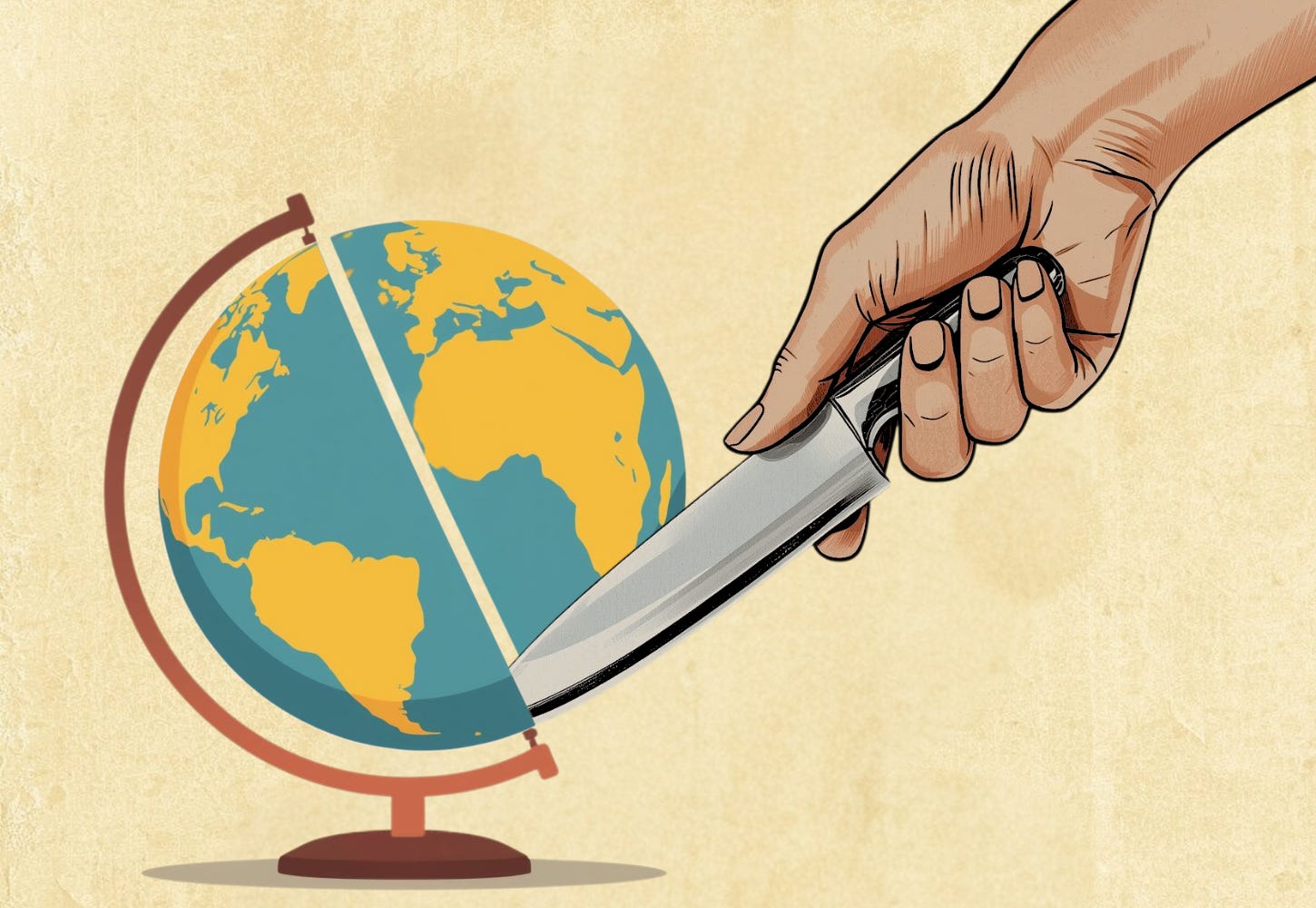
Global power blocs are dissolving into unpredictable, overlapping spheres of influence, forcing middle powers to scramble for survival as great powers redraw the geopolitical map.
The traditional rules-based international order is fracturing as major powers pivot toward pragmatic, interest-driven spheres of influence, marking the emergence of a discordant multipolar world. The U.S. National Security Strategy’s acknowledgment of this shift is reflected in Washington’s move away from values-based partnerships with the EU toward a hemispheric focus—what some analysts call the 'girl-next-door of Western Hemisphere hegemony.' Europe, meanwhile, fears being caught between Russia and the U.S., while Asia’s gaze is fixed on China and its regional ambitions, underscoring the global realignment into competing spheres.
The breakdown of the liberal international order is not merely a transition but a rupture, as crises in finance, health, energy, and geopolitics expose the vulnerabilities of extreme global integration. As Mark Carney bluntly put it, 'We are in the midst of a rupture, not a transition,' with middle powers like the EU scrambling to forge new economic agreements—such as the record-setting EU-Mercosur trade deal—to avoid marginalization in a world where great powers can afford to go it alone, but smaller states must cooperate or risk being 'on the menu.'
The erosion of traditional alliances is accelerating, with the transatlantic partnership under unprecedented strain as leaders like Friedrich Merz declare 'the West no longer exists' and the U.S. signals a new geopolitical alignment by sidelining the G7 in favor of a 'C5' grouping. This fragmentation is mirrored in Asia, where Japan’s shift from diplomacy to direct military support for the Philippines and the U.S.-Philippines Enhanced Defence Cooperation Agreement highlight the emergence of new, fluid coalitions that challenge the old alliance architecture.
Great-power rivalry is intensifying without the diplomatic frameworks that once managed global competition, leading to a territorialization of strategic postures reminiscent of 19th-century imperialism. The U.S. has reasserted the Monroe Doctrine in the Western Hemisphere, Russia seeks dominance in Eastern Europe, China pushes into Africa and the Middle East, and the UK doubles down on Euro-Atlantic primacy. However, as Gabriel Elefteriu warns, this descent into unrestrained competition—where military power, even in space, is paramount—risks chaos and potential full-scale war before any new equilibrium emerges.




Resilience Becomes Boardroom Law
Supply chain security and economic weaponization have elevated geopolitical risk management to a top-tier business function, with AI-driven intelligence and cross-sector coalitions now essential for survival.
By early 2026, supply chain risk has become a defining strategic and organizational concern, as companies confront the persistent fallout from U.S.–China rivalry and the rapid expansion of critical sectors like data centers. Leading organizations now recognize that resilience depends on deep geopolitical forecasting and intelligence, with RANE COO Deirdre Dastous emphasizing that 'accurate forecasting is critical to ensuring business resilience, preparing for emerging threats, and uncovering opportunities.' This shift has elevated supply chain management from an operational issue to a board-level imperative, particularly as vulnerabilities in critical minerals and memory chips become existential threats in an era of economic weaponization.
The accelerating weaponization of economic tools—tariffs, export controls, and supply chain leverage—has forced companies, middle powers, and institutions to rethink governance and resilience strategies. As highlighted by the World Economic Forum and recent cases like China’s rare earth export controls, organizations must now navigate a landscape where geoeconomic confrontation is the top business risk, requiring proactive, data-driven responses and collaborative governance. This includes integrating AI-powered risk intelligence, forging multilateral trade agreements, and building coalitions of the willing across governments, academia, and business to counteract the fragmentation of the old global equilibrium.
Strategic diversification—of supply chains, partnerships, and markets—has become the default response to geopolitical fragmentation, as evidenced by the EU’s record-breaking trade deal with Mercosur, Australia’s pivot toward Japan and India, and the US–Taiwan semiconductor supply chain relocation. Companies are not only shifting production and sourcing, with 97% of logistics executives reporting such moves, but also leveraging advanced digital tools and AI to manage volatility. However, this drive for resilience is often balanced against cost pressures, with nearly half of firms pausing sustainability initiatives, and is complicated by rising inflation and regulatory uncertainty.
Middle powers and regional actors are asserting agency through adaptive governance, leveraging trade diplomacy, defense reforms, and institutional innovation to buffer against the volatility of great-power competition. Yet, as seen in Taiwan’s reliance on the US for security and the EU’s internal struggles over investment and sovereignty, there are clear limits to this autonomy. The enduring centrality of superpowers, coupled with the disintegration of the neo-liberal consensus, means that strategic resilience increasingly depends on both hard power—capital, mandates, infrastructure—and soft power, such as trust, credibility, and the ability to convene diverse coalitions.




Cyber Arms Race Escalates
Technological sovereignty and offensive cyber operations are now core elements of national strategy, as states and companies adapt to a world where digital security defines geopolitical power.
By early 2026, cybersecurity and technological sovereignty have become inseparable from national power, as the world witnesses a pronounced strategic decoupling between nations, vendors, and even data itself. The year has been marked by high-profile incidents—from Kyowon’s breach to Microsoft’s takedown—underscoring that 'security is sovereignty.' This shift compels both governments and corporations to recalibrate their strategies, aligning not just with regulatory compliance but with the geopolitical realities of a fragmented, multipolar landscape, where cyber defense is now a core pillar of national and corporate strategy.
For middle powers, the dream of shaping global AI governance or developing proprietary frontier AI systems is increasingly out of reach, as the US and China consolidate dominance over both technological development and regulatory influence. Efforts like the EU AI Act have faltered amid legislative delays and the relentless pace of AI innovation, leaving middle powers with little leverage over foreign AI giants. Instead, experts urge a pragmatic pivot: focus on resilient domestic AI deployment and strategic import paradigms, leveraging positions in upstream and downstream bottlenecks to negotiate access to advanced AI while avoiding the resource-draining trap of chasing unattainable sovereignty.
The escalation of offensive cyber operations by Western democracies—spurred by Russia’s invasion of Ukraine and persistent threats from China, Iran, and North Korea—has normalized proactive 'defend forward' tactics, with countries like Germany, France, and Denmark institutionalizing offensive cyber capabilities. Legal frameworks are rapidly evolving to permit spyware installation and other aggressive measures, while the US considers tapping private contractors to match China’s cyber prowess. However, this arms race in cyberspace raises ethical and strategic dilemmas, as the risk of collateral damage to civilian infrastructure and the challenge of persistent, decentralized threats force policymakers and CISOs alike to rethink the boundaries of cyber offense and defense.
Technological sovereignty is now defined as much by control over supply chains and infrastructure as by regulatory ambition or talent. Europe’s struggle to secure semiconductors—producing less than 10% of what it consumes—and its 98% reliance on imported rare earths highlight a deeper crisis of industrial capacity and capital depth. As geopolitical scrutiny intensifies, hardware vendors with adversarial ties face regulatory crackdowns, and even electric vehicles become vectors for espionage, prompting organizations to reassess vendor risk through a political lens. In this environment, capital allocation, energy sovereignty, and the ability to orchestrate resilient, multi-provider infrastructure have become the true levers of digital sovereignty for both nations and global businesses.



Soft Power as Survival Tool
Soft power has transformed from image management to a hard-edged operational asset, directly influencing capital access, regulatory exposure, and the ability to shape new global norms.
The rise of value-based realism marks a decisive departure from the traditional rules-based international order, as leaders like Mark Carney argue that resilience and pragmatic risk management must be deliberately constructed in a world defined by rupture and fragmentation. This shift is exemplified by the move from a 'power over' mindset, typified by Donald Trump’s transactional, dominance-driven approach, to a 'power with' philosophy that emphasizes relational, cooperative power and collective agency. As Carney warns, relying on bilateral negotiations with hegemons leads to subordination, making the cultivation of shared standards and values essential for maintaining agency and competitive advantage in an increasingly multipolar landscape.
Soft power—rooted in credibility, trust, and relevance within critical networks—has evolved from a reputational asset to an operational necessity for organizations navigating hard constraints such as sanctions, export controls, and shifting tariffs. By early 2026, compliance alone is no longer sufficient; firms must build soft power to secure room to operate, as seen in the strategic reconfiguration of supply chains across South–South corridors and the increasing importance of stakeholder trust in cross-border ventures. This operationalization of soft power is underscored by the need for organizations to audit their exposure to regulatory and market risks, preparing for scenarios where multilateral trade rules may no longer provide stability.
The strategic value of soft power is now directly linked to financial outcomes, with banks and investors increasingly tying capital access and borrowing costs to governance quality, ESG performance, and stakeholder trust. For example, large banks are offering sustainability-linked loans where interest rates hinge on meeting climate and transition targets, rewarding organizations that treat soft power as a risk-pricing asset rather than a PR exercise. In complex sectors like cross-border green infrastructure, trusted partner status accelerates project approvals and reduces costs, while early movers in climate adaptation and critical minerals are shaping new norms and securing first-mover advantages in emerging alliances such as the G7’s critical-minerals partnerships.
The global contest for soft power is vividly illustrated by China’s recent surge in cultural influence, catalyzed by America’s perceived decline and amplified by geopolitical events like the US TikTok ban. While viral phenomena and the influx of US users to Chinese platforms have propelled Chinese culture into Western mainstream discourse, sustaining this momentum requires alignment between China’s professed values—such as prosperity and civility—and its actions, as contradictions like the suppression of journalists undermine trust and agency. Moreover, the export of contentious practices like '996 work culture' complicates China’s soft power narrative, highlighting the delicate balance between cultural influence and ethical leadership.
By 2026, addressing 'hard problems'—from climate risk to supply-chain fragility—has become a central strategic imperative, no longer relegated to CSR but directly impacting revenue, cost of capital, and license to operate. Leaders who succeed in this environment combine hard power (capital, mandates) with soft power (trust, legitimacy), leveraging cross-cultural collaboration and stakeholder convening to tackle complex, multi-jurisdictional challenges. This convergence of hard and soft power not only mitigates strategic risks but also creates commercial arbitrage opportunities for organizations willing to challenge outdated assumptions and engage deeply with systemic issues.



Leadership for a Fractured Era
Leaders are discarding nostalgia and playbooks for adaptive, curiosity-driven strategies—embedding geopolitical expertise and building pragmatic coalitions to thrive amid relentless uncertainty.
By early 2026, leaders across business and government are being called to fundamentally rethink their approach to uncertainty, recognizing that the world’s multipolar reality demands not nostalgia but bold adaptation. As Kristalina Georgieva of the IMF urged at Davos, the imperative is to 'think of the unthinkable' and remain calm and adaptive amid rapid technological, demographic, and climate shifts. Echoing this, Canada’s Mark Carney dismissed nostalgia as a viable strategy, instead advocating for the construction of pragmatic new coalitions—issue by issue, partner by partner—built on shared interests to forge resilience out of the fractured old order.
Effective leadership in this environment hinges on cultivating curiosity and the discipline to ask probing questions, rather than relying on outdated playbooks or the illusion of certainty. Davos participants highlighted the need for leaders to distinguish between momentum and meaning, and to engage their teams in ongoing dialogue—'What do you think?'—especially when perfect information is elusive. This mindset shift enables organizations to focus on both immediate and emerging challenges, fostering a culture of learning and adaptation that is essential for navigating volatility.
A critical capability for future-ready organizations is the development of deep geopolitical expertise and the institutionalization of processes that can monitor, interpret, and respond to global shocks. Ann Walsh of Guggenheim Partners emphasized the importance of stepping back to 'separate the signal from the noise,' while recent guidance for CEOs underscores the need to 'build a geopolitical muscle'—embedding geopolitical analysis into every function, not just siloed in a global affairs team. This structural resilience, supported by ongoing advisory mechanisms, ensures companies can remain nimble and thoughtful when 'the surprise is always around the corner.'
While the resurgence of state involvement through industrial policy introduces long-term risks, it also presents near-term strategic opportunities for agile companies. As recent analyses note, government interference can open doors for favored mergers, acquisitions, or investments, allowing businesses to leverage state-led market dynamics to their advantage. The challenge for leaders is to navigate these shifting sands ethically and strategically, balancing the pursuit of opportunity with the need for robust risk management in an era of unpredictable policy swings.