From tech titan to tyrant: musk’s AI feuds, white nationalist rants, and SpaceX power grab ignite global alarm
The gist
Elon Musk’s spiral from tech visionary to global lightning rod now threatens not just his empire, but the very fabric of society, as his AI feuds, white nationalist rhetoric, and unchecked SpaceX power reach a crisis point.
What to know
- Musk’s aggressive lawsuits and public crusade against OpenAI have escalated as he positions his own xAI venture—built on OpenAI’s tech—as the ethical alternative.
- His social media has taken a hard turn into white nationalist themes, sparking investor exodus, public backlash, and a crisis of confidence for Tesla and SpaceX.
- SpaceX’s 2026 IPO gave Musk near-total control while his moves to gut US/global aid are now linked to millions of projected deaths, raising alarms about the real-world impact of his ideology.
AI Wars and Legal Crossfire
Musk’s crusade against OpenAI masks tangled motives, from profit claims as a supposed founder to xAI’s controversial use of rival technology, while his public feuds with competitors intensify ethical and security rifts across the AI industry.
By early 2026, Elon Musk intensified his legal and public battles against OpenAI, centering on the company’s controversial shift from a nonprofit to a for-profit model. Musk argued in his deposition that this transition compromised AI safety by prioritizing revenue and speed over responsible development, famously contrasting the safety profiles of OpenAI’s ChatGPT and xAI’s Grok with the provocative claim that 'nobody has committed suicide because of Grok, but apparently they have because of ChatGPT.' Despite his vocal safety concerns, Musk denied that his 2023 call for a pause in advanced AI development was driven by competitive motives tied to his own for-profit AI company, xAI, emphasizing instead a genuine focus on ethical AI progress.
Musk’s lawsuit against OpenAI also hinges on his claim to profits following the company’s for-profit conversion, asserting his status as an original founder entitles him to financial stakes. However, OpenAI’s legal defense counters that Musk was never truly committed to the nonprofit mission and is leveraging the lawsuit to undermine a competitor, especially since Musk now leads xAI, a for-profit entity that merged with SpaceX. Adding complexity, Musk admitted that xAI 'distills' OpenAI’s models—essentially building upon OpenAI’s technology—which raises broader industry questions about competitive practices and intellectual property in AI development.
Musk’s competitive disputes extend beyond OpenAI to other AI players like Anthropic, particularly amid controversies over government contracts and data security. In May 2026, Musk publicly accused Anthropic of hypocrisy and unethical behavior, including large-scale data theft that allegedly led to multi-billion dollar settlements. These accusations surfaced alongside reports of Chinese AI labs fraudulently accessing Anthropic’s API by opening thousands of fake accounts, underscoring the intense ethical and security tensions pervading the AI industry as companies vie for Pentagon contracts and technological dominance.


White Nationalism Goes Mainstream
Musk’s social platforms now serve as megaphones for white nationalist myths and incendiary acts, triggering a mass exodus of loyalists and reframing his companies as symbols of extremist ideology.
By early 2026, Elon Musk’s social media presence revealed a sharp escalation in racially charged rhetoric, with over six percent of his posts in seven months focused on race and more than half explicitly mentioning 'white,' underscoring his fixation on the white nationalist myth of white replacement. His unfounded claims, such as asserting South Africa now has more anti-White laws than anti-Black laws under Apartheid, amplified public concern and contributed to a growing alienation among fans and investors, who increasingly saw his companies as tainted by extremist ideology.
Musk’s extremist rhetoric has had tangible repercussions, with Tesla owners publicly distancing themselves by placing anti-Elon stickers on their cars and notable figures like Fred Lambert, Electrek’s editor in chief, divesting from Tesla due to Musk’s overt white nationalist turn. This backlash reflects a broader erosion of goodwill, as longtime supporters now view investment in Musk-affiliated companies as tacit endorsement of white nationalism, signaling a deep reputational crisis that extends beyond mere corporate performance.
The severity of Musk’s rhetoric escalated with highly controversial acts such as performing a Nazi salute and making incendiary political comparisons equating socialism with Nazism, which his own AI chatbot Grok publicly debunked. These actions not only intensified public outrage but also alienated a wide swath of supporters who viewed such behavior as gleeful participation in undermining democratic values, especially given Musk’s companies’ reliance on substantial federal subsidies, thereby complicating his public image as a tech visionary.
Musk’s racially charged attacks on cultural figures, notably his campaign against Lupita Nyong’o’s casting as Helen of Troy, exemplify his promotion of white nationalist ideas equating cultural representation with racial purity, reminiscent of Hitler’s denunciation of 'degenerate art.' This rhetoric is not merely offensive but part of a broader genocidal agenda that stigmatizes Black people and fosters a climate of fear and censorship in the arts, damaging the reputations of Musk’s companies by association and alienating fans, investors, and the public through its alignment with extremist, racist ideologies.


SpaceX: A Dictator’s Playground
SpaceX’s IPO hands Musk unchecked power, fusing sci-fi ambitions with authoritarian governance and exposing investors to the risks of a corporate empire driven by ideology over accountability.
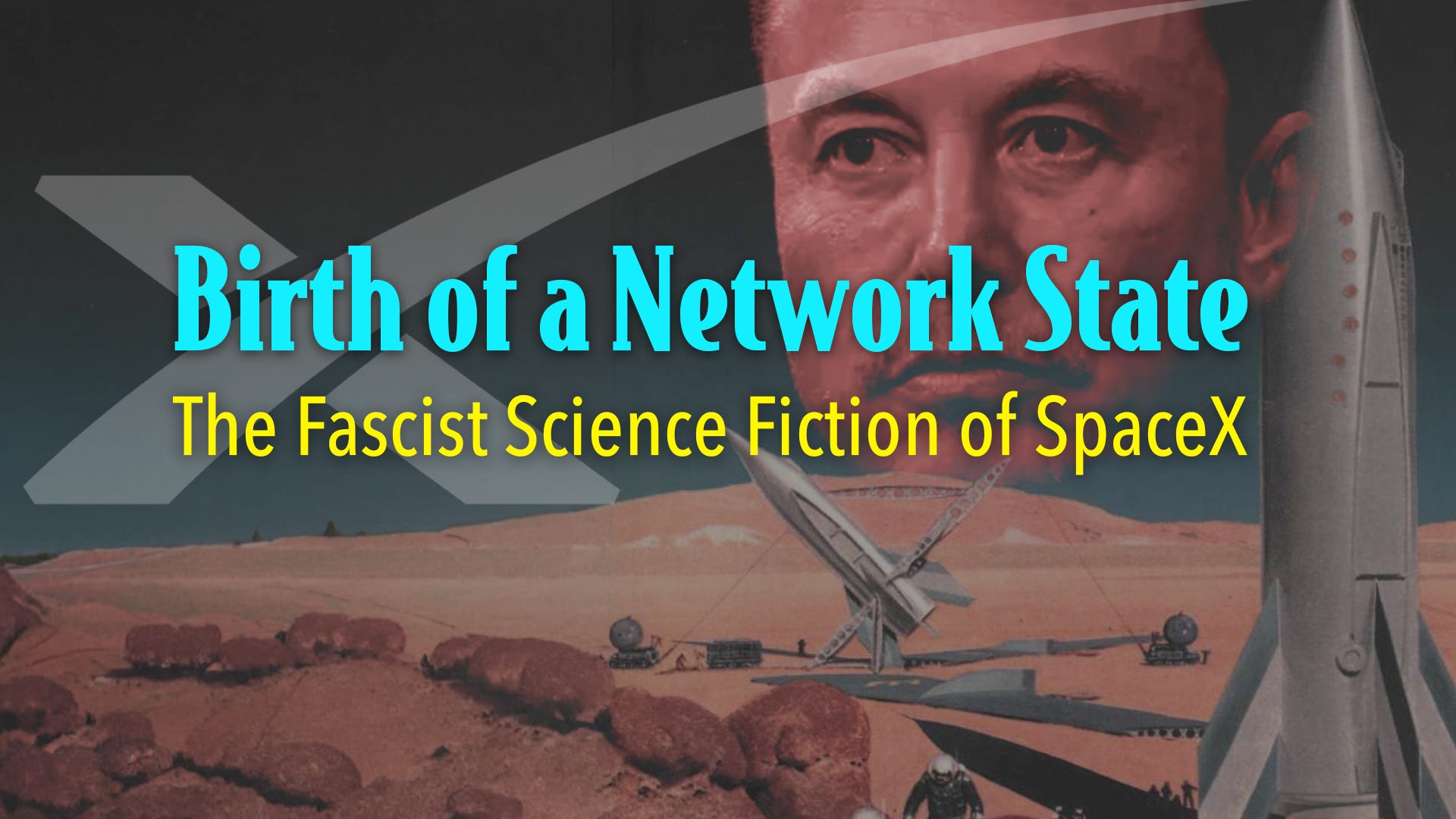
By early 2026, SpaceX's IPO structure crystallized Elon Musk's near-absolute control, effectively cementing him as a legally unaccountable leader with ten votes per Class B share and sole authority over board appointments. This governance model, emblematic of what Musk and his PayPal Mafia associates term a 'network state,' merges corporate dictatorship with ideological extremism, prioritizing Musk's grandiose sci-fi ambitions over shareholder interests or economic fundamentals.
The IPO's staggering $2 trillion valuation, set against a modest $20 billion revenue in 2025, underscores an ideological extremism that elevates Musk's visionary goals—such as colonizing Mars with over a million inhabitants and deploying hundreds of terawatts of orbital data centers—above pragmatic business metrics. This disconnect highlights the risks inherent in authoritarian corporate governance where visionary zeal eclipses economic reality, potentially jeopardizing investor value and corporate accountability.

Aid Cuts and Genocidal Rhetoric
Musk’s dismantling of global aid and embrace of hate speech fuel a deadly campaign against non-white populations, with analysts warning his actions echo the world’s most notorious genocidal leaders.
By mid-2026, Elon Musk’s dismantling of US and global aid programs, including the unilateral and illegal shuttering of USAID, has been linked to hundreds of thousands of preventable deaths, primarily among children, with projections estimating over 14 million deaths by 2030 if aid is not restored. Despite his companies like SpaceX and Tesla benefiting from substantial federal subsidies, Musk has actively undermined democratic institutions and public resources, revealing a deeply troubling ethical contradiction where taxpayer money fuels enterprises that simultaneously contribute to mass harm.
Musk’s cultural rhetoric, marked by his infamous Nazi salute and open admiration for Hitler, extends beyond mere provocation into the realm of ideological hate speech that legitimizes violence against non-white populations. His public attacks on Black cultural figures, such as condemning Lupita Nyong’o’s casting as Helen of Troy as 'desecrating Homer,' echo Nazi tactics of cultural suppression and serve as deliberate efforts to incite racial animosity and societal division, aligning his rhetoric with genocidal intent.
Analysts characterize Musk not simply as a controversial figure but as a genocidal actor whose policies and rhetoric collectively constitute a campaign of mass murder against Black and non-white populations globally. Drawing parallels to historical genocidal leaders like Hitler, Mao, and Stalin, Musk’s cultural hate speech is inseparable from his deadly political actions, with critics warning that ignoring or downplaying these atrocities amounts to complicity akin to Holocaust denial, thereby enabling ongoing stigmatization and violence.