FSSAI's crackdown jolts food, alcohol brands and claims
The gist
India’s food regulator is shaking up the industry with a no-mercy crackdown on unsafe products and dubious health claims, leaving major brands scrambling to defend their labels—and their reputations.
What to know
- In 2026, FSSAI banned 'FOLINEURO Syrup', halted 'Neuherbs TRUE VITAMIN', and recalled 'Wonderland Raisins' for safety violations, signaling zero tolerance for noncompliant supplements.
- Dabur India, United Spirits, and popular liquor brands like Royal Challenge and Old Monk were targeted for unverifiable '100% natural' claims and unauthorized flavorings, forcing product withdrawals and sparking legal fights.
- With no mandatory front-of-pack labels and patchy enforcement, India’s 'health halo' marketing lets misleading claims thrive—fueling confusion as ultra-processed food sales and lifestyle diseases surge.
Supplements Face the Axe
FSSAI’s sweeping bans and recalls of noncompliant supplements spotlight a new era of aggressive, preventive regulation to protect consumers from hidden risks.
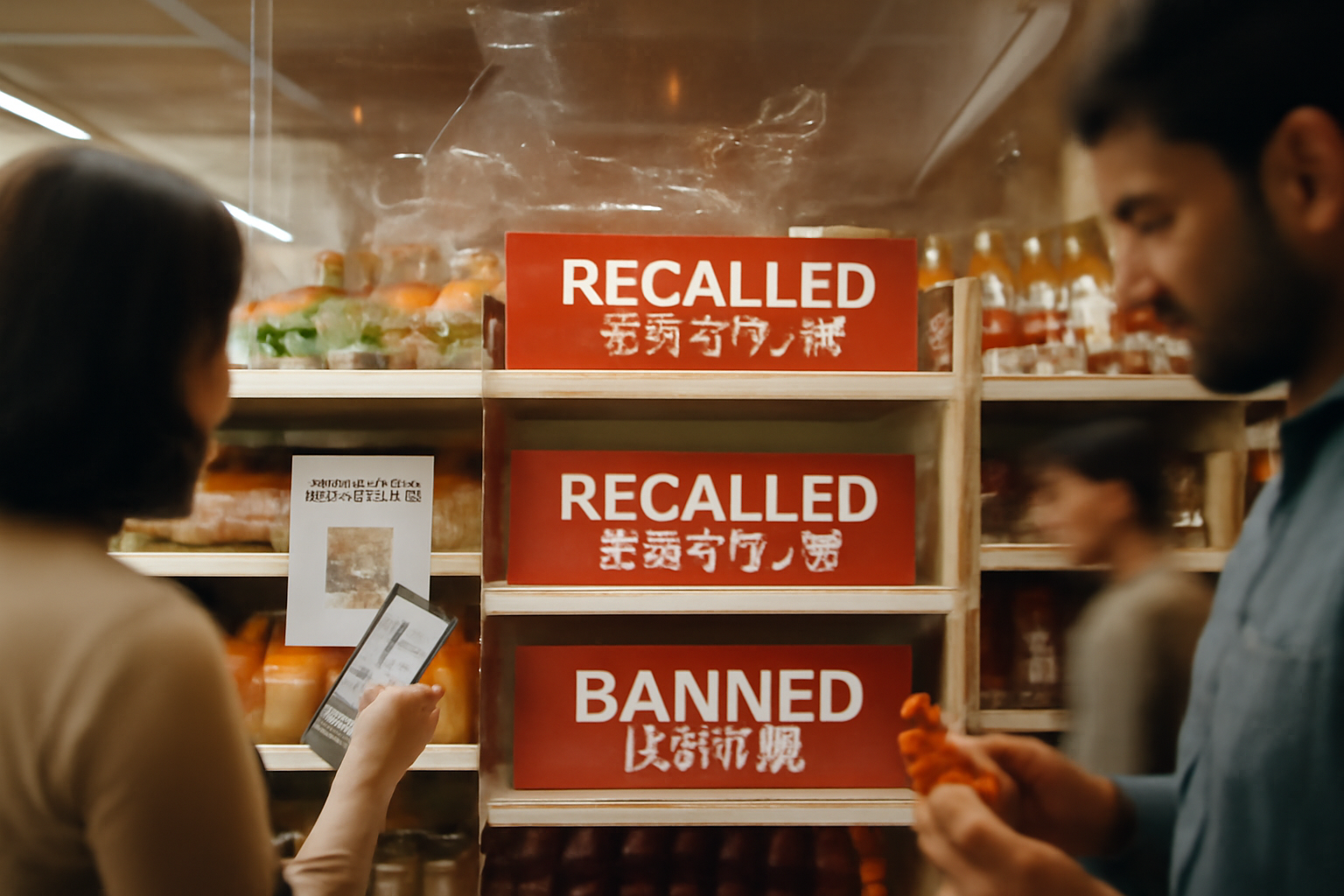
In a robust move to safeguard consumers, the FSSAI has imposed stringent regulatory actions on several food supplements exhibiting safety violations. Notably, the agency banned 'FOLINEURO Syrup', halted the sale of 'Neuherbs TRUE VITAMIN', and mandated the recall of 'Wonderland Raisins', signaling zero tolerance for products that fail to meet safety standards. These decisive steps underscore FSSAI's commitment to proactive consumer protection amid growing concerns over supplement safety.
Natural Claims Under Fire
Major food and alcohol brands are being forced to justify every label as FSSAI cracks down on vague purity promises and unauthorized additives, putting industry marketing tactics on trial.
By mid-2026, FSSAI escalated its enforcement against misleading marketing claims across both food and alcoholic beverage sectors, targeting unverifiable assertions such as '100% natural' and the use of unauthorized flavoring agents that misrepresent traditional product qualities. Major liquor brands including Antiquity Blue, Royal Challenge, McDowell's No. 1 rum, Bagpiper Deluxe whisky, and select Old Monk variants faced actions for employing artificial or 'nature-identical' flavorings, while United Spirits and Inbrew Beverages were barred from selling certain products due to unapproved additives and misleading age-related labels. This crackdown underscores FSSAI’s commitment to ensuring that manufacturing techniques and product definitions strictly comply with regulatory norms rather than relying on ambiguous or traditional industry language.
The regulator’s intensified scrutiny extends to food consumer brands, with a sharp focus on health and wellness claims that lack scientific substantiation. In June 2026, eight companies including Emami Healthy & Tasty, Neuherbs, Troovy, and Plan B received notices challenging claims like 'plant-based' and 'vegan,' while Dabur India was directed to halt sales of products labeled '100% Pure,' '100% Natural,' and '100% Organic' due to their ambiguous and scientifically unverifiable nature. This enforcement highlights the tension between marketing departments leveraging vague purity claims as brand differentiators and the absence of clear regulatory thresholds, making compliance a contentious and discretionary matter.
FSSAI’s evolving approach marks a significant shift from passive compliance monitoring to active policing of marketing claims, emphasizing that all product descriptions must withstand rigorous scientific scrutiny rather than serve as mere promotional language. This is evident in actions against energy drink brands like Red Bull and Monster for using the term 'energy drink'—not recognized as a standalone food category—and performance-based claims, as well as the broader regulatory stance treating food labels as essential sources of consumer information rather than marketing tools. Such a paradigm shift signals heightened accountability for brands, with tangible consequences for brand equity, as illustrated by Dabur’s share price decline and ensuing legal challenges following the prohibition order.
Health Halo Fuels Confusion
With ultra-processed food sales soaring, unchecked ‘health’ claims on packaging are misleading Indian consumers and deepening the country’s public health crisis.
The pervasive 'health halo' effect in India’s food marketing significantly distorts consumer perceptions, as single claims like 'protein-rich' or 'immunity-boosting' lead buyers to overlook unhealthy ingredients elsewhere on packaging. This cognitive bias is particularly concerning given the dramatic 40-fold surge in ultra-processed food sales between 2006 and 2019, which the Economic Survey 2025–26 identifies as a major contributor to the nation’s escalating obesity and diabetes crisis.
Despite ongoing discussions since 2014, India still lacks mandatory interpretive front-of-pack labeling, leaving a regulatory vacuum that manufacturers exploit by making unsubstantiated health claims such as 'healthy' without clear consumer guidance. This absence exacerbates confusion and undermines consumer trust, especially as the 2018 Food Safety and Standards (Advertising and Claims) Regulations, while requiring truthful nutrition claims and prior approval for disease-risk statements, suffer from inconsistent enforcement that allows misleading marketing to persist unchecked.
Brand Trust on the Brink
FSSAI’s clampdown is shaking the foundations of brand credibility, as iconic companies grapple with lost consumer trust and mounting legal battles over product authenticity.
FSSAI's intensified regulatory scrutiny is placing significant strain on brands that have long cultivated consumer trust through claims of purity, quality, and naturalness. For companies like Dabur India, which faced bans on marketing products with '100%' claims and improper use of the 'Jaivik Bharat' logo, these enforcement actions threaten to erode carefully built brand equity by casting doubt on product authenticity. Meanwhile, the legal pushback from major alcoholic beverage players such as United Spirits and Associated Alcohol & Breweries against FSSAI’s directives on product flavouring underscores broader industry concerns about regulatory overreach, highlighting the delicate balance brands must maintain between compliance and effective communication to preserve consumer confidence.