Fusion frenzy: global alliances, funding jitters, and data centers ignite race to commercial power
The gist
A global fusion power race is heating up as breakthroughs, big-money alliances, and data-hungry customers push the industry from the lab toward real-world energy markets.
What to know
- Pacific Fusion and Realta Fusion are moving fast with new pulsed power and compact magnetic mirror reactors, aiming for commercialization by the mid-2030s.
- Fusion startups are raking in record funding—like TAE Technologies' $200M boost and ARPA-E's $135M federal push—even as rivals in China pour $2.1B into state-backed programs.
- Regulators and investors are laser-focused on milestone wins like net energy gain (Q > 1), while data centers emerge as early buyers and American Fusion races to file 240 patents in 2026.
Fusion Tech Gets Practical
Fusion innovators are ditching costly mega-lasers for nimble pulsed power and modular magnetic mirror designs, betting on breakthroughs that slash complexity and cost.
By early 2026, fusion technology development has been marked by a shift toward more practical and cost-effective approaches, exemplified by Pacific Fusion and Sandia National Laboratories' pioneering use of pulsed power in inertial confinement fusion. This method offers a simpler, lower-cost alternative to the traditionally massive laser systems, signaling a promising path forward despite not yet achieving commercial viability. Such innovations underscore the ongoing drive to refine fusion techniques to accelerate their real-world application.
The strategic partnership between Realta Fusion and Commonwealth Fusion Systems (CFS) highlights the critical role of high-temperature superconducting (HTS) magnets in advancing magnetic mirror fusion technology. This multi-billion-dollar collaboration aims to de-risk and fast-track Realta’s compact, modular CoSMo fusion systems, targeting commercial deployment by the mid-2030s. Beyond accelerating timelines, the alliance also reflects a broader industry trend toward diversifying fusion platforms beyond tokamaks, addressing geopolitical and energy security concerns through innovative magnetic mirror designs.
General Atomics’ DIII-D National Fusion Facility stands as a cornerstone of U.S. fusion research, integrating magnetic fusion science with inertial confinement expertise to bolster both energy innovation and national security. Operating as the largest magnetic fusion research center in the country, DIII-D not only advances fusion science and engineering but also supports the National Nuclear Security Administration’s Stockpile Stewardship Program through specialized target fabrication and diagnostics. This dual focus positions fusion energy as a transformative, carbon-free power source with strong U.S. leadership driving its commercial potential.
Recent breakthroughs in artificial intelligence and superconducting magnet technology are pivotal in propelling fusion energy closer to commercialization, as highlighted in a 2026 equity podcast analysis. These advancements enhance the precision and efficiency of fusion systems, enabling better control and scalability. The integration of AI-driven diagnostics and HTS magnets exemplifies how cutting-edge technologies are converging to overcome longstanding fusion challenges, marking a significant leap from theoretical promise to practical deployment.




Alliances Power Fusion’s Leap
Cross-border and cross-industry partnerships—pairing American plasma science with Japanese manufacturing and multi-billion-dollar magnet deals—are building the global supply chains needed to make fusion a commercial reality.
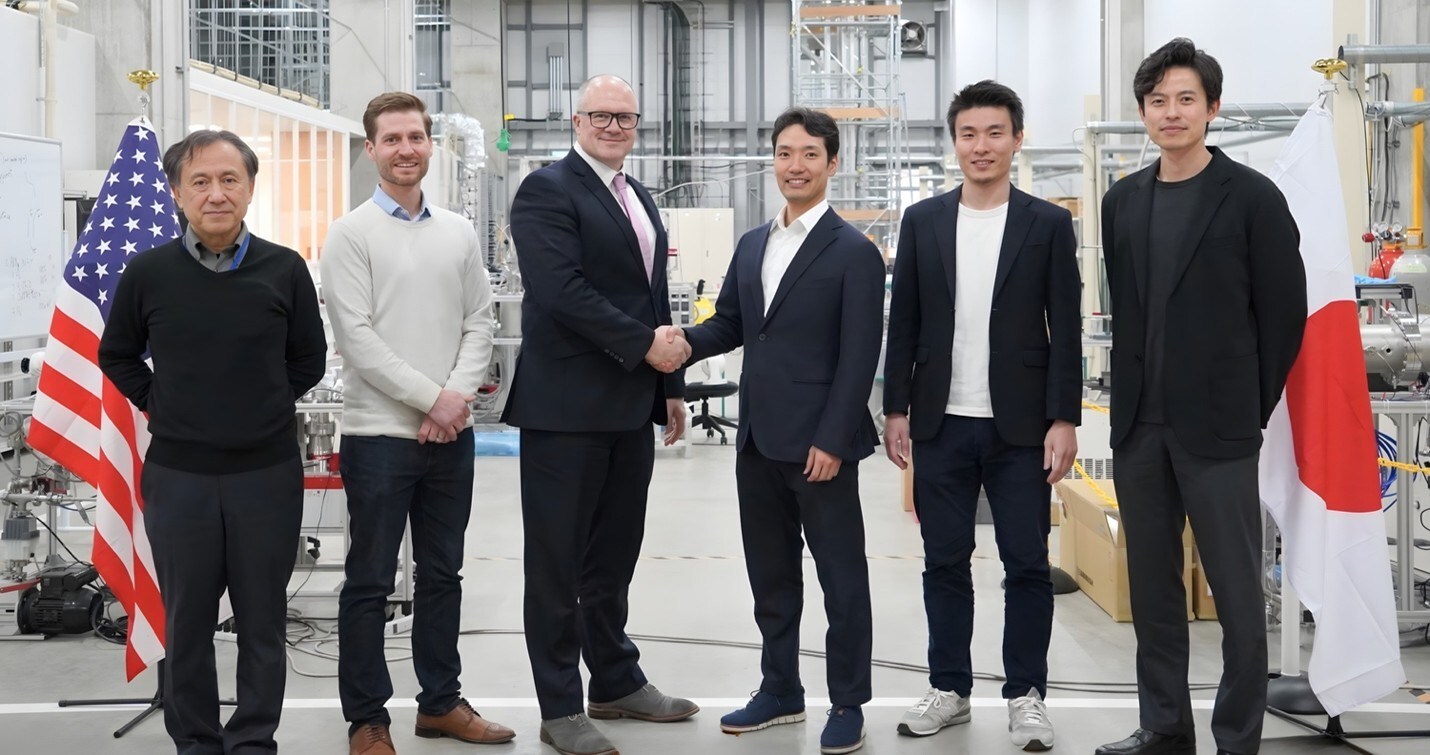
By early 2026, strategic partnerships between fusion startups and established companies have become pivotal in accelerating commercialization through the fusion of complementary technological strengths and integrated supply chains. The alliance between Realta Fusion, a U.S. startup born from University of Wisconsin-Madison research, and Kyoto Fusioneering, Japan’s leading fusion technology provider, exemplifies this trend by combining American advances in plasma physics with Japanese precision manufacturing expertise. This cross-border collaboration extends beyond technology development to coordinated engagement with government stakeholders and industry associations, establishing robust supply chains essential for scaling fusion power plant deployment globally.
TAE Technologies’ multi-state site evaluation process in the U.S. reflects a strategic approach to fusion commercialization that emphasizes collaboration with local partners and infrastructure readiness to ensure long-term, reliable deployment of its first fusion power plant. This effort is underpinned by significant financial backing from its merger with TMTG, which has already injected $200 million in cash with potential for an additional $100 million, providing the capital necessary to forge and sustain strategic partnerships critical for scaling fusion energy solutions.
The multi-billion-dollar partnership between Realta Fusion and Commonwealth Fusion Systems (CFS) highlights how alliances leveraging complementary capabilities and supply chains can fast-track fusion commercialization. CFS’s role in designing and supplying high-temperature superconducting magnets for Realta’s compact CoSMo fusion systems not only accelerates technology development but also de-risks projects by integrating supply chains. This deal, the largest of its kind for CFS, builds on a longstanding collaboration dating back to the WHAM experiment at the University of Wisconsin and strategically diversifies fusion approaches amid growing geopolitical and energy security concerns, while providing near-term revenue streams that sustain momentum for both companies’ fusion ambitions.
Funding Boom Faces Reality Check
Despite billions in new investment and public listings, fusion’s future hinges on patient capital and milestone wins as some startups hit financial turbulence without technical breakthroughs.
By early 2026, the fusion energy sector has attracted an unprecedented influx of capital from both private investors and federal agencies, underscoring the critical role of patient capital in sustaining long-term R&D efforts. Companies like TAE Technologies exemplify this trend, having secured $200 million through a merger with Trump Media & Technology Group, with potential for an additional $100 million contingent on SEC filings, enabling them to focus on infrastructure and site readiness for their planned 50 MWe plant in the early 2030s. Meanwhile, federal initiatives such as ARPA-E’s record $135 million funding over 18 months target technical barriers to commercialization, even as broader Energy Department budgets face political tensions, reflecting a complex but growing ecosystem of support that blends government and private investment to compete globally, particularly against China’s state-backed fusion programs.
Investor expectations in fusion remain firmly anchored on achieving key scientific and technical milestones rather than near-term revenue generation, mirroring a patient capital approach akin to biotech but without the latter’s industry-wide consensus on valuation benchmarks. The pivotal milestone is reaching Q > 1—net energy gain—which serves as a major value inflection point unlocking public market entry or high-value secondary funding rounds. As one analyst put it, "if you're one of the first couple of companies to hit Q greater than one, that is such a huge value driver that that company might be able to go public." This milestone-driven investment strategy explains why fusion firms are increasingly pursuing SPAC mergers and public listings despite concerns they may be premature relative to scientific progress.
Despite the surge in private investment—from $10 billion to $15 billion within months—and growing plans for public market entry, cracks are emerging in fusion’s funding boom as some startups struggle to sustain momentum without hitting critical milestones. General Fusion’s recent layoffs and funding challenges, followed by a $22 million lifeline, highlight the ongoing need for patient capital that bridges extended R&D phases. This dynamic underscores the sector’s reliance on a blend of strategic federal support, evolving regulatory frameworks, and private capital willing to endure long timelines, with the International Energy Agency’s prominent inclusion of fusion in its 2026 innovation report signaling increasing government procurement interest that could help de-risk investments.




IP Arms Race Heats Up
American Fusion is aggressively filing hundreds of patents and tightening governance, signaling a shift from lab innovation to commercial and regulatory muscle.
By early 2026, American Fusion (formerly Renewal Fuels, Inc.) has embarked on an ambitious expansion of its intellectual property portfolio to underpin both commercial and regulatory defensibility for its Texatron™ fusion platform. With 20 patent applications already filed covering critical aspects such as structural design, confinement, and electromagnetic systems, the company plans to file approximately 240 additional patents throughout 2026. This strategic IP buildup, driven by ongoing engineering refinements and architectural innovations, reflects a deliberate alignment of intellectual property development with technical progress, ensuring robust protection across core reactor architecture, fuel cycle optimization, and system integration technologies.
Complementing its IP strategy, American Fusion has strengthened its governance framework by appointing Andrew S. Mikulski as an independent director in March 2026, bringing the board to two independent members. This move aligns the company with corporate governance standards typical of national securities exchange listings, signaling a maturation in oversight and commercial readiness. Such governance enhancements not only support regulatory compliance but also bolster investor confidence as American Fusion transitions from technological breakthroughs toward market commercialization.

Regulators Pivot Toward Markets
Federal agencies and global watchdogs are rewriting the fusion rulebook to prioritize pilot plants and commercial buyers—especially data centers—over pure science.
By early 2026, federal support for fusion energy has decisively shifted toward the development of pilot plants and commercialization efforts, prompting debates within the Department of Energy about relocating oversight from the Office of Science to a division with a stronger commercial mandate. This strategic pivot reflects a broader recognition that advancing fusion from experimental stages to market-ready solutions requires regulatory frameworks and funding mechanisms aligned with industry needs and commercial objectives.
The International Energy Agency’s prominent inclusion of fusion energy in its 2026 State of Energy Innovation report marks a watershed moment in regulatory recognition, signaling increased government procurement interest and a reduction in investment risk for private capital. The IEA’s establishment of a 2030 milestone underscores growing institutional support, effectively validating fusion as a credible component of the future energy mix and encouraging stakeholders to actively engage in shaping the still-open regulatory roadmap.
Data centers have emerged as a critical market demand driver shaping both fusion’s regulatory environment and commercialization trajectory, due to their unique requirement for always-on, high-density power that intermittent renewables cannot reliably supply. Their willingness to pay premium prices and contract early for advanced fusion technologies accelerates deployment timelines, making them a pivotal customer segment that influences regulatory priorities and helps bridge the gap between pilot projects and grid-scale fusion integration.
Global Fusion Rivalries Intensify
U.S. and Asian fusion leaders are forging technology alliances and racing for funding amid political headwinds and national security stakes, transforming fusion into a new arena for global competition.
By early 2026, international collaboration has become a cornerstone in accelerating fusion commercialization, exemplified by the strategic partnership between U.S.-based Realta Fusion and Japan's Kyoto Fusioneering. This alliance leverages Realta's advances in plasma physics alongside Kyoto Fusioneering's precision manufacturing expertise, extending beyond technology to joint engagement with governments and supply chains. Realta's procurement of gyrotrons from Kyoto Fusioneering for its first commercial-grade fusion machine underscores tangible technology transfer and the critical role of robust cross-border supply chains in the global fusion ecosystem.
Simultaneously, domestic U.S. fusion efforts reflect a complex interplay between record funding and political challenges, with ARPA-E announcing $135 million over 18 months amid President Trump's proposed cuts to the broader fusion budget. This tension highlights the strategic imperative to blend government and private sector investments to effectively compete with China's predominantly state-funded fusion programs. Energy Secretary Chris Wright's cautious optimism about a commercial fusion pathway within five years, coupled with active government engagement at facilities like General Atomics' DIII-D, signals fusion's growing importance to U.S. energy leadership and national security.
The U.S. fusion landscape is further shaped by multi-billion-dollar partnerships such as the one between Realta Fusion and Commonwealth Fusion Systems (CFS), which aims to fast-track magnetic mirror fusion using advanced high-temperature superconducting magnets. This collaboration not only diversifies fusion approaches amid rising geopolitical and energy security concerns but also allows CFS to generate near-term revenue while advancing its own tokamak projects, illustrating how strategic alliances serve both commercial and technological objectives in a competitive global environment.
Meanwhile, China's fusion program is surging ahead with substantial state funding amounting to US$2.1 billion, enabling breakthroughs like the 'Artificial Sun' plasma stability exceeding 17 minutes and the development of a 21.7 tesla superconducting magnet by Energy Singularity. The Chinese Academy of Science's creation of advanced reactor steel capable of withstanding nearly double ITER's magnetic field strength highlights China's commitment to pushing fusion technology beyond existing international benchmarks, positioning fusion as a pivotal element in its future energy security and geopolitical influence strategy.