Gas prices split U.S. consumers as oil spikes
The gist
As oil prices skyrocket and inflation bites, America’s K-shaped recovery has split the country in two—leaving low-income families squeezed by soaring essentials while the wealthy keep spending.
What to know
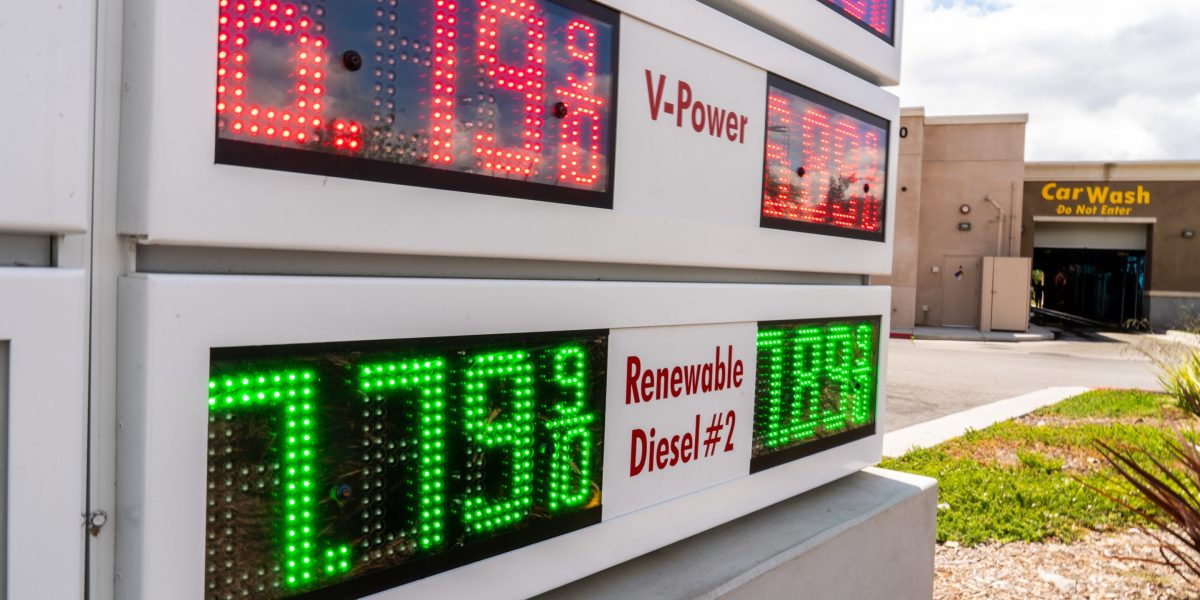
- Lower-income Americans are spending 12% more on gas despite cutting consumption by 7%, while wealthier households boosted gas spending by 19%.
- The Iran conflict has driven oil to $126 a barrel, spiking energy costs by 70% and adding up to $300 a month to household budgets—hitting low- and middle-income families hardest.
- Consumer confidence has cratered to its lowest since 1952, with 62% of shoppers delaying purchases and many dipping into savings or debt to cover rising bills.
The Widening Wealth Divide
America’s K-shaped recovery is deepening economic fault lines, with lower-income families forced into cutbacks and debt while affluent households thrive on asset gains and resilient spending.
By early 2026, the K-shaped recovery has starkly deepened economic divides, with lower-income households facing wage stagnation and rising financial stress while wealthier groups continue to prosper. According to the New York Fed, lower-income Americans cut gas consumption by 7% yet paradoxically spent 12% more on fuel in March due to soaring prices from the Iran conflict, whereas higher-income households increased gas spending by 19% with minimal consumption reductions. This divergence reflects a broader pattern where wealthier Americans benefit from asset gains and sustained spending power, while poorer households grapple with inflationary pressures that force them to curtail discretionary expenses and rely more on public transit or carpooling, underscoring growing inequality in everyday economic experiences.
The widening wage gap is the largest since 2015, intensifying the bifurcation of consumer behavior in 2026. Economists Heather Long and Mohamed El-Erian highlight how real wages for many workers remain flat or negative amid inflation and supply shocks linked to the U.S.-Israeli war in Iran, squeezing lower-income earners who increasingly turn to debt to manage expenses. Meanwhile, households earning above $125,000 continue to exhibit economic stability, with robust vacation bookings confirmed by Disney and sustained retail spending, illustrating a stark contrast in financial resilience that fuels the K-shaped recovery dynamic.
Retail trends vividly mirror this economic polarization, as companies like Walmart and TJX Companies adapt to the split consumer landscape. Walmart captures a broad spectrum, serving lower-income shoppers focused on essentials alongside higher earners who are trading down, while TJX increasingly caters to affluent consumers seeking premium brands at discounts. McDonald’s CEO has even acknowledged the deepening K-shaped economy through menu changes that reflect growing consumer anxiety, signaling how the divide reshapes not only spending power but also corporate strategies amid persistent inflation fears and shifting wealth patterns.



Energy Shock Hits Home
Surging oil prices from the Iran conflict have turned energy bills into a monthly crisis for working families, squeezing budgets across essentials and accelerating the gulf between rich and poor.
The Iran conflict has triggered a sharp spike in oil prices, with attacks on shipments through the Strait of Hormuz pushing prices to $126 a barrel and causing a 70% surge in energy costs this year. This energy shock has become a fixed, unavoidable expense for American households, forcing the average family to spend an additional $200 to $300 monthly on gas and utilities compared to pre-war levels, as highlighted by RSM US economists and recent analyses. These rising costs are not only inflating consumer budgets but also fueling lasting economic shifts that deepen polarization, disproportionately burdening low- and middle-income households who lack the financial flexibility to absorb such shocks.
The inflationary pressures driven by soaring energy and food prices are acutely felt by working- and middle-class families, who report worsening finances at the highest rates ever recorded—55% according to recent surveys. As one analyst observed, 'These gas prices, the cost of groceries, all of these various costs are being borne by working-class people who don't have the option of not paying it.' This affordability crisis manifests in smaller shopping baskets, fewer discretionary purchases, and cutbacks on travel, with many consumers breaking up purchases to manage constrained budgets. Meanwhile, wealthier policymakers remain insulated from these hardships, highlighting a stark divide in economic experiences.
Energy inflation is squeezing multiple essential budget categories simultaneously—housing, transportation, food, and utilities—accounting for over half of household expenses and leaving less room for discretionary spending. Transportation costs alone consume 15 to 20% of budgets and are rising alongside food prices driven by higher diesel costs, compounding the financial strain. This multifaceted pressure reduces real wages, particularly for lower-income households, eroding disposable income and dampening consumer confidence, which in turn slows economic growth and heightens uncertainty as noted in recent economic forecasts.
Despite elevated oil prices, current levels have not yet reached the historical peaks that typically trigger recessions, partly due to stronger household balances and lower relative gas expenditures compared to past decades. However, the ongoing energy shock continues to depress consumer sentiment and business confidence, signaling that while the economy may avoid a severe downturn, the uneven burden of inflation and energy costs is reshaping spending behaviors and exacerbating economic divides across income groups.






Confidence Collapses, Habits Shift
Historic lows in consumer confidence are driving Americans to slash discretionary purchases and prioritize essentials, as inflation and negative cash flow push many to the financial brink.
By early 2026, consumer confidence has plummeted to historic lows, with the University of Michigan's sentiment index hitting its lowest since 1952, reflecting widespread anxiety fueled by rising gas prices averaging $4.48 per gallon and a K-shaped economic recovery that masks the financial struggles of lower-income households. As Kraft Heinz CEO Steve Cahillane observed, many low earners are 'literally running out of money at the end of the month,' dipping into savings to cover essentials amid negative cash flows, while higher-income groups maintain spending, deepening economic polarization and consumer stress.
The war-driven energy shock, with gas prices surging over 30% in a month due to the Iran conflict, acts like a regressive tax on fixed costs such as fuel and utilities, squeezing disposable income and prompting consumers—especially those earning under $40,000—to cut gas purchases by 7% yet still spend 12% more overall on fuel. This dynamic forces a shift toward essentials, as seen in declining sales in discretionary categories like furniture (-3.6% year-over-year) and apparel (-1.5% monthly), while essentials like groceries and gas stations see increased spending, underscoring a growing divide in consumer behavior across income levels.
In response to sustained economic uncertainty and inflation pressures, consumers are adapting their spending habits by prioritizing essentials and wellness products—beauty, supplements, and self-care items are now viewed as necessities—while selectively investing in affordable, trend-driven fashion to maintain some normalcy. Retailers like Sally Beauty report cautious spending among lower-income shoppers, prompting a strategic pivot toward value, loyalty incentives, and targeted promotions to sustain demand amid stretched wallets and heightened financial anxiety.
Despite headline retail sales growth fueled by affluent consumers, underlying consumer behavior reveals a cautious pullback, with 62% of shoppers cutting back spending and many delaying larger purchases due to economic unknowns tied to the Iran war and inflation. Analysts from Telsey Advisory Group warn that prolonged gas prices above $4.00 per gallon could moderate spending growth, while EY-Parthenon economists highlight increasing reliance on savings and credit, especially among younger consumers facing income volatility and debt challenges, signaling that the ripple effects of current shocks will shape consumer confidence and spending patterns well beyond the immediate crisis.




Retailers Navigate Inflation’s Squeeze
Retailers are overhauling pricing and inventory strategies to survive war-driven cost surges and shifting consumer priorities, with Walmart adapting to both budget and luxury shoppers while others struggle to keep pace.
By early 2026, retailers are grappling with the far-reaching consequences of the U.S.–Iran conflict-driven energy shock, which has inflated operational costs and squeezed consumer wallets in a manner akin to a hidden tax on fixed expenses like fuel and utilities. This surge—exemplified by a 30% spike in gas prices within a single month—has introduced complex ripple effects that extend well beyond headline inflation, forcing retailers worldwide to rethink pricing and product strategies amid volatile market stability. As one analysis notes, "Energy touches everything. It acts more like a tax on fixed costs," underscoring the pervasive challenge retailers face in balancing cost pressures with consumer affordability.
The retail sector’s response to war-driven inflation is multifaceted, with pricing strategies evolving to counteract not only rising supply chain disruptions—from oil to food—but also consumer backlash manifesting as boycotts. Retailers like Walmart, which straddles both lower- and higher-income shoppers, are uniquely positioned to navigate this bifurcated landscape, capturing essentials for budget-conscious consumers while accommodating wealthier buyers trading down. Conversely, Target struggles due to its reliance on discretionary spending, highlighting how inflationary pressures disproportionately impact retailers depending on their customer base and product mix.
The K-shaped recovery has crystallized divergent consumer behaviors, with lower-income households spending up to four times more of their income on fuel compared to affluent cohorts, compelling them to cut physical gas consumption yet still face rising nominal bills. Retailers are closely monitoring metrics such as same-store sales, traffic versus ticket size, and inventory-to-sales ratios to discern whether revenue shifts stem from genuine demand or inflationary price increases. This nuanced data-driven approach enables retailers to fine-tune operational strategies and inventory management amid ongoing inflation and energy cost pressures that also elevate transportation expenses, further complicating the retail cost structure.