Gemini 3.6 flash cuts costs in chip crunch
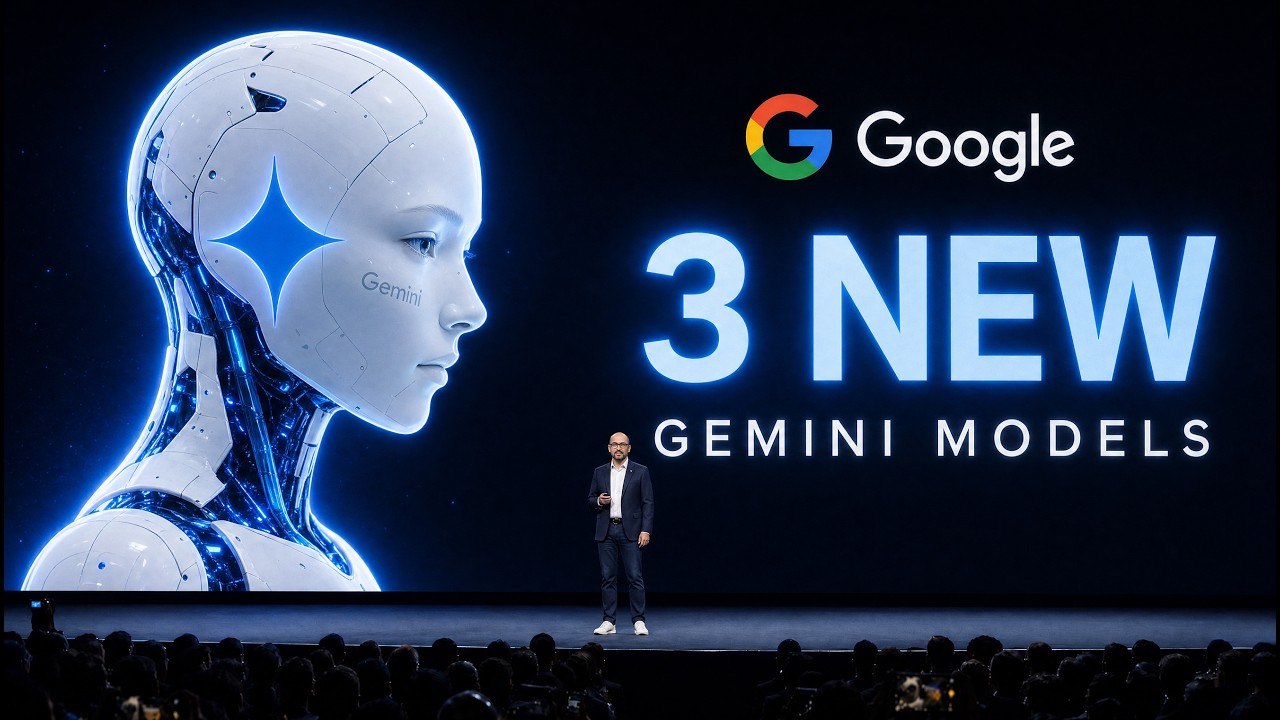
The gist
Google slashes AI costs and doubles down on specialized models with Gemini 3.6 Flash, racing ahead of industry-wide chip shortages that are stalling its flagship Gemini 3.5 Pro.
What to know
- Gemini 3.6 Flash drops output token costs by 17% to $7.50 per million and delivers double-digit benchmark gains, making high-volume AI cheaper and faster.
- Development of Gemini 3.5 Pro is delayed by a severe compute crunch, forcing Google to ration AI resources even for giants like Meta.
- As Google pivots to specialized models like Gemini 3.5 Flash Cyber for cybersecurity, rivals like Anthropic are racing to build custom AI chips with Samsung to dodge GPU shortages.
AI Gets Cheaper and Smarter
Gemini 3.6 Flash drives down operational costs while boosting benchmark scores, setting a new standard for efficient, high-volume AI across Google’s platforms.
Gemini 3.6 Flash marks a notable advancement in cost efficiency by reducing output token prices by 17%, dropping from $9.00 to $7.50 per million tokens, while also cutting input token costs to $1.50 per million. This pricing strategy, combined with a 17% reduction in output token usage for comparable tasks, enables significantly lower operational expenses, making the model highly economical for sustained, high-volume AI workloads across Google's ecosystem.
Despite these cost savings, Gemini 3.6 Flash delivers robust performance improvements, achieving double-digit gains on benchmarks like DeepSWE and MLE-Bench, with scores rising from 37% to 49% and 49.7% to 63.9% respectively. This balance of enhanced intelligence and token efficiency positions the model as a faster, smarter AI workhorse capable of handling complex coding, reasoning, and multimodal tasks without sacrificing quality.
Designed as a specialized, high-throughput workhorse, Gemini 3.6 Flash excels in practical AI applications such as robotics and financial data analysis by diving straight into answers to minimize latency and token consumption. Its deployment across Google’s API, enterprise platforms, and consumer apps underscores its role as the backbone for scalable, cost-effective AI workflows that demand rapid, efficient execution.
Complementing its token efficiency, Gemini 3.6 Flash’s enhanced Managed Agents API introduces native environment hooks and budget controls that curb compute waste by preventing infinite loops and shifting orchestration complexity from developers to the platform. This innovation, alongside asynchronous background polling capabilities, further drives down costs and supports resilient, scalable agentic workflows critical for long-horizon, multi-step AI tasks.


Compute Crunch Reshapes AI Race
Severe hardware shortages force Google and its rivals to ration resources and invest in custom chips, shifting the balance of power in the AI industry.
Google's flagship Gemini 3.5 Pro model has encountered significant delays driven primarily by a scarcity of computational resources, a challenge that extends beyond Google to the broader AI industry. This bottleneck in raw compute availability now surpasses budget and talent constraints, fundamentally reshaping development timelines and vendor strategies. The ripple effects of these delays are felt not only internally but also by third-party platforms and enterprise customers who rely on Gemini's capabilities, injecting uncertainty into their operational roadmaps tied to specific AI milestones.
The severity of Google's compute resource limitations is underscored by its decision to ration access even among major partners such as Meta, which faced capped access to Gemini compute nodes amid surging API demand. This rationing highlights the hardware bottlenecks constraining AI infrastructure capacity and signals a critical inflection point where demand for specialized AI compute outstrips supply, forcing strategic prioritization within and across organizations.
In response to these compute constraints, competitors like Anthropic are pivoting towards custom silicon development to mitigate reliance on increasingly rationed third-party GPU suppliers. Anthropic’s advanced negotiations with Samsung to co-develop AI chips tailored for the Claude model architecture exemplify a strategic shift aimed at securing dedicated hardware resources, reflecting a broader industry trend toward vertical integration as a hedge against compute scarcity.
Specialized Models Take Center Stage
Google leverages the Gemini 3.6 Flash lineup to outpace competitors by focusing on tailored AI agents like Flash Cyber, targeting high-stakes domains such as cybersecurity.
Google’s decision to launch the Gemini 3.6 Flash series ahead of the delayed Gemini 3.5 Pro reflects a calculated move to sustain its competitive edge in the fast-evolving AI agent landscape. By prioritizing the Flash series, Google not only maintains market momentum but also showcases its commitment to innovation through specialized AI models like Gemini 3.5 Flash Cyber, which excels in niche applications such as code vulnerability fixing. This strategic positioning enables Google to compete directly with leading models like GPT 5.5 Cyber and Mythos 5, reinforcing its presence in specialized AI domains while building anticipation for the more advanced Gemini 3.5 Pro and Gemini 4 releases.
The introduction of specialized models within the Gemini 3.6 Flash lineup, particularly the Gemini 3.5 Flash Cyber, underscores Google’s strategic pivot towards tailored AI applications that address specific industry challenges. Demonstrating performance on par with top-tier competitors in cybersecurity tasks, this model exemplifies Google’s focus on creating AI agents that deliver targeted solutions rather than broad generalist capabilities. This approach not only differentiates Google’s offerings in a crowded AI market but also signals a forward-looking strategy that leverages specialized expertise to drive adoption and set the stage for future flagship models.