Gen z opts out: AI job crunch breeds 'culture of futurelessness' as entry-level market collapses
The gist
Gen Z is opting out as AI-driven automation shatters entry-level job markets, fueling a generational wave of distrust, pessimism, and a new 'culture of futurelessness.'
What to know
- Entry-level hiring at AI-adopting firms has dropped 8% since 2025, pushing recent graduate unemployment to 5.6%—well above the national average.
- Official job numbers mask turmoil, with over 55,000 AI-related layoffs at companies like Amazon and UPS in 2025, while traditional unemployment rates have lost meaning.
- A staggering 75% of Gen Z plan to avoid full-time work, citing ethical concerns and deep skepticism about institutions’ ability to prepare them for an AI-dominated future.
AI Scrambles Labor Signals
Automated hiring and unreliable job data have left policymakers flying blind, as AI transforms the workforce faster than traditional metrics can track or governments can respond.
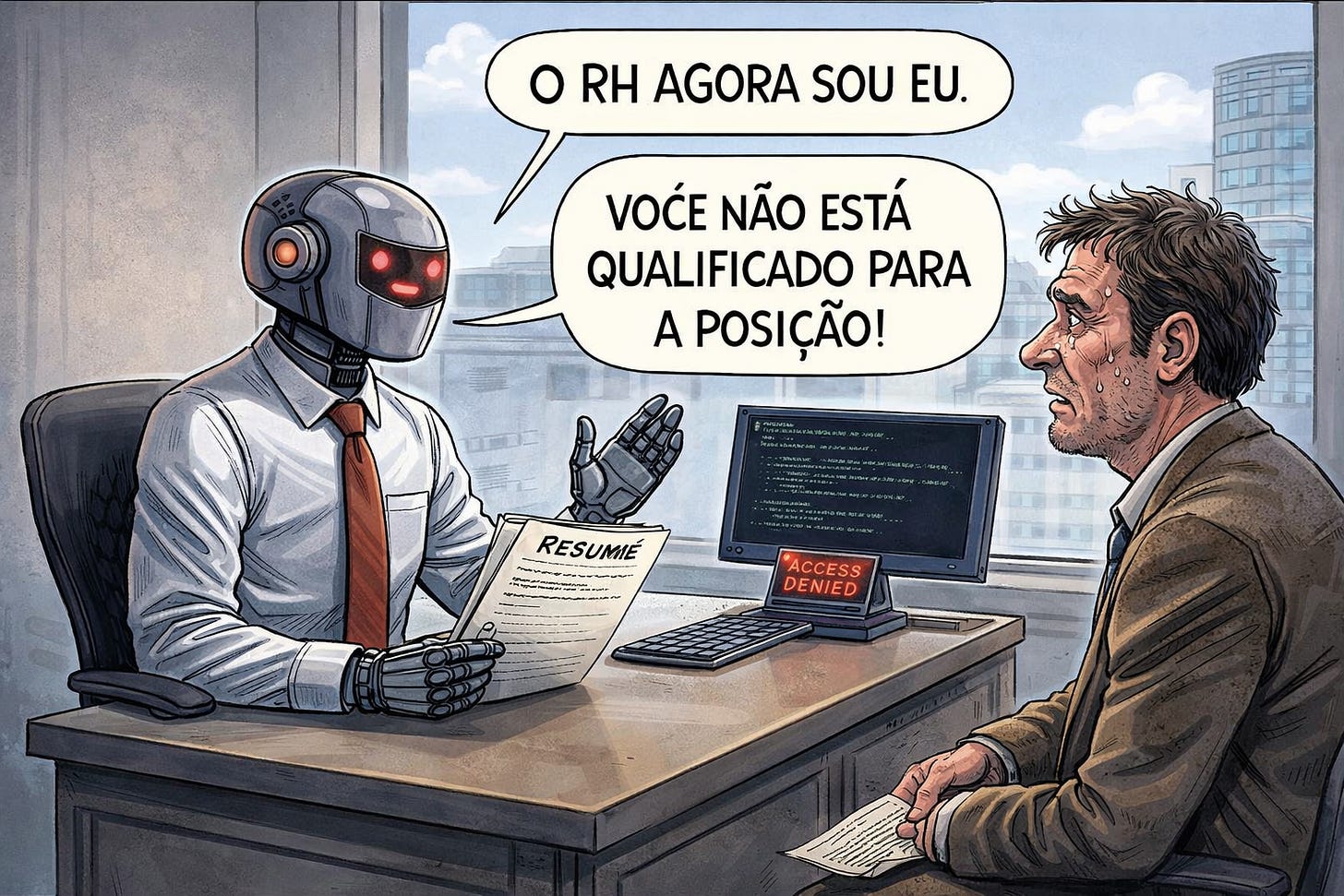
By late 2025, AI and automation had begun to fundamentally fragment traditional hiring practices, as automated systems replaced many HR functions and filtered out roles before they even materialized, leading to concentrated hiring in human-dependent sectors and stagnation elsewhere. This structural upheaval was compounded by deteriorating labor market data reliability—exacerbated by events like the U.S. government shutdown—which distorted economic indicators and increased uncertainty precisely when policymakers needed precision most.
As of early 2026, the labor market's structural shift under AI's influence rendered traditional employment metrics like the unemployment rate increasingly unreliable; Stephanie Roth emphasized that a 5% unemployment rate today no longer carries the same economic meaning it did decades ago. This unreliability was starkly illustrated in January 2026, when official reports showed job growth and low unemployment, yet private-sector data and the Federal Reserve’s Beige Book revealed widespread layoffs, including 108,435 in January alone, with companies such as Amazon and UPS explicitly citing AI in over 55,000 cuts during 2025.
Economic policymakers, including the Federal Reserve, face unprecedented challenges in responding to AI-driven labor market disruptions because traditional monetary tools like interest rate adjustments neither recreate lost jobs nor accelerate retraining. John and Fed Chairman Powell acknowledged AI’s potential to disrupt service sector jobs similarly to how globalization devastated manufacturing hubs, risking a structurally higher unemployment rate. Meanwhile, Bob Michael of JP Morgan highlighted that AI-related capital expenditures—currently about 1.5% of U.S. GDP—are shifting economic drivers away from traditional payroll and spending data, further complicating policy decisions.
The labor market is also undergoing a qualitative transformation: AI reduces demand for entry-level information workers while boosting demand—and wages—for mid-career employees who can harness AI productivity gains. Erik Renalson's Stanford study revealed this bifurcation, with firms seeing declines at the bottom and significant productivity-driven wage increases at the top, a dynamic that leaves younger workers disadvantaged. This uneven impact challenges conventional employment metrics and limits the Federal Reserve’s ability to craft effective policy, as Mark Zandi of Moody’s Analytics warned that AI’s full productivity impact—and its implications for jobs—are imminent but not yet reflected in economic data.




Official Data Masks Upheaval
Political interference and outdated metrics obscure the true scale of AI-driven job disruption, leaving both workers and leaders in the dark about the economy's real condition.
By early 2026, skepticism about the reliability of official U.S. labor and economic data has intensified, fueled by political interference and methodological shortcomings that obscure AI's true impact on the workforce. The Trump administration's meddling has cast doubt on the Bureau of Labor Statistics' objectivity, with 11 of 12 months in 2025 seeing downward revisions to job numbers. Traditional indicators like the headline unemployment rate, which stands at 5%, no longer carry the same economic meaning as in previous decades, as noted by Stephanie Roth, due to structural labor market shifts including rising underemployment and multiple job holding, with the U6 unemployment measure at 8.4%, 2.2% above 2019 levels. This data opacity complicates understanding whether the AI revolution is creating more jobs than it disrupts, with tech optimists uncertain about the timeline and scale of promised returns on AI investments.
Current policy choices, particularly immigration restrictions, tariffs, and mass deportations, intersect problematically with AI-driven labor market disruptions, creating a challenging environment for American workers. Dian Swunk highlights that immigration curbs have exacerbated labor shortages in sectors like leisure and hospitality, where foreign-born and native-born workers complement rather than substitute each other, contributing to soaring quit rates. Meanwhile, tariffs and restrictive policies narrow the pathways to job creation, concentrating growth in just a few sectors such as healthcare and construction, as ADP’s chief economist Nela Richardson observes. This policy milieu, combined with AI-related workforce reductions—exemplified by companies like Pinterest cutting 15% of staff to hire AI-proficient talent and Dow Chemical eliminating 4,500 jobs due to automation—intensifies reemployment difficulties and labor market strain.
Traditional economic indicators and policy frameworks are increasingly inadequate in an AI-driven economy where capital expenditures in AI, currently about 1.5% of U.S. GDP compared to housing’s 3%, are becoming a critical growth driver. As Bob Michael of JP Morgan points out, policymakers face the daunting task of setting effective strategies when conventional macroeconomic data fails to capture the nuances of AI’s economic influence. This challenge is compounded by persistent inflation and the risk of a payroll recession despite overall economic growth, with fiscal stimulus potentially exacerbating inflationary pressures. The uncertainty and lack of conviction among policymakers underscore the systemic complexity of navigating labor market disruptions amid AI advancements and restrictive policies.
Beyond labor market metrics, the narrative of an AI boom may mask deeper systemic issues related to power consolidation and exploitation of hard assets rather than genuine economic opportunity for workers. The AI-driven shifts appear less about broad-based job creation and more about reinforcing existing inequalities, as suggested by analyses questioning whether the AI revolution truly benefits the declining middle class or primarily serves elite interests. This perspective invites a critical reevaluation of how AI's economic impact is measured and addressed within policy debates, emphasizing the need to look beyond surface-level job statistics to understand the broader socio-economic transformations underway.
Gen Z Faces Entry-Level Freeze
AI-driven hiring freezes and institutional disconnects have pushed recent graduates into record-high underemployment, shattering the old promise of a stable career launch.
By early 2026, the youth labor market has been profoundly reshaped by AI adoption, which has led firms to favor experienced workers who can effectively leverage AI tools, resulting in a sharp decline in entry-level hiring for recent graduates. Erik Renalson's Stanford study highlights this trend, showing an 8% drop in junior hiring at AI-adopting companies over six quarters, not through layoffs but via quiet hiring freezes. This contraction has pushed the unemployment rate for recent grads to 5.6%, notably above the national average, while underemployment has surged to 42.5%, the highest since 2020, underscoring the precarious position of young workers amid AI-driven uncertainty.
The traditional pathway from college graduation to stable entry-level employment is fracturing, as young workers face not only fewer opportunities but also a labor market that undervalues their AI readiness. Educational institutions often discourage or ban AI use—42% and 11% respectively—leaving 63% of faculty doubting graduates' preparedness for AI-era jobs, even as employers increasingly prioritize AI literacy. This disconnect fuels Gen Z's declining optimism, with excitement about AI dropping 14 points to 22% and anger rising to 31%, reflecting a broader sense of institutional failure to equip them for the evolving workplace.
Confronted with shrinking traditional opportunities and institutional gaps, many young workers are pivoting toward alternative career strategies such as gig work, freelancing, and entrepreneurship. ZipRecruiter's 2026 Graduate Report reveals that nearly 38% of recent grads are considering starting their own businesses, while 32.5% and 28% are exploring gig and freelance work respectively. Despite these shifts, many find themselves in roles outside their desired career paths, as the old linear model of career progression gives way to a fragmented, nonlinear journey marked by increased competition and a 22% rise in job application clicks per posting.
The financial and psychological toll on this generation is significant, as they face rising unemployment without the cushion of student loan forgiveness or robust institutional support. Graduates from even top programs like UCLA's computer science department report months-long job searches, resorting to gig economy jobs like Uber to make ends meet. This reality raises urgent questions about the long-term economic prospects for young workers, with experts warning that the AI-driven labor market disruption may leave a lasting scar on this cohort's career trajectories and financial stability.




Hope Collapses, Anxiety Surges
Gen Z’s optimism about work and technology is plummeting amid institutional mistrust and a labor market that seems rigged against their future.
By early 2026, Gen Z's enthusiasm for AI has sharply declined, with Gallup polling revealing excitement dropped 14 points to 22% and hopefulness fell to 18%, while anger and anxiety surged to 31% and 42% respectively. This paradoxical anxiety is compounded by a feeling of being caught in a no-win scenario: pressured to adopt AI tools to stay employable yet fearful of being replaced by them, fostering a pervasive sense of helplessness and pessimism about their job prospects.
Distrust toward educational institutions is a critical factor fueling Gen Z’s anxiety, as over half of college students report their schools discourage or ban AI use, leaving them ill-prepared for AI-driven workplaces. Faculty acknowledge this gap, with 63% believing 2025 graduates lack necessary AI skills, while employers increasingly demand AI literacy. This institutional failure exacerbates a 'culture of futurelessness,' where young people hedge their bets by switching majors or pursuing 'AI-proof' fields like psychology and education, despite these paths now yielding negative financial returns.
The labor market realities deepen Gen Z’s pessimism: only 20% believe it’s a good time to find quality work, down from 62% in 2021, while recent graduates face a 5.6% unemployment rate—significantly higher than the overall 4.2%. CEOs’ hiring freezes on junior roles, anticipating AI-driven displacement, reinforce this bleak outlook. Consequently, 73% of recent grads consider gig or freelance work, and nearly 38% contemplate entrepreneurship, signaling a generational shift away from traditional career paths toward precarious, piecemeal employment.
Underlying these trends is a profound cultural and psychological shift: Gen Z is living within a 'culture of futurelessness' marked by a collapse of credible, inspiring narratives about the future and widespread institutional distrust. Over half of young people feel misunderstood by older generations and nostalgic for past eras, fueling a turn inward toward individual resilience—a 'privatisation of hope'—where personal optimism persists despite collective pessimism. This generational divergence redefines work’s purpose, with many rejecting full-time employment and ethical misalignment with employers, reshaping the social contract amid AI-driven disruption.

Reskilling Becomes Survival
With traditional economic levers failing, companies scramble to redeploy and retrain staff as AI quietly rewrites the rules of workforce composition.
By early 2026, central banks like the Federal Reserve face unprecedented challenges as AI-driven productivity gains decouple economic growth from traditional job creation, rendering conventional tools such as interest rate adjustments less effective in stimulating employment. Federal Reserve Governor Lisa Cook highlighted this dilemma, warning that lowering interest rates may no longer revive jobs but instead risk fueling inflation. This macroeconomic shift underscores the urgent need for organizations to rethink workforce strategies amid rapid AI-induced transformations.
In response to AI disruption, companies are elevating internal mobility and reskilling from optional perks to critical strategic infrastructure essential for workforce stability. JPMorgan Chase exemplifies this struggle; despite a $20 billion annual tech budget and a massive workforce of 318,000 employees, CEO Jamie Dimon admitted their talent redeployment efforts lag behind the swift pace of AI-driven role changes. This gap signals a widespread organizational challenge in aligning workforce transitions with accelerated productivity improvements, risking a future shortage of senior expertise if early-career pipelines are not actively protected.
Rather than triggering mass layoffs, AI disruption is quietly reshaping workforce composition by shrinking operations and support roles while expanding revenue-generating positions, a trend that enhances productivity but threatens to hollow out future talent pools without deliberate role mapping. For instance, engineers are becoming more productive, operations staff are managing more accounts per person, and fraud costs have decreased per unit. This subtle re-composition demands that organizations proactively manage role evolution to sustain a balanced and resilient talent pipeline over the coming decade.

The Social Contract Shatters
Gen Z’s mass rejection of full-time work and eroding faith in institutions signal a deep societal shift toward fragmented futures and privatized hope.
By early 2026, it became clear that the traditional 20th-century social contract—rooted in stable employment and job security—has irrevocably fractured, prompting a fundamental shift from focusing on income redistribution to rethinking ownership distribution. This transformation is vividly illustrated by Generation Z’s active rejection of conventional employment norms, with 44% declining jobs on ethical grounds and 75% planning never to engage in full-time work, signaling a grassroots rewriting of the employment contract that challenges legacy economic structures.
The AI-driven fragmentation of the labor market exposes the inadequacy of existing political frameworks that remain fixated on job creation and protection, failing to address the unbundling of jobs and the rise of invisible labor. As traditional parties continue to champion outdated goals, they overlook the structural shifts that fracture society along multiple fault lines—not only generational divides but also between remote knowledge workers and location-bound service workers—thereby complicating efforts to maintain socioeconomic cohesion.
This breakdown in the social contract has precipitated a pervasive 'culture of futurelessness' among young people, who struggle to envision credible and inspiring futures amid eroding trust in institutions and collective progress. As Annie Auerbach’s 2026 research highlights, young people are turning inward, embracing a privatization of hope that emphasizes personal resilience over collective advancement, a trend that risks deepening societal fragmentation and undermining the possibility of shared prosperity.
Compounding these challenges, AI’s reliance on historical data entrenches a backward-looking cultural mindset, reinforcing nostalgia and limiting youth’s capacity to innovate or imagine new futures. This technological retrospection stifles cultural and societal progress at a critical juncture, as the ecosystem struggles to foster the creative visions necessary for navigating the unprecedented transformations wrought by AI in the labor market and beyond.