Global power shuffle: US retreats, China connects, and middle powers hedge in a multipolar world
The gist
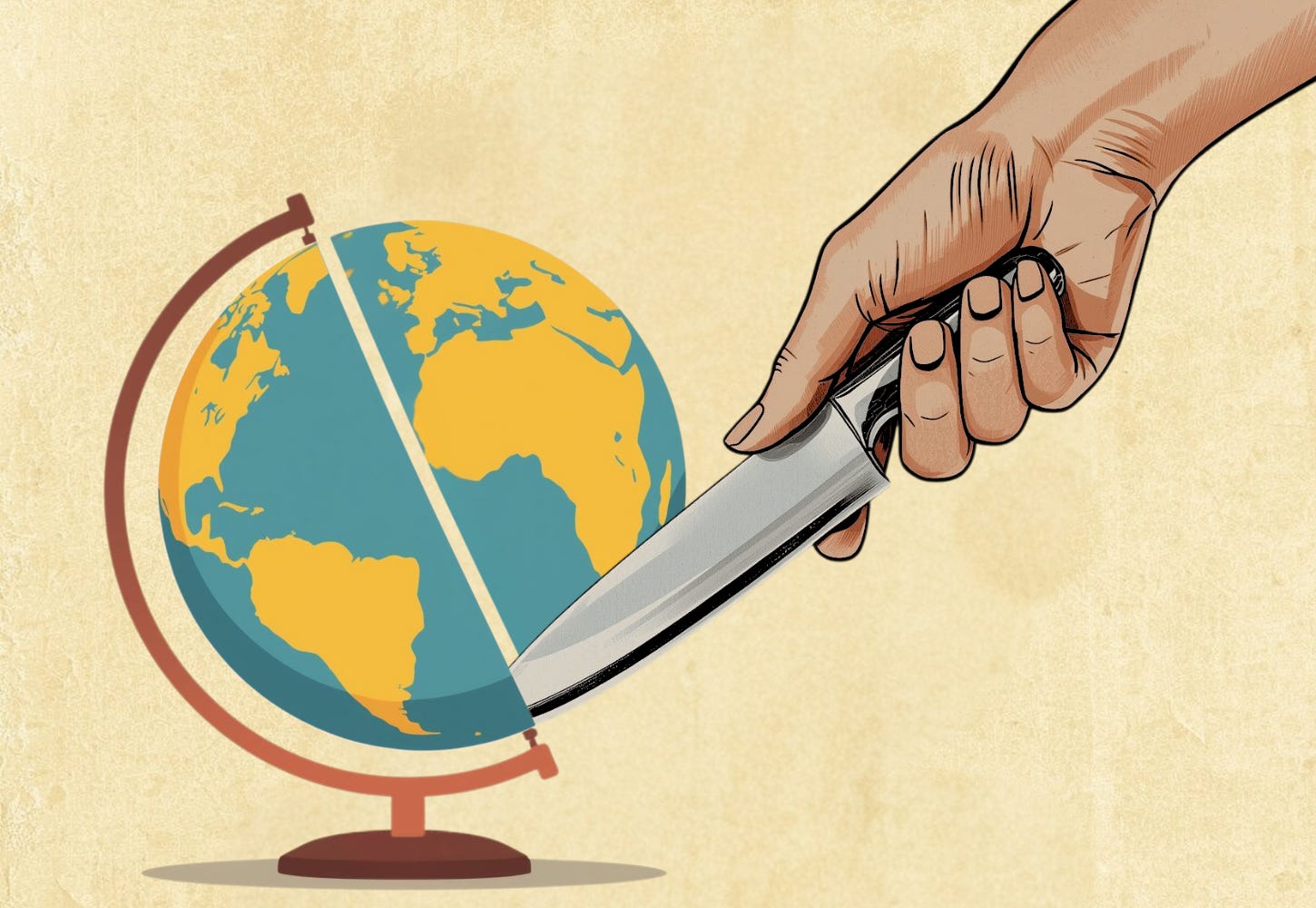
The old world order is out—2026 is all about fractured alliances, multipolar power plays, and a tug-of-war between the US, China, and a chorus of increasingly assertive middle powers.
What to know
- The US, under Trump, has retreated from global dominance to focus on the Western Hemisphere and Indo-Pacific, straining its alliances and leaving Europe anxious.
- China is quietly expanding its influence through trade, infrastructure like the Lobito Corridor, and the Belt and Road, while pitching itself as the hub of a new dual-core world order.
- Middle powers like India, Canada, and Indonesia are hedging bets—cutting new deals, joining BRICS, and refusing to pick sides as global institutions splinter and power fragments.
Fractured Alliances, Fading Hegemony
America’s pivot to isolationism and offshore balancing has left Europe rattled and its global leadership credibility in question, as internal weaknesses and strategic incoherence fuel doubts among allies and rivals alike.
By late 2025, the US National Security Strategy under Donald Trump marked a pivotal acknowledgment of a multipolar world defined by competing spheres of influence, signaling a strategic pivot from traditional liberal internationalism toward a more isolationist, offshore balancing posture focused on Western Hemisphere hegemony. This shift strained the transatlantic alliance, with European leaders like Friedrich Merz declaring 'the West no longer exists' and the Pope criticizing US efforts to fracture the transatlantic partnership, exacerbated by allegations that the NSS aimed to pull certain EU countries away from the Union, heightening European alarm over Washington's intentions.
The erosion of US-led multilateralism accelerated as China and Russia actively undermined key international institutions such as the WTO and the UN, with vetoes on crises like Ukraine and the Rohingya illustrating the decline of global governance. Both Moscow and Beijing pursued expansive strategic ambitions threatening US and allied interests, prompting calls within Washington for a more assertive posture signaling 'unlimited aims' to counter aggression. However, critiques of US leadership since the Clinton era highlighted a pattern of weakness and incoherence, with generations of leaders lacking national security resolve, further complicating America's ability to maintain its hegemonic role.
By early 2026, the US faced a complex strategic reassessment amid domestic political shifts and relative power decline, reflected in the recalibration of alliances—most notably the cooling of the US-India relationship as Washington prioritized cost-averse policies, leading India to hedge by strengthening ties with the EU, Australia, and China. Simultaneously, the US grappled with the unraveling of its financial hegemony as Trump's abandonment of 'great power self-discipline' undermined global economic stability and accelerated de-dollarisation efforts, while internal challenges such as the weakening of the government-university-research nexus threatened the innovation engine critical to sustaining American global strength.
Despite perceptions of decline, the US remained a central actor in global security and economic systems, with analysts emphasizing a gradual transition rather than abrupt rupture of unipolarity. Strategic refocusing rather than contraction characterized US policy, as evidenced by strengthened ties with key Indo-Pacific allies—Japan's $550 billion investment pledge and renewed US-India economic engagement highlight this recalibration. Nonetheless, fracturing alliances, exemplified by France's independent moves and restrictions on US military overflights, underscored the fragility of the US-led order, while domestic political dynamics, including President Trump's interventions, continued to shape the maintenance of critical global facilities and alliances.




China’s Patient Power Play
Beijing is quietly redrawing the global order by fusing Confucian diplomacy, economic leverage, and infrastructure deals to build a multipolar system that challenges Western dominance without direct confrontation.
By early 2026, China has embraced a strategy of strategic patience, carefully balancing transactional diplomacy with the United States while promoting a vision of 'mutually assured disruption' that could evolve into a stable coexistence, as noted by Wu Xinbo and Da Wei. This nuanced approach underpins China’s broader ambition to reshape global governance through decentralization, exemplified by Beijing’s Global Governance Initiative, which seeks to counter Western dominance and elevate emerging powers and developing countries, according to Jia Qingguo. Simultaneously, China leverages its economic heft and diplomatic initiatives, such as the Belt and Road Initiative, to frame infrastructure and connectivity projects as global public goods fostering 'win-win cooperation,' reinforcing its multipolar influence and contrasting with U.S. liberal individualism by promoting a Confucian-inspired model of relational obligation and harmony.
Capitalizing on perceived U.S. strategic retrenchment and domestic challenges, China is actively expanding its global role by promoting managed trade agreements and advocating for a fairer global financial system. Analysts like Ma Xiaoye and Zheng Yongnian highlight China’s leadership in advancing 'managed trade' frameworks and the gradual internationalization of the renminbi, signaling a shift toward multipolar currency dynamics and economic order. At the same time, China establishes clear economic 'red lines' to protect overseas investments and supply chains, ready to exert pressure when its interests are threatened, as Chen Wenling emphasizes, reflecting a posture of strategic patience rather than aggressive military expansion.
China’s diplomatic strategy involves exploiting U.S. missteps, especially during the Trump administration, to build the largest and most robust alliance of allies dominating supply chains, trade, and economic blocs. This patient approach, noted in April 2026 analyses, leverages ongoing global conflicts and U.S. strategic blunders to strengthen China’s position in AI, energy, and trade sectors, while also expanding influence in Africa through infrastructure projects like the Lobito Corridor. Furthermore, China is advancing proposals for a comprehensive UN hub in Shenzhen or Hangzhou to connect innovation clusters with the Global South, enhancing multilateral governance and addressing gaps left by U.S. disengagement from global institutions.
China is positioning itself as a central 'connecting point' in the emerging dual-core multipolar world order alongside the United States, engaging in strategic dialogues such as the intergovernmental AI governance talks to secure a role in high-value industrial ecosystems. This reflects a sophisticated recognition of the shifting global landscape from U.S. unipolar dominance to multipolar stalemate, where China promotes trilateral cooperation and addresses global public goods provision in development finance and AI risk-sharing, as Yang Jiemian and Zhang Chong observe. Meanwhile, China continues to debate internal economic policies balancing capital account liberalization and stimulus approaches, emphasizing talent security and innovation to sustain its expanding global role amid increasing international instability.

India’s Strategic Tightrope
New Delhi expertly hedges between Washington, Moscow, Beijing, and Brussels, leveraging multipolarity to maximize autonomy and economic gain while refusing to be boxed into a single camp.
India's multi-aligned balancing act is a deliberate strategy to maintain strategic autonomy amid a fracturing global order. By early 2026, India skillfully engaged both China and the United States simultaneously—evidenced by Modi's 2025 visit to China during tense US-India trade relations under Trump, while also dispatching its national security adviser to the US to mend ties, culminating in a bilateral trade deal. Despite some domestic leanings toward Beijing, Indian officials continue to view the US as an indispensable source of capital, technology, and strategic partnership, underscoring India's pragmatic approach to economic growth and regional security.
India’s enduring partnership with Russia remains a cornerstone of its defense and energy strategy, rooted in Cold War-era alignments and reinforced by substantial arms imports and discounted Russian oil purchases following the Ukraine conflict. Yet, this relationship coexists with a deepening strategic partnership with the United States, highlighted by milestones such as US recognition of India's nuclear power status—a legacy of George W. Bush’s administration—and ongoing cooperation in technology and defense. This dual engagement exemplifies India’s refusal to fully align with any single power, even as US pressure mounts to choose sides amid rising global tensions.
India’s multi-aligned foreign policy extends beyond the traditional US-Russia-China triangle to include closer ties with the European Union and emerging middle power partnerships with countries like South Korea and Italy. While the EU’s rules-based, values-driven framework contrasts with India’s pragmatic diplomacy, this engagement adds complexity to its balancing act. Concurrently, strategic agreements with middle powers reflect India’s cautious hedging amid concerns about US reliability, illustrating New Delhi’s preference for multipolarity and issue-based minilateralism over deep alliances or military blocs.
Regionally, India prioritizes balancing China as its principal peer competitor, leveraging its growing economic power, nuclear capabilities, and significant military presence in the Indian Ocean to project influence and deter Chinese naval expansion. This strategic posture is complicated by Pakistan’s terrorism-linked threats, exacerbated by China’s ‘ironclad’ support for Islamabad, which shapes India’s security calculus. Despite advances, India faces a military technology gap with China and Pakistan, notably lacking fifth-generation fighters, underscoring its ongoing need for advanced defense partnerships and the importance of US diplomatic engagement to manage regional tensions.



Middle Powers Chart Their Own Course
Countries like Canada, the UK, Japan, and Indonesia are sidestepping great power rivalry by recalibrating alliances and deepening pragmatic ties with China, signaling a shift toward independent, interest-driven foreign policy.
By early 2026, middle powers such as Canada and the UK have pursued a pragmatic recalibration of their China policies, signaling a move toward strategic autonomy from the United States amid escalating US-China tensions. Canada’s tariff cuts on Chinese electric vehicles and Prime Minister Mark Carney’s Beijing visit, alongside the UK’s planned approval of a large Chinese embassy in London despite security concerns, illustrate a nuanced engagement strategy that balances economic interests with geopolitical caution. China’s diplomatic overtures, including calls from China Daily for Canada to distance itself from Washington, further complicate the traditional alliance dynamics, encouraging these middle powers to carve out independent paths within the multipolar order.
European middle powers face a profound strategic identity crisis as they grapple with the transactional diplomacy of the Trump administration and the erosion of the rules-based order they once championed. Analysts like Zheng Ge and Meng Weizhan highlight Europe’s ideological rigidity and its struggle to adapt to a world where the US adopts a more pragmatic, sometimes unpredictable stance, exemplified by the loss of Greenland and the ‘big stick’ diplomacy that the UK under Keir Starmer seeks to soften. This has led to a tentative shift toward pragmatic engagement with China, especially as far-right political currents gain traction, potentially easing tensions despite internal political fragmentation and electoral uncertainties.
In Asia, middle powers such as Japan and Indonesia are navigating the multipolar landscape through a blend of domestic consolidation and pragmatic international partnerships. Japan’s Prime Minister Takaichi Sanae’s February 2026 electoral victory has empowered her to pursue a dual fiscal and security agenda, while regional actors including Indonesia, Singapore, and China are collaboratively advancing AI governance frameworks that balance innovation with security concerns. Indonesia’s strategic pivot toward China for renewable energy projects, notably a 100 GW plan with Chinese partnership, underscores the region’s pragmatic approach to economic and technological cooperation amid US policy unpredictability.
Pakistan has emerged as a pivotal middle power in regional security diplomacy by repositioning itself as a credible peace broker in the US-Iran conflict, leveraging its unique geopolitical ties with Saudi Arabia, Iran, and the United States. Its operational success in the May 2025 military confrontation with India has enhanced its international standing, enabling Islamabad to facilitate high-level ceasefire talks and relay critical diplomatic communications between Washington and Tehran. This transformation is underpinned by a more unified counterterrorism doctrine and a pragmatic approach to navigating complex regional dynamics shaped by shared borders and sectarian demographics.
Middle powers like Japan, South Korea, and India are deepening economic and strategic ties with the United States, exemplified by Japan’s $33 billion investment in an Ohio natural gas plant and South Korea’s parallel negotiations, reflecting a broader US effort to solidify alliances amid global uncertainty. However, India’s approach remains cautious and multipolar, favoring issue-based minilateral cooperation over formal alliances, as seen in its strategic agreements with South Korea and Italy and its silence following a US strike near Sri Lanka. These dynamics reveal a pragmatic hedging strategy where middle powers diversify partnerships to mitigate US unpredictability while maintaining essential security dependencies.



Rival Spheres, Rising Chaos
A new era of multipolar rivalry is emerging as major powers entrench territorial dominance, weaponize technology, and form shifting coalitions, fueling a global environment marked by distrust and institutional fragmentation.
By early 2026, the global order is unmistakably shifting toward a multipolar architecture marked by contested spheres of influence and fragmented institutions. Major powers are entrenching territorialized strategic postures: the U.S. reasserts the Monroe Doctrine in the Western Hemisphere, Russia intensifies its dominance in Eastern Europe, and China expands aggressively into Africa and the Middle East. This multipolar rivalry transcends traditional competition, as autocratic states like China and Russia coordinate adversarially through sanction evasion, disinformation campaigns, and advanced warfighting technology transfers, creating a complex, anarchic global environment that defies simple diplomatic resolution. As Gabriel Elefteriu observes, unlike the negotiated settlements of Yalta or the Berlin Conference, today’s geopolitical landscape lacks the diplomatic conditions for stable agreements, raising the specter of chaotic conflict before any new order stabilizes.
The fracturing of global alliances is further exemplified by the rise of new coalitions such as Indonesia’s entry into BRICS, signaling a realignment in response to persistent US-China tensions and coercive diplomacy under the Trump administration. This environment breeds widespread mistrust and anxiety, with diplomats describing interactions as fraught with unpredictable demands and a tributary-like dynamic, complicating efforts to forge stable cooperative frameworks. The resulting fragmentation undermines traditional global governance mechanisms, necessitating innovative approaches to cooperation amid contested spheres and shifting loyalties.
In this multipolar stalemate, the U.S. transitions from a global public goods provider to a posture of interest-first unilateralism, while Europe’s strategic autonomy remains limited by internal divisions and dependency on the U.S., constraining China-Europe cooperation. This evolving order demands new cooperative frameworks, particularly in development finance and AI governance, where existing institutions like the Paris Club fall short. Proposals such as establishing a UN hub in Shenzhen or Hangzhou aim to leverage China’s innovation clusters and financial infrastructure to better connect with Global South development needs, reflecting a strategic push to build resilient, multi-centric governance networks that can navigate the fragmented institutional landscape.
Amid these structural shifts, China is actively crafting a distinct ideological and strategic identity to challenge Western dominance, emphasizing the development of a Chinese 'win-ology' to articulate its 'new form of human civilisation' as an alternative global governance paradigm. Concurrently, regional actors like African states adeptly leverage multipolarity by balancing Chinese and Western resources, exemplified by projects like the Lobito Corridor that blend cooperation despite geopolitical competition. The concept of a 'dual-core multipolar order' crystallizes this complexity, recognizing the U.S. and China as central players while allowing middle powers to hedge selectively, thus avoiding rigid Cold War-style blocs. Notably, China’s role as a connecting point in this order is underscored by closely timed U.S. and Russian delegations visiting Beijing, and the launch of a U.S.-China intergovernmental dialogue on AI governance offers a strategic window for China to embed itself in global AI ecosystems or risk exclusion.
Global Governance on Shaky Ground
Traditional international institutions are losing traction as multipolar competition spawns fragmented alliances, compelling new frameworks for development, finance, and technology governance from the Global South upward.
Traditional international institutions are losing traction as multipolar competition spawns fragmented alliances, compelling new frameworks for development, finance, and technology governance from the Global South upward.