Gold, silver break out as scarcity fuels bullish surge
The gist
Gold and silver are breaking out of months-long corrections, ignited by deepening scarcity, surging institutional demand, and a perfect storm of bullish macro catalysts.
What to know
- Gold has rebounded $70 off support near $4,000 and silver smashed through $50, as mining stocks rally on renewed technical momentum.
- Silver faces a chronic supply crunch—with a 46.3 million ounce deficit projected for 2026—while most new supply remains stubbornly inelastic.
- Central banks scooped up 244 tonnes of gold in Q1 2026 and the U.S. declared silver a critical mineral, spotlighting precious metals’ rising strategic cachet.
Technical Signals Defy Scarcity
Despite bearish chart patterns, surging lease rates and tight inventories reveal that recent sell-offs in gold and silver are short-lived flushes masking deep physical scarcity.
Despite recent bearish technical signals such as the death cross in silver—where the 50-day moving average dipped below the 200-day—and similar patterns in gold, these indicators have misled many by reflecting a short-term repricing of the war premium rather than a fundamental breakdown. Physical market conditions tell a different story: tight above-ground silver inventories and sharply elevated lease rates near 8% annualized underscore ongoing scarcity, even as momentum-driven traders exited positions following geopolitical developments like the Islamabad MoU peace deal. This divergence highlights that the technical sell signals are more symptomatic of a transient flush than a true trend reversal.
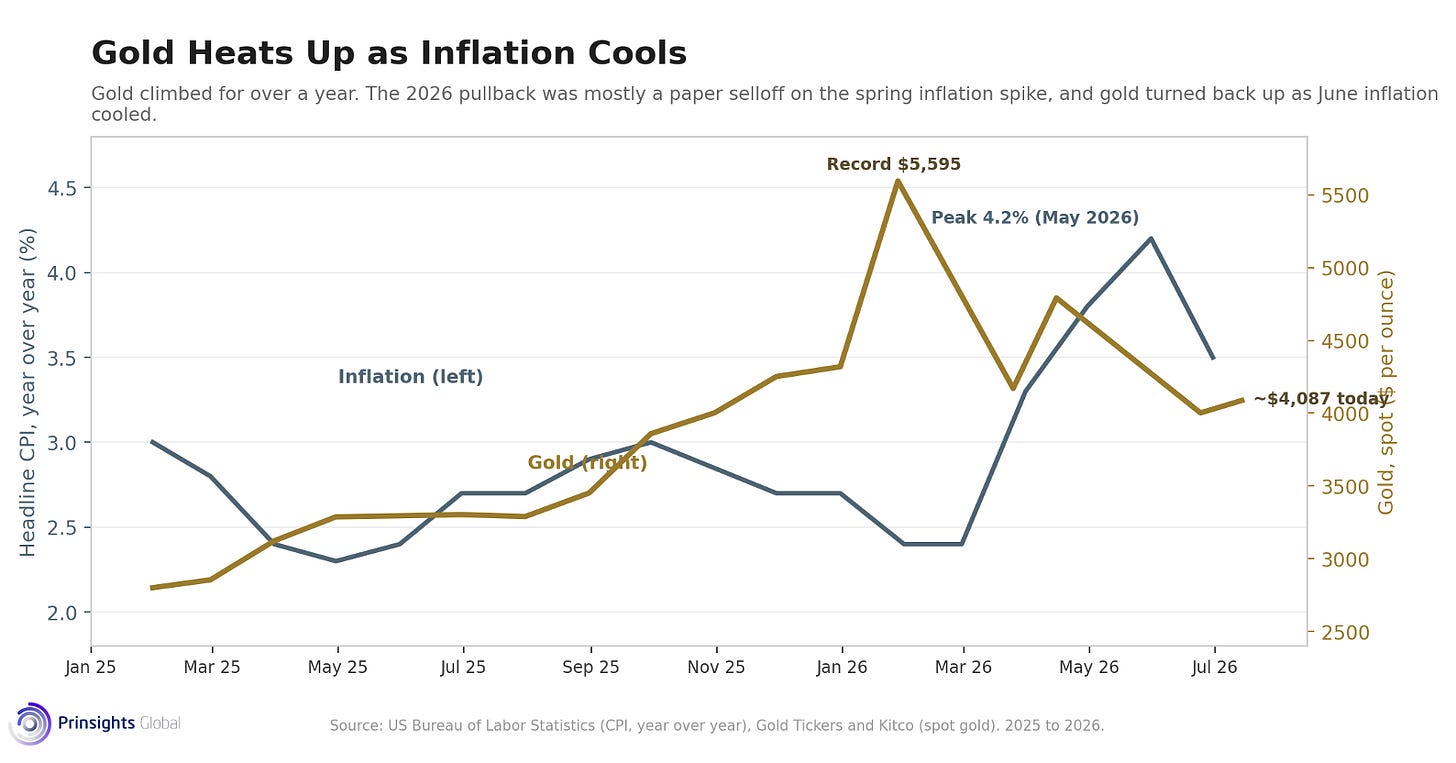
Gold and silver prices, alongside mining stocks, have recently broken out of a feared downside triangle pattern that had dominated since January, signaling a likely end to the correction phase and a nascent trend reversal. Gold’s rebound of approximately $70, or 1.75%, off a robust support zone between $3,900 and $4,100, coupled with the MACD turning positive and holding key support from late last year, suggests growing technical momentum. However, confirmation hinges on gold closing decisively above $4,100 and eventually surpassing the $4,300 to $4,600 resistance zone, which would validate that recent weakness has run its course despite headwinds from rising energy prices and inflation expectations.
Silver’s technical setup remains particularly compelling, having broken out from a massive six-decade cup and handle pattern by surpassing the critical $50 resistance level in fall 2025—a level now serving as strong support. The subsequent pullback from the $121 peak in January was a healthy re-test of this breakout, with RSI indicators confirming that silver corrected from an overbought state to a sustainable range above $50. Unlike previous bull markets that ended near this price, current momentum and structural demand drivers suggest silver’s secular bull market is still in its early stages, poised for a sharp rally potentially reaching $70 to $75 in the near term.
Gold’s technical trajectory is at a pivotal juncture, breaking out of a descending wedge and channel pattern that forecasts a rapid ascent toward $4,400 to $4,500 if key support near $4,000 holds. This level represents a critical decision point; a failure to maintain it could trigger a steep decline toward $3,400, underscoring the importance of monitoring lower highs and resistance breakouts around $3,900 to $4,200. The current setups offer attractive risk-to-reward ratios for long positions, with suggested stop losses near 3,980 for gold and defined entry points for silver, indicating that traders are positioning for a sustained upward move amid technical consolidation and reaccumulation phases.




Miners Poised for Outperformance
High-quality gold and silver miners, trading at historic discounts, are primed to convert rising metal prices into outsized cash flow and shareholder returns as market undervaluation persists.
Selective investment in high-quality silver miners offers a superior risk-reward profile compared to holding physical silver alone, especially when miners are still pricing in silver at levels well below current market prices. Investors are advised to focus on companies with real production, competitive costs, long reserve lives, manageable balance sheets, and financeable growth projects, as these firms can leverage operational efficiencies to amplify free cash flow beyond the metal price increase, despite additional costs such as royalties, maintenance, and environmental obligations. As noted, the true upside lies in miners capable of converting sustained silver prices between $50 and $70 into robust free cash flow, debt reduction, dividends, buybacks, and internally funded growth, underscoring the importance of company quality over timing the metal price amid expected corrections that may resemble bear markets.
Gold miners are currently trading at historically attractive valuations, with many companies priced at just 10-12 times forward-looking earnings despite strong operational fundamentals and clean balance sheets. This undervaluation, highlighted by Rick Rule who notes gold stocks are as cheap as in four decades on a net present value basis, presents a rare buying opportunity amid ongoing consolidation within the broader bull market. Companies like Banyan Gold exemplify this strength, boasting over $65 million in cash, zero debt, and active drilling programs, positioning themselves well for significant value creation as the sector prepares for a major breakout.
The relative underperformance of gold miners compared to bullion this year, particularly reflected in ETFs like GDX, has enhanced their appeal by improving risk/reward dynamics, making them more attractive to investors looking for value. While there remains a risk of further sell-offs during broader market deleveraging events, such dips should be viewed as buying opportunities given the expectation that future market dislocations will prompt substantial Federal Reserve liquidity injections, which historically support precious metals and mining stocks. This strategic outlook is reinforced by central banks’ disciplined accumulation of gold reserves—China alone increased purchases to about 40 tons in the first half of 2026—signaling sustained demand fundamentals that underpin the long-term investment case for miners.
Silver miners stand on the cusp of a technical breakout that could mark the end of recent corrections and the start of renewed bullish momentum, with key support levels around $48 to $50 per ounce providing a solid floor for upside potential. Michael Oliver highlights that silver remains dramatically undervalued relative to gold, copper, commodities, and the money supply, creating a compelling valuation case for silver equities, which are currently cheaper than the metal itself—a rare and ironic opportunity for speculators. Historical precedent from late 2025 shows that aggressive positioning in silver miners can yield rapid and substantial gains, with call options doubling in value within two weeks and share prices rising approximately 30%, underscoring the near-term investment appeal of this sector.




Silver’s Supply Squeeze Deepens
Chronic production deficits and inelastic supply are fueling a structural silver shortage, setting the stage for a secular rally as industrial and monetary demand remain resilient.
Silver’s structural scarcity is underscored by six consecutive annual supply deficits, with Metals Focus projecting a 46.3 million ounce shortfall in 2026, equivalent to about 4.2% of total demand. This persistent deficit persists despite short-term price volatility and demand adjustments, reflecting the market’s chronic inability to replenish physical supply rapidly.
The supply side’s rigidity stems from silver’s unique production dynamics: only about 26-28% originates from primary silver mines, while the majority is a byproduct of lead, zinc, copper, or gold mining. Consequently, even a doubling of silver prices fails to trigger immediate supply increases, as new mine development involves long lead times for exploration, permitting, and construction, making silver’s supply inherently inelastic.
Despite a 3% decline in industrial demand in 2025 due to substitution and efficiency gains, silver’s broad industrial applications in electronics, electric grids, automotive sectors, data centers, and AI infrastructure sustain robust long-term demand. This diversification, coupled with silver’s dual monetary and industrial roles, supports a bullish secular outlook that transcends short-term cyclical fluctuations.
The U.S. designation of silver as a critical mineral in November 2025 marks a pivotal institutional recognition of its economic and strategic importance, highlighting vulnerabilities in its supply chain. This status, combined with ongoing structural deficits and silver’s monetary-industrial duality, reinforces a sophisticated bullish thesis, suggesting that even modest increases in global investment allocations could dramatically impact prices given the slow physical supply response.
Central Banks Fuel Bull Market
Aggressive gold buying by central banks and surging retail futures activity signal a global shift toward precious metals as trust in the dollar erodes and macro volatility intensifies.
Central banks remain pivotal drivers of the precious metals bull market, strategically increasing gold purchases as a hedge against dollar risk and fiscal instability. In Q1 2026 alone, they acquired 244 tonnes of gold—surpassing the five-year average—with China adding about 40 tonnes amid a 28% price drop from peak levels. This disciplined accumulation reflects broad institutional expectations of a declining dollar share in global reserves, as 74% of surveyed central banks foresee a reduced dollar role within five years, reinforcing gold's status as a critical reserve asset amid persistent US national debt growth and dollar weaponization concerns.
Amid easing inflation pressures and a cooling rate hike outlook, precious metals have regained institutional and retail interest, buoyed by geopolitical volatility and shifting macroeconomic dynamics. June’s headline CPI fell 0.4%, the largest monthly drop since 2020, pushing the Fed’s pause odds to 86%, while escalating Middle East conflicts and expectations of Fed and ECB rate cuts have heightened gold’s safe-haven appeal. This confluence has driven gold price volatility into the top fifth percentile since 1971, attracting surging retail trading volumes—Micro Gold futures up 270% and Micro Silver futures up over 1,000% year-to-date—highlighting renewed investor engagement amid uncertainty.
Silver’s unique position as both a critical industrial metal and a safe haven amplifies its macroeconomic and institutional allure, especially given persistent structural supply deficits. Now in its sixth consecutive annual shortfall, silver was 95 million ounces short in 2025 alone, underpinning bullish long-term fundamentals. Its essential role in AI hardware and green energy technologies links industrial demand directly to macro drivers, while institutional flows reflect this dual appeal, with silver ETFs experiencing significant trading activity that dwarfs annual mine production, signaling robust underlying demand beyond speculative paper markets.
Despite a traditionally challenging macro backdrop characterized by a stronger U.S. Dollar, rising bond yields, and elevated rate hike probabilities, precious metals have demonstrated remarkable resilience, suggesting robust underlying demand. Geopolitical tensions in the Middle East, notably the Iran war and Strait of Hormuz standoff, have pushed oil prices higher, reviving inflation risks and strengthening both yields and the Dollar—a rare positive correlation that nonetheless supports commodity sectors including precious metals. This dynamic, coupled with equity market weakness, is prompting a rotation of institutional flows into commodities as a defensive inflation-hedging strategy, with coordinated base setups emerging across metals.