Google, dell, Nvidia push hybrid AI on-prem
The gist
The AI arms race is turbocharging enterprise speed and slashing costs, but new on-prem power moves from Google, Dell, and NVIDIA are exposing a pricey path to scale.
What to know
- Google’s Gemini 3.5 Flash is wooing giants like Shopify and Salesforce with 4× faster AI and 40% lower costs, aiming to reach a billion users by 2026.
- Dell and NVIDIA’s AI Factory is flipping the economics for over 5,000 enterprises—delivering up to 10× lower cost per token and break-even versus cloud in just three months.
- Hybrid AI is now the enterprise default, blending cloud flexibility with on-prem security and speed as firms scramble to balance innovation, compliance, and budgets.
Gemini’s Billion-User Gamble
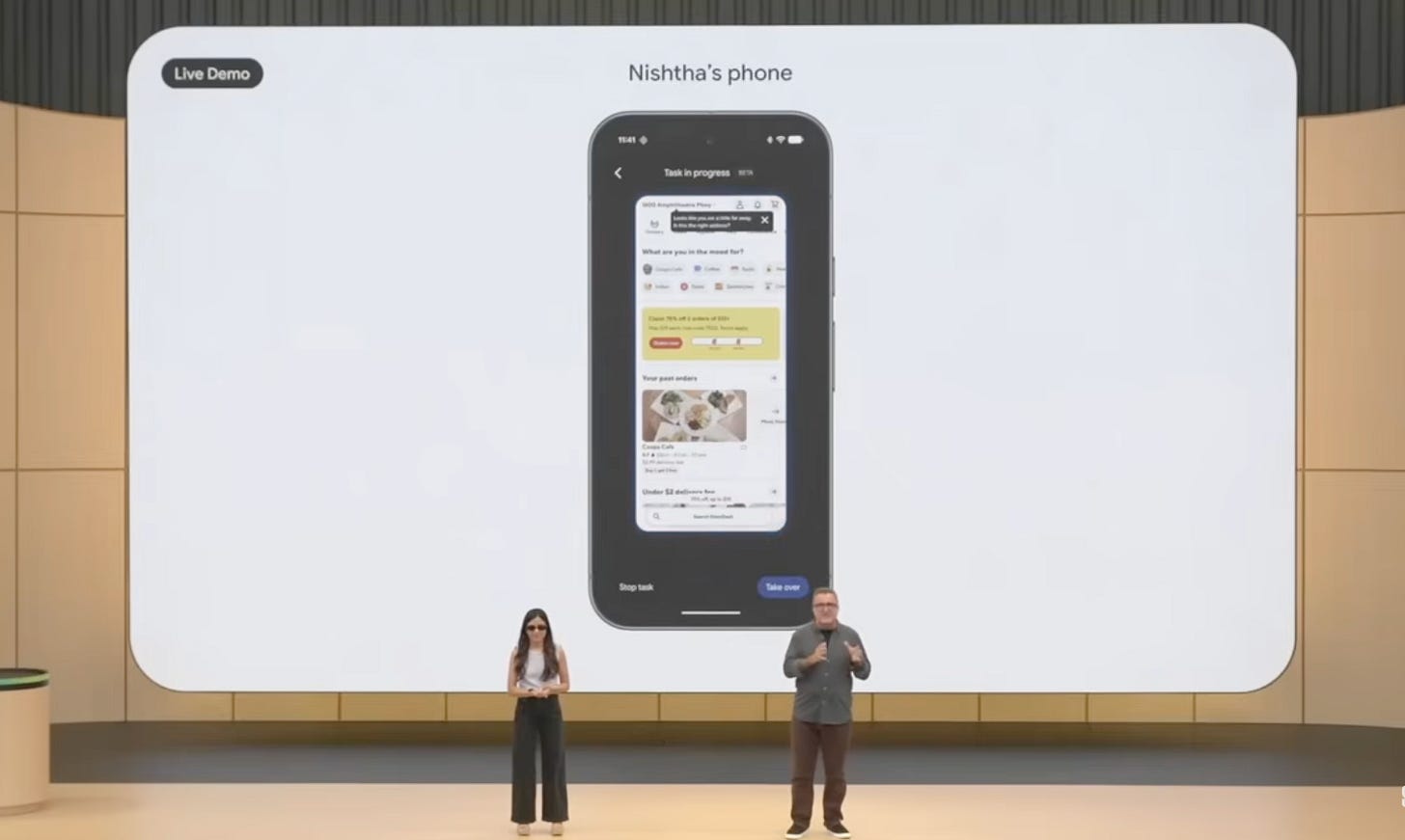
Google’s Gemini 3.5 Flash is driving mass adoption with unmatched speed and cost savings, but its consumer-centric, vertically integrated approach is reshaping AI economics and forcing enterprises to rethink scale and cost management.
Google’s Gemini 3.5 Flash has emerged as a powerhouse in enterprise AI for 2026, boasting a remarkable 4× speed increase and 40% cost reduction compared to its flagship predecessor. This leap in performance and efficiency has driven adoption by major players like Shopify, Macquarie Bank, and Salesforce, underscoring strong market confidence in its capabilities. By early 2026, over a billion users engaged with Gemini’s AI mode and search features, reflecting its broad consumer appeal beyond niche coding applications.
Despite its blazing speed and agentic power, Gemini 3.5 Flash introduces a costly operational reality for enterprises scaling advanced AI, echoing Red Hat’s warnings about AI economics. Google’s vertically integrated stack and consumer-focused strategy differentiate it from competitors like Anthropic and OpenAI, who concentrate more on coding AI tools. This world-models approach aims to create versatile AI systems capable of handling diverse inputs and outputs, potentially broadening AI’s utility but also complicating cost management for large-scale deployments.


Dell-NVIDIA: Factory Model Risks
Dell and NVIDIA’s AI Factory slashes costs and deployment times with an integrated hardware-software stack, but its factory-built model deepens vendor lock-in and raises the stakes for future flexibility across enterprise IT.
By mid-2026, Dell and NVIDIA have firmly established their AI Factory platform as a cornerstone for cost-efficient, high-performance on-prem AI infrastructure, boasting over 5,000 enterprise customers including Lilly, Samsung, and Honeywell. This integrated hardware-software stack combines Dell’s refreshed PowerRack servers with NVIDIA’s cutting-edge Blackwell GPUs and Vera Rubin NVL72 platform, delivering up to 10× lower cost per token and 5× inference performance improvements. Dell COO Jeff Clarke highlights that some enterprises achieve break-even against public cloud API costs within just three months, underscoring the platform’s economic viability for continuous, agentic AI workloads that demand low latency and data sovereignty.
Dell’s innovations extend beyond raw hardware to a vertically integrated ecosystem that includes advanced cooling solutions, AI Data Orchestration engines, and unified runtimes like NVIDIA OpenShell, which provide robust security features such as policy isolation and sandboxing. This comprehensive approach addresses enterprise concerns around data privacy and governance, enabling secure deployment of frontier AI models on-premises while maintaining compliance. Furthermore, Dell’s AI Factory supports seamless scaling from deskside workstations running NVIDIA NemoClaw software to liquid-cooled rack-scale systems, allowing enterprises to prototype locally and scale without refactoring, a critical capability validated with partners like Mistral and Google Gemini.
The strategic partnership between Dell and NVIDIA is not only technological but also operational, emphasizing supply chain scaling and industry-specific blueprints that simplify AI deployment across sectors such as healthcare and industrial manufacturing. By integrating servers, networking, storage, and AI orchestration tools into repeatable, factory-built solutions, they reduce the months-long integration bottleneck that traditionally hampers enterprise AI adoption. However, this factory-built model introduces vendor lock-in risks, as enterprises become increasingly dependent on the combined Dell-NVIDIA stack and certified partner ecosystems, making future changes in AI models or hardware suppliers potentially costly and politically complex within IT organizations.
Dell and NVIDIA’s vision for on-prem AI infrastructure reflects a broader paradigm shift towards localized, context-aware intelligence that runs where the data and action reside. As NVIDIA CEO Jensen Huang states, 'Intelligence has to be performed produced at the point of context,' a principle that drives their development of specialized hardware like the Vera CPU—the highest performing single-threaded CPU globally—and liquid-cooled PowerEdge servers optimized for continuous agentic AI workloads. This shift enables enterprises to transform human-to-human workflows into tokenized, agent-to-agent processes within secure, scalable AI factories, fundamentally reshaping enterprise operations while mitigating the prohibitive costs and latency of cloud-only AI strategies.


Hybrid AI: Control Meets Compliance
Enterprises are pushing AI workloads on-premises for speed, cost, and regulatory reasons, with Dell’s portable infrastructure kits enabling secure, scalable AI while sidestepping cloud bottlenecks and compliance risks.
By 2026, enterprises are embracing a sophisticated hybrid AI architecture that strategically distributes workloads across on-device, on-premises, and cloud environments to optimize latency, data sovereignty, and cost efficiency. Dell champions this three-tier model, emphasizing that local inference not only accelerates experimentation and enhances privacy but also addresses growing cloud AI compute capacity constraints, which have become a bottleneck for large organizations. This nuanced approach reflects a pragmatic balance between leveraging cloud scalability and maintaining control over sensitive data and operational agility.
The surge in agentic AI workloads and the imperative to safeguard proprietary data have propelled a decisive shift toward on-premises AI deployments, where intelligence is generated at the point of context. Jensen Huang of NVIDIA underscores that manufacturing and other data-sensitive industries prefer running autonomous agents on-premises to keep secure data and specialized skills close to home. Dell’s 'deskside to data center' strategy exemplifies this trend, offering a continuum of AI infrastructure from local workstations to liquid-cooled rack-scale systems, thereby reducing latency, governance risks, and exorbitant bandwidth costs associated with cloud routing.
Economic viability and regulatory compliance are central drivers for extending AI workloads on-premises rather than repatriating cloud tasks wholesale. Dell reports that on-prem AI solutions can be up to 63% more cost-effective than public cloud alternatives, with deskside AI delivering savings as high as 87%. Furthermore, industries governed by HIPAA, FERPA, and similar regulations increasingly rely on Dell’s portable, all-in-one AI infrastructure kits that consolidate storage, compute, and networking, ensuring data sovereignty and privacy without sacrificing scalability. This hybrid extension model enables enterprises to optimize workflows, reduce latency, and leverage existing data assets securely and cost-effectively.
The complexity of scaling AI across fragmented enterprise environments has sparked demand for unified AI stacks and comprehensive software platforms that enforce governance, security, and operational control. Dell’s AI Factory program and AI Data Orchestration engine provide repeatable blueprints and integration components that streamline the transition from pilot projects to production, addressing the costly and intricate AI on-ramp challenge. Strong governance frameworks, including rigorous access controls and data lineage tracking, are essential to prevent data leaks and unauthorized actions, especially as thousands of autonomous AI agents proliferate within organizations. CIOs increasingly favor vendor-supported, maintainable AI software stacks over bespoke pipelines, underscoring the industry's pivot toward secure, scalable, and economically viable hybrid and on-prem AI solutions.