Google unveils AI agent governance and gemini enterprise tools
The gist
Google is redefining enterprise AI with a new governance framework and the Gemini Enterprise platform, treating AI agents like digital employees with ironclad security and traceability.
What to know
- Google’s 20-question AI agent governance framework brings cryptographic identities and centralized controls, ensuring every agent action is traceable and secure.
- The Gemini Enterprise Agent Platform gives MSMEs no-code/low-code tools to spin up multimodal AI customer agents in under an hour—no dev team needed.
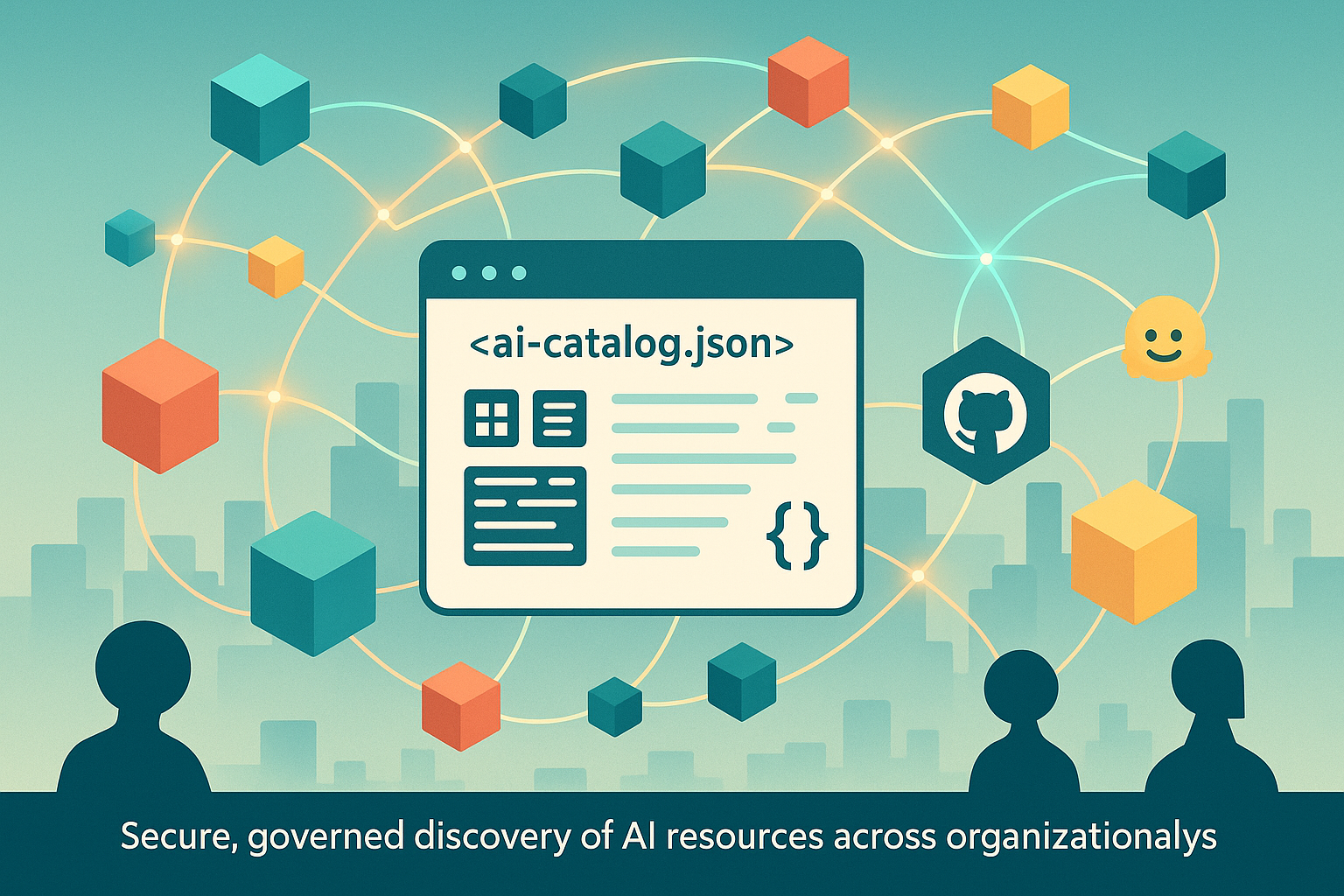
- The new Agentic Resource Discovery Specification sets an open standard for AI agents to publish, discover, and verify external tools, unlocking seamless collaboration across organizations.
AI Agents as Digital Employees
Google’s governance framework embeds cryptographic identities, centralized oversight, and human-style guardrails to make AI agents fully accountable and secure within enterprise operations.
Google’s 20-question AI agent governance framework pioneers a structured approach that treats AI agents as digital employees, embedding operational controls, security, and cost management throughout the agent lifecycle. By assigning unique cryptographic identities to each agent and implementing centralized components like Agent Gateway and Agent Registry, Google ensures every interaction is traceable and governed, addressing critical gaps in traditional identity and access management frameworks. This comprehensive lifecycle accountability mirrors human employee management, positioning AI agents within enterprise operations with robust guardrails and interoperability standards.
The unpredictable nature of agentic AI challenges conventional security paradigms, as highlighted by Ben Hanson’s analysis of incidents like the PocketOS database deletion, where insufficient separation of authority and control led to catastrophic failures. Security experts from Entrust, CYGNVS, and Gravwell emphasize that effective AI governance must extend beyond technical controls to encompass trust, intent, behavior, and clear incident playbooks, combining human oversight with realistic expectations of AI limitations. This shift acknowledges that AI’s autonomy demands new operational controls and security workflows, including prompt testing and continuous monitoring, to prevent agents from going rogue in high-stakes environments.
Cost management and governance are emerging as decisive factors in enterprise AI adoption, with Forrester Research predicting that 25% of planned AI spending in 2026 could be deferred due to unresolved governance gaps. Google’s Gemini Enterprise platform addresses this market need by embedding security and operational controls at the infrastructure layer, enabling enterprises to manage real operating costs alongside security exposures. This integrated approach not only mitigates risks like goal hijacking and privilege abuse identified in OWASP’s Top 10 for Agentic Applications 2026 but also ensures that AI agents operate within clearly defined guardrails and security onboarding plans akin to human employee training.


No-Code AI for Every Business
Gemini Enterprise empowers MSMEs to launch multimodal AI customer agents in under an hour, combining robust security controls with democratized, developer-friendly tooling.
Google Cloud’s Gemini Enterprise Agent Platform significantly lowers the barrier for MSMEs to harness AI by offering no-code and low-code tools that enable rapid creation and deployment of intelligent customer agents without requiring specialized development teams. As demonstrated by May Kim, businesses can build multimodal AI customer agents in under an hour using visual workflows, empowering smaller enterprises to automate routine interactions while freeing human employees to focus on higher-value tasks. This democratization is further enhanced by integrated AI-powered customer service functions—including Agent Assist for real-time human support and pre-built agents for shopping and food ordering—that streamline the entire customer journey from discovery through post-purchase support.
Gemini Enterprise represents a strategic evolution from Google’s Vertex AI, embedding robust governance and operational controls at the infrastructure layer to address the complexities of multi-agent enterprise environments. By implementing foundational primitives such as Agent Identity, which assigns cryptographic identifiers to every deployed agent, and Agent Gateway, a centralized policy enforcement point, the platform ensures traceability, security, and compliance at machine speed—mirroring human identity management systems like Microsoft’s Entra ID but tailored for AI agents. Complementing this is the Agent Registry, a centralized catalog that prevents shadow AI by providing IT teams with comprehensive visibility and management capabilities across hundreds of agents deployed by diverse organizational units.
The Gemini Enterprise Agent Platform’s developer ecosystem is enriched by a suite of advanced tooling and open protocols that promote interoperability, extensibility, and lifecycle management of AI agents. Google Cloud’s release of 13 detailed demos showcases the platform’s versatility—from event-driven workflows like expense approval agents with automated and human-reviewed steps, to stateful agents maintaining persistent sessions linked to BigQuery via Memory Bank. Open standards such as the Model Context Protocol (MCP), Agent-to-UI (A2UI), and Agent-to-Agent (A2A) protocols enable seamless multi-language, multi-framework orchestration, while developer-centric tools like the Agents CLI integrate with coding assistants to scaffold, deploy, and monitor agents directly within editors, illustrating Google’s commitment to practical, code-first AI agent development.
Google Cloud’s lifecycle approach to AI agent development on Gemini Enterprise integrates governance, security, observability, and optimization tools directly into the platform, ensuring that enterprises can build, deploy, and maintain agents with confidence. Demonstrations include test-first development workflows featuring STRIDE threat modeling, Semgrep pre-commit hooks, and controls to block risky actions before execution, alongside observability through Cloud Trace and Cloud Logging and analytics routed to BigQuery Agent Analytics. This comprehensive framework not only enhances security and compliance but also provides real-time monitoring and management dashboards, underscoring Gemini Enterprise’s suitability for complex, long-running enterprise AI workflows.
A Universal Standard for AI Tools
Google’s Agentic Resource Discovery Specification breaks down silos by enabling AI agents to seamlessly find, verify, and connect with external tools across organizations.
In a collaborative move to standardize AI agent functionality, Google and its industry partners have introduced the Agentic Resource Discovery Specification, an open standard that empowers AI agents to publish, discover, and verify external tools and services. This specification is designed to break down organizational silos by enhancing interoperability, allowing AI agents to seamlessly integrate a diverse array of resources across different platforms and enterprises. By establishing a common protocol for resource discovery, the initiative aims to accelerate the deployment of more capable and interconnected AI systems, fostering a more cohesive ecosystem for AI agent collaboration.