Google’s AI-first search sparks user revolt, fuels DuckDuckGo surge amid privacy and accuracy backlash
The gist
Google’s AI-first search overhaul has sparked a user revolt, driving privacy-focused competitors like DuckDuckGo to record growth as backlash over forced AI features boils over.
What to know
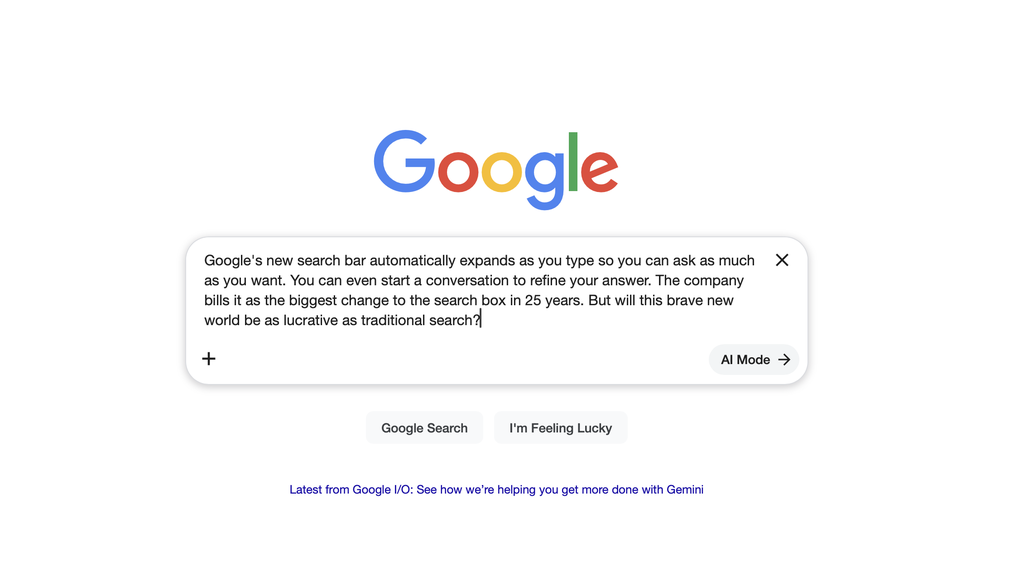
- Google’s mid-2026 launch of its Gemini 3.5-powered Intelligent Search Box embedded AI agents and subscription-gated personalization—without giving users a true opt-out.
- User frustration over privacy, AI inaccuracies (like the infamous 'disregard' bug), and loss of search control has fueled a 33% week-over-week surge in U.S. DuckDuckGo app installs and tripled no-AI search traffic.
- With Microsoft scaling back its AI co-pilot and rivals like Brave and Mozilla rolling out AI-optional features, the industry is shifting toward respecting user choice as trust in Google’s AI reliability falters.
Google’s AI Search Overhaul
Google is transforming search into a subscription-driven, agent-powered ecosystem that blends classic results with personalized AI features and hardware integration, aiming to outpace AI-native rivals.
By mid-2026, Google aggressively advanced its AI-First Search vision, unveiling the Gemini 3.5 Flash-powered Intelligent Search Box that supports conversational queries, persistent autonomous agents, and personalization features gated behind subscription tiers. This strategic overhaul aims to compete head-on with AI-native rivals like OpenAI and Anthropic by transitioning from the traditional '10 blue links' model to a more agentic, always-on search experience that anticipates user needs and manages tasks proactively.
Google’s AI integration extends beyond software into hardware and ecosystem-wide initiatives, including AI-powered smart glasses co-developed with Samsung and personal assistant tools like Gemini Spark. This broad push reflects Google's ambition to create a differentiated, deeply personalized user experience that leverages multimodal AI capabilities and planetary-scale deployment across its vast infrastructure.
To balance innovation with reliability, Google maintains classic search results alongside AI-generated summaries and agentic content presentations, addressing concerns from publishers and regulators about traffic and content usage. Features like the 'Preferred' badge for user-designated trusted sources and new AI-driven formats such as scrollable article carousels and 'Highly Cited' labels underscore Google’s effort to enhance user trust and diversify content discovery within its AI-first framework.
Google’s AI-first search reflects a fundamental shift in user behavior toward conversational, full-sentence queries and interactive follow-ups, prompting the company to embed agentic capabilities that monitor topics over time and provide actionable summaries, for example from YouTube videos. However, this transformation has met mixed user reactions, with some opting for alternatives like DuckDuckGo that offer easier AI opt-out options, highlighting the nuanced reception to Google’s AI-driven search evolution.





User Backlash Intensifies
Forced AI integration, privacy fears, and persistent errors have driven users to seek workarounds and abandon Google for alternatives that offer true control over search.
The rollout of Google's AI-powered 'Information Agents' and AI Overviews has sparked significant user backlash due to privacy concerns and the forced nature of AI integration without opt-out options. Users have expressed frustration over the loss of manual search control and the requirement to share detailed personal data, which has intensified fears about privacy and data collection. This unease is compounded by frequent AI inaccuracies, such as the notorious 'disregard' search bug that replaced dictionary definitions with irrelevant chatbot replies, undermining trust and fueling demands for the ability to bypass AI features altogether.
Despite Google positioning AI summaries as a 'core Search feature' that cannot be disabled, users have sought workarounds like appending '-AI' to queries or enabling the 'Web filter' to reclaim a traditional search experience. This lack of an official opt-out has driven many toward alternatives like DuckDuckGo and Brave Search, which prominently offer easy toggles to disable AI features. DuckDuckGo, in particular, has capitalized on this demand, reporting a surge in U.S. app installs—up to 33% week-over-week on iOS—and a tripling of no-AI search traffic, as CEO Gabriel Weinberg criticized Google's 'force-feeding AI with no way to opt out.'
The backlash against Google's AI-first search approach is not only driven by technical flaws but also by user nostalgia for the classic '10 blue links' format and a desire for predictable, straightforward results. Social media users have highlighted persistent AI errors, including hallucinated letters and spelling mistakes, which degrade the search experience and contribute to growing AI fatigue. This sentiment has fueled measurable growth for AI-free alternatives like DuckDuckGo and the Vivaldi browser, though experts note that despite these gains, Google's dominant market share remains largely intact, with some users eventually returning to Google out of habit or for more reliable results.
Industry players are beginning to acknowledge user resistance to forced AI integration, with Microsoft announcing plans to scale back aggressive AI promotions like Co-Pilot in response to backlash. Meanwhile, the trend toward user control over AI in search is gaining momentum, as seen in the rise of 'anti-AI' or 'AI-optional' products from companies such as Brave and Mozilla. This shift underscores a broader market demand for search experiences that respect user choice and privacy, challenging the prevailing notion that AI must be ubiquitously embedded and non-negotiable in search engines.

DuckDuckGo’s Surge Explained
DuckDuckGo’s promise of AI-optional search and privacy has triggered massive growth as users flee Google’s ‘force-fed’ AI, even as most still rely on Google for certain results.
In response to Google's AI-first search overhaul, which integrates AI features without offering users an opt-out, competitors like DuckDuckGo and Brave have capitalized on growing user dissatisfaction by emphasizing privacy and AI-optional search experiences. DuckDuckGo, in particular, has seen a dramatic surge in U.S. app installs—up to 30% in the week following Google's May 2026 announcements—with iOS downloads peaking at nearly 70%, underscoring a clear market shift toward alternatives that prioritize user control over AI integration. CEO Gabriel Weinberg has openly criticized Google's 'force-fed' AI approach, positioning DuckDuckGo as a user-centric refuge where AI can be toggled off entirely, a feature that resonates strongly with users seeking traditional, link-based search and greater privacy protections.
This surge in AI-free search alternatives is not isolated to DuckDuckGo; other players like Brave and Mozilla have introduced 'anti-AI' or AI-optional products, reflecting a broader market trend driven by user demand for privacy and granular AI control. Despite Google's dominant market share making these gains relatively small in absolute terms, the rapid growth in visits to DuckDuckGo's no-AI search page—tripling in traffic and rising by over 20% week-over-week—demonstrates a palpable fatigue with AI-driven search experiences perceived as intrusive or mandatory. This shift is further evidenced by Microsoft’s decision to scale back the prominence of its AI co-pilot, signaling that major tech companies are attuned to user pushback against forced AI integration.
User sentiment around AI in search is deeply polarized, often fueled more by headlines and social media narratives than by actual product experience, which complicates the competitive landscape. While Google maintains that AI mode is optional and unchanged in functionality, the perception of AI being 'force-fed' has driven significant user migration to AI-free alternatives like DuckDuckGo, which deliberately separates AI-powered tools from its traditional search experience to meet this demand. However, despite these gains, many users eventually return to Google due to habit or search result preferences, highlighting the challenge for AI-free competitors to sustain long-term market share against entrenched incumbents.



AI Errors Undermine Trust
High-profile AI failures and questionable internal data have eroded confidence in Google’s AI Search, with critics highlighting unreliable answers and global skepticism about AI-driven results.
By late May 2026, concrete examples of AI errors in Google's new AI Search feature have surfaced, notably with searches for terms like 'disregard' triggering chatbot-style or blank responses instead of straightforward dictionary definitions. These malfunctions, widely highlighted in news reports and social media, reveal frequent spelling mistakes and hallucinated letters within AI overviews, undermining user trust and fueling skepticism about Google's claims of AI Search reliability. Critics have contrasted Google's faltering AI responses with Bing's more effective handling of similar queries, reigniting concerns over the impact of AI-driven answers on search usability and accuracy.
Skepticism about Google's assertions that users prefer AI Search is mounting, as all such claims trace back solely to Google's internal data without independent verification. Analyst Carl Hendy points out that the only third-party research cited, the Google/Ipsos Multi-Country AI Survey 2026, does not directly ask users whether they prefer AI-generated answers over traditional web results, instead measuring general AI tool usage and sentiment. Furthermore, trust in AI for accurate information varies dramatically across countries—from a mere 3% 'great deal' of trust in the US to 49% in Nigeria—highlighting a fragmented global perspective rather than a clear endorsement. Hendy also emphasizes that increased AI feature usage is largely a byproduct of default embedding in search rather than explicit user choice, cautioning that 'usage is not preference.'

Search Market in Flux
Major players and startups are racing to balance AI innovation with user control, as Microsoft, Meta, and DuckDuckGo recalibrate strategies amid mounting resistance to all-in AI search.
By mid-2026, the search ecosystem is undergoing a significant transformation as major players and startups alike innovate with AI-powered tools while grappling with user acceptance. Google’s AI-driven search revamp and the rise of AI agent marketplaces, such as the one co-founded by ex-Twitter CEO Parag Agarwal, aim to diversify content discovery and benefit smaller publishers. However, this AI-first approach has sparked mixed reactions among users, prompting some to seek alternatives that prioritize user control over AI integration.
DuckDuckGo has emerged as a prominent beneficiary of user pushback against forced AI integration, capitalizing on demand for AI-free or AI-optional search experiences. Its no-AI search page visits tripled, and U.S. app installs surged by 18.1% week-over-week, peaking at nearly 70% growth on iOS in late May 2026. CEO Gabriel Weinberg openly criticized Google's lack of an AI opt-out, positioning DuckDuckGo as a user-centric alternative that offers granular control, a strategy that resonates amid growing resistance to AI-first search models.
Microsoft and Meta are also recalibrating their AI search strategies in response to evolving user sentiments and competitive pressures. Microsoft acknowledged backlash by announcing plans to reduce the prominence of its AI co-pilot features, signaling a more cautious approach to AI integration. Meanwhile, Meta’s AI search offerings, though perceived as less compelling compared to Google’s Gemini or Microsoft’s co-pilot, maintain a substantial user base due to deep platform integration and extensive data access, underscoring the varied competitive dynamics shaping the AI search landscape.
Google finds itself in a strategic quandary, balancing rapid AI innovation with the risk of alienating users who prefer traditional search experiences. The company faces competition from AI-first entrants like Perplexity, which have begun eroding Google’s search dominance. Despite some user resentment, the convenience of integrated AI tools like Google Gemini and Microsoft’s co-pilot continues to drive high engagement, with monthly users nearing a billion, illustrating the complex interplay between innovation, user preferences, and competitive positioning in the evolving search ecosystem.
