GRC goes real-time: automation, AI, and human oversight redefine compliance in 2026
The gist
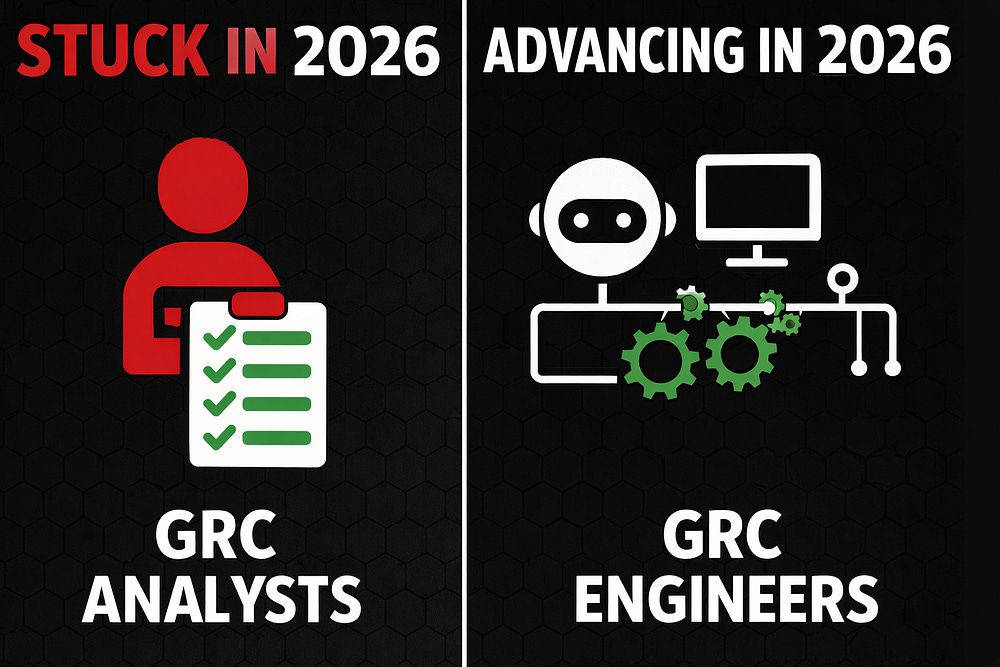
Compliance in 2026 is no longer a box-ticking afterthought—it's a real-time, AI-powered, human-guided business engine that leaves spreadsheets (and annual audits) in the dust.
What to know
- GRC Engineers now automate real-time control validation and tamper-resistant logs, making traditional audits obsolete and scaling compliance exponentially.
- Human-in-the-loop governance is mandatory: AI-powered compliance tools require explicit human approval for key actions, keeping firms accountable and regulators happy.
- New regulations like NIS2, DORA, and SEC rules drive the adoption of integrated, API-first RegTech platforms, while firms race to unify compliance across borders and keep pace with 247,500+ annual regulatory updates.
GRC Talent Transformed
The rise of engineering-driven compliance is forcing organizations to replace manual, checklist-based roles with automation-savvy professionals who embed governance directly into code and cloud systems.
By late 2025, the governance, risk, and compliance (GRC) landscape was already pivoting sharply from traditional manual methods like spreadsheets and checklists toward engineering-centric skill sets. Organizations began demanding professionals who could automate evidence collection, integrate controls with cloud logs, and implement policy-as-code workflows, effectively embedding governance into scalable, automated systems. This engineering-driven approach not only modernizes compliance but also aligns with emerging regulatory complexities introduced by frameworks such as the EU AI Act and NIST AI RMF, which require sophisticated identity governance and AI system classification capabilities.
As 2026 unfolded, the divide between GRC Analysts and GRC Engineers became stark: while analysts remained mired in descriptive, manual compliance tasks producing static reports, engineers were building automated control systems that make non-compliance difficult by design. This transition to continuous assurance—characterized by system-generated evidence, tamper-resistant logs, and real-time control validation—rendered traditional annual audits and manual sampling obsolete. The economic implications were clear; as one analysis noted, "A GRC Engineer scales exponentially through automation, whereas a GRC Analyst scales linearly," influencing hiring and promotion decisions amid budget constraints.
The 'shift-left' movement gained momentum by mid-2026, with companies like HoundDog.ai pioneering continuous, code-level compliance embedded early in the development lifecycle. This evolution transformed static privacy documents such as ROPAs and DPIAs into dynamic, living reports that evolve alongside the codebase, enabling proactive data minimization rather than reactive fixes. Concurrently, the explosion of shadow AI and unsanctioned third-party integrations—over 1,000 detected by HoundDog.ai’s scanner alone—demanded GRC professionals adopt automated tools capable of detecting and governing these risks at the code level, underscoring the necessity of engineering skills in modern compliance.
By mid-2026, AI adoption in buy-side compliance had moved decisively from pilot projects to integrated operational tools that enhanced efficiency, scalability, and analytical depth across functions like communications surveillance and trade analysis. This shift prompted firms to reassess manual processes, favoring automation and technology-driven workflows that free compliance professionals for higher-value, judgement-led work. However, this technological leap also intensified the need for robust AI governance frameworks addressing accountability, risk assessments, and multi-jurisdictional regulatory divergence. Platforms like those highlighted by Forvis Mazars US exemplify this next-generation GRC transformation, offering connected, AI-enabled workflows that improve audit management, control documentation, and executive reporting while maintaining essential human oversight amid growing regulatory pressures and fragmented tooling.


AI Needs Human Judgment
Mandatory human-in-the-loop oversight ensures that AI-powered compliance remains ethically accountable, with audit trails documenting every critical human decision behind automated actions.
Human-in-the-loop governance is the cornerstone of ethical responsibility and accountability in AI-driven compliance, ensuring that automation does not operate unchecked. As emphasized in multiple analyses and interviews from late 2025, AI systems function as assistive partners that propose actions but require explicit human approval before execution, maintaining transparency and auditability. This dynamic partnership accelerates compliance tasks—transforming hours of manual effort into streamlined processes—while preserving the indispensable role of human judgment, moral guidance, and contextual understanding that AI alone cannot replicate.
Accountability in AI-enabled governance hinges on robust organizational policies mandating human review and clear assignment of responsibility, as underscored by compliance leaders and regulatory frameworks like the DOJ’s guidance. Audit logs predominantly capture human decisions authorizing AI actions, reinforcing that firms—not their technologies or vendors—bear ultimate responsibility for compliance outcomes. This insistence on human oversight is critical to meet legal expectations and prevent the pitfalls of unvetted AI outputs reaching decision-makers, ensuring that compliance programs remain auditable and ethically sound.
By mid-2026, as AI transitions from pilot projects to mainstream buy-side compliance practice, industry consensus highlights the necessity of balancing automation with human judgment to navigate complex, multi-jurisdictional regulatory landscapes. Effective AI governance frameworks now emphasize comprehensive risk assessments, escalation protocols, and cross-functional collaboration among compliance, technology, operations, and senior leadership. This holistic approach not only manages operational complexity but also fosters organizational change management, addressing challenges such as resistance from professionals unfamiliar with AI’s value, thereby accelerating adoption and maximizing the technology’s transformative potential.

Continuous Compliance Mandate
Regulations like NIS2 and DORA now require real-time, dynamic identity and AI risk management, pushing firms to unify controls and prove compliance across rapidly shifting digital environments.
By mid-2026, regulatory frameworks such as NIS2, DORA, and SEC cybersecurity disclosure requirements have evolved from advisory guidelines into stringent mandates demanding continuous, auditable identity posture management. These regulations compel organizations to enforce operational standards like MFA, least-privilege access, and privileged account inventories, while producing real-time evidence of compliance and incident readiness. IAM leaders now face the imperative not merely to adopt continuous identity posture management (ISPM) but to ensure their programs dynamically track rapid changes in identity environments—including non-human and AI identities—and enable swift remediation to preempt breaches, distinguishing proactive security from mere post-incident documentation.
Financial services firms are grappling with the challenge of embedding AI governance within existing regulatory frameworks that vary across jurisdictions, necessitating continuous, scalable compliance solutions that operate consistently yet respect local nuances. This shift redefines the traditional three lines of defence by moving governance and controls into the first line, integrating monitoring and explainability into AI systems from inception. Heightened regulatory focus on operational resilience and vendor oversight further drives adoption of integrated RegTech platforms capable of managing AI risks, vendor due diligence, and contingency planning, as emphasized by the FCA’s principles-led approach demanding demonstrable governance and ongoing assurance post-deployment.
Amid mounting operational complexity, accelerating technological change, and intensifying investor scrutiny, buy-side firms are abandoning outdated compliance scaling models in favor of integrated technology and outsourcing that enable continuous, scalable compliance. AI is transitioning from pilot projects to embedded operational tools that enhance efficiency and analytical depth by automating communications surveillance, policy reviews, and large-scale data analysis, surfacing patterns undetectable by manual review. However, robust governance frameworks remain essential to meet regulatory expectations, requiring clear accountability and nuanced risk assessments, especially in multi-jurisdictional contexts where firms cannot rely solely on vendor assurances.
The rapid expansion and complexity of global regulations—including NIS2, DORA, GDPR-style privacy laws, and emerging AI, climate finance, and digital asset rules—are overwhelming traditional manual and fragmented compliance processes, creating a costly 'compliance crunch' for firms that delay action until legislation is enacted. Proactive horizon scanning methodologies, like FinregE’s Seven-Step Process, leverage a human-in-the-loop model combining AI scanning with expert legal oversight to detect early regulatory signals and compress implementation timelines from months to weeks. This approach transforms compliance from a defensive cost center into a strategic driver of resilience and growth, a necessity underscored by Info-Tech Research Group’s call for scalable, repeatable regulatory IT response engines that centralize regulation inventories, translate requirements into controls, and continuously adapt to evolving demands.

RegTech: The New Compliance Edge
Integrated, API-first RegTech platforms outpace in-house builds by delivering continuous regulatory updates, scalable automation, and built-in governance that make compliance a competitive differentiator.
By early 2026, the strategic adoption of RegTech platforms had become a clear competitive advantage over internal compliance builds, as these specialized solutions offer deep regulatory expertise and continuous, shared innovation that internal teams cannot replicate. Providers like Arctic Intelligence invest heavily in research and development, enabling platforms to evolve rapidly with regulatory changes and emerging financial crime typologies, delivering upgrades seamlessly to all clients without additional budget approvals. This continuous evolution embeds regulatory alignment by design, accelerating audits and reducing costly remediation, while automating workflows and embedding governance to free compliance teams from administrative burdens.
The transition from legacy RegTech to AI-powered, integrated compliance ecosystems marks a strategic reassessment of entire technology stacks rather than piecemeal upgrades. Leading compliance teams now prioritize flexible, API-first platforms that support custom AI-native workflows and seamless interoperability across jurisdictions and business units, enabling unified risk views and real-time data replication. This architectural shift, exemplified by event-driven mesh designs and multi-tenant distributed infrastructures spanning global hubs like London, Singapore, and the US, eliminates throughput ceilings and ensures operational resilience, security certifications, and external validations become baseline expectations.
Despite vendors overwhelmingly emphasizing AI and automation—with 91.67% expecting these areas to dominate investment—financial institutions adopt a more cautious, compliance-first stance, focusing on foundational technologies such as modern data architecture, cloud migration, cryptography, and privacy-enhancing tools. As Scott Nice highlights, institutions prioritize governance, explainability, and oversight over autonomous AI deployment, reflecting the need for confidence in regulated environments. This divergence underscores that successful AI-driven RegTech adoption depends on robust 'plumbing' that supports safe, scalable integration rather than rushing into agentic automation.
The RegTech market’s explosive growth—projected to reach USD 93.48 billion by 2032 at a 21.33% CAGR—reflects a broad strategic shift from fragmented manual controls to integrated, AI-enhanced platforms that unify customer identity, transaction behavior, regulatory rules, and reporting workflows. This evolution includes a move from rule-based engines to hybrid systems combining behavioral analytics and network analysis, improving suspicious activity detection while reducing false positives. Moreover, RegTech adoption is expanding beyond traditional banking into fintech, digital assets, insurance, gaming, and telecom financial services, driving demand for globally scalable, configurable platforms with centralized governance and cloud-based deployment where regulators permit.

Global Rules, Local Realities
Fragmented AI regulations and relentless rule changes force firms to adopt intelligence-driven compliance models and multi-tenant architectures that balance global oversight with strict local data laws.
By mid-2026, global organizations, especially in financial services, grapple with the complexity of navigating a fragmented AI regulatory landscape that spans prescriptive to principles-based frameworks, requiring consistent governance across jurisdictions while meeting local mandates. This challenge is compounded by operational dependencies on a limited vendor pool, necessitating rigorous due diligence and resilience planning, as well as the embedding of AI governance into first-line defense functions to ensure continuous monitoring and explainability from the outset. Firms like Bally’s, operating across 13 licensed jurisdictions, exemplify the need for intelligence-driven compliance models that integrate diverse data sources and maintain oversight without breaching data residency laws, leveraging multi-tenant architectures spanning London to Singapore to keep sensitive data within legal boundaries.
The sheer volume and pace of regulatory change—highlighted by Vixio’s finding of 247,500 global regulatory updates in 2024—render manual compliance processes obsolete, pushing firms to adopt unified, AI-powered platforms that automate horizon scanning, triage, and impact analysis with auditable workflows. Platforms like Vixio’s Horizon Scanning and Smart Inbox have become indispensable, described by users as “the Bible” for regulatory intelligence, enabling firms to proactively manage fragmented rules across multiple jurisdictions and avoid compliance bottlenecks that could stall business expansion. This evolution transforms compliance teams from reactive enforcers into proactive informers, providing foresight on regulatory shifts and their business implications, a shift underscored by Roseanne Spagnuolo’s assertion that “regulatory change management is no longer just a line item in the compliance budget. It’s critical infrastructure.”
Success in multi-jurisdictional AI governance increasingly hinges on building integrated, intelligence-driven operating models that unify disparate legacy systems and data silos into a cohesive compliance ecosystem. As ACA Group experts emphasize, without consistent data models and connected workflows, AI risks amplifying complexity rather than enhancing oversight, especially as regulators themselves deploy advanced analytics to detect misconduct at scale. Frameworks like EC-Council’s Adopt. Defend. Govern. AI (ADG), co-developed with industry leaders including Citi and Microsoft, serve as critical translation layers aligning diverse standards such as the EU AI Act, NIST AI RMF, and ISO/IEC 42001 into a common operational floor, enabling firms to maintain holistic, auditable oversight in an increasingly AI-enabled regulatory environment.
Amidst rapidly evolving AI regulations that outpace traditional corporate policy updates, firms face operational fragility due to information asymmetry—a challenge FinregE addresses with a human-in-the-loop compliance model where AI handles large-scale regulatory data scanning but final legal interpretation remains with experts. Their Seven-Step Horizon Scanning Process compresses compliance implementation timelines from months to weeks, reducing costly last-minute remediation and enforcement risks. This proactive, continuous scanning approach is positioned not as a standalone function but as a foundational element of a broader Regulatory Operating System, exemplified by global systemic banks that have leveraged it to enhance agility and resilience across multi-jurisdictional AI governance ecosystems.
Scaling Compliance Without Silos
Modern compliance teams leverage automation and cross-functional trust to deliver always-on, enterprise-wide oversight that keeps pace with business growth and regulatory acceleration.
Building scalable and resilient compliance functions demands a transformation beyond mere headcount increases or checkbox exercises; it requires evolving in tandem with business growth and cultivating trusted partnerships that position compliance as a strategic enabler rather than a hurdle. As highlighted in the 2026 analysis 'Four lessons on building compliance that scales,' compliance teams succeed by deeply understanding the business and proactively influencing decisions, thereby earning the trust necessary to facilitate responsible growth and embed governance into strategic planning.
To meet the accelerating complexity of regulatory demands, compliance must shift from fragmented, manual, and point-in-time risk management toward continuous, 'always-on' oversight that spans multiple domains and enables rapid detection, response, and reporting. This proactive stance, emphasized in the July 2026 AOL report, is critical as shrinking regulatory timelines and interconnected exposures require faster coordination and communication, transforming compliance from a reactive function into a dynamic, real-time guardian of enterprise risk.
Technology and automation serve as indispensable force multipliers in scaling compliance efficiently without sacrificing oversight. The Info-Tech Research Group's July 2026 blueprint underscores the necessity of moving away from disconnected manual processes toward AI-enabled tools that translate complex regulatory requirements into actionable IT controls, prioritize initiatives by impact and deadlines, and support continuous monitoring. However, these technological advances realize their full potential only when embedded within robust governance frameworks that ensure human oversight and cross-jurisdictional coordination, preventing siloed or fragmented execution.
Leadership accountability is increasingly personal and pronounced under emerging regulations such as NIS 2 and DORA, which impose criminal sanctions on management for compliance failures, underscoring the critical need for trusted relationships and proactive governance. This shift, detailed in the mid-2026 AOL analysis, compels compliance functions to not only manage risk but also to communicate its business impact effectively, translating controls into language executives understand to secure resources and avoid bottlenecks, thereby reinforcing compliance as a strategic business partner.