Green tech, red lines: china’s clean energy grip sparks global realignment
The gist
China’s iron grip on clean tech supply chains is redrawing global alliances, exposing the West to new strategic risks as energy security, economics, and geopolitics collide.
What to know
- China supplies over 80% of the UK’s solar panels, wind components, and EV batteries, making it the world’s essential clean tech hub.
- The UK has dodged US and EU tariffs on Chinese green tech, enjoying cheap imports but risking exposure to Beijing’s export controls on critical materials.
- Rising US-China tensions are fracturing old alliances, pushing Western nations to scramble for economic security and rethink their place in a fragmented world order.
China’s Scale, World’s Reliance
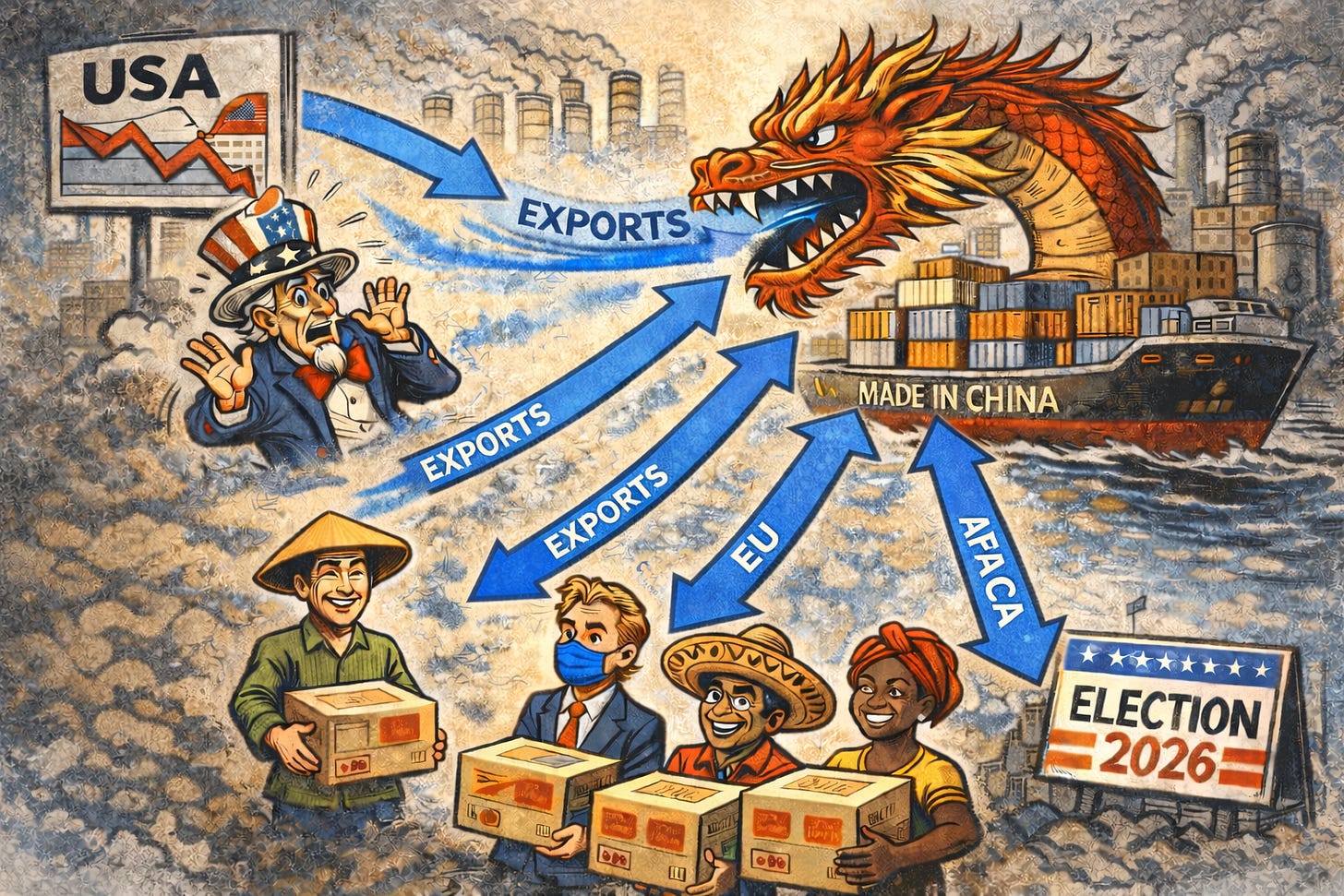
China’s unmatched industrial scale and state-backed overproduction have made it the backbone of global clean tech, flooding markets with cheap goods while deepening economic dependencies and geopolitical fault lines.
China’s industrial dominance in global clean tech supply chains is rooted in its sheer scale and strategic industrial policy, which have made it the world’s manufacturing powerhouse. By leveraging a vast, highly skilled workforce, advanced engineering capabilities, and a domestic market that expanded in tandem with green industries, China didn’t so much out-innovate as outscale its competitors. As one analyst put it, 'China didn’t outthink the world; it outscaled it,' positioning itself as the indispensable engine of affordable, abundant clean technologies worldwide—even as its own emissions continued to rise.
This dominance translates into deep global dependencies, with countries like the UK relying on China for over 80% of their solar panels, key wind turbine components, and EV battery materials—so much so that 'China isn’t just part of the supply chain, it is the supply chain.' Despite geopolitical tensions and protectionist moves from the US and EU, Britain has so far benefited from cheap Chinese hardware without being drawn into trade conflicts, highlighting a trade-off between the risks of supply chain concentration and the volatility of fossil fuel markets.
China’s aggressive export-driven industrial model, underpinned by massive state subsidies and suppressed domestic consumption, has resulted in record trade surpluses—$1.2 trillion in 2025 alone—even in the face of US tariffs. This 'beggar-thy-neighbor' approach floods global markets with subsidized goods, exerting disinflationary pressure and making it nearly impossible for competitors to match prices, while simultaneously deindustrializing advanced economies and stalling industrialization in poorer countries. As a result, China’s overcapacity and export surpluses have become both a lever of global influence and a source of mounting geopolitical friction.
Recognizing the strategic vulnerabilities created by such dependencies, Western governments are recalibrating their economic statecraft. The US and EU have begun prioritizing supply chain resilience and diversification in their national security strategies, while the UK has drawn red lines around Chinese involvement in critical infrastructure like nuclear power—debating whether similar caution should extend to renewables and grid assets. This policy shift underscores a growing consensus that economic security and industrial policy are now inseparable from national security in an era where, as analysts warn, 'manufacturing is a war now' and China is rewriting the industrial playbook.




UK’s Delicate Green Tech Gamble
Britain’s sidestep of US-EU tariffs keeps clean tech affordable but leaves it exposed to Beijing’s economic leverage, as Western allies splinter over whether to prioritize security or cheap supply.
Since Brexit, the UK has leveraged its newfound trade flexibility to avoid the sweeping tariffs on Chinese green tech imposed by the US and EU, maintaining lower costs for domestic consumers and developers while deftly managing diplomatic relations with allies. In contrast, the US has doubled down on protectionist measures, with tariffs on Chinese net zero goods reaching as high as 100% for electric vehicles and 60% for solar panels by 2026, reflecting a decisive shift toward prioritizing economic security and strategic competition over affordability. This divergence underscores the strategic dilemma facing Western allies: whether to prioritize economic pragmatism or align with Washington’s increasingly hardline stance against Beijing.
The UK’s dependence on Chinese inputs for clean technology presents a unique strategic risk—distinct from the immediate crises of fossil fuel dependency—as China has repeatedly demonstrated its willingness to weaponize export controls on critical materials like rare earths, gallium, and germanium. While a sudden cutoff would not plunge Britain into an energy blackout, it could significantly delay the expansion of low-carbon infrastructure and jeopardize Net Zero targets, leaving the UK vulnerable to Beijing’s economic leverage at a critical juncture in the global clean tech race.
Amid rising US-China tensions, the UK and other US allies such as Canada are increasingly pursuing tactical engagement with Beijing, signaling a move toward strategic autonomy that complicates Washington’s efforts to maintain a unified front. Canada’s decision to cut tariffs on Chinese EVs in exchange for market access and the UK Prime Minister’s high-profile 2026 visit to China—his first since 2018—reflect a nuanced balancing act, as allies seek to preserve economic opportunities while managing security risks and alliance cohesion, especially with a volatile US administration.
Security concerns are mounting as China expands its diplomatic presence in allied countries, exemplified by the controversial approval of a massive Chinese embassy in London, strategically located over vital fiber optic infrastructure. Despite vocal protests and espionage fears, the UK government appears poised to greenlight the project, highlighting the tension between deepening economic engagement and safeguarding national security—a dilemma at the heart of the UK’s evolving ‘Three Cs’ strategy: Cooperate, Compete, Challenge.
Despite periodic political chill and limited ministerial contact, UK exports to China have historically proven resilient, with trade volumes hitting records even during diplomatic lows. However, Britain’s exports to China remain modest—just 3.3% of total exports and declining—due in part to Beijing’s push for self-reliance and domestic consumption under policies like ‘Made in China 2025.’ This reality complicates the UK’s economic engagement strategy, as high-level visits, such as the Prime Minister’s 2026 trip with a major business delegation, are challenged by both the CCP’s controlled diplomacy and the shrinking commercial opportunities on offer.


Fragmented Alliances, Rising Rivalries
Traditional Western unity is fracturing into regional blocs as China and Russia undermine global institutions, pushing the world toward multipolar competition and forcing the US to rethink its global strategy.
The emergence of a multipolar world order is fragmenting traditional alliances and fueling the rise of distinct spheres of influence, as highlighted by the National Security Strategy’s acknowledgment of this new reality. Europe, in particular, finds itself increasingly anxious about being caught between the gravitational pulls of Russia and the United States, while Asia’s focus remains fixed on the ambitions of larger powers like China. This recalibration of global alliances is further underscored by the U.S. pivot toward hemispheric dominance in the Western Hemisphere, as evidenced by incidents such as the seizure of a tanker off Venezuela and rising tensions in the Caribbean, signaling a retreat from Europe and intensifying regional rivalries and economic-technological competition.
The disintegration of the unified Western alliance is manifesting in the formation of new regional blocs and power configurations, exemplified by the proposed 'C5' as a replacement for the G7 and the U.S. adoption of a more isolationist, offshore balancing role. As Friedrich Merz bluntly put it, 'the West no longer exists,' reflecting a broader fracturing of traditional transatlantic partnerships. This shift away from values-based partnerships toward pragmatic, regionally focused strategies is not only redrawing the geopolitical map but also accelerating the fragmentation of the global order.
China and Russia are actively undermining multilateral institutions such as the WTO and the United Nations, fueling a return to great power competition and the proliferation of regional blocs. Their pursuit of unlimited strategic aims—Putin’s ambition to arbitrate European politics and Xi Jinping’s drive to replace the U.S. as the foundational global power—challenges the liberal international order and propels the world toward multipolarity. This intensifying rivalry is forcing the U.S. to reconsider its own strategy, moving beyond liberal internationalism to a posture of pursuing 'unlimited aims' to counter aggression from Moscow and Beijing.
China’s aggressive industrial policies and export-driven growth model are catalyzing a new phase of global economic and technological rivalry, destabilizing the rules-based trading order and accelerating the rise of regional blocs. With a record $1 trillion manufacturing trade surplus in 2025 and a willingness to weaponize supply chain chokepoints—such as rare earth elements—China is reshaping global alliances and supply chains through economic statecraft. In response, Western and allied countries are increasingly coordinating to enhance supply-chain resilience and diversify trading partners, making economic security a core geopolitical concern and further fragmenting the global order.