Home batteries and EVs power grid’s new virtual era
The gist
Home batteries and EVs are transforming from household helpers to critical grid players, powering a new era of virtual power plants and supercharging America’s energy resilience.
What to know
- Base Power skyrocketed to a $13B valuation by 2026 by turning affordable home batteries into grid assets, enabling utilities in Texas and Illinois to boost capacity fast.
- Virtual power plants now aggregate over 16 GW of home and EV batteries, letting utilities and data centers dodge blackouts and retire dirty peaker plants.
- General Motors is rolling out bidirectional charging across all 2027 EVs, aiming for 52,000 grid-connected vehicles by 2030 and driving the vehicle-to-grid revolution.
Home Batteries Reshape Utilities
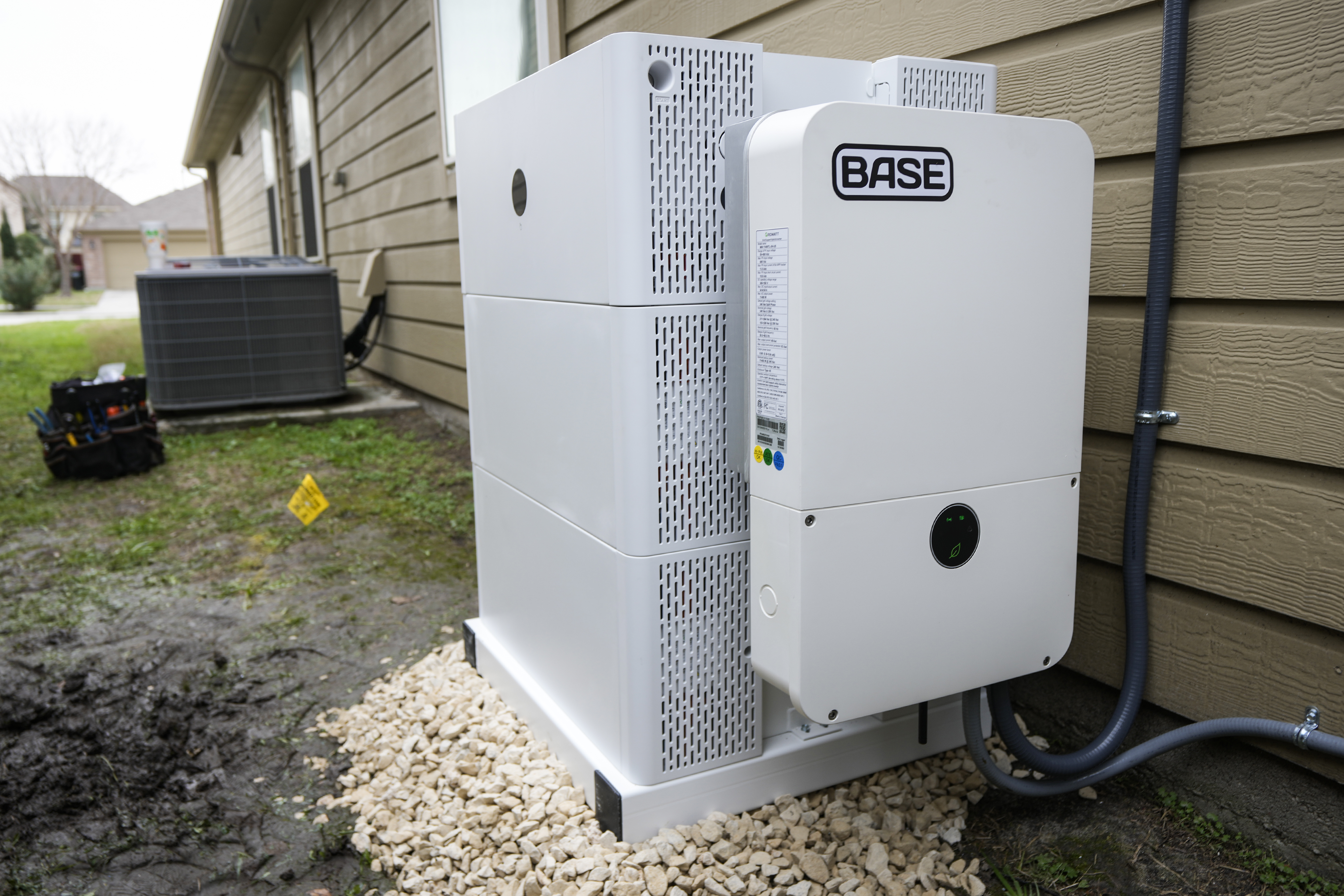
Base Power’s retail-battery model and behind-the-meter tech are transforming home batteries into critical infrastructure, slashing grid bottlenecks and powering AI data centers years ahead of schedule.
Base Power has emerged as a pioneering force in the distributed battery market, rapidly scaling from a startup to a major player with a $1 billion Series C raise at a $4 billion valuation in late 2025, and further expanding to a $13 billion valuation by mid-2026. Their innovative business model integrates energy retailing with affordable home battery systems that serve both as backup power for homeowners and as critical grid infrastructure assets, enabling utilities in deregulated markets like Texas and Illinois to leverage these batteries as wholesale power resources. This dual role underscores the foundational importance of home batteries in meeting rising electricity demand driven by AI and electrification.
The rapid scaling of distributed battery technologies has been catalyzed by the rise of Behind-the-Meter (BTM) battery storage, which circumvents the protracted 5 to 8 year Front-of-the-Meter interconnection queues in the U.S. By allowing customers to install batteries on their premises without waiting for grid approval, BTM systems provide a swift and effective solution to grid bottlenecks. This capability is especially critical for AI data centers, where BTM batteries enable peak shaving, prevent costly outages, and virtually expand power capacity beyond grid limits, accelerating operational timelines by up to three years and protecting multi-billion-dollar GPU assets.
By early 2026, U.S. home battery installations surged to a record 673 megawatts in Q1, propelled by state incentives and rising electricity costs, with virtual power plants incorporating home batteries growing 153% in 2025. Base Power played a foundational role in this expansion by offering discounted home batteries and electricity rates in exchange for managing these batteries as a distributed fleet, effectively creating one of the largest virtual power plants in the country. This surge in capacity not only supports grid flexibility but also enables new energy applications, including powering AI data centers and large-scale distributed power plants, as evidenced by collaborations among Sunrun, Renew Home, and Tesla to aggregate hundreds of thousands of home battery systems.
Base Power’s early scaling success is further exemplified by its vertically integrated approach, designing and manufacturing its own Texas-made home batteries that are over three times larger than typical residential units like the Tesla Powerwall and installed rapidly to function primarily as grid assets rather than mere homeowner backups. Co-locating engineering and manufacturing in Texas has enabled faster iteration and operational efficiencies, positioning the state as a key hub for domestic battery production. With a multi-decade vision supported by aligned investors, Base Power has expanded beyond Texas into markets like Chicago, forming multiple utility partnerships and increasing daily installations from a single unit to a record 113, all while focusing on solving coordination challenges across the energy stack to enhance grid stability and lower consumer costs by improving grid utilization.





Virtual Power Plants Mature
VPPs are evolving from basic demand response tools to sophisticated, dispatchable assets, with new benchmarks pushing utilities to treat them as true power plants and defer costly grid upgrades.
By early 2026, Virtual Power Plants (VPPs) were predominantly functioning as enhanced demand response resources rather than fully dispatchable power plants, with most grid operators hesitant to treat them as equivalent to traditional generation assets due to limited visibility, schedulability, and availability. Seth Frader-Thompson of EnergyHub emphasized that while the terms 'virtual power plant' and 'distributed power plant' are often used interchangeably today, the distributed nature of these assets will become increasingly critical in market valuation and regulatory frameworks as VPPs mature beyond their initial roles.
EnergyHub has been at the forefront of advancing VPP maturity by developing a comprehensive maturity model that guides the evolution of VPPs from basic demand response tools to fully reliable power plants capable of daily dispatch. Managing over 1.8 million devices aggregating more than 2 gigawatts of capacity, EnergyHub’s framework incorporates the 'Huels test'—a benchmark assessing whether a VPP can seamlessly replace a conventional power plant from the grid operator’s perspective based on visibility, schedulability, and availability, marking a critical step toward operational equivalency.
The value proposition of VPPs has expanded significantly as they progress through maturity levels, moving beyond merely avoiding generation costs to deferring costly transmission and distribution infrastructure upgrades. By intelligently managing and shifting localized peak demand, sophisticated VPPs can reduce the need for transformer replacements and wire upgrades, effectively enabling more load to be added to the grid without increasing peak stress—a capability that utilities increasingly recognize as a cost-effective alternative to traditional grid expansion.
Recent developments underscore the rapid scaling and integration of VPPs into mainstream grid operations globally. Startups like Lunar Energy, backed by $232 million in funding, are leveraging deep hardware-software integration to create consumer-friendly battery ecosystems, while utility partnerships such as Tesla and PG&E’s official VPP launch demonstrate evolving regulatory and operational frameworks supporting residential solar-plus-storage growth. Meanwhile, companies like Axle Energy coordinate over 300,000 distributed assets across Great Britain, harnessing AI for real-time grid optimization and aiming to normalize distributed energy resource participation in energy markets worldwide.


Leasing Models Drive DER Boom
Innovative ownership and leasing strategies from Base Power, Lunar, and Sunrun are fueling a national surge in residential battery adoption and positioning distributed energy as a mainstream grid resource.
Base Power has pioneered a flexible and innovative business model that blends energy retail with distributed battery ownership, enabling it to penetrate both deregulated and regulated utility markets. By owning the batteries rather than selling them to customers, Base Power offers utilities fast, reliable, and cost-effective capacity through distributed battery fleets, which utilities increasingly accept as comparable to traditional power plants. This approach has fueled rapid expansion from a single pilot to five utility partnerships totaling 220 MW, with regulated utility installations rising to about 50% of Base’s business by late 2025, positioning the company as a national leader aiming to become 'America’s Next-Generation Power Company.'
By early 2026, Lunar Energy, led by Tesla residential energy veteran Kunal Girotra, exemplified the evolution of the distributed energy resource (DER) market through its tightly integrated hardware-software leasing model that operates customer batteries as virtual power plants (VPPs). Raising $232 million in funding, Lunar’s approach builds on Tesla’s legacy but aims for broader market penetration and seamless solar-plus-storage integration, signaling strong investor confidence in leasing and VPP operation as key drivers for scaling residential battery adoption.
Sunrun’s pioneering 'solar-as-a-service' leasing model, which now accounts for 65% of its revenue, has revolutionized DER adoption by owning and operating residential solar and battery systems while offering customers long-term power purchase agreements with low or no upfront costs. Strategic partnerships with Tesla and Renew Home have enabled Sunrun to aggregate over 106,000 customers into virtual power plants, achieving a 400% year-over-year increase in VPP enrollments in 2024 and nearly 80 MW of instantaneous capacity. This model not only generates new grid services revenue streams by dispatching stored solar energy during peak demand but also leverages tax credits like Section 48E to maintain competitive advantages amid shifting policy landscapes.
The expansion of DERs into grid services markets is further accelerated by strategic collaborations and innovative financing models that connect distributed assets with large energy consumers such as hyperscale data centers. Companies like Sunrun, Base Power, and aggregators such as Voltus are actively enabling flexible grid capacity through virtual power plants, with pilot programs in deregulated markets like Texas targeting up to 1 GW capacity and ambitions scaling to 50 GW by 2030. Although tri-party negotiations involving utilities, customers, and large buyers can slow deployment in regulated markets, contractual assurances with liquidated damages are building trust, and regulatory advances like FERC Order 2222 promise to unlock wholesale market participation for behind-the-meter assets, further expanding VPP potential.

V2G Tech Hits Tipping Point
GM’s bidirectional charging rollout and Massachusetts’ lucrative pilot mark a breakthrough for vehicle-to-grid, turning EVs into reliable grid assets and unlocking new revenue for drivers.
General Motors is spearheading the evolution of vehicle-to-grid (V2G) technology by integrating bidirectional charging capabilities into all its 2027 EV models via the North American Charging Standard (NACS) ports. With ambitious plans to connect 52,000 EVs to the grid by 2030 and the development of sodium-ion batteries for energy storage, GM is positioning its vehicles not just as transportation tools but as flexible grid resources. This strategic push is complemented by the launch of Energy Pass, a unified app simplifying charging and payments across networks, enhancing user experience and grid integration.
Despite V2G technology's long-discussed potential, 2026 marks a turning point where pilot programs and utility partnerships are rapidly accelerating its practical deployment. GM’s collaboration with standards bodies like SAE and IEEE is driving the adoption of interoperable bidirectional charging protocols, including the near-final ISO 15118-20 standard, which all GM 2028 models will comply with. These efforts address previous fragmentation and vendor lock-in concerns, ensuring scalable and reliable V2G integration that utilities increasingly demand amid rising grid stress and the need for flexible energy resources.
Massachusetts has emerged as a national leader in V2G adoption through a pioneering pilot program launched by utilities Eversource and National Grid, supported by technology partners like EnergyHub and Sunrun. This initiative offers EV owners of models such as the Nissan Leaf and Kia EV9 up to $1,250 annually by supplying stored battery power back to the grid during peak demand, thereby reducing reliance on high-emission peaker plants. The program’s multi-stakeholder approach and integration into the ConnectedSolutions virtual power plant exemplify how V2G is transitioning from concept to a financially viable, grid-stabilizing solution.
The convergence of advanced bidirectional charging architectures and next-generation 800-volt battery systems is transforming EVs into intelligent, distributed energy nodes capable of generating an estimated $7 billion in grid value by 2030. GM leads this charge with approximately 250,000 bidirectional-capable vehicles on the road and a commitment to embed V2X technology across all future Ultium platform EVs. This shift underscores a broader industry transition from traditional automotive manufacturing toward integrated energy services, where controlling energy flow equates to controlling the customer ecosystem.



Residential Storage Goes Mainstream
A record wave of home battery installations and VPP enrollments, driven by incentives and corporate alliances, is empowering homeowners to collectively stabilize the grid and avert blackouts.
By early 2026, the United States witnessed a surge in home battery installations, reaching a record 673 megawatts in Q1 alone, fueled by state incentives and rising electricity costs. This boom was further amplified by the rapid expansion of virtual power plants (VPPs), with home battery capacity integrated into VPPs soaring 153% in 2025. A landmark collaboration between Sunrun, Renew Home, and Tesla culminated in the creation of the nation’s largest distributed power plant, capable of delivering over 16 GW to data centers and utilities, underscoring the pivotal role of aggregated residential storage in enhancing grid flexibility and resilience.
Virtual power plants have transitioned from concept to critical infrastructure, with thousands of homeowners linking their home and EV batteries to collectively shave thousands of megawatts off peak demand during extreme weather events like hurricanes and heat domes. California’s aggressive utility incentives, including a $6,000 rebate for new home batteries, alongside Tesla and Sunrun’s 16 GW VPP initiative, exemplify how policy and corporate partnerships are accelerating DER adoption to prevent blackouts and brownouts amid rising grid stress.
Utility programs such as Eversource Energy’s ConnectedSolutions in New England demonstrate how aggregated residential batteries function as virtual power plants to reduce peak load, defer costly infrastructure upgrades, and align with clean energy goals by replacing fossil fuel peaker plants. Incentives offering up to $1,000 annually for battery dispatch and the recent inclusion of vehicle-to-grid participation—where EV owners can earn up to $1,200 annually—highlight the growing sophistication and scale of DER integration to bolster grid resilience.
Internationally, South Africa and the UK are embracing VPPs to tackle grid challenges through innovative aggregation of distributed resources. South Africa’s Plentify and Deye coordinate over 160,000 residential batteries and smart geysers, achieving peak demand reductions comparable to large diesel peaker plants, though regulatory hurdles remain a key barrier. Meanwhile, the UK’s VPP market is maturing rapidly amid record solar generation and falling battery costs, with new offerings like Hugo Energy’s Hugo Flex promising to return 100% of generated value as real money to households, signaling a shift toward transparent and financially rewarding consumer participation.
Vermont’s Green Mountain Power has set a benchmark by developing the state’s largest energy source—a 110 MW VPP composed primarily of residential batteries—which during a July heat wave dispatched 90 MW, effectively removing 50,000 homes from the grid. This VPP not only cut $6 million in peak electricity costs but also enabled the retirement of carbon-intensive peaker plants, illustrating how DER aggregation can deliver both economic and environmental benefits while supplying nearly 10% of Vermont’s summer peak demand—the highest storage-to-peak ratio in New England.
Regulation and AI Fuel Expansion
FERC 2222 and AI-driven strategies are unlocking wholesale markets for distributed energy, letting batteries and EVs bypass grid delays and monetize flexibility at unprecedented scale.
The rapid implementation of FERC 2222 remains a linchpin for unlocking the full potential of distributed energy resources (DERs) and virtual power plants (VPPs), enabling behind-the-meter assets to participate directly in wholesale markets. While California ISO has led the way, many ISOs lag in fully adopting this framework, which is essential for scaling aggregation strategies that manage millions of residential participants efficiently. As noted, local distribution system operator (DSO) level markets complement wholesale participation by addressing distribution-level impacts, creating a more nuanced and scalable grid integration model.
Behind-the-meter (BTM) battery storage has emerged as a strategic asset for AI data centers, with giants like Microsoft, Meta, and Google leveraging these systems to circumvent the 5 to 8-year front-of-the-meter interconnection delays. This approach not only smooths peak power demands and avoids costly demand charges but also acts as a critical safeguard for multi-billion-dollar GPU infrastructure during outages. By virtually expanding power capacity—charging off-peak and discharging during peaks—BTM batteries grant AI centers a valuable 'time premium,' enabling operations to commence up to three years earlier and unlocking tens of billions in monetization opportunities.
General Motors exemplifies the convergence of AI, regulatory support, and DER innovation by integrating AI-driven tools and leveraging FERC 2222 to optimize vehicle-to-grid (V2G) and sodium-ion battery storage technologies. With plans to connect 52,000 EVs to the grid by 2030 and introduce a streamlined Energy Pass app for charging and payments, GM is also pioneering leasing programs that lower barriers to residential battery adoption through extended investment tax credits. While V2G technology is accelerating amid unprecedented utility demand, commercial-scale grid coordination remains nascent, underscoring the critical role of supportive regulatory frameworks in scaling these solutions internationally.
Global expansion and AI-driven optimization are at the forefront of the DER and VPP evolution, with companies like Amber Electric and Base Power pushing the envelope through software-driven grid stabilization and massive residential battery deployments. Impact Ventures' $10 million fund accelerates this momentum by addressing regulatory hurdles, especially in multi-tenant settings, while exporting Australian-developed technologies worldwide. Meanwhile, Axle CEO Karl Bach highlights AI’s growing role in enhancing demand forecasting and real-time decision-making, aiming to normalize flexibility in electricity systems globally. Base Power’s rapid scale-up—targeting over 1 GWh of storage by year-end—and its vision to integrate compute demands with energy infrastructure signal a future where AI and DERs coalesce to transform grid resilience and efficiency.