Home batteries flex grid muscle as VPPs hit prime time
The gist
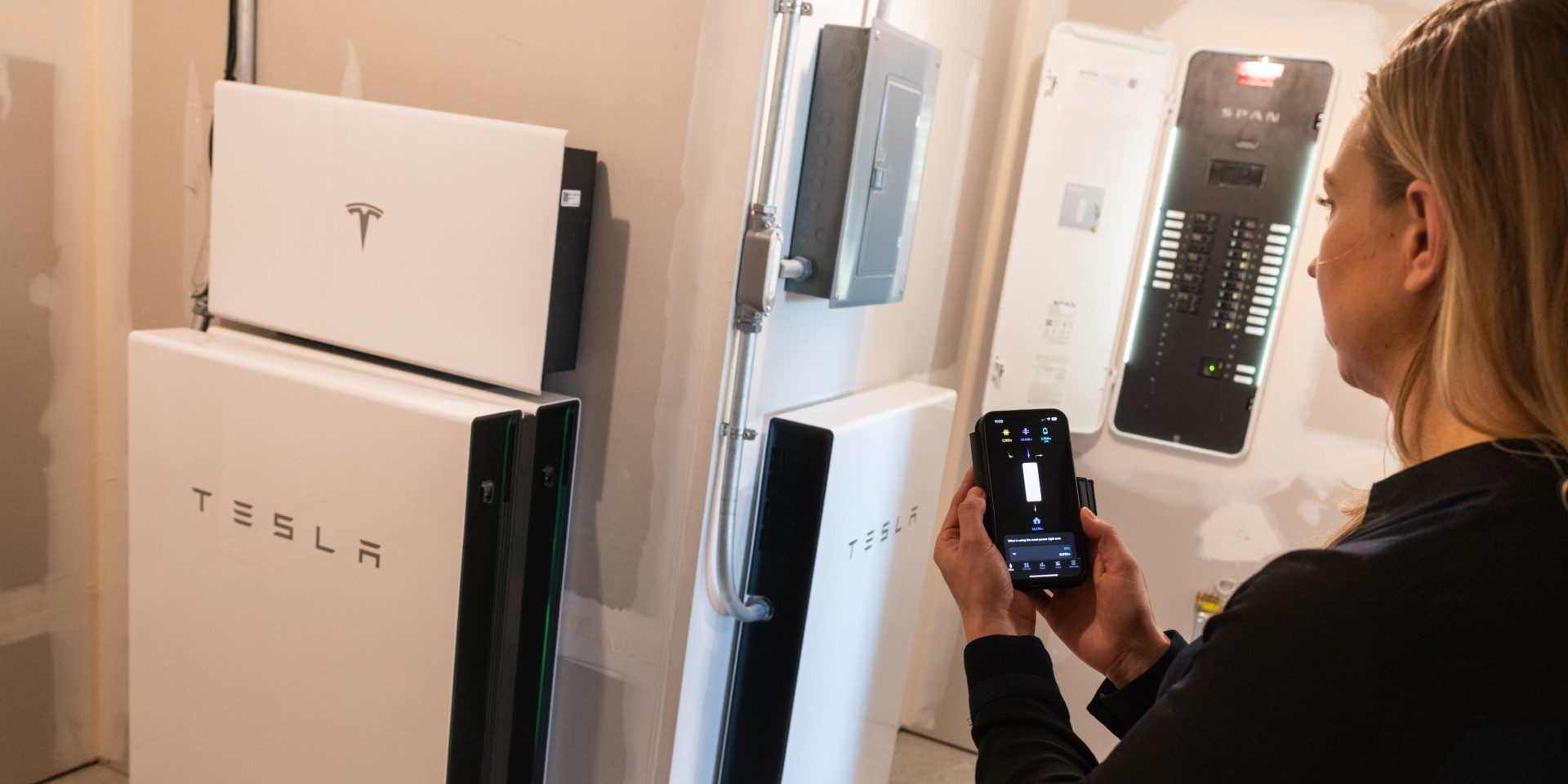
Virtual power plants are catapulting home batteries from household backups to major players on the U.S. electric grid, with record installations and real cash payouts.
What to know
- U.S. home battery installs smashed records in early-to-mid 2026 as utilities bundled thousands into virtual power plants (VPPs) for grid support.
- The share of U.S. home battery capacity enrolled in VPPs soared 153% in 2025, with most systems reducing household demand—think 2 kW per home—during peak hours.
- Programs like Eversource’s ConnectedSolutions pay residents up to $1,000/year, while Vermont’s Green Mountain Power tapped 90 MW from over 10,000 enrolled batteries during a July heat wave.
VPPs Drive Battery Boom
Home battery installations soared as virtual power plants transformed thousands of small systems into a utility-scale force, shifting batteries from backup to grid-critical assets.
A virtual power plant is the organizing model that helps explain why home battery deployment accelerated into 2026: Energy Live News describes a VPP as a system that “links together lots of small, distributed energy resources” and runs them “as if they were one large power station,” turning household batteries into utility-usable capacity. That timing matters because, as Energy Live News put it, “2026 has already been a record year for solar,” a surge that raises curtailment risk and makes attached batteries more valuable as aggregatable assets rather than stand-alone backup devices.
The same period also shows the market moving beyond theory into active program buildout, with providers designing offers that pay households for joining battery fleets and utilities or aggregators preparing larger-scale operations. Energy Live News reported that “Hugo Energy is currently developing its own VPP offering, Hugo Flex… built around a simple principle: 100% of the value generated goes back to the household, as real money,” while Next Kraftwerke’s expansion framing underscored the scale ambition behind these initiatives: “Today, with the 15 gigawatts, yes, we're having some impact… We're not in all the countries that we want to be.”
Batteries Rival Peaker Plants
Aggregated home batteries now deliver grid services at a scale rivaling traditional gas plants, with major deals positioning VPPs as the next big player in U.S. electricity.
What makes the current battery buildout matter is not just that more homes have storage, but that those systems are being stitched together into something grid operators can actually use. Ars Technica says record early-2026 adoption is tied to virtual power plant aggregation that coordinates thousands of behind-the-meter batteries for grid operations, while Yale E360 found “the amount of US home battery capacity incorporated by virtual power plants soared by 153 percent in 2025,” showing these devices are increasingly organized as dispatchable fleets rather than isolated household backup assets.
That aggregation model is gaining credibility because it is being framed as a substitute for conventional peak resources and as a business model with clear counterparties. Ars Technica highlighted a “demonstration in July 2025 that showed how 100,000 home batteries could provide more power than a large gas peaker plant,” and on June 24 Sunrun, Renew Home and Tesla announced an agreement to combine “hundreds of thousands of home battery systems operated by Sunrun and Tesla” into “the largest distributed power plant in the country,” aimed at serving utilities and other large customers.

Load Shifting, Not Exporting
Residential batteries in VPPs primarily cut household demand during grid stress, acting as precision demand response tools rather than mini power exporters.
In practice, residential batteries in VPPs usually help the grid by lowering what a home draws during stressed hours, not by acting like miniature power plants. As Volts put it, “these things plugging into a 120 volt standard outlet cannot export power to the grid,” so their role is mainly demand response through controllable load shifting; that matches utility goals that are modest and household-scale, with “on average for each of those residential customers, they're trying to solve about a 2kW load reduction.”
That operating logic also shows up in how these systems are controlled inside the home: the speaker describes a “small 1.6 kilowatt hour battery” and explains that with “awareness of internal temperature in the home” they can “play with power modulation to make that 1.6 kilowatt hours go further,” even asking, “what is a fridge if not a thermal battery?” The point is to coordinate appliances, comfort, and storage so consumption is shifted or shaved locally, rather than sending large amounts of electricity back onto the grid.
Real-World Utility Paydays
States like Massachusetts and Colorado are proving VPPs’ value with cash incentives and measurable grid benefits, as utilities pay households for reliable, dispatchable battery power.
The strongest evidence that home batteries are becoming real utility resources is that programs now tie dispatch to both measurable grid outcomes and cash payments. In Massachusetts, Eversource’s ConnectedSolutions pays households to let the utility discharge batteries during peak events, with program materials indicating incentives of up to roughly 800 to 1,000 dollars per year for a typical home battery in the daily dispatch tier; Eversource says those aggregated systems reduce peak load, help defer substation upgrades, and cut regional capacity and transmission costs in ISO-New England.
The same pattern appears beyond Massachusetts: utilities and partners are using distributed batteries as operational grid support, not just backup devices. Electrek reported that “Tesla having paid out $9.9 million to Powerwall customers in 2024 alone,” a concrete sign that participation can be monetized, while also describing batteries shaving peak demand during grid stress; in Colorado, a Holy Cross Energy pilot is explicitly testing utility-controlled residential and multifamily batteries for “VPP Dr. Load reduction style programs,” with the utility paying for initial deployments to prove the model.
Vermont’s Grid-Scale Milestone
Vermont’s home battery fleet now forms the state’s largest power resource, delivering coordinated megawatt-scale output during peak demand and redefining what distributed energy can achieve.
In at least one U.S. market, residential batteries have crossed the threshold from household backup devices to a grid resource of statewide significance. Green Mountain Power says its virtual power plant “now has 110 MW of capacity, making it Vermont’s largest single power resource by capacity,” and the scale is not coming only from utility-owned assets: “More than half of that capacity – 53 MW – comes from residential battery systems,” showing that behind-the-meter systems now add up to something large enough to matter at the system level.
Just as important, Vermont’s fleet has shown it can perform like a major resource when demand actually spikes, not merely on paper. During Vermont’s early July heat wave, as temperatures rose into the “high 80s and low 90s,” GMP “dispatched 90 megawatts (MW) from its VPP”; that output was assembled from a distributed base in which “More than 5,000 GMP customers now have over 10,000 batteries enrolled in the VPP,” allowing the utility to draw on stored electricity “as one coordinated power source” during a grid peak.