Home batteries graduate: utilities bet big on virtual power plants
The gist
Home batteries have officially graduated from green gadget status to critical grid muscle, as utilities across the U.S. bet big on virtual power plants and real dispatch programs.
What to know
- September 2026 saw utilities like Eversource and Green Mountain Power launch or expand virtual power plants, letting them control home batteries for predictable grid support—with customers pocketing up to $1,000 a year.
- Residential battery installations smashed records with 673 MW added in Q1 2026, and Green Mountain Power dispatched 90 MW from enrolled homes during Vermont’s July heat wave—enough to supply nearly 10% of the state's summer peak.
- With Wood Mackenzie projecting 10 GW of residential storage by 2028 and grid connection delays slowing big projects, utilities are racing to tap home batteries as the fastest, cheapest way to tackle peak demand and dodge costly upgrades.
Utilities Embrace Batteries as Grid Tools
Utilities are treating home batteries as reliable, measurable assets for peak load reduction, shifting from pilot projects to operational contracts with clear performance targets.
September 2026’s wave of residential-battery VPP activity mattered because it showed utilities were no longer treating home storage as a speculative consumer gadget, but as an operational grid tool with dispatchable value. As Volts put it, “these things plugging into a 120 volt standard outlet cannot export power to the grid,” so their role in VPPs is not traditional generation but controllable demand and load shaping—exactly the kind of measurable, repeatable service utilities can contract for, pay for, and call on during system stress.
That helps explain why launches and expansions in September came with concrete program design rather than vague innovation language: utilities were chasing defined peak obligations and had a clear customer-level target for batteries to meet. Volts noted that “the cost to serve the customers is increasingly driven by the transmission cost… set by five coincident peaks… about one hour long… on average for each of those residential customers, they're trying to solve about a 2kW load reduction,” while products such as Pila’s 1.6 kWh plug-in batteries could “mesh” together, pair with rooftop solar, or participate in VPP programs.


Home Batteries Enable Reliable Grid Response
Aggregated home batteries now offer utilities a predictable, hands-off solution for demand response, with homeowners earning steady payouts and minimal disruption.
The model emerged by turning many small, behind-the-meter batteries into a controllable demand-response fleet: Eversource’s ConnectedSolutions lets the utility trigger limited discharges during peak events through the battery’s cloud platform, with homeowners rarely touching a switch or app. That makes load shaping measurable and repeatable rather than behavioral—Maria Lopez described her battery’s state-of-charge dipping from 100 to 60 percent, then recharging overnight from rooftop solar—and the economics are explicit, with incentives of up to roughly 800 to 1,000 dollars per year for a typical home battery in the daily dispatch tier, paid directly or credited on utility bills. The discussion also showed that under California’s NEM 3 rules, batteries can be financially valuable because they shift energy use away from expensive evening grid purchases, underscoring the same load-shaping value these programs can capture.
What changed is operator confidence that these fleets can be dispatched predictably without annoying customers: Voltus CEO Dana Guernsey shared a chart showing how many times per year Voltus’s demand response resources are actually dispatched by grid operators, not merely enrolled, while noting utilities once feared that “when you use this, you’re probably going to frustrate some customers,” in programs “called on only 10 times a year.” Newer residential battery designs answer that constraint because, as one Volts speaker put it, “the fact that it’s not a huge amount of kilowatt hours… is made up for by the fact that it’s easy and reliable and no impact on the homeowner,” especially for the one- to two-hour power problems that matter most.

Residential Storage Hits Critical Mass
Record-breaking deployments and real-world dispatches prove home batteries can rival traditional power plants in grid support and peak shaving.
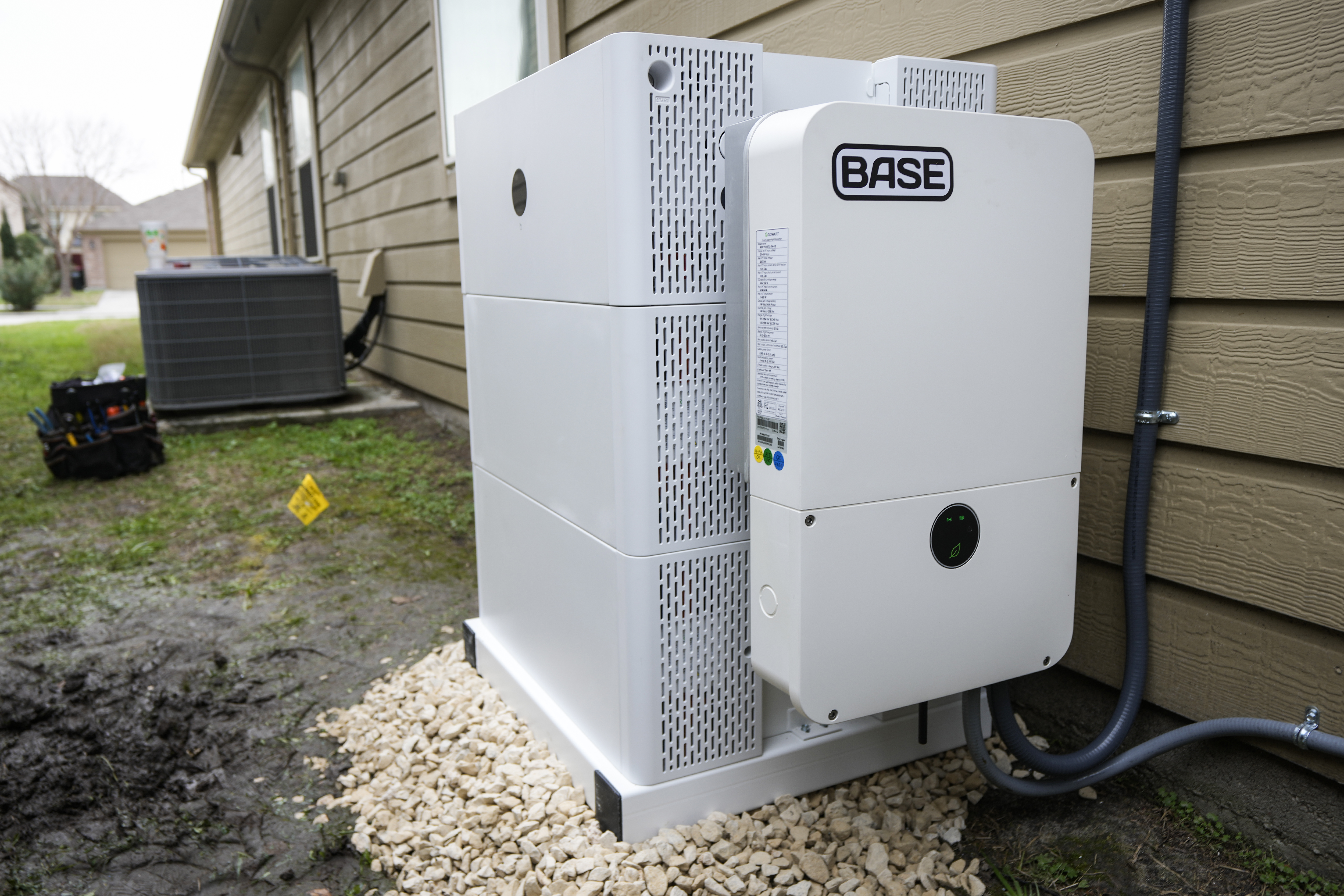
By early 2026, residential batteries had clearly moved beyond niche status into a deployment scale that matters for the grid. Ars Technica, citing the US Energy Information Administration, reported that “new home battery installations reached a record 673 megawatts of energy storage in the first quarter of 2026,” while Yale E360 found that “the amount of US home battery capacity incorporated by virtual power plants soared by 153 percent in 2025,” reinforced by a July 2025 demonstration showing “how 100,000 home batteries could provide more power than a large gas peaker plant.”
That scale is no longer theoretical: some utility programs are already dispatching residential batteries in grid-relevant volumes. Electrek reported that Green Mountain Power dispatched 90 MW from its virtual power plant during Vermont’s early July heat wave; GMP says the VPP totals 110 MW, with 53 MW from residential battery systems, and that “more than 5,000 GMP customers now have over 10,000 batteries enrolled,” enough for those batteries alone to supply nearly 10% of Vermont’s summer peak demand, the “highest storage-to-state-peak ratio in New England.”

Peak Costs Accelerate Battery Adoption
Facing expensive grid upgrades and slow central projects, utilities are turning to residential batteries as the fastest, most cost-effective way to manage surging demand.
Utilities want residential battery VPPs because they solve an immediate economics problem: peak demand is expensive, and traditional fixes mean more wires, substations, and distant power purchases. Electrek described aggregated home batteries as resources that can keep the grid stable during record demand, prevent blackouts, and shave peak load when it matters most, while former DOE official Jigar Shah argued “we can’t keep upgrading the distribution grid” and instead need customers to opt into load flexibility, a cheaper way to manage stressed local networks. That framing also aligns with critiques of centralized growth plans that note Part II “contains no mention of how such a program would raise peak electricity demand and necessitate new investments in centralized infrastructure,” concluding that meeting post-2030 growth “will” require more of that costly buildout if demand is not managed more flexibly.
That logic is getting stronger as the addressable fleet grows and as centralized alternatives look slower and costlier. Wood Mackenzie said at last year’s Solar & Energy Storage Summit in San Francisco that battery attachment rates had quadrupled from 6% in Q1 2020 to 25% in Q1 2024, and forecast 10 GW of residential storage by 2028, with residential assets making up about 80% of DERs; meanwhile, Consultancy.uk reported front-of-the-meter projects face “grid connection queues stretching years into the future,” with some awarded projects not connecting until the late 2020s, making behind-the-meter batteries using existing connections a faster, lower-cost flexibility option instead of relying on new centralized infrastructure to absorb rising peaks.