Hormuz havoc: global order upended as oil shock, cyber wars, and superpower jockeying redraw the map
The gist
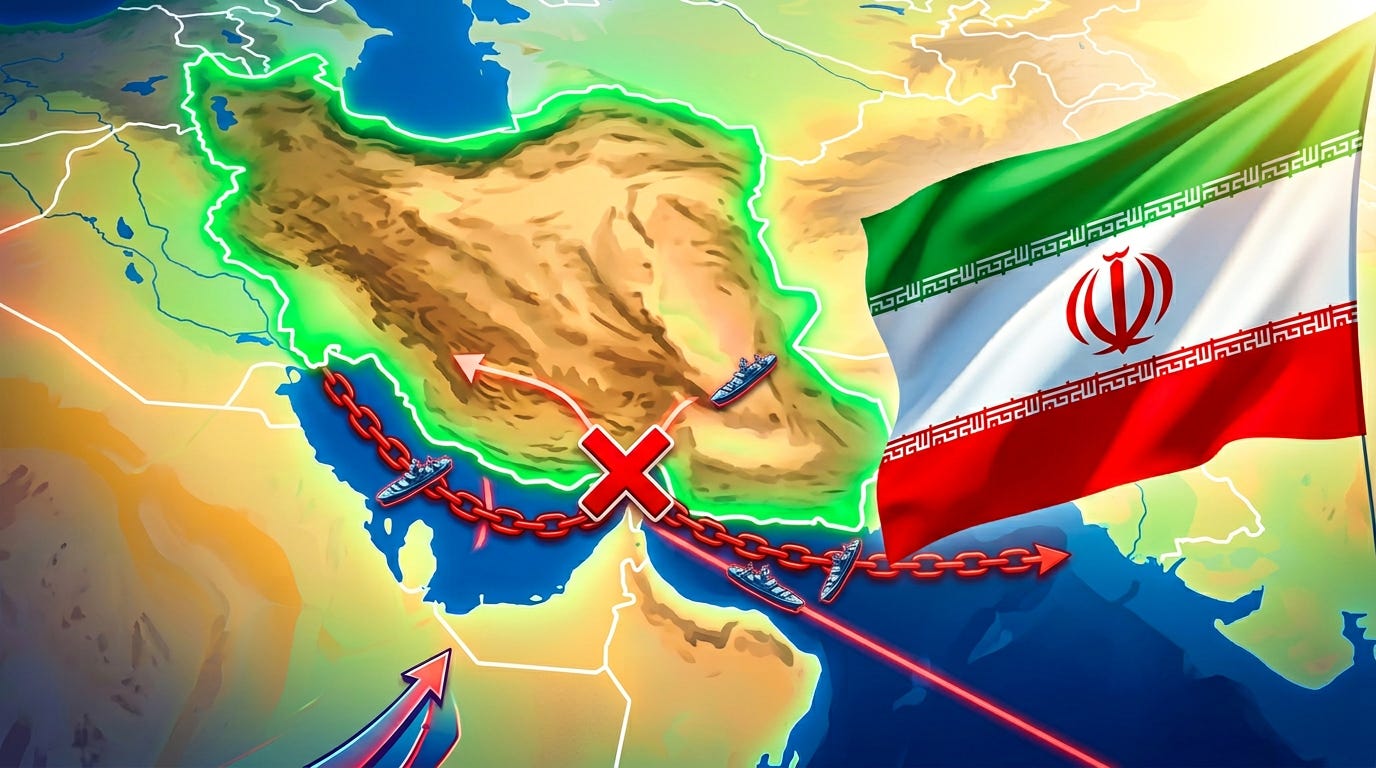
**The closure of the Strait of Hormuz in early 2026 has ignited the biggest oil shock in history, unleashing economic chaos, cyber warfare, and a scramble for power as superpowers redraw the global order in real time.**
What to know
- US-Israel strikes on Iran triggered the Strait of Hormuz shutdown, spiking Brent crude above $120 and freezing 20% of global oil flows.
- Russia and China have muscled in—deploying warships, snapping up cheap Iranian oil, and selectively reopening Hormuz for their own shipping.
- The crisis is fueling global stagflation, political upheaval, and a flood of cyberattacks, while alliances fracture and safe-haven assets like gold and Bitcoin soar.
Limits of Hard Power
US military escalation aimed at regime change in Iran has instead fortified Tehran's grip, exposed the fragility of multipolar deterrence, and highlighted the unsustainable costs of countering cheap asymmetric tactics with expensive American firepower.
The escalation of US and Israeli military actions against Iran in early 2026 has starkly exposed the limits of multipolar restraint, as American hard power surged back to the fore despite the presence of rival great powers and regional caution. While US and allied strikes—including the unprecedented killing of Supreme Leader Ali Khamenei—were intended to coerce regime change and degrade Iran’s capabilities, Tehran’s leadership instead framed survival as victory, leveraging narratives of external aggression to consolidate domestic control and undermine internal protest movements. This dynamic not only challenged the assumption that military pressure alone could topple resilient regimes, but also revealed how US intervention can inadvertently strengthen adversaries’ legitimacy and complicate prospects for organic political change.
Renewed US hard power projection has been marked by massive military buildups—two carrier strike groups, B-52 bombers in the UK, and the deployment of a Marine Expeditionary Unit—demonstrating Washington’s willingness to act unilaterally even as allies like Israel, France, and GCC states urged restraint. Despite attempts to build multilateral coalitions, such as efforts to reopen the Strait of Hormuz, the US has largely acted alone, straining transatlantic relations and highlighting Europe’s continued dependency on American military capabilities and defense exports. This assertive posture has not only disrupted global trade routes and spiked oil prices, but also underscored the fragility of multipolar checks on US power as European defense spending flows disproportionately to US arms giants like Lockheed Martin and RTX, reinforcing an asymmetrical burden-sharing dynamic.
The conflict has revealed a critical mismatch between traditional US defense models—rooted in Cold War-era deterrence and high-cost missile systems—and Iran’s asymmetric warfare tactics, particularly the mass deployment of inexpensive drones and mobile missile units. While the US has showcased advanced capabilities, such as the combat debut of the Precision Strike Missile (PrSM) and overwhelming naval firepower, Iran’s ability to impose systemic costs through drone swarms, maritime disruption, and proxy attacks has strained American and allied defenses, driving up insurance and freight costs and exposing vulnerabilities in critical chokepoints like the Strait of Hormuz. As Iranian drones costing as little as $35,000 force the US to expend million-dollar interceptors, the sustainability of American power projection—and the global order it underpins—faces mounting challenges.
Despite the US’s renewed willingness to project hard power, the conflict’s expansion and the persistence of Iranian resistance have shattered assumptions about the ease of regime change or rapid stabilization. The war has metastasized across multiple fronts and continents, with the closure of the Strait of Hormuz freezing over 24 million barrels per day of oil supply and sending global markets into turmoil. Meanwhile, adversaries like Russia and China have exploited the situation—Russia by providing targeting intelligence to Iran and China by leveraging US distraction to advance its own interests—demonstrating that multipolar competition now constrains US freedom of action even as it enables bold interventions. The result is a world order where American military might can still disrupt, but not decisively shape, the global landscape.





Russia & China Muscle In
Moscow and Beijing have seized the Gulf power vacuum, using naval deployments and energy deals to sideline US influence and tilt regional dynamics in their favor while turning Iran into a strategic proxy.
Russia and China have adeptly exploited the chaos of escalating U.S.-Iran tensions to assert their strategic presence in the Gulf, challenging American maritime dominance and signaling a realignment of regional power. Since 2019, both powers have conducted joint naval exercises with Iran, and by early 2026, they deployed advanced warships—including China’s guided missile destroyers and Russia’s Marshall Shaposhnikov frigate—to the region. This show of force not only emboldens Iran, whose Revolutionary Guard has staged live-fire drills and partially closed the Strait of Hormuz, but also complicates U.S. efforts to contain Tehran, as Iranian commanders now describe their Gulf islands as 'impregnable fortresses'—a confidence clearly bolstered by their new great power backers.
The strategic maneuvering by Russia and China is a calculated response to U.S. distraction and internal turmoil, allowing both powers to advance their geopolitical interests with minimal direct confrontation. As the U.S. grapples with domestic isolationism and fraying alliances under President Trump, Russia and China have seized the opportunity to realign global partnerships and challenge the rules-based order. Analysts note that 'Pax Americana actually restrained American power,' and its erosion has enabled Moscow and Beijing to position themselves more assertively on the world stage, with China now the largest trading partner for most Gulf nations and Russia leveraging instability to drive up commodity prices and undermine Western unity.
Energy market dynamics lie at the heart of Russia and China’s strategic playbook, with both nations leveraging the turmoil in the Middle East to secure supply advantages and exert global influence. China, for instance, has become the sole recipient of Iran’s oil exports—1.424 million barrels per day as of December 2025, or 12.3% of its imports—benefiting from discounts of $8 to $10 per barrel below Omani crude. Meanwhile, Russia capitalizes on rising oil prices and loosened sanctions, with U.S. waivers allowing Indian purchases of Russian oil, providing Moscow with a vital economic lifeline. The selective reopening of the Strait of Hormuz for Chinese and allied shipping further underscores how these powers are shaping energy flows to their advantage, even as the U.S. struggles to secure the chokepoint.
Despite their apparent alignment, Russia and China’s core interests in exploiting global instability diverge in important ways, creating both opportunities and limits to their cooperation. Russia thrives on chaos, using commodity leverage, hybrid warfare, and nuclear intimidation to destabilize Europe and extract concessions, while China’s economic model depends on stable, integrated global markets and uninterrupted trade. This divergence is evident in China’s cautious diplomacy—balancing condemnation of U.S. actions with efforts to maintain ties to Gulf Arab states and avoid direct military entanglement—contrasted with Russia’s willingness to harden its stance on Ukraine and provide intelligence support to Iran. As one analysis suggests, the U.S. could exploit these differences to drive a wedge between the two, but for now, both are united in leveraging U.S. distraction to reshape the global order.




Narrative Warfare Unleashed
Information operations, foreign lobbying, and cyber disruptions have blurred truth and fiction, weaponizing perception as both battlefield and battleground from Tehran to Washington.
From the earliest stages of the 2026 U.S.-Iran crisis, information operations and media manipulation have played a central role in shaping both domestic and international perceptions. State and non-state actors, from Tehran's ideological framing of conflict as a 'prolonged ideological struggle' to U.S. media figures like FCC chief Brendan Carr shifting from free speech advocacy to partisan information control, have weaponized narratives to influence public opinion and policy. As Doug bluntly observed, most 'war news' is little more than propaganda, misdirection, or rumor, making narrative itself a potent weapon that not only distorts reality but also complicates effective crisis management.
The proliferation of foreign lobbying and information operations in Washington, particularly under the Trump administration, has further muddied the domestic information environment. With over 380 new foreign agent registrations from nearly 100 countries, external actors have aggressively sought to shape U.S. policy and public discourse, exploiting the volatility of the media landscape. This surge in foreign influence campaigns underscores how information warfare is no longer confined to distant battlefields, but is deeply embedded in the political machinery of major powers, complicating efforts to discern truth from manipulation.
Modern conflicts have seen the targeting of data infrastructure become a strategic priority, blurring the lines between military and civilian spaces and intensifying the psychological battle for perception. As data systems, communications networks, and financial platforms become targets, the effects are felt not just 'over there,' but in the daily lives of ordinary citizens—phones stop working, cards fail, airports grind to a halt. This shift transforms the information battlefield, making disruption itself a tool for shaping public sentiment and amplifying the sense of crisis.
Markets Bet on Turmoil
Financial markets reacted not to bombs but to signals and insurance withdrawals, pricing global chokepoint risk as a new normal and exposing just how swiftly supply chain fears can upend economic stability.
The initial market shockwaves from the Iran conflict were not triggered by direct military strikes, but rather by the market's interpretation of operationally legible political signals and the perceived probability of disruption. As analysts noted, the largest early repricing occurred when political signaling became clear—such as the deployment of the USS Abraham Lincoln Carrier Strike Group—prompting immediate risk transfer in the form of war-risk premia, marine insurance riders, and volatility in energy and transportation equities. This shift marked a return to pricing corridor disruption as a generalized global condition, with the impact quickly pivoting beyond Iran to other critical theaters, signaling to investors that the world had re-entered an era where supply chain vulnerabilities and chokepoint risks are a baseline market reality.
By March 2026, the closure of the Strait of Hormuz had escalated from a looming threat to a full-blown supply shock, freezing up to 20% of global oil and LNG flows and causing Brent crude to spike as high as $120 per barrel before retreating. The unprecedented nature of this disruption—described by the International Energy Agency as the largest in oil market history—was compounded by insurance market withdrawals, with Lloyd’s of London and other reinsurers pulling war risk coverage, effectively grounding over 900 tankers and container ships. These cascading effects rippled through commodities, equities, and alternative assets, with global inflation fears intensifying as gasoline prices surged by up to $1 per gallon in some cities, and supply chain bottlenecks began to threaten everything from fertilizers to semiconductor helium supplies.
The market’s response was further complicated by a tug-of-war between short-term panic and longer-term expectations of mean reversion. While front-month oil futures soared, the steep backwardation in the curve—with November 2026 contracts trading near $70—signaled that investors expected the crisis to be temporary, driven by risk premiums rather than a structural supply deficit. This view was reinforced by the muted reaction of energy equities like the XLE ETF, which remained relatively stable despite the oil price spike, and by coordinated G7 interventions such as the release of 400 million barrels from strategic reserves. However, the persistent closure of Hormuz and the slow pace of insurance reinstatement challenged these assumptions, leaving markets highly sensitive to both diplomatic developments and the physical restoration of tanker flows.
Beyond traditional markets, the crisis catalyzed a surge in alternative assets and safe havens. Gold briefly topped $5,200, central banks accelerated bullion purchases, and Bitcoin rallied to $71,800 on record ETF inflows, even as the broader crypto market remained fragile after months of losses. Meanwhile, volatility indices like the VIX spiked near 30, and equity indices experienced sharp swings, with the S&P 500 dropping below its 200-day moving average and Asian markets—especially Korea and Japan—suffering outsized losses due to their energy import dependence. This cross-asset turbulence underscored the interconnectedness of energy, commodities, and financial volatility in an era where geopolitical shocks rapidly transmit through global markets, challenging both central banks and portfolio managers to adapt in real time.




Stagflation & Scarcity Ripple
The Hormuz crisis is driving inflation, energy shortages, and food insecurity worldwide, with emerging markets and US households alike facing soaring costs and political fallout as supply chains buckle.
The closure of the Strait of Hormuz and the escalation of military conflict in the Persian Gulf have unleashed a cascading economic shock that is straining US domestic and monetary policy, deepening political divides, and exposing acute vulnerabilities in allied economies. As oil prices surged above $100 per barrel—peaking at $119 and driving a 47% rise in energy costs—US inflationary pressures mounted, complicating the Federal Reserve's ability to cut rates and pushing the economy toward stagflation. The crisis has also triggered a wave of market volatility, with the Dow and S&P futures falling sharply, and forced the administration to consider emergency measures like a federal gas tax holiday, all while the political fallout intensifies ahead of the midterm elections and public trust in policy effectiveness erodes.
Allied economies, particularly in Asia and Europe, are bearing the brunt of the crisis due to their heavy reliance on Gulf oil and LNG transiting the Strait of Hormuz, with countries like Japan, South Korea, and India scrambling to release strategic reserves, seek alternative suppliers, and implement energy conservation measures. The effective blockade has slashed oil flows from 20 million barrels per day to less than half, and Qatar's force majeure on LNG exports has nearly doubled European gas prices and triggered acute shortages in Asia, with Japanese utilities seeing power futures jump over 30%. These disruptions are not only driving up input costs for critical sectors—such as semiconductor manufacturing in Taiwan and South Korea, which now face helium shortages—but are also forcing governments and businesses to adapt through rationing, black market sourcing, and even menu overhauls in Indian restaurants.
The crisis has exposed the fragility of global food and energy security, with the closure of the Strait of Hormuz disrupting not just oil but also fertilizer, LNG, and critical raw materials, threatening spring planting cycles and caloric security for billions. Fertilizer prices have soared—urea up from $475 to $680 per metric ton and a 77% spike at the Port of New Orleans—while ammonia, sulfur, and natural gas shortages ripple through agricultural supply chains from Iowa to Cairo. Poorer nations and emerging markets are disproportionately affected, facing acute food inflation, power cuts, and even the risk of famine, as highlighted by the UNCTAD's warning that nearly half of global urea and sulfur trade is now at risk and by the closure of 10,000 restaurants in a single Indian state due to lost cooking gas imports.
Social and political fallout is intensifying across regions, with the US and its allies facing rising unemployment, labor market strain, and deepening political divides, while the Middle East and poorer nations endure disproportionate humanitarian impacts. In the US, job losses topped 92,000 in February, unemployment rose to 4.4%, and sectors like tourism and hospitality are reeling, fueling partisan gridlock and eroding public confidence. Meanwhile, over 3 million people have been displaced in the Middle East, more than 2,100 killed, and countries like Bangladesh, Egypt, and Jordan are experiencing power cuts and fuel price hikes, underscoring the crisis's uneven toll and the risk of cascading instability.



Alliances and Rules Rewritten
The unraveling of old alliances, the rise of Israel as a regional superpower, and the scramble for new risk strategies have thrown global order into flux, forcing leaders to improvise amid legal and political chaos.
The Iran conflict has catalyzed a dramatic realignment of regional and global alliances, compelling major powers to rethink both their risk management strategies and the very rules underpinning the international system. The collapse or weakening of traditional Middle Eastern actors—Hamas reduced to a 'faint shadow,' Hezbollah 'largely defanged,' and the Syrian regime toppled—has left Israel as the region's new 'superpower,' fundamentally altering the calculus for global actors. This upheaval, coupled with intensifying US domestic political tensions over executive war powers, is forcing policymakers to navigate a fraught landscape where congressional authority, public opinion, and international law are in flux, making future frameworks for conflict and cooperation increasingly unpredictable.
Operation Epic Fury and its narrow 219-212 House approval exemplify the recalibration of alliance commitments and risk tolerance in Washington, even as bipartisan opposition simmers beneath the surface. The internal discord—highlighted by Senator Marco Rubio's public messaging missteps—underscores how alliance cohesion now hinges as much on clear communication and public trust as on military might. Meanwhile, the potential for US military operations in Iranian territory, including buffer zones near the Strait of Hormuz, signals a willingness to challenge established international norms and expand conflict zones, further complicating alliance dynamics and global risk management.
The energy market's response to the crisis—marked by oil price spikes, steep futures backwardation, and cautious optimism in Brent and LNG prices—reflects a belief that the current disruption is both temporary and manageable, provided global coordination holds. The G-7's massive strategic petroleum reserve releases, the US Treasury's creative India-Russia oil waiver, and tankers' stealth navigation through the Strait of Hormuz all point to a new era of flexible, pragmatic risk management. This convergence of geopolitical shocks and market volatility is forcing a re-evaluation of the international system's rules, with economic resilience now hinging on negotiated settlements—such as the anticipated Trump-Xi summit deal to pressure Iran into a ceasefire—that can defuse conflict and restore market confidence.
As the war in Iran triggers the largest oil supply disruption in history and a 47% surge in energy prices, global capital flows and alliances are being reordered in real time. Investors are fleeing emerging markets—evidenced by a $1 trillion drop in the MSCI Emerging Markets Index—for the relative safety of US assets, while energy-dependent regions from Southeast Asia to Europe scramble to implement extreme conservation measures. The US, buffered by geographic and resource advantages, emerges structurally stronger, reinforcing existing power asymmetries and highlighting the fragility of current economic interdependencies. Meanwhile, calls for a multinational coalition to secure the Strait of Hormuz reveal both the urgency and complexity of forging new cooperative frameworks, as divergent interests among powers like Japan and China complicate the path forward.