Huawei surges as China doubles down on homegrown AI chips, while Nvidia gets a cautious reprieve
The gist
China is racing toward AI chip self-sufficiency, propelling Huawei to dominance and strategically limiting Nvidia’s role as US export controls fuel a high-stakes battle for tech supremacy.
What to know
- Huawei now owns a commanding 50% of China’s AI chip market, while Nvidia's share has plummeted to just 8% due to tightened US export controls.
- China has cautiously reopened limited imports of Nvidia’s powerful H200 chips to ease shortages at firms like Alibaba and ByteDance, but is doubling down on homegrown alternatives.
- Massive state-backed investments—2 trillion yuan in data centers and 400 gigawatts of coal-powered compute—are fueling a homegrown AI ecosystem and deepening the US-China tech rivalry.
China's AI Chip Powerhouses
Huawei and emerging homegrown rivals are building a vertically integrated AI chip ecosystem, training trillion-parameter models on domestic hardware and reducing reliance on both Nvidia and each other.
Huawei has solidified its position as the dominant force in China's AI chip market, capturing a commanding 50% share while Nvidia's presence has dwindled to just 8%, a shift largely propelled by stringent US export controls. This dynamic underscores how geopolitical pressures have accelerated China's drive toward semiconductor self-sufficiency, enabling domestic champions like Huawei to outpace foreign competitors and lead the burgeoning AI hardware ecosystem.
Chinese tech giants such as Huawei and Baidu are not only advancing AI training on domestically developed chips but are scaling their hardware capabilities impressively—Huawei's training of the 718 billion-parameter Pangu Ultra MoE model on 6,000 Ascend NPUs exemplifies this progress. Meanwhile, Meituan's training of a 1.6 trillion-parameter model entirely on roughly 50,000 domestic AI accelerator cards highlights the maturation of a self-sufficient AI semiconductor ecosystem capable of supporting frontier large language models without foreign technology reliance.
Emerging Chinese AI firms like DeepSeek and Zhipu AI are spearheading a strategic pivot toward proprietary AI inference chips, aiming to reduce dependence not only on Nvidia but also on Huawei, thereby fostering a vertically integrated AI ecosystem. DeepSeek’s planned $7 billion funding round and its quiet chip-design initiatives reflect a broader industry trend where hardware-software synergy is prioritized to optimize inference efficiency, lower operating costs, and enhance competitive positioning within China’s expanding semiconductor landscape.
The Chinese AI chip industry is witnessing an unprecedented convergence among model developers, chipmakers, and cloud providers, with companies like Alibaba spinning out semiconductor units and Baidu’s Kunlunxin pursuing IPOs, signaling deep integration of AI chip development into cloud infrastructure. This ecosystem expansion, coupled with massive government investments—such as the allocation of roughly 2 trillion yuan to build data centers with at least 80% domestic core technologies—illustrates China’s commitment to establishing a robust, self-reliant AI semiconductor sector poised for global leadership despite ongoing challenges like memory chip shortages.

Nvidia's Fragile Foothold
Intensified US export crackdowns and Taiwan raids have forced China to tightly ration Nvidia’s H200 chips, even as Beijing doubles down on domestic innovation to sidestep future foreign tech dependencies.
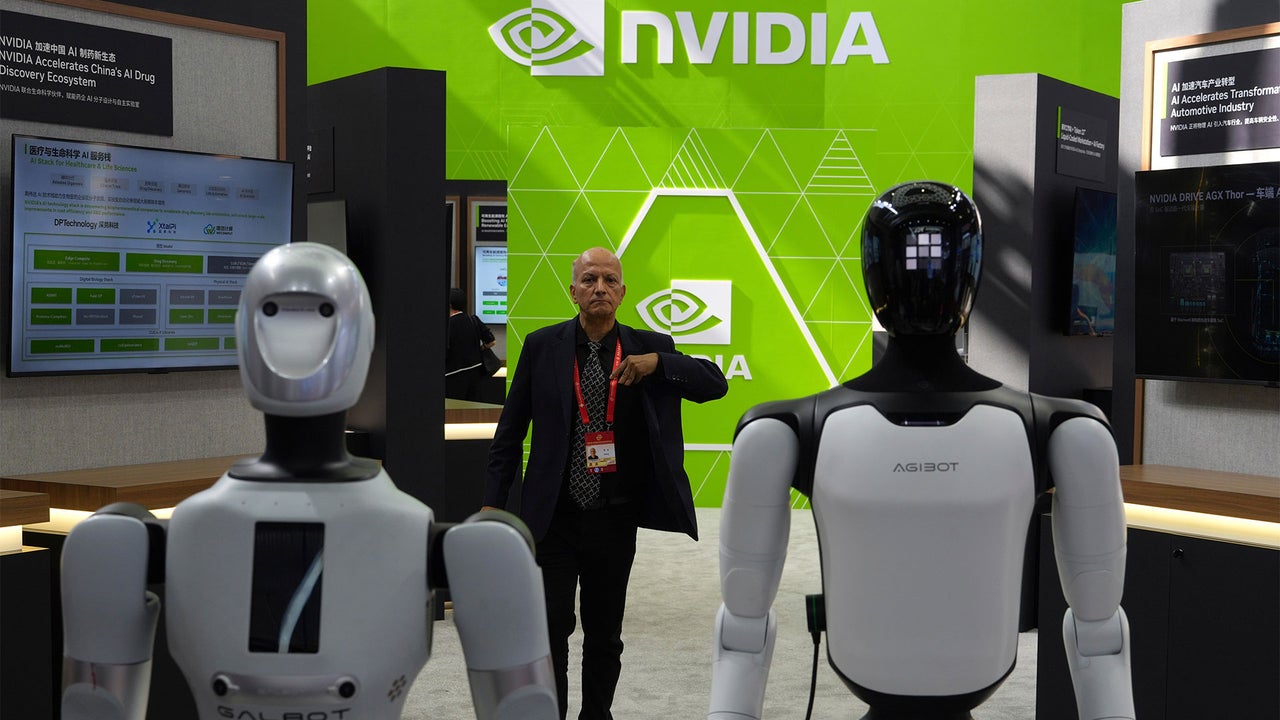
US export controls have dramatically reshaped China’s AI chip market, slashing Nvidia’s share to just 8% while propelling Huawei to a dominant 50% stake. This shift underscores how restrictions on foreign technology have accelerated China’s strategic push for self-sufficiency, forcing domestic champions like Huawei to fill the void left by constrained Nvidia imports.
Enforcement of US export restrictions has intensified, exemplified by Taiwan government raids on Super Micro Computer and affiliates for allegedly smuggling Nvidia chips into China, highlighting the challenges of curbing illicit chip flows amid soaring demand. Despite these crackdowns, China has pragmatically allowed a cautious, limited reopening to Nvidia’s high-end H200 AI chips to alleviate immediate compute shortages faced by leading AI firms such as Alibaba and ByteDance.
Beijing’s partial reopening to Nvidia’s H200 chips is a carefully calibrated policy maneuver balancing urgent AI compute needs against long-term goals of chip independence. While the government permits only a tightly controlled number of imports under strict conditions, it maintains a clear priority on domestic innovation, with Huawei’s next-generation AI chips poised to rival Nvidia’s capabilities and reduce reliance on foreign technology.
China’s cautious partial reopening also highlights broader systemic challenges in achieving AI chip self-sufficiency, including the need for expanded manufacturing capacity, improved memory supply chains, and trustworthy software ecosystems. This underscores that while limited Nvidia imports temporarily ease compute bottlenecks, China’s path to fully autonomous AI hardware remains complex and resource-intensive.



State Muscle Fuels AI Supremacy
China’s massive state-backed compute buildout and targeted VC funding have created an AI powerhouse that leverages supply chain dominance and market control to challenge US tech leadership on multiple fronts.
China’s state-driven AI strategy, marked by massive domestic compute investments and a tightly controlled market ecosystem, is reshaping global tech governance and intensifying techno-nationalist tensions with the U.S. By early 2026, China had deployed 400 gigawatts of coal-powered facilities to expand AI compute capacity—a stark contrast to the U.S., where regulatory hurdles and societal resistance stalled similar infrastructure projects. This aggressive buildout underpins China’s layered market control and parallel technology substitution efforts, reflecting a strategic push to assert sovereignty over AI hardware and semiconductor supply chains while challenging U.S. dominance.
China’s AI and semiconductor ascendancy is fueled by a concentrated, state-adjacent venture capital ecosystem that raised RMB 83 billion across 764 AI companies in 2025, with the top 20 firms capturing 30% of funding. This financial muscle supports a token-based consumption infrastructure that surged from 100 billion to 140 trillion daily tokens in just two years, illustrating how China integrates technology supply with commercial demand at scale. Tech giants like Baidu, Alibaba, Tencent, and Bytedance remain resilient pillars amid regulatory crackdowns, driving innovation and commercialization that increasingly command global respect beyond China’s former reputation as a mere copier.
The intensifying U.S.-China rivalry in AI hardware is not only a battle over technological innovation but also a contest for supply chain dominance and cross-industry influence. China’s unrivaled position as the world’s supply chain capital enables rapid, cost-effective manufacturing that Western markets struggle to replicate, while its leadership in electric vehicle markets complements its AI ambitions, creating a multifaceted techno-nationalist strategy. Meanwhile, Silicon Valley firms are adopting competitive ecosystem-expansion tactics reminiscent of Chinese approaches, signaling a complex interplay of rivalry and adaptation amid stalled governance talks that complicate global cooperation on AI regulation.
Despite the fierce competition, there is growing recognition within U.S. policy circles and industry leaders of the need to accelerate AI infrastructure development to counterbalance China’s rapid commercialization and compute capacity expansion. However, experts caution that overly restrictive export controls risk backfiring, potentially harming U.S. innovation more than China’s, underscoring the delicate balance between strategic competition and the benefits of selective openness. As one analyst noted, the best path forward involves 'open strategic cooperation,' even as the global AI hardware landscape becomes a defining arena of techno-nationalist rivalry.