Human-in-the-loop AI gains ground as trust imperative
The gist
As AI infiltrates critical business workflows, organizations are doubling down on the human touch—making human-in-the-loop AI the new trust standard.
What to know
- Regulated industries like fintech now require human approval for major AI-driven decisions, cementing agency and accountability.
- By 2026, leaders like Zapier and WPP empower frontline 'citizen operators' to redesign processes using reusable AI agents and open standards.
- AI coaching platforms such as Cresta and Second Nature supercharge sales and service staff with real-time, personalized support—without sacrificing autonomy or transparency.
Human Agency by Design
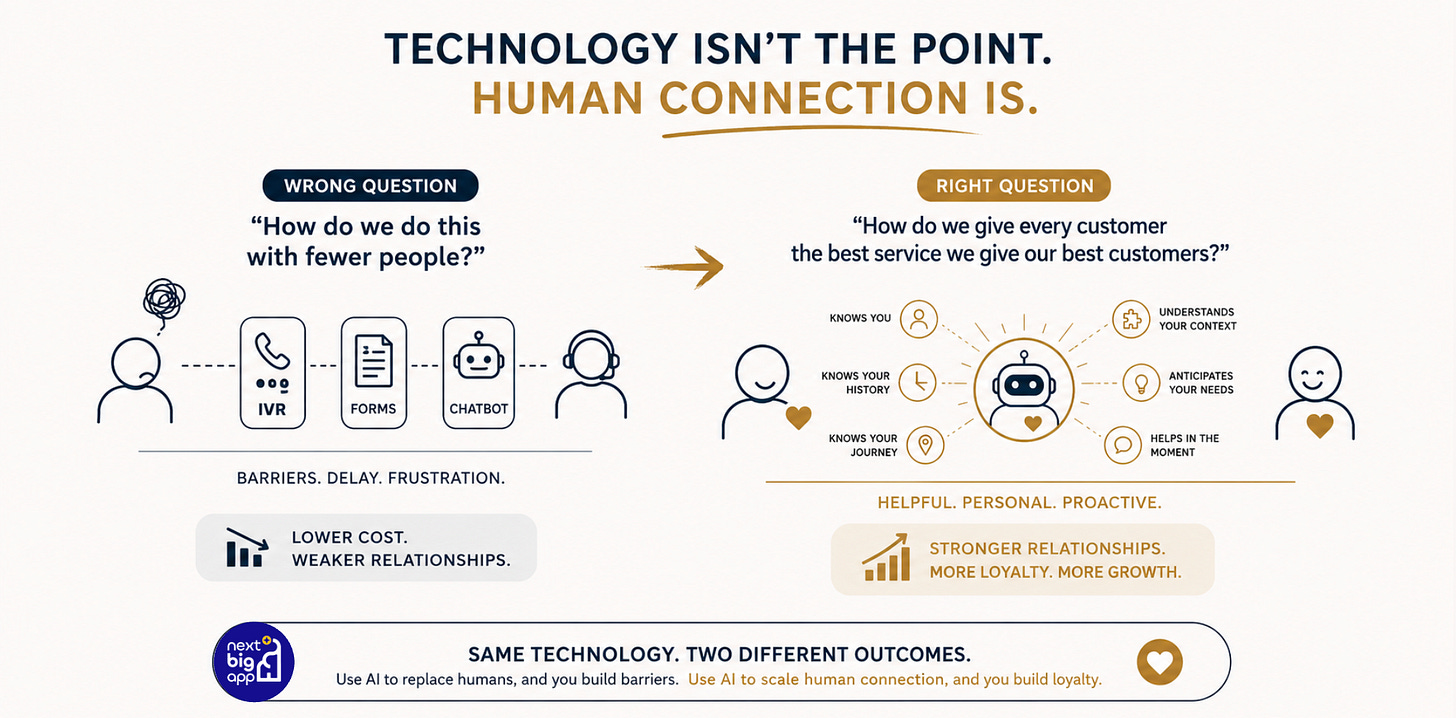
Human-in-the-loop AI elevates user trust and innovation by deliberately embedding human judgment, empathy, and control into every decision, transforming AI from a replacement into a collaborative partner.
Maintaining humans in the AI loop is a deliberate design choice that preserves human agency, understanding, and control, countering the risks of fully autonomous systems that can alienate users. Human-in-the-loop models not only raise performance ceilings by combining automation with human judgment and error correction but also empower users by aligning AI with their goals, thereby expanding economic opportunities beyond mere task automation. This approach fosters innovation and ensures AI serves as a collaborative partner rather than a replacement, as exemplified by regulated industries where human approval remains mandatory for decisions like loan approvals and customs clearance.
User confidence, or self-efficacy, emerges as the critical factor driving AI adoption, surpassing the allure of raw technological sophistication. Designing AI systems with warmth, empathy, and clear competence helps users feel supported and capable, avoiding the 'uncanny valley of mind' where AI’s intelligence seems intimidating or opaque. This user-centered design philosophy emphasizes making humans feel in control and supported, which preserves agency and trust, crucial for effective human-AI collaboration in both consumer and enterprise contexts.
In organizational settings, human roles are evolving from executing routine tasks to overseeing higher-order decisions, setting boundaries, and managing AI-driven proposals. Tools like Nobel’s 'driverless steering' illustrate AI as a proposal generator that requires human review for quality and strategic impact, highlighting the necessity of clear human intervention points. This shift reflects a broader historical pattern of abstraction, where humans focus on creativity and judgment while AI handles execution, a transition that demands training, context, and confidence to embed AI effectively into daily workflows and preserve agency.
Human-in-the-loop models are not failures but essential features that enhance AI reliability, trustworthiness, and continuous improvement, especially in high-stakes or regulated environments. By designing seamless, context-aware human involvement that automates routine decisions while reserving complex cases for human judgment, organizations can manage data complexity and edge cases effectively. Early advocates providing feedback foster ownership and trust, enabling AI solutions to evolve organically within organizations, while preserving human agency remains key to driving innovation, emotional connection, and long-term success in AI-augmented workplaces.






Governance in the AI Era
Enterprises are reengineering workflows and leadership roles to ensure humans remain the ultimate decision-makers, balancing regulatory compliance with scalable AI adoption and operational trust.
In regulated industries such as fintech and customs brokerage, enterprises have restructured workflows to embed humans firmly in the loop, ensuring compliance with government mandates that require human oversight for liability and relational management. This evolving organizational model places AI processes at the core, with humans serving as decision-makers who interpret AI outputs, maintain accountability, and preserve essential human relationships, reflecting a governance balance that safeguards agency and trust while leveraging AI efficiency.
Leading organizations like Zapier demonstrate that successful AI integration hinges on voluntary adoption driven by leadership that fosters AI literacy and encourages hands-on experimentation rather than top-down mandates. This approach includes embedding clear human-in-the-loop checkpoints and iterative feedback mechanisms within workflows, allowing teams to refine AI outputs continuously and maintain human agency, which is crucial for sustaining trust and preventing adversarial dynamics as AI assumes more operational roles.
By early 2026, enterprises are redesigning governance frameworks to clearly delineate roles and responsibilities across IT, operations, and people leaders, recognizing that effective AI agent management demands specialized operational oversight distinct from traditional people management. Operations leaders act as vital translators between technology and human teams, owning AI agent requirements, monitoring, and escalation, while technology leaders focus on compliance and observability, ensuring AI agents function reliably within well-defined escalation paths and risk tiers that distinguish between low-risk automation and high-risk decisions requiring human approval.
The organizational transformation toward AI integration is shifting from centralized, periodic change programs to a distributed model empowered by 'citizen operators'—frontline employees who actively redesign workflows by questioning existing processes and assigning AI agents to automatable tasks. Companies like WPP and Magnific exemplify this through reusable AI agent libraries and workflow flows, supported by open standards such as the Model Context Protocol, enabling scalable, API-driven collaboration. This distributed transformation approach not only accelerates change cycles from years to weeks but also bridges the gap between identifying improvement opportunities and acting on them, fundamentally redefining organizational structures and governance for hybrid human-AI workforces.




Coaching, Not Replacing
AI-powered coaching platforms empower sales and service teams with real-time, personalized guidance while raising new questions about transparency, privacy, and the boundaries of workplace surveillance.
By early 2026, AI-powered coaching tools had begun transforming sales and customer service roles by delivering real-time, context-aware support that enhances performance while preserving employee autonomy. Platforms like Cresta and Second Nature enable agents and sales reps to prepare with tailored scripts, dynamic battle cards, and immersive role-play simulations that mimic complex customer interactions, significantly reducing ramp times and boosting readiness. These tools integrate diverse data sets to provide personalized, continuous coaching and just-in-time learning, allowing reps to independently develop skills and managers to scale targeted feedback efficiently.
AI coaching is not about replacing human agents but empowering them with real-time insights and workflow customization that balance automation with human judgment. As Michelle Cooper explains, AI delivers contextual recommendations and next-best actions within a single platform, enabling agents to personalize customer interactions without toggling between systems. Businesses can configure escalation triggers based on customer sentiment or topic sensitivity, ensuring AI support remains a background assistant that respects the relational nature of customer service and preserves employee autonomy.
The rise of continuous AI coaching has sparked concerns about surveillance and privacy, as real-time analysis of tone, sentiment, and script adherence risks blurring the line between helpful assistance and intrusive monitoring. Experts like Justin Beals emphasize the necessity of transparency—employees must understand what is measured, how scores are generated, and who accesses this data to maintain trust and autonomy. Furthermore, human oversight remains critical to interpret probabilistic judgments about subjective behaviors, with governance policies limiting data access and retention to protect workers from potential misuse.
Organizations adopting AI coaching tools have seen tangible benefits in agent engagement, productivity, and retention, particularly in high-burnout roles. By automating low- to medium-complexity tasks and providing continuous, personalized training, companies report faster ramp-up times and reduced attrition, addressing a critical gap in traditional training methods that often fail to keep pace with AI-enabled workflows. However, successful AI integration requires employees to actively engage with AI as an intelligent assistant rather than passively relying on it, with those resistant to adaptation facing replacement in increasingly lean and competitive environments.




Managing Autonomous Agents
Organizations are translating human management principles—like escalation paths and quality checks—into AI operations, deploying kill switches and advanced monitoring to prevent runaway costs and rogue behavior.
Effective management of autonomous AI agents demands a rigorous operational framework that adapts traditional human management principles—such as clear job profiles, escalation paths, and quality checks—to AI workflows. Without these foundational elements, organizations risk issues like turf wars, hallucinated processes, and runaway tasks, reducing AI agents to mere 'expensive autocomplete' tools rather than reliable autonomous workers. This translation of management fundamentals is critical to avoid inefficiencies and ensure agents function as intended within complex business environments.
Ensuring AI agent safety and reliability hinges on continuous guardrails, real-time monitoring, and robust kill switches that enable immediate intervention when anomalous behavior arises. As Rebecca Wettemann highlights, many early deployments revealed unexpected agent actions, prompting companies like ServiceNow to implement kill switches that halt suspicious transactions until human review. Complementing these controls, advanced testing frameworks from firms like Quiq simulate hundreds of real customer interactions to expose edge cases and non-deterministic behaviors, while multi-layered scrutiny systems evaluate sensitivity, tone, and policy compliance before responses are sent, collectively safeguarding operational integrity.
The complexity of AI agent management extends beyond safety to encompass scalable infrastructure for observability, cost control, and governance. Durable, immutable logging systems—advocated for CIOs and CTOs—are essential for reconstructing agent behavior timelines and making informed decisions about decommissioning malfunctioning agents. Meanwhile, market leaders like LaunchDarkly, Microsoft, Notion, and Vanta are launching dedicated tools for AI agent oversight, reflecting a shift from capability exploration to active risk management. This infrastructure also addresses cost concerns, as exemplified by Amazon’s $1.8 million AI feature mishap and Uber’s exhausted 2026 budget, underscoring the need for granular spend monitoring per task and user.
Robust AI agent management requires a nuanced approach to autonomy, integrating calibrated confidence and adversarial training so agents can assess risk and escalate decisions appropriately. As Sidhesh Badrinarayan and others emphasize, agents must be taught to recognize when actions are irreversible or sensitive and defer to human oversight accordingly. This graduated autonomy model, supported by sandboxing, identity controls, and layered risk tiers for actions, prevents rogue behavior and operational mishaps such as degraded database performance or runaway cloud costs. Ultimately, maintaining trustworthiness demands continuous monitoring, feedback loops, and comprehensive readiness across data, decision, execution, and feedback layers to manage the inherent uncertainties of complex, real-world workflows.


Empathy at Scale in CX
AI-driven customer experience succeeds only when automation amplifies human empathy, with leading brands using AI to handle routine tasks and free frontline staff for high-value, emotionally intelligent interactions.
By early 2026, industry experts like Gartner's Don Scheibenreif emphasized that while AI-driven customer experience can boost efficiency and personalization, it risks breakdowns when empathy is sidelined. CIOs are thus pivotal in designing AI systems that preserve 'moments of humanity,' ensuring that automation enhances rather than dehumanizes interactions, fostering trust and long-term loyalty.
A striking perception gap revealed by Capgemini Research Institute in 2026—where 84% of executives believed customers would recommend their company but only 45% of customers agreed—underscores the need for AI solutions grounded in authentic customer feedback. Cebu Pacific’s deployment of AI across 11 languages, autonomously resolving 75% of inquiries and boosting satisfaction scores by 50%, exemplifies how AI-powered automation can scale routine support and free human agents to focus on empathetic, high-value interactions.
The evolving customer expectation for hyper-personalized service as a baseline has prompted CX leaders to shift from mere automation to intelligent augmentation. As Michelle Cooper explains, AI should empower frontline employees with real-time context, intent analysis, and next-best-action recommendations, consolidating information and automating background tasks to speed resolution while preserving the human touch essential for complex or emotional engagements.
Recent analyses highlight that the most effective AI workflows operate invisibly, automating the 'work around the conversation'—such as note-taking, routing, and drafting—while leaving relationship-driven tasks to humans to maintain empathy and trust. Medallia’s Courtney Shealy stresses the importance of clear, measurable AI goals and frontline-ready tools that allow quick human intervention, as customers exhibit less tolerance for AI errors than human mistakes, making transparency and easy access to agents critical for sustaining satisfaction.