Human roles get a strategic AI makeover
The gist
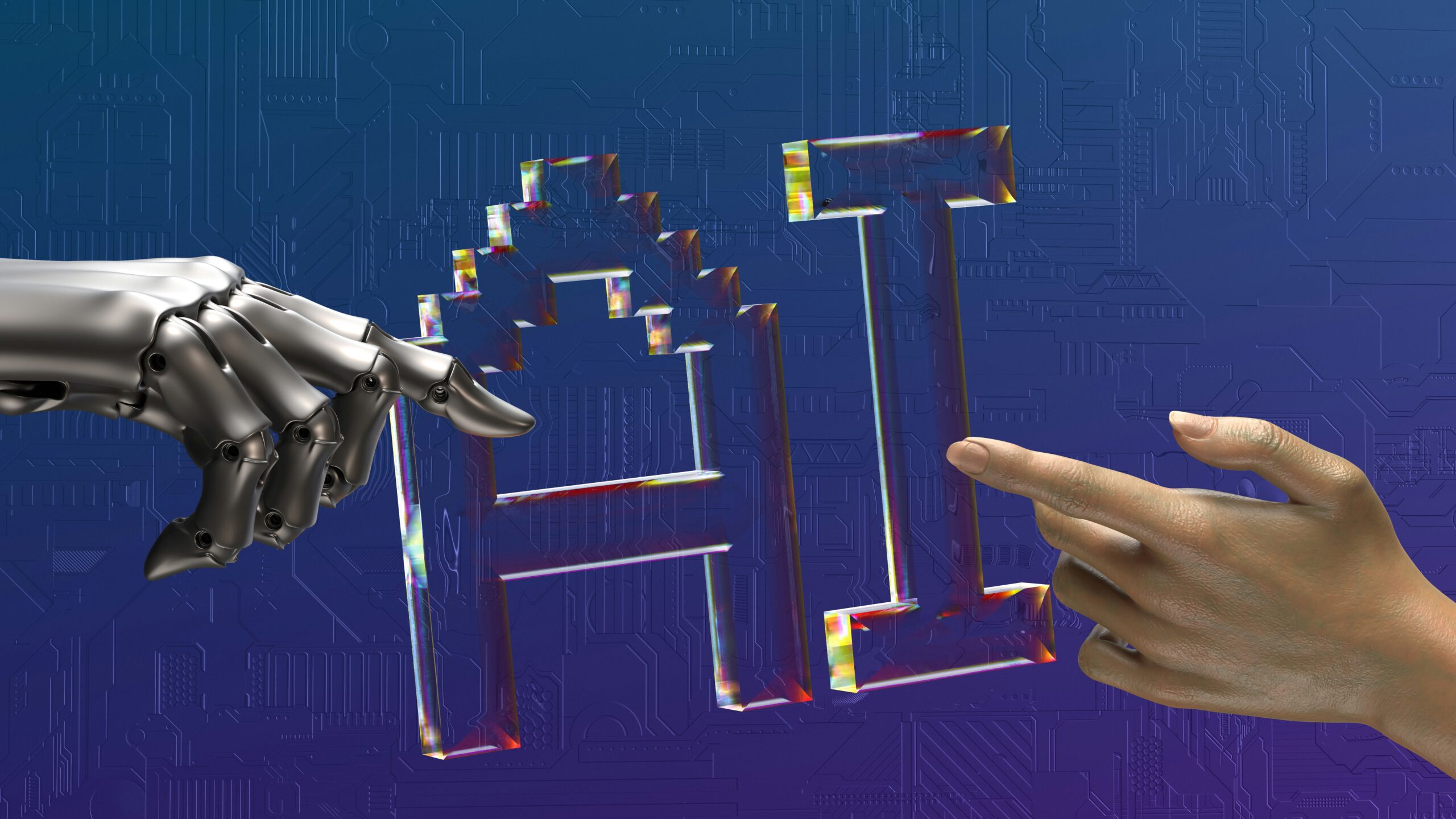
AI isn't taking your job—it's taking a seat at the table, forcing companies to reimagine human roles as strategy, governance, and creativity become the new essential skills.
What to know
- By late 2025, major enterprises like Zapier, Nobel, and Salesforce prioritized human-AI collaboration, with 40% of enterprise apps predicted to feature task-specific AI agents by year-end.
- Hybrid governance models now require humans to oversee and approve AI-driven decisions, especially in regulated sectors like fintech, ensuring human accountability remains non-negotiable.
- Cultural and organizational shifts are underway as HR leaders champion AI onboarding, with companies like Workday, Netflix, and Toyota leveraging AI to cut routine workload and supercharge creativity.
Designing for Human Agency
Enterprises are deliberately engineering AI systems to keep humans in control, countering the natural push toward full automation and ensuring AI augments—rather than replaces—human decision-making.
By late 2025, it became clear that preserving human agency within AI systems is not a passive outcome but a deliberate design choice, countering the natural drift toward full automation for scalability. Analysts emphasized that keeping humans 'in the loop' actively supports collaboration and empowerment, enabling AI to augment rather than replace human roles. This perspective envisions AI models that truly understand and align with human goals, expanding economic opportunities by growing the overall 'pie' instead of merely automating away jobs, thus fostering innovation and richer human-AI partnerships.
Early AI benchmarks focused on autonomous extended reasoning tasks lasting two to two-and-a-half hours without human intervention, showcasing impressive technical progress but simultaneously raising concerns about diminishing human understanding and control over AI outputs. This tension highlighted the risk that as AI systems become more capable of independent operation, human agency and oversight could erode, underscoring the importance of maintaining meaningful human involvement despite AI’s growing autonomy.
In highly regulated sectors like fintech, government mandates explicitly require human oversight for critical AI-driven decisions, such as loan approvals, reinforcing the indispensable role of humans in AI workflows. Early practical experiments demonstrated AI’s utility as an error-reducing assistant—for instance, customs brokerage teams employed AI 'spell checkers' to catch subtle mistakes like confusing country codes between Australia and Austria. This synergy illustrates how AI can optimize core processes while humans retain ultimate decision-making authority, liability acceptance, and relationship management within organizational ecosystems.
Despite rapid advances in AI capabilities, human preferences continue to favor collaboration with other humans over AI partners, reflecting deep-rooted social and cognitive factors. This enduring preference signals that even as AI becomes more integrated into workplaces, the fundamental human need for interpersonal connection and trust remains a cornerstone of effective teamwork, shaping how organizations redesign work for human-AI collaboration.


AI as a True Collaborator
AI agents are now embedded as team members, receiving performance reviews and challenging human thinking, redefining roles to focus humans on strategic and emotional tasks while AI handles the routine.
By late 2025, enterprises like the podcast team employing the AI co-producer Blair exemplified a transformative shift from viewing AI as mere tools to embracing them as active collaborators embedded within team dynamics and workflows. This evolution involved human-in-the-loop patterns where AI not only received direct human feedback through 360 performance reviews but also self-updated to improve its contributions, transitioning from sycophantic support to challenging and deepening human thinking. Such integration redefined roles by allowing humans to focus on higher-level strategic and emotional tasks that AI cannot replicate, highlighting a nuanced partnership rather than simple automation.
Leading companies like Zapier and Nobel have championed voluntary AI adoption strategies, emphasizing employee choice and leadership-driven education to foster trust and acceptance rather than mandating AI use. Zapier’s approach includes embedding human-in-the-loop workflows that enable iterative AI improvement and maintain human oversight, while Nobel’s 'driverless steering' system illustrates AI as a strategic advisor generating proposals that require human managerial review for quality and business impact. This balance preserves human agency and mitigates resistance, as over-automation risks provoke pushback and workaround behaviors among teams.
By early 2026, enterprises increasingly recognized that successful AI integration demands a fundamental redesign of workflows and roles with clear delineation of human and AI responsibilities to prevent accountability gaps and harmful outcomes. Exemplified by Epic’s sepsis detection requiring human confirmation and Michigan’s MiDAS fraud system failure due to unclear accountability, organizations now embed deliberate human judgment points—such as interpretation, decision authority, and intentional friction—to ensure AI acts as a tool producing outputs while humans retain decision-making and accountability. This human-in-the-loop design is not a fallback but a vital feature enhancing AI reliability and trustworthiness, as Amazon’s escalation patterns demonstrate.
Throughout 2026, the rapid adoption of AI task-specialized agents—projected by Gartner to reach 40% of enterprise applications by year-end—has driven a profound reimagining of job roles, team structures, and workflows. Enterprises like Salesforce reskill tens of thousands of employees to develop human skills alongside structured human-agent collaboration, shifting talent from task execution to directing AI outputs and owning outcomes. This role redesign prioritizes strategic, architectural work over routine tasks, with AI acting as a workforce multiplier for individual contributors, fundamentally changing communication patterns and requiring CHRO-led organizational redesign to realize AI’s full growth potential beyond mere cost reduction.
By mid-2026, HR leaders have moved beyond debating AI adoption to focusing on responsible integration that redesigns roles and workflows to augment rather than replace human work. Tools like JOBTOPGUN’s AI candidate analysis exemplify human-in-the-loop hiring processes that flag candidates for human review, supporting fairness and evidence-based decisions, while AI-powered platforms enable proactive talent hunting and real-time workforce insights. However, organizational readiness—encompassing quality data, leadership alignment, and workforce visibility—remains the critical bottleneck, with HR functions evolving from operational coordinators to strategic designers who rebuild workflows around AI to unlock higher-value, non-automatable work and enhance managerial effectiveness through AI-prepared context.





Hybrid Governance in Action
New organizational models assign AI as the operational core but require human oversight and approval, balancing efficiency with accountability and preventing overreliance on automation.
Since late 2025, organizational structures in regulated industries like fintech and customs brokerage have evolved to embed humans in the loop, mandated by government regulations to manage AI decision-making and liability. This hybrid governance model positions AI as the operational core while humans retain ultimate responsibility for decisions, accountability, and maintaining inter-organizational relationships, reflecting a persistent human preference for interpersonal collaboration despite AI automation advances.
By early 2026, companies like Nobel exemplify hybrid governance frameworks where AI acts as a proactive assistant—generating data-driven proposals that leadership teams must review and approve—thereby preserving human agency and preventing overreliance on AI. This approach balances AI’s efficiency with human judgment, as excessive AI control has led to team pushback and circumvention, underscoring the necessity of human-in-the-loop interventions focused on quality, accuracy, and long-term impact.
Organizational design is rapidly adapting to integrate AI agents as formal workforce members, requiring new structures that support three distinct modes of work: building, operating, and strategizing AI capabilities. Leadership roles are shifting accordingly—campaign managers now operate AI agents to draft content, while strategists set directions that leverage human-agent collaboration. However, current workflows and governance frameworks lag behind AI’s output capacity, creating a bottleneck that demands comprehensive structural redesign rather than merely increasing AI deployment.
HR leaders, exemplified by Workday’s Dawkins, are emerging as pivotal architects and gatekeepers in hybrid workforce governance, continuously refining flexible job architectures and ethical boundaries between human and AI responsibilities. Effective governance demands clear role definitions, ongoing collaboration between HR and business units, and leadership focus on preserving meaningful human interactions and developing skills like communication and empathy that AI cannot replicate. This strategic partnership between CHROs and CIOs is critical to embedding governance, oversight, and escalation protocols from the outset, especially as Gartner projects that by 2028 Fortune 500 companies will operate over 150,000 AI agents—yet only 13% feel adequately prepared.


AI Supercharges Creative Teams
Creative industries and HR are leveraging AI not just for output, but for iterative collaboration and career development, with humans maintaining oversight to ensure quality and empathy remain central.
By late 2025, research underscored that AI's role in creative industries transcends mere idea generation, emphasizing the necessity of structured human-AI collaboration to truly augment creativity. Netflix's integration of AI to analyze character arcs and audience trends exemplifies this partnership, where AI supports human writers rather than replaces them. This evolving dynamic reflects a shift from AI as a passive tool to an active collaborator engaging in joint refinement and shared learning with humans, as Cambridge Judge Business School's Dr. Yeun Joon Kim highlights.
By mid-2026, creative sectors witnessed a transformation with AI agents managing iterative processes rather than just outputs, enabling creators greater control and transparency. Adobe’s introduction of conversational AI assistants and WPP’s Agent Hub illustrate this trend toward agentic AI systems that orchestrate content supply chains and marketing workflows. The Model Context Protocol (MCP) further facilitates seamless integration across platforms, heralding Gartner’s prediction that 40% of enterprise applications will embed task-specific AI agents by year-end, provided workflows are redesigned around these agents rather than simply layering AI onto old processes.
In HR and talent management, AI adoption surged dramatically by mid-2026, with companies like Workday reporting a 25% reduction in HR workload and automating up to 90% of finance processes, including saving 900 hours annually through AI-driven audits. AI-driven tools democratize career development by identifying transferable skills and new roles, helping to alleviate imposter syndrome among underrepresented groups. However, experts stress that human oversight remains critical, especially in consequential decisions, with communication and empathy becoming indispensable skills for HR leaders to validate AI outputs and maintain human connection.
Municipal and manufacturing sectors showcase AI’s practical impact on operational efficiency and workforce support. Raleigh, North Carolina’s deployment of ServiceNow’s L1 AI Specialist cut IT support costs by automating ticket triage with 98-99% accuracy, while Toyota integrates AI and robotics to assist with hazardous tasks and accelerate skill transfer, envisioning AI supporting 80% of work tasks. Toyota’s philosophy frames AI as a collaborative 'buddy' enhancing human kaizen efforts rather than a cost-cutting substitute, highlighting how AI augments skilled labor and promotes continuous improvement.


Workforce Mindset Overhaul
HR leaders are driving a cultural transformation where employees become 'AI whisperers,' orchestrating AI agents to reduce overwork and push organizations to confront the realities of redundant roles.
By mid-2026, organizations faced the pressing challenge of confronting AI's growing capability to perform operational tasks traditionally done by humans, such as information gathering and workflow coordination. However, many companies hesitated to engage in honest conversations about eliminating redundant roles, opting instead to frame AI adoption as mere productivity experimentation. This reluctance risks maintaining unnecessary labor costs and delays essential organizational redesign, as leaders are urged to critically evaluate whether repetitive, routine functions should remain staffed or be integrated into AI-enabled workflows.
The cultural shift required for AI adoption extends beyond technical integration to a fundamental transformation in workforce mindset and collaboration. HR leaders, rather than just IT teams, have taken the helm in navigating humane and profitable AI integration, emphasizing that AI agents are becoming part of organizational charts alongside humans. This evolution demands that employees transition from defending outdated workflows to becoming 'AI whisperers' who redesign processes and orchestrate AI tools, fostering a collaborative environment where AI alleviates overwork rather than threatens job security.
Successful AI adoption hinges on organizational readiness and gradual trust-building akin to traditional employee onboarding, as illustrated by Raleigh CIO Mark Wittenburg's approach to training the AI service agent 'Alli.' This process involves iterative learning, data refinement, and cross-functional engagement to foster acceptance and mitigate fears of displacement. Wittenburg's strategy—grounded in a strong data infrastructure and ongoing cultural education—demonstrates that positioning AI as a tool to enhance staff efficiency can transform skepticism into advocacy within organizations.
Despite AI's promise, resistance persists due to misconceptions framing AI as mere automation rather than a transformative skill requiring new thinking and workflow redesign. Experts emphasize the necessity of human-in-the-loop processes to manage data complexities and edge cases, ensuring governance and ethical oversight. The San Francisco store experiment with AI manager Luna highlights ongoing challenges in autonomous AI decision-making and the critical role of human supervisors, underscoring that cultural transformation is vital to embracing AI as a collaborative partner rather than a replacement.

AI Powers Research Breakthroughs
Human-AI teams are producing higher-quality knowledge at unprecedented speed, with agentic AI handling routine work and freeing researchers to focus on judgment, strategy, and creative breakthroughs.
By early 2026, human-AI collaboration in research and innovation was evolving into a synergistic partnership where AI agents like Claude Code augmented human creativity and judgment rather than replacing it. Researchers expanded their teams to oversee AI agents, leveraging these tools not just to increase output but to exponentially enhance the quality and impact of knowledge produced, as reflected in the challenge to create '100x the knowledge, and not just 100x the amount of papers.' This synthesis of human intuition and AI's data processing capabilities enabled rapid, high-quality outputs—such as generating a 40-page document in four hours—that were driven by human perspective rather than AI alone.
AI tools have increasingly become a 'superpower' for professionals by automating repetitive tasks and freeing up time to tackle complex problems and strategic planning. As one expert noted, these technologies turbocharge consultants beyond what was previously possible, enabling a focus on solving 'the real problems' rather than mundane work. This shift underscores the emerging view of AI as an enabler of higher-order human work, amplifying creativity and strategic impact.
The rise of agentic AI—systems capable of autonomous task execution with infinite patience but limited creativity—is transforming workflows by offloading routine, patience-intensive tasks to AI, thereby allowing humans to concentrate on governance and strategic oversight. However, deploying these agents at scale faces significant security and governance challenges, prompting innovations like Prediction Guard, an AI control plane that enforces organizational policies within secure infrastructures. This evolution requires rethinking human roles from direct task replication to operational oversight, focusing on what tasks truly necessitate human creativity versus those better suited for AI.
As autonomous AI systems become more prevalent, human roles are shifting away from granular decision-making toward higher-order governance and strategic rule-setting. This transition mirrors historical patterns of technological progress, where humans abstract away from mundane tasks to engage in more complex, higher-level thinking and execution. Embracing agentic AI’s novel problem-solving approaches challenges traditional workflow designs and encourages organizations to redefine the 'rules of the game' within which AI operates autonomously.