Humanoid robots scale up, value questions grow
The gist
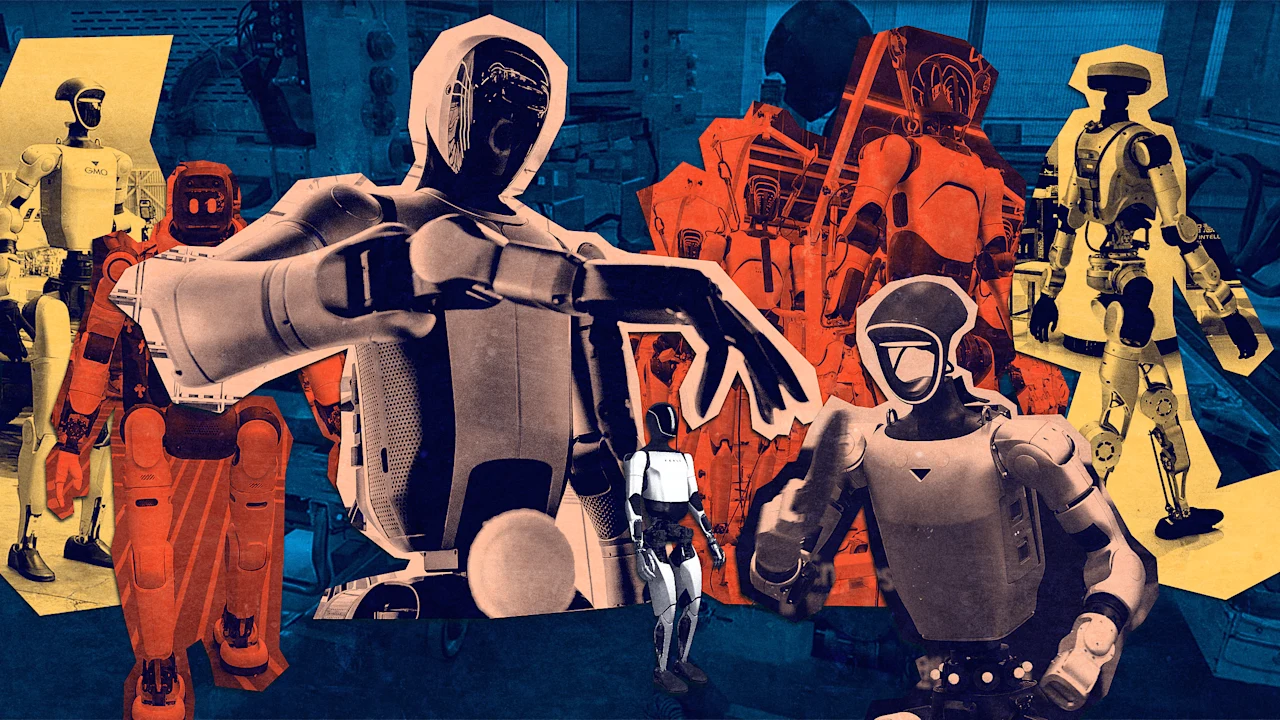
Humanoid robots are finally hitting factory floors and warehouses at scale, but fierce debate rages over whether they’re worth the hype—or the price tag.
What to know
- Tesla and Figure AI are pushing mass-market humanoids, with China dominating the race by controlling 90% of key robot components and offering prices as low as $17,600.
- Breakthroughs in AI and hardware have enabled robots to take on complex, human-like tasks in real-world industries, with deployments like Figure’s robots assembling 30,000 BMWs and Ultra Robotics handling 30% of orders in a major U.S. warehouse.
- Skeptics warn these robots struggle outside repetitive roles, face steep costs, and lack strong U.S. policy backing—fueling doubts about their economic and practical value compared to traditional automation.
From Demos to Deployment
A wave of specialized humanoid robotics startups is moving from flashy prototypes to real-world trials, fueled by billions in funding and fierce competition from aggressive Chinese entrants like Unitree.
By early 2026, the humanoid robotics landscape witnessed a surge of specialized players transitioning from proof-of-concept demos to real-world pilot deployments across diverse sectors such as assisted living, manufacturing, and hazardous environments. Companies like Neo advanced teleoperated robots in assisted living facilities, mirroring Tesla’s remote-control approach to ensure operational reliability during early trials, while Boston Dynamics and Persona targeted industrial and high-risk settings including oil rigs and nuclear plants. This shift from controlled demonstrations to practical trials underscored the sector’s maturation and readiness for broader adoption.
The market’s competitive dynamics were shaped by distinct business models and funding trajectories, with firms like Agility Robotics securing over $400 million to deploy robots in Amazon fulfillment centers, while Persona focused on niche hazardous jobs backed by $27 million in funding. Meanwhile, Unitree emerged as a formidable Chinese contender, leveraging substantial government support to produce low-cost robots and aggressively undercut Western rivals, positioning itself as a 'wild card' in the global race and preparing for an IPO to scale rapidly.
Figure AI rapidly ascended as a dominant force by mid-2026, amassing nearly $1.9 billion since its 2022 inception and emphasizing vertical integration with in-house AI development after founder Brett Adcock parted ways with OpenAI. This investment fueled the deployment of the Figure 03 robot in pilot programs with industry giants like BMW and UPS, where it demonstrated near-human proficiency by narrowly losing a 10-hour package-sorting competition to a human intern, signaling a significant leap from demos to impactful real-world applications.
Tesla dramatically scaled its humanoid robotics ambitions in 2026 by repurposing Fremont’s manufacturing lines to produce the Optimus robot, targeting an unprecedented output of up to 10 million units annually. Leveraging proprietary AI systems derived from its self-driving technology and pioneering the 'Optimus Academy'—a novel training method where robots learn through self-play—Tesla aims to disrupt the market with a sub-$20,000 price point per unit. This strategy not only undercuts Western competitors but also signals a bold shift from concept to mass production and widespread pilot deployments.

China’s Humanoid Robot Blitz
China’s state-backed ecosystem is flooding global markets with affordable, vertically integrated humanoids, outpacing Western rivals and leveraging robots for both civilian and military use.
China's rapid ascendance in humanoid robotics is anchored in its unparalleled vertical integration and supply chain dominance, controlling roughly 90% of critical components such as actuators and motors. This comprehensive ecosystem, exemplified by companies like Unitree and UBTECH, enables faster iteration cycles, aggressive pricing—with robots starting as low as $17,600—and swift commercialization, positioning China as the global leader in physical robot deployment. By early 2026, Aggiebot had shipped 10,000 humanoid robots across 17 countries, underscoring China's ability to flood the market with cost-competitive, highly capable robots that address pressing labor shortages in sectors ranging from factory floors to elderly care.
China's humanoid robotics surge is deeply intertwined with strategic government support and demographic imperatives. The Chinese government's five-year plan explicitly integrates humanoids as 'embodied AI,' coupling artificial brains with bodies, and backs this vision with incentives like cheap land, favorable loans, buyer subsidies, and direct deployment in public services. This state-led approach not only accelerates adoption but also extends to potential military applications, such as 'robocops' in cities like Hangzhou, reflecting a dual-use strategy that amplifies the technology's strategic significance amid an aging population and acute labor shortages.
In stark contrast, the United States pursues a robotics strategy focused on AI foundation models and legislative barriers rather than large-scale physical deployment. While Google DeepMind integrates its Gemini robotic models into 20,000 industrial robots worldwide, U.S. lawmakers have introduced bipartisan bills to restrict Chinese-made robots from federal and sensitive facilities over data security concerns. This divergence highlights a geopolitical dimension where the U.S. emphasizes software sophistication and regulatory caution, whereas China prioritizes scalable, flexible, and cost-effective humanoid robots that excel in real-world adaptability beyond controlled demos.
Experts, including former NASA robotics leadership, critique the U.S. approach as overly focused on brittle, single-task robots optimized for controlled environments, contrasting sharply with China’s pragmatic scaling that addresses real labor market needs. The absence of comprehensive federal incentives for deployment—beyond R&D tax credits—hamstrings American efforts, while China’s vertically integrated supply chain and government-backed deployment create a robust ecosystem for rapid humanoid robot adoption. This strategic gap risks leaving the U.S. trailing in the global robotics race, as China applies a playbook reminiscent of its electric vehicle dominance to reshape manufacturing and labor worldwide.





General-Purpose Robots Arrive
Humanoid robots are breaking out of niche roles, as advances in AI, sensing, and power management enable them to handle complex, human-centric tasks in unpredictable industrial environments.
By mid-2026, humanoid robotics have evolved from niche industrial tools into versatile machines capable of operating seamlessly in human-centric environments, as exemplified by Figure’s 11-month deployment at BMW’s Spartanburg plant where Figure 02 robots loaded over 90,000 parts contributing to 30,000 X3 vehicles. This shift is embodied by robots like Apptronik’s Apollo and Agility’s Digit, designed specifically to navigate and perform complex tasks in spaces built for humans, signaling a transition from purpose-built to general-purpose humanoid robots that can assist in manufacturing and logistics.
The integration of AI with advanced robotics hardware and sensing technologies has accelerated operational efficiency in logistics and manufacturing, with Amazon deploying its millionth robot by mid-2025 and introducing the DeepFleet foundation model to improve fleet travel time by 10%. Similarly, collaborations such as Kawasaki Robotics and Dexterity Inc. combine precision-engineered robot arms with AI-driven humanoid systems to tackle complex warehouse tasks like trailer loading, overcoming traditional automation’s limitations in unpredictable environments through physics-informed AI and real-time adaptability.
Technological breakthroughs in system-level integration—melding torque-dense motors, series elastic actuators, AI accelerators, and high-resolution tactile sensors—have empowered humanoid robots to perform precise, coordinated movements with real-time perception and resilience in harsh industrial settings. Drawing on innovations from electric vehicle battery and thermal management, manufacturers have enhanced power management and durability, addressing critical challenges highlighted by experts like John Quinlan who notes that converting onboard energy into usable power remains a serious design hurdle limiting robot performance despite rapid advances in mobility, dexterity, and vision.
While the promise of generalized humanoid robots remains tempered by ongoing challenges in tactile sensing and simulation, industry leaders foresee physical AI’s transformative impact across physical industries over the next decade, emphasizing vertical integration with specialized platforms tailored to sectors like construction and logistics. OpenAI’s strategic pivot to robotics, led by Aditya Ramesh, underscores this trajectory, focusing on embodied AI to support infrastructure development and signaling a market potentially surpassing GPUs in scale and longevity, with humanoid robots poised to become critical participants in both terrestrial and extraterrestrial environments.



Factories Embrace Humanoid Scale
Humanoid robots are scaling up in warehouses and factories without costly retrofits, with innovative business models and plug-and-play tech lowering barriers for mid-market adoption.
By mid-2026, commercial deployments of humanoid robots have moved decisively beyond pilot phases into operational scaling across factories, warehouses, and logistics hubs. Collaborations like Kawasaki Robotics and Dexterity’s integration of the RL030N robot arm with Mech humanoids exemplify how precision engineering combined with enterprise-grade Physical AI software is overcoming traditional automation limits in complex, variable warehouse tasks such as trailer unloading and mixed-SKU picking. Meanwhile, Apptronik’s Apollo robots, rooted in over a decade of NASA research, have proven their versatility and endurance on Mercedes-Benz assembly lines, seamlessly integrating into human-centric workflows to perform tedious tasks without fatigue. This transition from experimental demos to real-world manufacturing and logistics is further underscored by Boston Dynamics’ Aya Durbin, who highlights the critical role of AI-driven training methods like reinforcement learning in enabling humanoids to tackle flexible, high-dexterity industrial work that is difficult to staff and retain.
The economic rationale for humanoid robot deployment is becoming increasingly compelling as factories and warehouses—designed inherently for human workers—allow humanoids to substitute one-for-one without costly retrofits. Analyses reveal that once humanoid costs dip below human labor expenses or deliver superior speed and quality, their adoption becomes financially justifiable. This is evidenced by deployments in warehouse settings where humanoids operate within existing human infrastructure, leveraging human motion data to accelerate training and integration. Such practical ease of adoption is exemplified by Highline Commerce’s expansion to a 60,000-square-foot facility at Industry City, where Ultra Robotics’ humanoid fleet now fulfills up to 30% of orders, demonstrating both operational scaling and seamless integration within established workflows.
Innovative operational models and technology advances are lowering barriers for widespread humanoid robot deployment in mid-market industrial settings. Highline Commerce and Ultra Robotics’ co-location strategy—sharing the same facility—enabled rapid commercial rollout without seven-figure contracts, dedicated integration teams, or facility retrofits, a breakthrough for the roughly 15,000 independent U.S. 3PL operators outside Amazon’s ecosystem. Additionally, Ultra Robotics’ Operator OP1 robot, a stationary dual-arm system confined to a fixed workstation, sidesteps complex mobility challenges, reducing friction and deployment complexity. Complementary advances such as no-code, explosion-proof cobots from Hirebotics and edge AI inference modules like DEEPX AI HAT further facilitate autonomous robotics integration by lowering capital costs and eliminating cloud dependencies, collectively marking a new era of scalable, economically viable humanoid robotics in industry.


Skeptics Expose Humanoid Hype
Despite headline-grabbing demos, experts warn that humanoid robots remain brittle, expensive, and less productive than humans or specialized machines—raising doubts about their economic value.
By mid-2026, experts widely criticized humanoid robots for their limited practical viability, especially when compared to specialized industrial automation. Despite impressive demonstrations, robots like Figure AI’s 02 model at BMW performed only single, repetitive tasks over extended periods, revealing a stark gap between controlled environment success and real-world adaptability. A Stanford report underscored this divide, showing robots with nearly 90% success in simulations managed just 12% of household tasks, highlighting their brittleness outside narrow training conditions.
Skepticism deepened around the economic and operational feasibility of scaling humanoid robots, particularly for mid-sized manufacturers. Current U.S. policy frameworks, such as federal R&D tax credits, inadequately support deployment costs, offering similar incentives for integrating a humanoid system costing $800,000 as for purchasing a forklift. This misalignment discourages adoption, as the high integration expenses and limited return on investment contrast sharply with the efficiency and affordability of specialized robots, which have dominated warehouses and factories for decades.
Industry leaders like Boris Sofman voiced cautious pessimism about the near-term promise of general-purpose humanoid robots, emphasizing that significant advances in tactile sensing and autonomous simulation remain necessary. Sofman argued that the future lies in highly specialized, surgically focused robotic solutions tailored to specific industrial applications, such as warehouse fulfillment or assembly, rather than universal humanoid platforms. This perspective aligns with broader expert views that humanoid robots currently perform unskilled tasks at roughly half the productivity of humans, underscoring the technology’s nascent stage despite widespread hype.
The complexity and cost of humanoid robots continue to fuel skepticism about their scalability and real-world impact. Cathie Wood’s firm estimated that humanoids are 200,000 times more complex than robotaxis, yet optimistic projections from figures like Elon Musk and Nvidia CEO Jensen Huang have failed to materialize, with no meaningful deployments in Tesla factories or elsewhere. Critics argue that much of the humanoid robotics hype resembles theatrical spectacle rather than substantive business solutions, especially when specialized tools—like a hammer for nails versus a humanoid hand—outperform generalist robots in efficiency and cost-effectiveness.