Humanoid robots still trip over real life
The gist
Despite viral demos and bold promises, humanoid robots still fumble basic household tasks and remain years away from being reliable home helpers.
What to know
- Experts say even the latest robots struggle with simple chores like loading dishwashers, often performing worse than toddlers.
- China produces 85% of the world’s humanoid robots—some costing up to $99,000 each—but fragile designs and high prices keep them out of most homes.
- Public and investor skepticism is mounting, with experts warning that general-purpose robot assistants are at least 15 years from becoming a practical reality.
Robots Stumble at Home Tasks
Technical limitations, design compromises, and unpredictable home environments leave humanoid robots struggling with basic chores, far behind their impressive demos.
Humanoid robots continue to grapple with fundamental technical challenges such as dexterity and reliable task execution, which remain significant bottlenecks for practical household use. Despite advances in delicate gripping and tactile sensing, as noted by John Black of Brain Corp, many everyday tasks requiring fine motor skills are still beyond current robotic capabilities, with robots often performing worse than toddlers in simple chores like loading dishwashers. This difficulty is compounded by the complexity of home environments, which feature multiple rooms, moving objects, and unpredictable human activity, making navigation and autonomous operation far more challenging than in controlled industrial settings.
Design tradeoffs heavily favoring human-like appearance over functional robustness have constrained the practical deployment of humanoid robots. Companies invest in creating robots that look impressively human, as seen in choreographed demos like Unitree’s martial arts performances, yet these designs often sacrifice agility, stability, and hardware reliability. For instance, forearm subsystems suffer frequent failures due to tight packaging and thermal limits, and battery life remains limited to around four hours with modest payload capacities, as reported by Apptronik and GXO. Joanna Stern emphasizes that these robots are not yet safe or ready for real home environments, underscoring the gap between aesthetic ambitions and operational realities.
The integration of AI in humanoid robotics currently supports only low-level motor functions such as balance and movement, falling short of enabling full autonomy or multitasking in complex domestic settings. As Chris Matthieu of RealSense points out, most humanoids are either teleoperated or restricted to narrowly scripted tasks, highlighting the absence of general-purpose functionality. Moreover, emerging AI models like vision-language-action systems improve instruction interpretation but remain non-deterministic and unpredictable, raising safety concerns noted by John Black. This technological gap is further exacerbated by insufficient real-world data to train robots effectively, a challenge Xinrui Bi of AgiBot identifies as critical to scaling autonomous operation.
Explorations into alternative actuation methods, such as pneumatic 'air-muscles' demonstrated in DIY bipedal robots, reveal both promise and persistent hardware challenges in replicating human-like movement. While these systems can mimic muscle contractions and enable stable standing and balance, as the maple-skeleton robot project showed, issues like sensor unreliability, fragility, and difficulties achieving consistent walking highlight the complexity of translating biological mechanics into durable robotic hardware. This underscores the broader technical struggle to balance anatomical mimicry with functional durability and control precision.





Households: The Ultimate Obstacle
Even the most advanced robots falter in the messy, ever-changing reality of real homes, where clutter, pets, and unpredictability expose their fragility and dependence on human intervention.
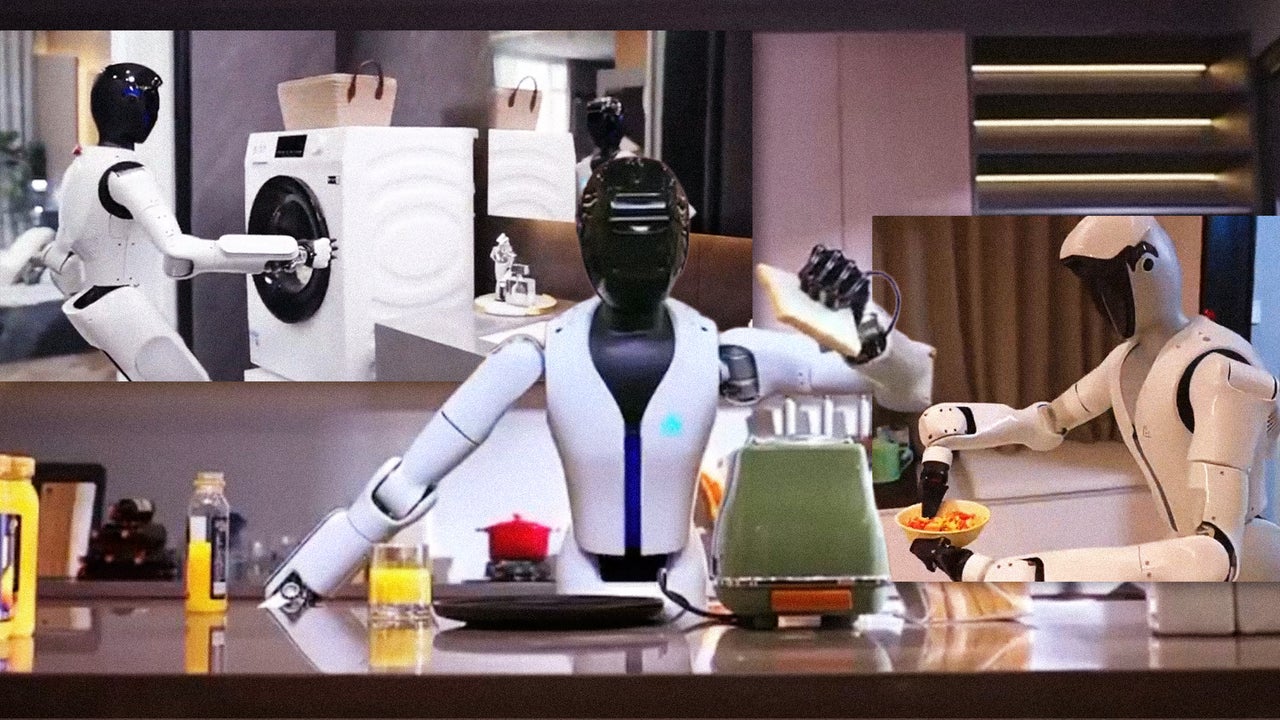
Despite high-profile demonstrations and ambitious promises from tech companies, humanoid robots remain far from practical deployment in real homes, struggling to perform even simple household tasks reliably and safely. Joanna Stern highlighted this gap by noting that her toddler could load the dishwasher better than current robots, and Mark Rolston of argodesign dismissed early adopters of robots like GigaAI’s SeeLight S1 as more novelty than functional helpers. This disconnect underscores that while robots excel in controlled industrial or delivery settings, the dream of general-purpose humanoid assistants in domestic environments remains distant.
The inherent complexity and dynamic nature of home environments pose formidable challenges for humanoid robots, which must navigate multiple rooms, unpredictable obstacles, and changing conditions daily. Guo Renjie, CEO of Zeroth, emphasized that homes are non-standardized spaces unlike factories or roads, complicating robot navigation and task execution. Joanna Stern and other analysts concur that this variability, including factors like pets or clutter, makes reliable autonomous operation elusive, with many robots still requiring human intervention behind the scenes despite impressive demos.
Current humanoid robots often prioritize human-like appearance over functional practicality, which can lead to public skepticism and perceptions of creepiness, as seen with models like the $20,000 Neo. Moreover, design tradeoffs such as opting for wheels instead of legs may improve mobility but do not fully address the challenges of operating effectively in complex homes. Reviews of robots attempting household chores, like cooking scrambled eggs, reveal underwhelming performance that falls short of expectations, reinforcing doubts about their readiness for real-world tasks.
While glimpses of advanced robotics capabilities exist, these have yet to be integrated into cohesive, reliable systems suitable for everyday home use. Analysts caution that much of the current technology remains fragmented and dependent on human oversight, with autonomous operation still a work in progress. Additionally, geographic disparities in development pace suggest China may be advancing faster due to prioritization and regulatory differences, potentially shaping the near-term landscape of domestic humanoid robotics.





Production Booms, Demand Lags
China’s massive output of humanoid robots faces a sobering reality: sky-high prices, fragile hardware, and a lack of real buyers threaten to burst the commercial bubble.
Despite China's dominance in mass production—accounting for 85% of the world's humanoid robots with over 140 manufacturers and 330 models by 2025—the market faces a stark imbalance between supply and demand. Companies like Matrix Robotics, with flagship units priced near $99,000, have amassed roughly 1,000 orders primarily from state-owned enterprises in sectors such as power plants and hospitality, yet actual production lags behind due to fragile robot operation and reliance on highly structured environments. This disconnect has prompted government warnings about a potential bubble, as broad commercial adoption remains elusive beyond niche or performative uses, underscoring that scaling production without sufficient buyers is a critical hurdle. [7,9,10,11,13,15,16,17]
In the U.S., high costs and limited functionality severely constrain the economic viability of humanoid robots for mid-sized manufacturers, who find it difficult to justify multi-thousand-dollar investments for machines performing singular tasks, as exemplified by Figure AI’s 02 model which was used for just one task over ten months. The lack of tailored federal incentives compounds this challenge; current R&D tax credits do not differentiate between deploying advanced robotics and purchasing conventional equipment like forklifts, leaving manufacturers with minimal financial motivation to integrate humanoids. Experts advocate for distinct, stackable 'manufacturing deployment' tax incentives and expanded support programs such as the Manufacturing Extension Partnership to ease workforce transitions and promote adoption. [1,2,3,4]
The prohibitive price tags of humanoid robots—typically starting around $50,000 and climbing to nearly $100,000—limit their accessibility primarily to corporate buyers, effectively excluding educational institutions and general consumers from the market. Moreover, design choices favoring human-like appearance over functional agility constrain performance and commercial appeal; as one expert noted, a spider-like robot could offer greater speed and stability, yet the industry persists in crafting humanoids that sacrifice practicality for form. This prioritization of aesthetics over utility not only inflates costs but also hampers robots’ ability to deliver compelling returns on investment, especially when several human workers can outperform a single humanoid in many factory tasks. [5,6,8,12,18]
A notable divergence exists between China and the U.S. in the robotics market: China excels in hardware manufacturing and mass production scale, while the U.S. leads in AI development and high-level computing capabilities. This split creates a complex market dynamic where Chinese factories churn out humanoid robots at scale but struggle with commercialization, whereas American firms push the technological envelope but face challenges in cost-effective deployment. Bridging this gap requires not only technological innovation but also strategic policy and market incentives to translate AI advances into economically viable, widely adopted humanoid robots. [14]


Skepticism Grows Amid Pricey Flops
Repeated public failures and sky-high costs have soured both consumers and investors on humanoid robots, fueling doubts that a true household breakthrough is anywhere near.
Public skepticism towards humanoid robots has been amplified by highly visible underperformance in seemingly straightforward tasks such as dancing, as highlighted by the 2026 headline 'Humanoid Robot Dancing Fail Highlights Tech Challenges.' This skepticism is compounded by practical concerns over the value proposition of expensive robots—costing upwards of $30,000—with limited reliability in home tasks like dishwashing, where only about 70% accuracy is achieved, leading many to question whether such investments are justified.
Investor sentiment remains cautious, with prominent voices like those in the 2026 opinion piece 'ChatGPT For Robotics Deployment Is Still 15 Years Away' warning against overhyping a 'ChatGPT moment' for robotics. While acknowledging eventual technological progress, experts emphasize that the breakthrough for general-purpose humanoid robots is likely a decade and a half away, reflecting tempered expectations despite recent media enthusiasm.
The stark contrast between rapid industrial automation—where near-perfect accuracy is the norm—and the slow, complex development of reliable humanoid robots for home use fuels doubts about their near-term viability. As Boris Sofman notes in his contrarian 2026 view, the technological hurdles in tactile sensing and simulation, coupled with extreme price pressures and market risks, make consumer humanoids a distant prospect, favoring instead specialized industrial robotic solutions that deliver deep value in targeted applications.
The immense complexity of embodied autonomous systems compared to more constrained technologies like autonomous vehicles further dampens optimism. Analysts highlight that while autonomous cars operate with four to five degrees of freedom, humanoid robots must manage dozens, multiplying challenges exponentially. Given the automotive industry's $2 trillion investment over the past decade with limited autonomy gains and sobering financial outcomes, similar heavy investments in humanoid robotics are viewed with skepticism regarding near-term returns and practical deployment.