Hybrid-electric hype takes off: electra and heart spark regional air race as JSX bets big on USTOL fleet
The gist
Hybrid-electric regional aviation just hit full throttle, as Electra, Heart Aerospace, and JSX ignite a high-stakes race to transform short-haul air travel with ultra-short takeoff tech and ambitious new fleets.
What to know
- Electra Aero’s EL2 demonstrator wowed Charleston with ultra-short takeoff and landing (USTOL) under 150 feet, proving hybrid-electric flight can work in compact urban airfields.
- JSX committed to up to 82 nine-seat Electra Aero EL9 hybrid-electric USTOL aircraft—32 firm—signaling surging demand for regional planes that access smaller city airports.
- Heart Aerospace’s X1 passed key taxi tests, keeping its 30-seat ES-30 hybrid-electric airliner on track for 2029 certification and up to 800 km hybrid range for underserved routes.
Hybrid Planes Go Urban
Electra Aero’s EL2 wowed industry leaders in Charleston by proving hybrid-electric planes can safely take off and land in spaces smaller than a city block, setting the stage for regional air travel from compact urban airfields.
By mid-2026, Electra Aero’s EL2 demonstrator had convincingly proven the viability of hybrid-electric ultra-short takeoff and landing (USTOL) technology, achieving takeoff and landing distances under 150 feet in a dramatic Charleston waterfront demonstration. This feat, enabled by a blown-lift system powered by eight electric motors distributing high-velocity airflow over multi-segment flaps, allowed the fixed-wing aircraft to operate safely at approach speeds far below those of conventional planes, validating the potential to serve compact urban sites with minimal infrastructure.
Electra Aero’s pragmatic focus on ultra-short runway operations rather than vertical takeoff and landing marks a strategic pivot toward near-term regional air mobility solutions that integrate seamlessly into existing urban environments. This approach was underscored during the CAPA Airline Leader Summit Americas at Charleston’s Columbus Street Terminal, where industry leaders witnessed firsthand the EL2’s capabilities, signaling a tangible shift in how regional connectivity might be expanded without the complexities of VTOL technology.
Commercial momentum behind Electra Aero’s hybrid-electric USTOL vision is exemplified by JSX’s early and substantial commitment to the EL9 model, with a letter of intent for up to 82 nine-seat aircraft including 32 firm orders. JSX’s participation in the Charleston demonstration highlights a clear market appetite for regional aircraft capable of accessing smaller, less congested urban airfields, positioning Electra Aero at the forefront of a burgeoning segment that promises to redefine short-haul air travel.
Heart’s Hybrid Ambitions
Heart Aerospace’s ES-30 project cleared a major technical hurdle with successful taxi tests, positioning it as a game-changer for cleaner, longer-range flights between underserved regional airports.
By mid-2026, Heart Aerospace's X1 demonstrator had successfully completed crucial low-speed taxi tests at Plattsburgh International Airport, a pivotal milestone in de-risking the hybrid-electric systems ahead of the ES-30's anticipated first flight and FAA special airworthiness certification. This progress underscores the company’s methodical approach to validating the technology that will underpin the ES-30, a 30-seat regional airliner designed to revolutionize short-haul travel.
The ES-30 is engineered to serve a unique niche in regional air mobility by combining a fully electric range of approximately 200 km with an extended hybrid-electric range up to 800 km, targeting certification by 2029. Heart Aerospace strategically positions the ES-30 to operate on short regional routes that often suffer from limited airport infrastructure, offering a cleaner, more efficient alternative that could reshape connectivity in underserved areas.
NASA’s Turbo-Electric Leap
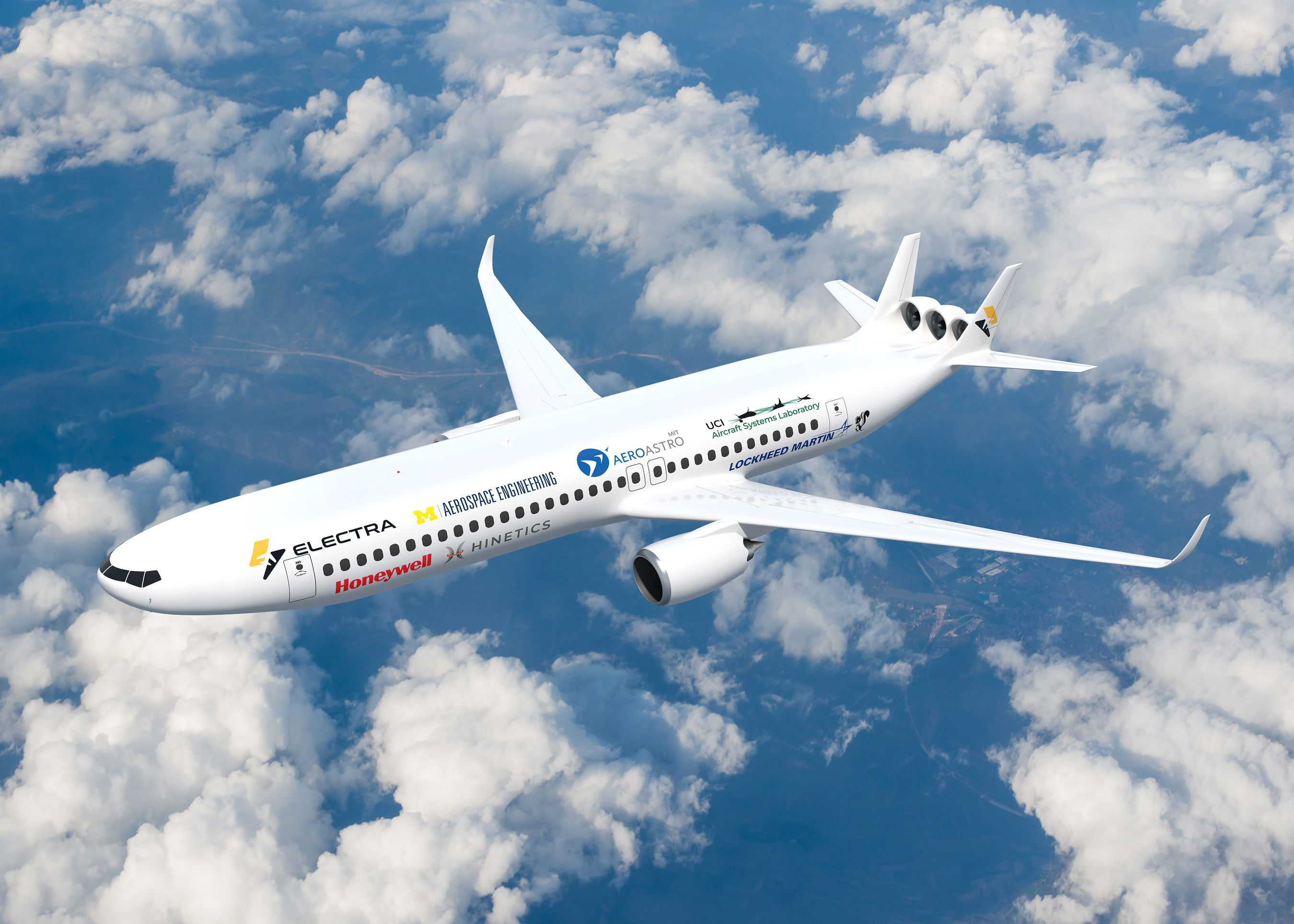
Electra’s double-bubble airliner concept, developed with NASA and industry giants, targets a new era of sustainable aviation by blending advanced aerodynamics, hybrid propulsion, and real-world airport compatibility for future 100-seat regional jets.
By early 2026, Electra unveiled its visionary double-bubble turbo-electric airliner concept under NASA’s AACES 2050 program, targeting a 17% efficiency improvement over mid-century standards through an integrated airframe–propulsion design. This innovative aircraft features a wide, double-bubble fuselage originally conceptualized at MIT that generates additional lift beyond payload carriage, paired with two underwing turbofan engines that supply thrust and electrical power to rear fuselage-mounted electric fans employing boundary layer ingestion to re-energize slower-moving air, thereby enhancing aerodynamic efficiency and reducing noise footprints. Electra’s Chief Engineer, Dr. Alejandra Uranga, emphasized the holistic system design approach, supported by a collaborative consortium including American Airlines, Honeywell Aerospace, Lockheed Martin Skunk Works, MIT, and the University of Michigan, which extended NASA’s open-source Aviary platform to optimize aerodynamics, structures, propulsion, and thermal management across over 100,000 simulation scenarios.
Electra’s concept prioritizes operational practicality by conforming to existing airport gate dimensions and utilizing standard jet fuel or sustainable aviation fuel, thus circumventing the need for new charging infrastructure—a critical factor for real-world adoption. Dr. Parker Vascik, Electra’s Director of Product Strategy, underscored that the goal extends beyond theoretical efficiency gains to delivering certifiable, buildable aircraft that fit within current airport ecosystems while offering a twin-aisle cabin within a narrowbody footprint, enhancing passenger comfort and boarding efficiency. This pragmatic approach balances the benefits of electric propulsion with current technological constraints, retaining a fuel-burning engine to power electric motors distributed strategically across the wing’s leading edge to enable blown lift, shorter runway requirements, steeper climbs, and quieter operations ideal for regional routes served by aging turboprops and small regional jets.
Electra’s development path leverages its experience from the EL9 nine-passenger hybrid-electric USTOL demonstrator to validate aerodynamic and control technologies essential for scaling to a 100-seat regional airliner, though the feasibility of such scaling remains an open engineering question that NASA’s AACES program is designed to explore. This turbo-electric architecture represents what Electra terms the 'third era of aviation,' necessitating NASA-led accelerated technology demonstrations—such as double-bubble X-planes, multi-megawatt integrated generators, and kilovolt-class power distribution systems—to mature critical technologies by 2035 for commercial service by 2050. Importantly, Electra’s concept serves primarily as a research contribution to guide NASA’s future technology investments rather than an immediate production roadmap, reflecting a strategic partnership aimed at pushing the boundaries of integrated airframe–propulsion systems for sustainable aviation.
Addressing the challenges of energy storage and thermal management inherent in hybrid-electric propulsion, Electra’s collaboration with the University of Michigan Aerospace Engineering team—led by Professors Gökçin Çınar, Joaquim Martins, and Venkat Viswanathan—focused on optimizing battery pack size, weight, performance, and heat dissipation. This multidisciplinary effort ensured that the hybrid propulsion system strategically balances the promise of electric motors with current limitations in battery energy density and thermal dynamics, thereby advancing a viable pathway toward sustainable regional aviation. Such rigorous modeling and simulation underpin the concept’s potential to deliver meaningful fuel savings and noise reductions on short regional routes, aligning with stringent airport noise regulations and the broader industry push for decarbonization.