Hyperscaler AI spending meets gridlock
The gist
The trillion-dollar AI infrastructure boom is slamming into a wall of grid bottlenecks, regulatory gridlock, and financial reinvention as hyperscalers scramble to power—and finance—the next era of artificial intelligence.
What to know
- Hyperscalers like Amazon, Microsoft, Google, and Meta are set to shell out $1.5 trillion by 2027 on AI data centers and chips, igniting an unprecedented arms race.
- Up to half of planned U.S. AI data centers are stuck in limbo thanks to outdated grids, regulatory blowback, and community pushback over water, land, and energy demands.
- Nvidia and Wall Street giants are rewriting the rulebook with revenue-sharing deals, mega joint ventures, and asset-backed data center debt to fuel AI’s insatiable power needs.
The Compute Arms Race
Hyperscalers and chipmakers are rewriting tech industry playbooks as trillion-dollar bets on AI data centers collide with volatile markets, credit risks, and fierce competition for compute power.
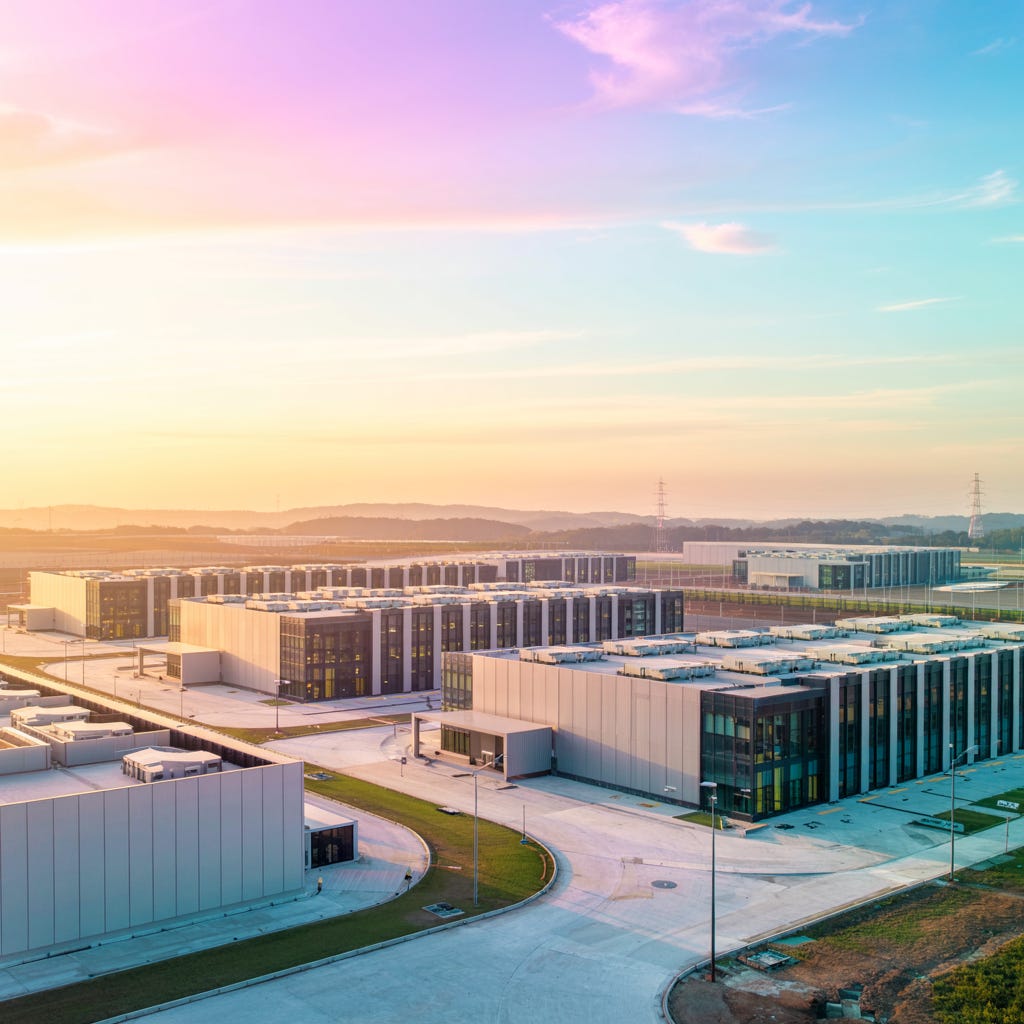
Hyperscalers are spearheading an unprecedented surge in AI infrastructure investments, with capital expenditures soaring to an estimated $725 billion in 2026 and projections reaching up to $1.5 trillion by 2027. Industry giants such as Amazon, Microsoft, Google, and Meta Platforms are aggressively expanding AI-ready data centers and semiconductor capacity, exemplified by Google's bold $50 billion financial backstop and Amazon's $25 billion bond raise. This massive spending spree is fueling a trillion-dollar compute arms race that is reshaping traditional valuation and funding models, as well as investor outlooks, amid growing market volatility and geopolitical tensions.
The AI infrastructure market is witnessing a strategic inflection point characterized by divergent capital strategies among hyperscalers and private equity, vertical integration by AI model labs into custom hardware, and the emergence of radically new pricing models. Companies like SpaceX are driving a $2 trillion AI data center showdown, intensifying competition over compute factory assets and cost efficiency. While this fuels explosive revenue growth for semiconductor leaders such as NVIDIA, Broadcom, and AMD—whose data center revenues have surged by 57% to 143% year over year—investor sentiment remains cautious due to escalating credit risks, construction challenges, and geopolitical uncertainties.
Despite the massive capital influx, the AI data center boom is constrained by critical infrastructure bottlenecks, particularly power grid limitations and local regulatory pushback. For instance, Microsoft, NVIDIA, and Bitzero Holdings Inc. lead AI data center growth in the U.S., yet approximately half of planned facilities face delays or cancellations due to grid capacity issues and community resistance. These challenges are intensifying the power grid showdown, contributing to market jitters and prompting hyperscalers to innovate financing models and strategic investments to navigate soaring energy costs and regulatory hurdles.
The ripple effects of hyperscalers’ mega-spending extend beyond direct investments, catalyzing significant growth across the AI infrastructure supply chain. Semiconductor manufacturers like SK Hynix, Vertiv, Eaton, and Constellation Energy are benefiting from the surge in demand, underscoring how deeply AI compute is embedding into enterprise workflows. Bank of America analyst Vivek Arya highlights that supply constraints in chip production are viewed positively, signaling full utilization of deployed compute capacity rather than excess, which reinforces the long-term nature of this capital-intensive buildout rather than a transient market hype.


Gridlock Meets AI Ambition
AI’s energy appetite is overwhelming outdated power grids and sparking local backlash, forcing tech giants to bankroll grid upgrades and pioneer on-site renewables in a scramble for reliable power.
The explosive growth of AI data centers, now demanding up to a third of new electricity capacity in regions like the U.S., is exposing severe limitations in aging power grids originally designed for minimal annual demand increases. Utilities and regulators face unprecedented pressure to modernize infrastructure and justify costly distribution upgrades amid soaring electricity prices and political backlash, as hyperscalers like Amazon, Google, and Microsoft pledge to fund these essential power and infrastructure improvements. Yet, despite these investments, grid bottlenecks and long lead times for critical equipment such as transformers and backup generators continue to delay data center energization, underscoring a widening gap between AI-driven energy demand and existing grid capacity.
Regulatory and community opposition has emerged as a formidable barrier to AI data center expansion, with local governments in places like Indiana and Maine outright blocking multi-billion-dollar projects due to concerns over water, electricity demands, and land use. This social pushback, coupled with complex permitting and siting challenges, is stalling critical renewable generation and transmission projects needed to support AI infrastructure, transforming what were once localized hurdles into systemic constraints that threaten to derail half of planned U.S. data centers. The resulting regulatory battles spotlight the urgent need for improved community engagement and integrated long-term planning to align AI growth with decarbonization and grid resilience goals.
In response to grid constraints and reliability concerns, major hyperscalers and AI frontier labs are increasingly adopting power-first, on-site generation strategies, including behind-the-meter renewables, batteries, and gas-powered microgrids, to secure reliable and climate-resilient energy supply. Texas exemplifies this trend, where companies like Microsoft, Google, Meta, and Nvidia lead the AI data center boom by building gigawatt-scale renewable-powered campuses, though this surge intensifies local grid tensions and costly disputes over transmission capacity and control. Meanwhile, the Department of Energy's 2026 'Energy Dominance' agenda aggressively targets transmission investments and innovative backup power solutions to stabilize strained grids, highlighting a strategic pivot toward decentralized, clean energy systems amid a high-stakes global compute arms race.
The convergence of soaring AI data center energy demands with outdated utility regulation and infrastructure is fueling a brewing showdown over power control, cost allocation, and smart energy management. Regulators are cracking down on distribution spending incentives and demanding rigorous justification for costly grid upgrades, as utilities confront inflated reliability valuations and outdated asset management practices. This complex landscape requires leveraging hyperscalers’ financial power and tenant ecosystems to invest in smart grid technologies and long-term resilience, while balancing rising electricity bills and geopolitical tensions that complicate the path to scalable, affordable, and secure AI compute infrastructure.


Financing the AI-Power Nexus
Nvidia, private credit giants, and energy titans are forging unprecedented revenue-sharing deals and asset-backed ventures, transforming power-and-compute infrastructure into a high-stakes, investable asset class.
Innovative financing models are rapidly reshaping AI infrastructure investments as traditional roles blur and strategic partnerships multiply. Nvidia, under CFO Colette Kress, is pioneering revenue-sharing and credit partnerships with AI cloud customers like Sharon AI and startups such as Firmus, transitioning from a pure supplier to an equity stakeholder and risk-sharing partner in AI compute ecosystems. Similarly, Realty Income Corporation’s $6 billion joint venture with Cloud Capital to expand hyperscale digital infrastructure into Europe exemplifies how capital partnerships are fueling geographic and capacity growth, while Anthropic’s $19 billion, 20-year lease with TeraWulf merges crypto infrastructure expertise with AI compute demands, signaling a seismic shift in long-term strategic commitments amid volatile markets and power grid constraints.
Private credit and infrastructure credit funds are emerging as critical financing engines amid soaring AI compute demand and market volatility. Wellington’s cautious yet opportunistic approach targets the $700 billion AI data center opportunity, while Stonepeak Credit sharpens its underwriting rigor to navigate hyperscaler spending frenzies, grid power challenges, and macroeconomic jitters. This trend is mirrored by record private credit fundraises and strategic diversification across regions, with major players like Ares Management, KKR, and Apollo Global Management backing infrastructure despite geopolitical risks, underscoring private credit’s resilience as a backbone for AI infrastructure capital deployment.
The fusion of power generation and compute facilities is crystallizing into a standalone investable asset class, driven by the premium on secured, dispatchable power amid global grid constraints. Landmark deals such as Chevron-Microsoft’s 2.67GW off-grid power project and Brookfield Asset Management’s $25 billion expansion with Bloom Energy’s fuel cell technology illustrate strategic investments that integrate energy and compute infrastructure to overcome supply bottlenecks. Funds like The GRID Power Fund are capitalizing on this surge by targeting power grid-centric companies, while hyperscalers’ multi-year power purchase agreements and land acquisitions lock in long-term supply chain commitments, reflecting a sophisticated, vertically integrated financing approach.
Capital deployment strategies are evolving from single-asset acquisitions to platform consolidations and specialized financing structures that cater to distinct risk profiles. Blackstone’s acquisition of a 49 percent stake in Rowan Digital Infrastructure, alongside I Squared’s and DigitalBridge’s platform purchases, exemplify moves to secure scalable pipelines, power, and operational capabilities in one transaction. Concurrently, the emergence of investment-grade, asset-backed data center debt—pioneered by CoreWeave and Hut 8—opens AI infrastructure to institutional fixed-income investors, while platforms like Architect’s ComputeConnect link GPU derivatives to physical compute, signaling novel financial instruments bridging compute assets and capital markets amid an $11 trillion AI infrastructure spend.