Hyundai’s pleos connect turns cars into app-powered hubs
The gist
Hyundai’s Pleos Connect is turning cars into app-powered, AI-driven digital hubs—aiming to transform the driving experience for 20 million vehicles by 2030.
What to know
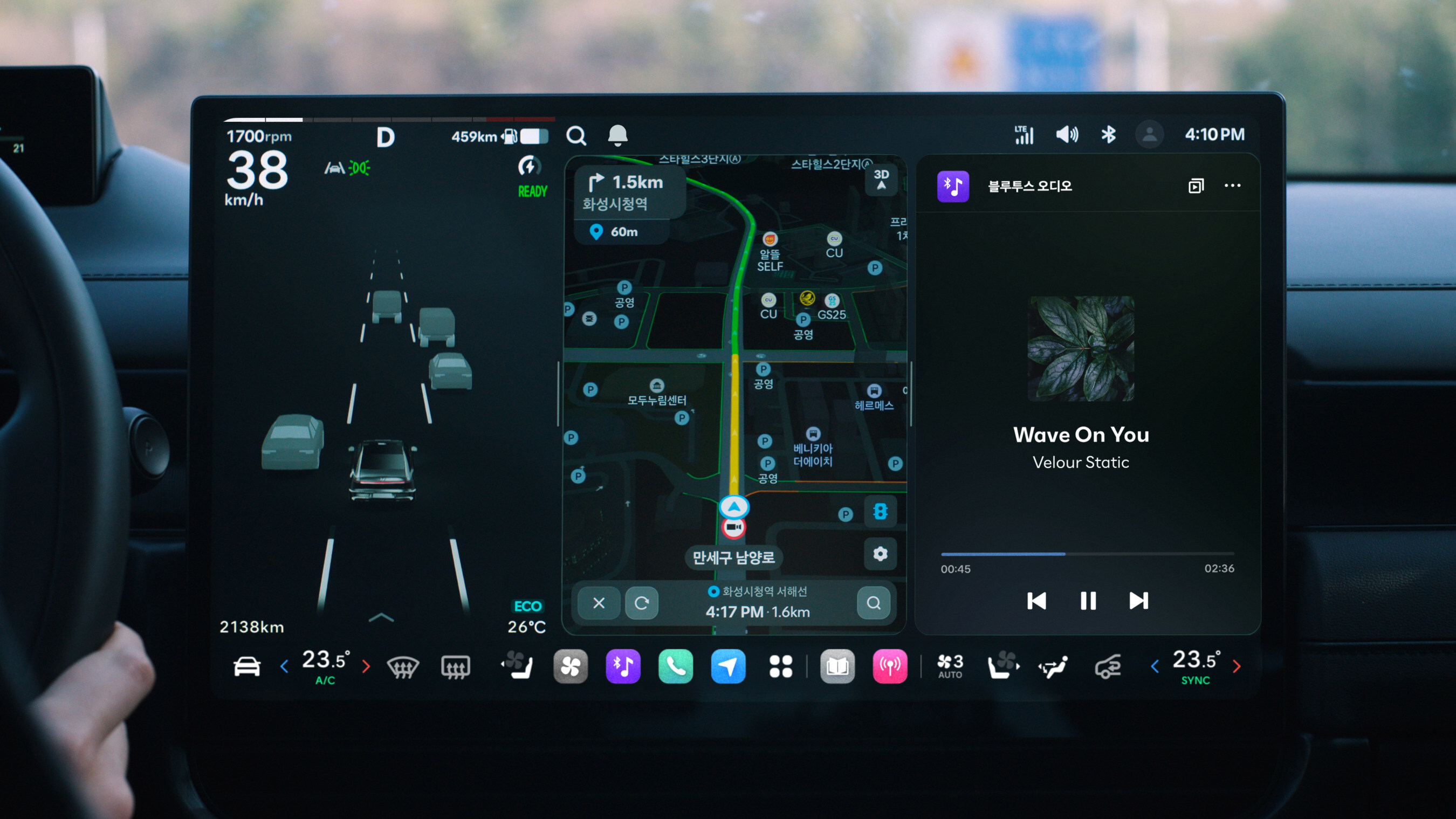
- Launching in South Korea in May 2024, Pleos Connect features a giant 17–18 inch touchscreen and Gleo AI voice assistant, replacing traditional controls across Hyundai, Kia, and Genesis models.
- Built on Android Automotive OS, the new system supports over-the-air updates and popular third-party apps like Kakao Navi and Melon, while inviting developers to expand its in-car app ecosystem.
- The luxury Genesis GV90 gets an immersive upgrade with a 25-inch head-up display, pop-up OLED screen, and 25-speaker B&O 3D Sound System, making in-car entertainment a private theater affair.
Hyundai’s Software-First Revolution
Hyundai is betting big on AI-driven, software-defined vehicles by rolling out Pleos Connect across 20 million cars by 2030, signaling a radical overhaul of automotive design and user interaction.
Hyundai's unveiling of the Pleos Connect infotainment system marks a transformative step in the company's ambitious shift toward software-defined vehicles (SDVs), with a goal to equip approximately 20 million Hyundai, Kia, and Genesis vehicles by 2030. Launching initially in South Korea in May 2024, Pleos Connect integrates 'Gleo AI,' an advanced voice assistant that supports context-aware, multi-command interactions and continuous over-the-air updates, underscoring Hyundai's commitment to AI-driven mobility experiences.
The Pleos Connect system embodies a significant evolution in Hyundai's in-car technology, featuring a large 17–18 inch central touchscreen that replaces the traditional twin-screen layout and minimizes physical controls, signaling a major user interface overhaul inspired by app-based, customizable functionality akin to Tesla’s approach. This design shift, first spotted in the 2027 IONIQ 5 prototype, aligns with Hyundai Motor Group’s broader strategy to standardize Pleos Connect—built on Android Automotive OS—across its brand portfolio, despite some current owners expressing reservations about reduced tactile controls.
Hyundai's integration of Pleos Connect into a forthcoming D-segment electric SUV, positioned above the IONIQ 5 and built on a full-stack SDV platform with Level 2 autonomous driving capabilities, exemplifies the company’s broader vision to become a tech-driven automaker. This rollout complements Hyundai's focus on AI, robotics, software, and electrification, highlighted by in-house autonomous AI systems like Atria AI, reinforcing the automaker’s strategic pivot toward software-centric, AI-enhanced mobility solutions.

Customizable Cockpits Take Center Stage
Pleos Connect’s drag-and-drop interface, gesture controls, and hybrid digital-physical cockpit mark Hyundai’s pivot toward personalized, distraction-minimizing driving experiences.
Hyundai’s Pleos Connect system marks a significant evolution in software-defined vehicle interfaces, replacing traditional twin-screen layouts with a large 17–18 inch central touchscreen that streamlines user interaction and enhances customization. Rooted in Android Automotive OS, Pleos offers an app-based ecosystem reminiscent of Tesla’s approach, underscoring Hyundai’s ambitious plan to equip approximately 20 million vehicles by 2030 with this user-centric platform, signaling a major shift toward flexible, software-driven automotive experiences.
The Pleos Connect cockpit integrates a dual-display setup featuring a horizontally expansive central screen complemented by a slim digital instrument cluster or head-up display, designed to balance immersive digital interaction with driver safety. Hyundai thoughtfully combines touchscreen versatility with tactile physical controls—including buttons, knobs, and rocker switches below the screen and redundant steering wheel controls—to help maintain driver focus and minimize distraction, reflecting a nuanced approach to in-car usability.
User experience innovation is at the heart of Pleos, which offers a highly customizable interface allowing drivers to drag and drop apps, split or expand panels with intuitive gestures, and access swipable utility widgets for real-time information like trip data or tire pressure. This flexibility is paired with an AI-powered voice assistant and an open app ecosystem supporting Apple CarPlay and Android Auto, positioning Hyundai to rival Tesla and Rivian by blending intuitive usability, safety, and third-party app openness.
Hyundai’s open architecture enables brand-specific UI customization across Hyundai, Kia, and Genesis, allowing each to tailor graphics and features that reinforce their unique identities within the Pleos ecosystem. For instance, the 2028 Genesis GV90 showcases a larger display, a movie theater mode, and a left-positioned menu bar, demonstrating how Pleos not only standardizes software innovation but also empowers differentiated luxury experiences across the group’s portfolio.
App Ecosystem Fuels In-Car Innovation
Hyundai’s open platform invites third-party developers to turn its cars into digital hubs, integrating popular navigation, music, and lifestyle apps directly into the dashboard.
Hyundai is strategically expanding its third-party app ecosystem by integrating popular services such as Kakao Navi and Melon directly into its Pleos Connect infotainment system, allowing drivers to navigate and stream music without relying on smartphone connections. This move not only enhances user convenience but also marks a significant step toward creating a fully software-defined in-car experience. Starting with flagship models like the New Grandeur and All-New Avante, Hyundai aims to broaden this app market across its vehicle lineup while fostering a vibrant developer ecosystem to continuously enrich digital services within its cars.
At the core of Hyundai’s approach is the Pleos Connect platform, designed as an open, software-defined system that supports post-factory app additions and grants open access to external developers. This architecture enables a dynamic expansion of the in-car app catalog beyond navigation and music to include games, vehicle management, and lifestyle services, effectively transforming Hyundai vehicles into versatile digital hubs. By cultivating this open developer environment, Hyundai is positioning itself to accelerate innovation and create a robust ecosystem that reduces dependency on smartphones while enhancing the overall driving experience.
Genesis GV90: Luxury Reimagined
The Genesis GV90 transforms the EV interior into a high-tech theater with massive displays, immersive audio, and premium design, redefining what luxury means in electric mobility.
Hyundai is elevating its luxury electric vehicle portfolio by integrating its cutting-edge Pleos Connect infotainment system into flagship models like the Genesis GV90 and a new D-segment electric SUV positioned above the IONIQ 5. This system enhances user experience with features such as dual side menus, AI-powered Gleo integration, and a massive 25-inch head-up display, underscoring Hyundai’s commitment to blending advanced technology with premium comfort in its EV lineup.
The Genesis GV90 exemplifies Hyundai’s ambition to redefine luxury EV interiors by transforming the cabin into a private theater experience. Its pop-up OLED display expands from 23.6 to 24.6 inches when parked, paired with a 25-speaker Bang & Olufsen Premier 3D Sound System featuring Dolby Atmos, delivering immersive cinematic audio and streaming capabilities through Media Home mode. This integration of high-end audiovisual technology elevates in-car entertainment to new heights, catering to discerning luxury consumers.
Beyond infotainment, the GV90’s design and performance credentials position Genesis as a formidable player in the luxury electric vehicle market. Equipped with Hyundai’s largest battery pack at 123.5 kWh, the seven-seat SUV offers an estimated 310-mile range, complemented by Neolun Arch Gate coach doors, a B-pillarless design, and spacious dimensions that blend functional elegance with cutting-edge EV technology. This holistic approach highlights Hyundai’s strategic push to compete at the intersection of luxury, electric powertrain innovation, and advanced user experience.