Imperial presidency: trump’s power grab sparks constitutional crisis and bipartisan alarm
The gist
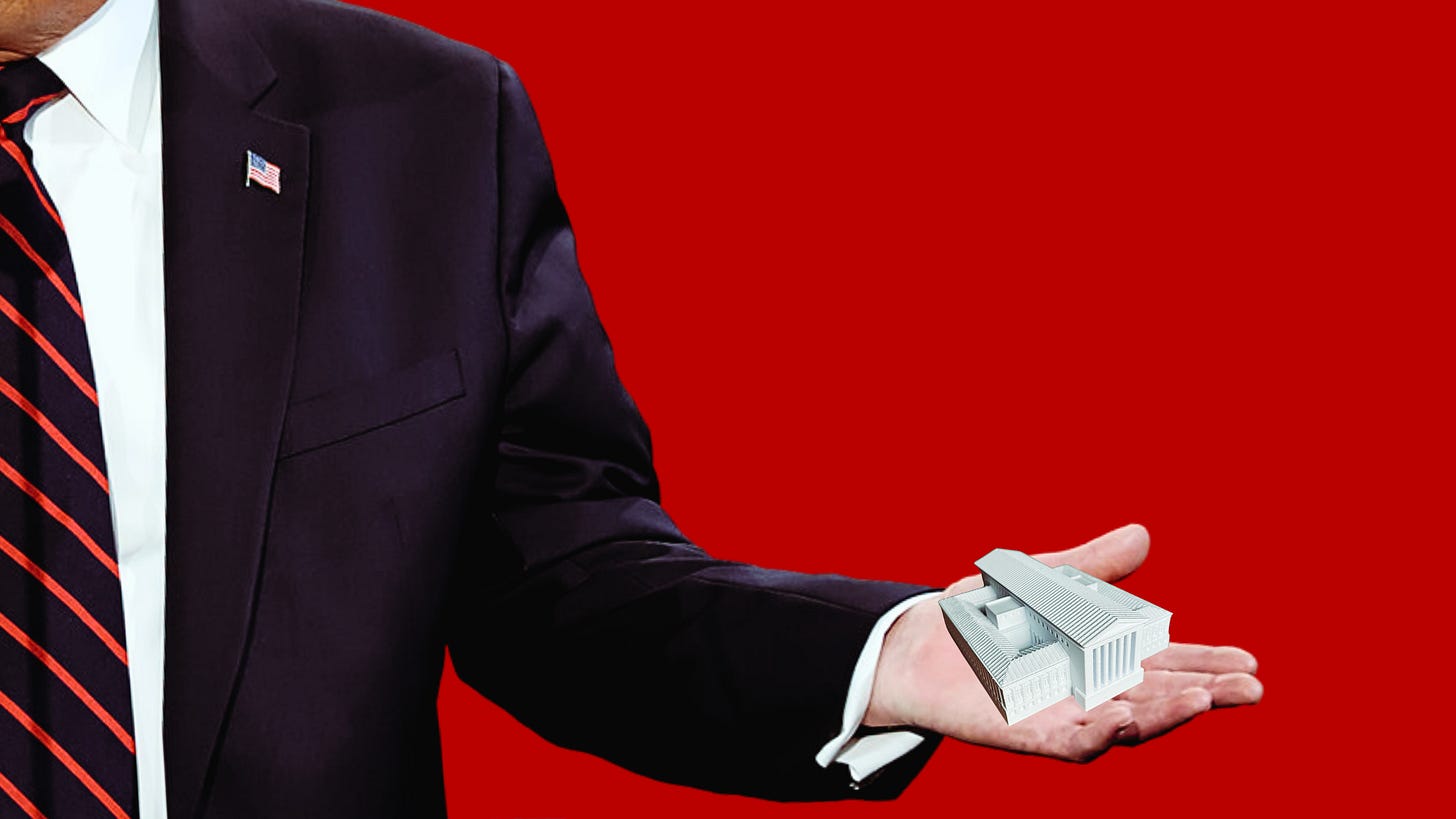
Trump’s second-term power grab—supercharged by a Supreme Court blessing—has sparked a constitutional crisis, bipartisan outrage, and unprecedented attacks on America’s democratic guardrails.
What to know
- The Trump administration, backed by a Supreme Court ruling led by Chief Justice John Roberts, claimed criminal immunity and seized control of DOJ investigations, gutting prosecutorial independence.
- Federal agencies were purged and repopulated with loyalists, oversight was gutted, and political opponents—including media critics—were aggressively targeted through weaponized federal power.
- Unilateral military strikes in Iran and Venezuela, mass voter roll purges, and a $1.776 billion DOJ slush fund for convicted Trump allies have triggered bipartisan calls for civic resistance as electoral integrity and constitutional limits unravel before the 2026 midterms.
Unchecked Executive Overreach
Trump’s loyalist administration, empowered by a Supreme Court immunity ruling, dismantled prosecutorial independence and weaponized federal agencies, erasing decades-old legal safeguards against authoritarian rule.
By early 2026, the Trump administration returned with fewer constraints and a more loyal team, emboldening an unprecedented expansion of presidential power that critics warn is steering the U.S. toward an imperial presidency. This shift was cemented by a Supreme Court ruling led by Chief Justice John Roberts, which controversially granted Trump criminal immunity, effectively allowing him to dictate Department of Justice investigations and undermining the traditional prosecutorial independence that safeguards democratic accountability. As attorney John Lauro remarked, 'That’s what the Supreme Court said,' highlighting the hyper-partisan nature of this legal precedent that fuels further executive overreach.
The politicization of federal law enforcement under Trump 2.0 became starkly evident as DOJ appointees like Acting Attorney General Todd Blanche openly defended the president’s directives to prosecute political adversaries and justified the removal of federal prosecutors investigating Trump, blatantly disregarding long-standing safeguards such as the Hatch Act. Since 1939, the Hatch Act has barred federal employees from using official authority to interfere with elections, yet Trump’s administration systematically ignored these guardrails, transforming independent agencies into extensions of presidential loyalty rather than impartial public service.
Beyond domestic legal manipulations, the administration’s unchecked executive power destabilized traditional checks and balances on the global stage, exemplified by unauthorized military actions like bombing Iran without Congressional approval and covert operations to seize Venezuela’s Nicolás Maduro. These actions flagrantly violated Article I of the Constitution and the War Powers Act, which reserves war declarations and oversight to Congress, thereby escalating international crises and bypassing democratic accountability mechanisms.
In a striking example of constitutional disregard, the Trump administration established a $1.776 billion fund to compensate allies allegedly targeted by the previous administration, including individuals convicted of seditious conspiracy related to the January 6 Capitol insurrection. This move potentially violates the Fourteenth Amendment’s explicit prohibition against paying debts incurred in aid of insurrection, illustrating how taxpayer money was weaponized to reward political supporters. Coupled with a Justice Department settlement barring IRS audits of Trump and his family, these actions reflect a broader erosion of independent oversight and bipartisan accountability, as both parties increasingly abandon impartial investigations, enabling a dangerous normalization of corruption and unchecked presidential power.



Democracy Undermined from Within
Judicially sanctioned executive power enabled sweeping purges of civil servants, suppression of media critics, and the dismantling of oversight bodies, eroding the impartiality and integrity of American governance.
By early 2026, the Supreme Court under Chief Justice John Roberts had fundamentally altered the Department of Justice's independence, effectively granting former President Trump unprecedented control over prosecutorial decisions. Roberts’ ruling that invented criminal immunity for Trump not only paved the way for the Fulton County raid but also normalized the notion that one individual could dictate DOJ investigations, eroding long-standing safeguards like the Hatch Act and DOJ policies designed to prevent political interference. This judicial endorsement of executive overreach has facilitated the weaponization of the justice system, allowing Trump-appointed officials like Acting Attorney General Todd Blanche to openly justify targeting political enemies and dismiss ethical norms, thereby undermining the impartiality essential to democratic governance.
The systematic capture of federal agencies and erosion of watchdog functions have been central to the authoritarian playbook, with the Trump administration reinstating Schedule F to reclassify and purge career civil servants in favor of loyalists. This bureaucratic overhaul, coupled with the firing of inspectors general in batches and defunding of critical oversight offices such as the State Department’s Bureau of Democracy, Human Rights and Labor and the Global Criminal Justice Office, has neutered internal checks on executive misconduct. Such moves not only dismantle institutional integrity but also facilitate retaliatory prosecutions against dissenters, legal pressures on law firms and universities, and media suppression exemplified by ABC pulling Jimmy Kimmel following administration pressure, signaling a broad assault on democratic accountability across multiple sectors.
Manipulation of electoral processes and the promotion of loyalty over institutional integrity have further entrenched authoritarian governance. Executive orders aimed at eliminating mail-in voting ahead of the 2026 midterms threaten the very foundation of free and fair elections, with experts like the Brennan Center warning of jeopardized electoral integrity. Symbolic acts such as stripping Martin Luther King Jr. Day of its free-admission status in national parks and replacing it with free admission on Trump’s birthday underscore a cult of personality supplanting democratic traditions. This environment is reinforced by oligarchs and Christian extremist leaders like Franklin Graham, who endorse falsehoods to maintain allegiance, illustrating how loyalty has become the currency that overrides constitutional norms and ethical governance.
The creation of a $1.776 billion Justice Department fund to compensate Trump’s allies convicted in the January 6 Capitol insurrection epitomizes the brazen disregard for constitutional limits and public accountability. Controlled by a commission hand-picked and removable at will by Acting Attorney General Todd Blanche, this fund violates the Fourteenth Amendment’s prohibition against paying debts incurred in aid of insurrection and circumvents Congressional oversight of public funds. Critics like Senator Ron Wyden have labeled it the most audacious abuse of taxpayer money in American history, while internal dissent surfaced with the resignation of Treasury’s general counsel Brian Morrissey on the fund’s announcement day. This episode, alongside unilateral military actions without Congressional authorization and settlements barring IRS audits of Trump and his family, reveals a broader pattern of executive overreach, normalization of corruption, and erosion of democratic institutions under a veneer of legality.




War Powers in Crisis
Presidential strikes deep inside Iran reignited the unresolved battle over who controls America’s war-making, exposing the collapse of congressional checks on the commander in chief.
The recent US and Israeli strikes deep inside Iran, notably the killing of Supreme Leader Ayatollah Ali Khamenei, have reignited a longstanding constitutional crisis over the president's unilateral authority to initiate military action without congressional approval. Despite the War Powers Resolution of 1973—passed to reclaim Congress’s constitutional role after Vietnam—the struggle over war powers remains unresolved, surfacing repeatedly with each major intervention. This unresolved tension underscores the persistent debate about the balance of power between the executive and legislative branches in decisions of war and peace.
The Constitution explicitly grants Congress the sole authority to declare war, as outlined in Article I, Section 8, emphasizing that war decisions require public debate, accountability, and shared political ownership. The president’s role as commander in chief is constitutionally limited to directing military forces once authorized, not to unilaterally initiating sustained military conflict. However, since World War II, presidents have increasingly engaged in military actions without formal declarations of war—exemplified by the Korean 'police action' and the Gulf of Tonkin Resolution—leading to executive overreach and a diminished congressional role.
The War Powers Resolution of 1973 was Congress’s legislative attempt to rein in executive overreach by requiring that presidential military action be tied to a declaration of war, specific statutory authorization, or a national emergency. Yet, presidents like Richard Nixon historically resisted such limits, with Nixon vetoing the bill and calling it 'both unconstitutional and dangerous.' This resistance reflects a broader pattern where executive claims of constitutional prerogative clash with congressional efforts to assert democratic checks, a dynamic vividly playing out in the Trump administration’s unilateral strikes against Iran without congressional authorization.
The Trump administration’s unilateral military strikes against Iran have sparked fierce criticism for violating constitutional war powers, with figures like Senator Tammy Duckworth condemning the actions as illegal and reckless, emphasizing that only Congress can declare war. These strikes have not only deepened political polarization and intensified GOP infighting—as highlighted by David French—but also raised urgent questions about democratic accountability, the enormous financial costs of such conflicts, and the erosion of traditional checks and balances. With the War Powers Resolution’s 60-day limit surpassed without congressional authorization, mounting political pressure and bipartisan fatigue signal a critical juncture in the ongoing battle over executive war-making authority.



Voter Purges and Power Plays
A coordinated campaign to purge voter rolls and undermine mail-in ballots, backed by Supreme Court rollbacks, systematically stripped voting rights and tilted the electoral playing field.
By mid-2026, the Trump administration orchestrated an unprecedented federal purge of voter rolls, demanding states hand over exhaustive personal voter data—including names, addresses, driver’s license and social security numbers, voting history, and dates of birth—under Memoranda of Understanding that compelled states to remove voters flagged by Republican partisans. This coordinated effort, involving GOP-controlled states such as Alaska, Texas, and South Carolina, echoes the infamous 2000 Florida purge that disenfranchised 80,000 mostly Black and Hispanic voters, which ultimately swung the presidential election by a razor-thin margin. Such tactics represent a deliberate strategy to pre-rig electoral outcomes by systematically suppressing Democratic votes through data-driven roll purges.
The erosion of electoral integrity is compounded by the Supreme Court’s dismantling of the Voting Rights Act, where Chief Justice John Roberts and Justice Samuel Alito relied on 'phony, cooked numbers' to justify stripping away critical protections against discriminatory voting practices. This judicial assault, paralleling their controversial rulings in Dobbs and Citizens United, removes vital legal barriers that once guarded against partisan voter suppression, effectively enabling the administration’s broader agenda to reshape election rules unfettered.
In a further assault on voting access, the administration aggressively targeted mail-in voting, a method favored by many Democratic voters, by issuing an executive order in August 2026 aimed at 'bringing honesty' to the midterms through its elimination. This move followed a conspicuous exchange with Vladimir Putin, who reportedly suggested undermining mail ballots—a tactic that threatens to disenfranchise millions and undermine the integrity of future elections. Simultaneously, the administration consolidated control over election oversight by capturing key agencies, firing inspectors general en masse, and defunding watchdog entities like the State Department’s Bureau of Democracy, Human Rights and Labor, thereby neutering institutional checks on electoral fairness.
Polarization and Civic Backlash
As Trump’s imperial presidency deepened institutional decay and public distrust, bipartisan coalitions mobilized mass resistance, warning of a democracy on the brink.
By early 2026, the return of Trump to the presidency with fewer constraints and a more loyal team has accelerated the erosion of democratic norms, fueling public anxiety and nostalgia for 2016 as 'the last normal year.' This shift toward an imperial presidency is marked by open assaults on truth and the rule of law, intensifying political polarization and undermining public trust in institutions.
The Trump administration’s unilateral military actions, such as bombing Iran without congressional authorization, flagrantly violate constitutional war powers and deepen public distrust. The diversion of massive federal funds—estimated at $1 billion per day—to unauthorized wars exacerbates domestic crises, prompting broad coalitions of 251 organizations to mobilize civic resistance by urging Congress to withhold war funding and defend democratic checks and balances.
Institutional decay is evident as the administration replaces career civil servants with loyalists, neuters watchdog agencies, and weaponizes federal institutions for political gain, including a $1.776 billion Justice Department fund to compensate Trump’s allies accused of insurrection. These actions, coupled with punitive measures against opposition figures and independent media censorship, deepen political polarization and threaten electoral integrity, underscoring the urgent need for bipartisan action and judicial resistance.
Defending American democracy amid this crisis demands robust civic engagement, bipartisan cooperation, vigilant judicial oversight, and independent journalism. As Representative Ro Khanna emphasizes, resisting authoritarian tactics and upholding democratic accountability is critical, while media scrutiny and congressional oversight remain indispensable to prevent the presidency from becoming an unchecked tool of power. Moreover, restoring a shared moral consensus on corruption and articulating common values are vital to bridging divisions and sustaining democratic norms.