Insurance exodus turns strait of hormuz into world’s most expensive bottleneck, upending markets and safe havens
The gist
When insurance giants abandoned the Strait of Hormuz, they didn’t just freeze $100 oil—they rewrote the rules of global finance and turned the world’s busiest energy lifeline into its priciest bottleneck.
What to know
- The effective closure of the Strait of Hormuz in early 2026 sparked a global supply shock, doubling European gas prices and sending US fertilizer costs up 77%.
- War-risk insurers—including the International Group of P&I Clubs—pulled coverage, halting tanker traffic and forcing energy giants like QatarEnergy and Kuwait Petroleum into force majeure.
- With gold reserves surging past Treasuries and China quietly hoarding up to 5,000 tons, investors are fleeing traditional safe havens for hard assets and critical metals, exposing deep supply chain risks.
Hormuz: Logistics Unraveled
The unprecedented closure of the Strait of Hormuz has shattered global energy supply chains, exposing hidden vulnerabilities from agriculture to semiconductors and revealing just how unprepared the world is for a true maritime bottleneck.
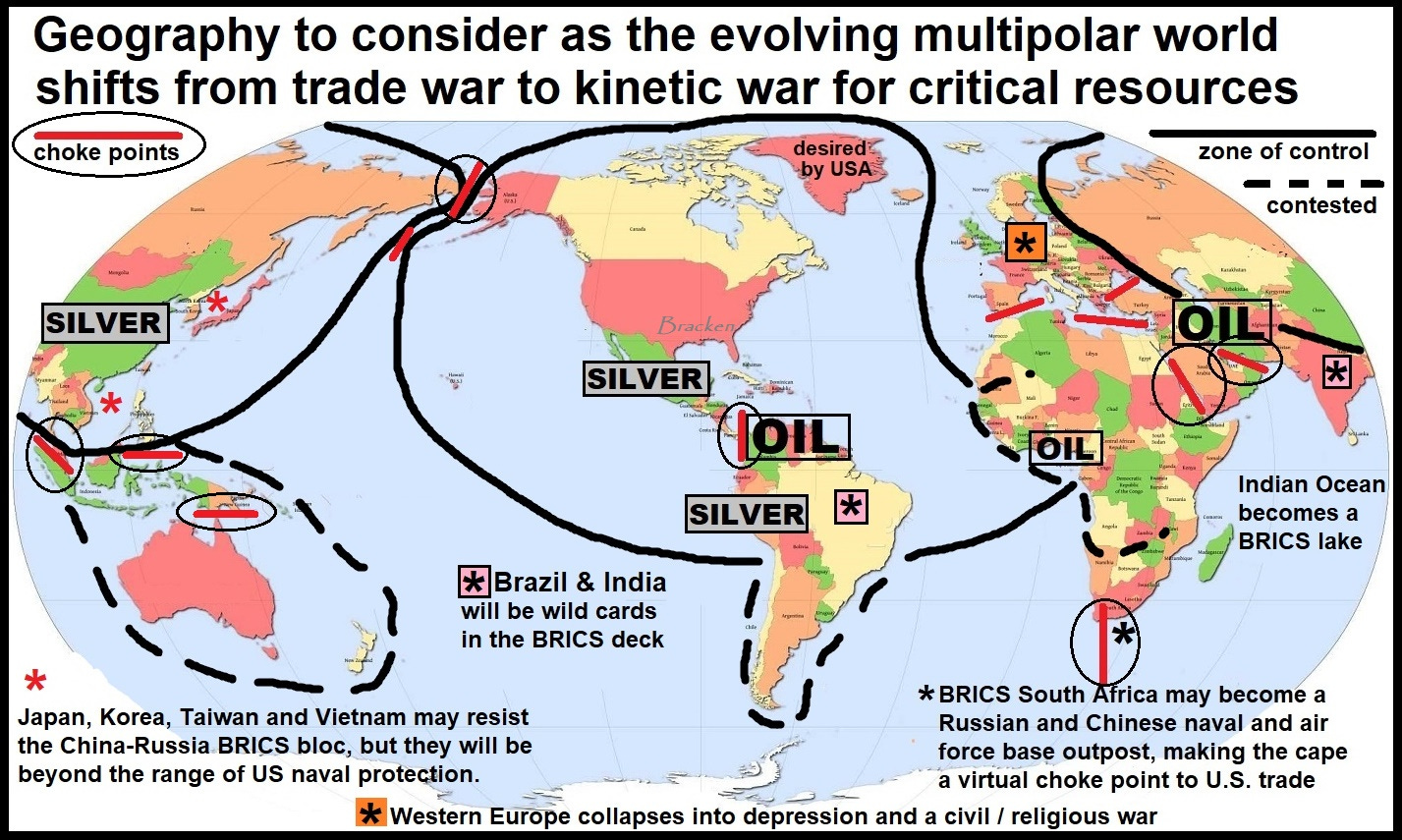
The escalation of conflict in the Middle East, culminating in the effective closure of the Strait of Hormuz in early 2026, has transformed a longstanding geopolitical risk into a full-blown supply shock, fundamentally reshaping the global energy risk landscape. With over 20% of the world's oil and LNG flows—and a significant share of fertilizers and critical commodities—bottled up by Iranian attacks and insurance market withdrawals, the disruption has exposed the fragility of global energy logistics. As Rachel Ziemba notes, 'This is the first time it has been effectively blocked, and there hasn’t yet been a way to reopen it,' underscoring the unprecedented nature of the crisis and its ripple effects across industries from agriculture to semiconductors.
The market response has been swift and severe: oil prices surged from the $60s to over $100 per barrel within weeks, while European natural gas prices doubled on the Qatar LNG shutdown alone, and fertilizer prices in the US soared by 77% since December. These price spikes have amplified inflationary pressures worldwide, with the IMF estimating that every 10% rise in oil prices adds 0.4 percentage points to inflation and cuts 0.15 from global growth. The resulting volatility has pushed investors toward safe havens like gold and the US dollar, while also driving up operational costs across sectors—Newmont, for example, forecasts a 23.7% rise in gold production costs, directly tied to oil price increases.
Efforts to mitigate the crisis, such as US Navy escorts and the US Development Finance Corporation's emergency insurance, have so far proven insufficient to restore normal tanker flows, largely due to the sheer scale of risk and insurance market constraints. While Saudi Arabia and the UAE have rerouted some exports via pipelines, these alternatives cover only a fraction—about 13%—of the volume typically transiting Hormuz, leaving nearly half of Middle Eastern oil exports vulnerable. Meanwhile, China’s ability to tap strategic reserves and secure discounted Gulf crude through informal arrangements with Tehran offers it some insulation, but even Chinese imports have dropped below pre-war levels, highlighting the limits of alternative strategies.
The shockwaves extend far beyond energy, disrupting global supply chains for critical materials like helium (vital for semiconductors), aluminum, and fertilizers, and prompting force majeure declarations by major players such as QatarEnergy and Kuwait Petroleum Corporation. As container and bulk shipping rates soar to six-year highs and insurance premiums jump 30-fold, the compounding effects threaten to cascade through agriculture, manufacturing, and construction worldwide. With the International Energy Agency’s unprecedented 400-million-barrel reserve release unable to fully offset the lost supply, the crisis has laid bare the world’s acute dependence on vulnerable chokepoints—and may ultimately accelerate a strategic pivot toward renewables and more resilient supply chains.






Insurance: The Hidden Blockade
The real choke point isn’t military action but the abrupt withdrawal of war-risk insurance, which has paralyzed tanker traffic and left energy giants powerless, highlighting the outsized influence of actuarial decisions over global trade.
The collapse of maritime war-risk insurance has emerged as the true chokepoint in global shipping, with the Strait of Hormuz serving as the most dramatic case study. While the waterway remains technically open, the effective withdrawal of insurance coverage—especially by the International Group of Protection and Indemnity Clubs, which collectively insure about 90% of the world’s commercial tonnage—has brought tanker traffic to a near standstill, as confirmed by Marine Traffic data and Lloyd’s List AIS tracking. This actuarial blockade, triggered not by missiles or mines but by seven insurance cancellation letters, has exposed the systemic fragility of insurance markets: without coverage, even the world’s largest energy exporters like Qatar Energy and Kuwait Petroleum Corporation have been forced to declare force majeure, unable to guarantee delivery or secure passage for their cargoes.
Unlike military blockades, the insurance market operates on its own institutional logic and timeline, creating a regime where private underwriters—particularly London’s reinsurance syndicates and Lloyd’s of London—wield more practical power over global energy flows than navies or governments. As one analyst put it, 'Lloyd’s of London has more power over the flow of oil through Hormuz than the IRGC does.' The regulatory capital constraints imposed by frameworks like the EU’s Solvency II directive mean that, when risk becomes unquantifiable, insurers and reinsurers withdraw en masse, and no amount of political will or naval presence can quickly restore coverage. This 'actuarial warfare' paradigm means reopening shipping lanes depends on rebuilding insurance capacity—a process that, as history shows, can take six to eighteen months or longer, far outlasting the duration of most kinetic conflicts.
The financial closure of the Strait of Hormuz has sent shockwaves through global markets, with Very Large Crude Carrier (VLCC) charter rates soaring to a record $481,170 per day and Brent crude spiking from $67 to $108 per barrel within a week—the largest single-week gain since 1983. Yet, market pricing remains structurally misaligned, with Brent crude still reflecting expectations of a short-term, mean-reverting disruption rather than the prolonged paralysis dictated by insurance market realities. As one analyst noted, 'The market is pricing a four-to-eight-week disruption. The evidence supports six to eighteen months as the minimum timeline for full insurance reinstatement,' creating a massive temporal arbitrage and underscoring how deeply the insurance chokepoint is misunderstood by both traders and policymakers.
The insurance market’s hidden role as a systemic chokepoint extends beyond oil, affecting a broad range of commodities and global supply chains. The inability to secure affordable war-risk coverage has forced rerouting and halted shipments of not just energy, but also aluminum, fertilizers, and other critical goods, causing price spikes and supply disruptions worldwide. As disruptions persist, costs escalate exponentially and capacity shrinks, creating a domino effect that strains the entire logistics ecosystem—a dynamic previously glimpsed during post-COVID shipping congestion, but now amplified by the withdrawal of insurance in active conflict zones.



Safe Havens Redefined
Central banks and investors are abandoning US Treasuries for gold and critical metals, as geopolitical fragmentation and eroding trust in dollar assets drive a historic rotation toward tangible reserves and away from traditional safe havens.
The global definition of a 'safe haven' is undergoing a seismic transformation, as central banks and institutional investors pivot away from US Treasuries in favor of gold, silver, copper, and other critical metals. This historic shift, underscored by gold surpassing Treasuries as the dominant reserve asset in 2025, is driven by deepening geopolitical fragmentation, eroding trust in US fiscal stability, and strategic moves by powers like China and Russia to reduce reliance on the dollar-based system. As Jamie Dimon remarked on the plausibility of gold reaching $5,000 or even $10,000, the institutional embrace of tangible assets signals a new equilibrium in global finance, where hard assets are seen as bulwarks against political risk and monetary uncertainty.
China's aggressive, often opaque gold accumulation—estimated at up to 5,000 tons, double official IMF figures—exemplifies the broader trend of emerging markets quietly diversifying reserves away from US Treasuries to hedge against sanctions and asset freezes, as seen in Russia's 2022 experience. With only a third of central bank gold purchases now formally reported, state-driven demand is increasingly the dominant force in gold markets, overshadowing traditional investor sentiment and driving record price surges. This clandestine accumulation not only reflects a desire to avoid political friction with the US but also highlights the growing strategic importance of gold and critical metals as financial and geopolitical safe havens.
The erosion of confidence in US Treasuries is further exacerbated by the US debt surpassing 100% of GDP, persistent inflation, and the fragility of Treasury markets—evidenced by doubled buybacks in 2024 and interventions described as 'Hail Mary' efforts. As a result, traditional safe havens like real estate, bonds, and private equity are seen as weak, while gold and silver hit record highs and defensive sectors outperform. The market's rotation toward tangible assets—mirrored in surging demand for copper driven by data center expansion and the strategic stockpiling of rare earths vital for defense—marks a regime change from asset-light tech booms to hard, low-obsolescence assets as the new anchors of stability.
The rise of the Shanghai Gold Exchange and the shift toward yuan-settled, physically delivered gold markets underscore the global move away from dollar hegemony in safe haven assets. Meanwhile, the emergence of tokenized assets is beginning to reshape the roles of gold, silver, and cryptocurrencies in institutional portfolios, blending digital innovation with the enduring appeal of precious metals. As central banks boost gold reserves and gold miners ramp up exposure to soaring prices—despite operational headwinds from rising energy costs—the new safe haven paradigm is defined by both geopolitical necessity and technological evolution.





Critical Metals: Supply Squeeze
Explosive demand for silver, copper, and rare earths—driven by AI, renewables, and defense—has collided with inflexible supply and geopolitical weaponization, turning industrial metals into the new front line of economic security.
The global scramble for critical industrial metals—especially silver, copper, nickel, and rare earths—has exposed deep structural vulnerabilities in supply chains, as surging demand from AI, clean energy, and defense collides with stubbornly inelastic supply. Silver, for example, is now a strategic bottleneck for both solar and AI infrastructure, with 72% of its supply coming as a byproduct of other metals, making it largely unresponsive to price spikes and repeated market deficits a persistent feature since 2021. Meanwhile, copper faces a projected 70% supply shortfall by 2040, and rare earths remain dominated by China, whose export controls and resource nationalism have forced the U.S. and its allies to pour billions into reshoring, regulatory reform, and strategic stockpiling—yet regulatory hurdles and concentrated refining capacity continue to threaten the security of technology and defense supply chains.
Geopolitical shocks—from the closure of the Strait of Hormuz to China’s extraterritorial export controls—have weaponized supply chain dependencies, driving up costs and forcing a rethink of industrial policy and investment flows. The U.S. has responded with measures like price floors for critical minerals and massive investments in rare earths and domestic mining, but faces a paradox: reshoring cuts import reliance and creates jobs, yet raises costs and environmental tradeoffs, while regulatory bottlenecks slow progress. As a result, capital is flooding into large, de-risked mining projects in stable jurisdictions like the U.S., Canada, and Australia, and investors are increasingly favoring diversified deposits over single-commodity plays to hedge against the new era of resource nationalism and supply chain volatility.
The relentless expansion of AI and renewable energy is not just a technological story but an inflationary shock to the physical economy, as data centers drive copper demand to record highs and solar panel production consumes ever more silver. Goldman Sachs estimates AI will drive a 165% increase in data center power demand by 2030, with each new facility requiring up to four times the copper density of traditional server farms. This 'Greenflation' and 'Tech-flation' is fueling a new commodities supercycle, as noted by Jeff Currie and Robert Friedland, with tech giants and central banks shifting assets into metals and mining equities—transforming the sector from a cyclical play to a strategic imperative underpinning the digital and energy transition.
Ultimately, the scarcity and high cost of critical minerals are reshaping global competitiveness, particularly in defense and advanced manufacturing, where supply chain constraints have made high-end military systems unsustainably expensive relative to their adversaries’ low-cost alternatives. The LUCAS drone, for example, costs 3.5 times more to build than the Iranian Shahed-136 it targets, and the U.S. has fired $15 million THAAD interceptors at drones costing as little as $20,000. As supply chain shocks ripple from energy to fertilizer to semiconductors, the question for policymakers and investors is no longer just about price, but about prioritization and allocation—where does the next critical ounce or ton go, and who gets left behind?



Markets: Engineered for Crisis
Digital assets, instant repricing, and financial fragmentation are forcing investors to rethink risk, as engineered market structures amplify shocks and reward those who pivot to real assets and physical security.
The transformation of market structure in the wake of geopolitical shocks is fundamentally altering how risks are transmitted and amplified across global finance. The rise of tokenized assets and 24/7 trading platforms, as noted by Andy Schectman of Miles Franklin, is reshaping the roles of traditional safe havens like gold and silver, while also integrating cryptocurrencies into the risk calculus. This diversification and digital integration are not merely cosmetic; they reflect a deeper shift toward engineered, constraint-driven decision-making, where investors must now model complex loops of what can move, what must reroute, and what becomes legible enough to price—challenging the resilience of traditional market models.
Geopolitical shocks now propagate through financial markets at unprecedented speed, with symbolic military posturing and corridor disruptions compressing time and elevating risk perception. This is evident in the rapid repricing of war-risk premia, marine insurance, and freight spreads, as markets move from pricing isolated regional risks, such as Iran, to treating corridor disruption as a generalized, structural condition. The engineered nature of escalation—where decisions are shaped by constraints and repeatable motifs—forces investors to abandon passive strategies in favor of active, real-asset-focused approaches that can navigate dynamic, multi-theater risk environments.
The weaponization of the US dollar and the resulting global financial fragmentation are eroding traditional liquidity channels and risk transmission models, as nations erect financial walls and develop alternatives like China's digital yuan and 'bricks pay.' This shift is driving a move from efficiency to security, with countries repatriating gold, diversifying into hard commodities, and restricting trade to trusted partners—actions that increase volatility and structural inflation. As the era of 'set it and forget it' index investing gives way to a world of walled financial gardens, investors are compelled to prioritize optionality and physical reality, fundamentally altering portfolio construction and market resilience.
The emergence of 24/7 trading in tokenized assets—ranging from stocks to gold—has enabled continuous price discovery and risk transmission, even during traditionally off-hours, as seen with significant weekend trading volumes on platforms like Hyper Liquid. Within the crypto ecosystem, assets such as HYPE have begun acting as safe havens during geopolitical shocks, with notable price surges (up 12% over a weekend of attacks), while even structurally advantaged assets like Bitcoin remain vulnerable to broader market downturns. This rapid evolution, compounded by regulatory uncertainties and the looming prospect of market structure legislation, is amplifying risk transmission and challenging the assumptions underpinning traditional models of asset resilience.
The closure of the Strait of Hormuz in early 2026 has exposed a new paradigm of 'Actuarial Warfare,' where private reinsurance desks—constrained by regulatory capital requirements like the EU's Solvency II—effectively exercise de facto sovereignty over critical chokepoints by withdrawing war-risk coverage. Unlike previous crises, such as the 1980s Tanker War, the current insurance architecture has fractured, leading not to a repricing of risk but a refusal to price it at all, and markets are dramatically underestimating the duration of disruption—by a factor of three or more. This insurance-driven mechanism of risk transmission cannot be reversed by political or military means in less than six months, revealing the limitations of traditional anchors and the urgent need for new models that account for the sequential, multi-party nature of modern financial market structures.
As geopolitical shocks drive a global repricing of assets, the investment regime is pivoting decisively toward hard, low-obsolescence assets—grids, pipes, plants, towers, and metals—while demand for commodities like gold and oil surges as investors seek to sidestep dollar-denominated assets vulnerable to sanctions. This shift away from the asset-light, technology-driven boom of the past decade is compressing financial markets around tangible, durable investments, fundamentally altering risk transmission dynamics and underscoring the centrality of real assets in the new era of global finance.