Jet fuel shock forces lufthansa, BA flight cuts
The gist
A global jet fuel shortage triggered by the Iran war and the Strait of Hormuz blockade is grounding flights, spiking fuel prices, and threatening a recession ripple far beyond the runway.
What to know
- Airlines like Lufthansa and British Airways have slashed thousands of flights as jet fuel reserves dwindle amid severe supply chain shocks.
- Jet fuel prices have soared toward record highs—doubling U.S. airline costs and pushing regular gasoline up 50%—as refinery bottlenecks and reserve releases fail to meet demand.
- Governments are scrambling with emergency measures and stalled diplomacy, but analysts warn supply disruptions and price volatility could persist for months if the Strait remains closed.
Supply Chains in Crisis
With Asian and European airlines slashing flights, rare refinery bottlenecks and desperate rerouting of oil highlight the fragile, interconnected web behind global jet fuel supplies.
The closure of the Strait of Hormuz amid the Iran war has severely disrupted global jet fuel supply chains, particularly impacting Asia and Europe, which rely heavily on this critical transit route. Asian countries, receiving about 80% of their oil through the Strait, face acute shortages leading to widespread flight cancellations, while Europe, especially the UK, grapples with scarcity due to its dependence on Kuwaiti jet fuel supplies that typically account for roughly a quarter of its aviation fuel. Airlines like Lufthansa and British Airways have already curtailed operations as fuel reserves dwindle, underscoring the immediate operational impacts of these supply chain shocks.
Refinery production shifts to mitigate jet fuel scarcity are constrained by the inherently limited share of jet fuel in refinery outputs, typically only 10-13%, with the U.S. record being 11% in 2024. Although some regional refiners like Par Pacific’s Kapolei facility produce a higher concentration—up to 30-40% jet fuel—such specialized capacity is rare globally, limiting the ability to rapidly scale jet fuel supply despite soaring prices. This structural bottleneck means that even as refineries worldwide maximize jet fuel production, as noted by industry observers, the supply-demand imbalance persists and is expected to tighten further with rising summer demand.
To compensate for the disrupted Gulf oil production—reduced by approximately 16 million barrels per day—and the resulting global supply deficit of around 10 million barrels per day, producers have rerouted exports via pipelines and coordinated a massive strategic petroleum reserve release totaling 400 million barrels, with the U.S. contributing 172 million. Europe, lacking significant domestic crude production and holding smaller commercial stocks than the U.S., has been forced to draw down inventories more aggressively, importing jet fuel from the U.S., Nigeria, and India at higher costs and longer transport distances. These supply chain reroutings have led to multi-month lows in key inventory hubs like Amsterdam-Rotterdam-Antwerp and Singapore, signaling growing strain on global jet fuel availability.
China’s directive to halt new fuel export contracts has further tightened regional jet fuel availability in Asia, compelling the region to source jet fuel from alternative suppliers such as the U.S. Gulf Coast and Africa. This export restriction, combined with the Strait of Hormuz closure, has intensified supply chain disruptions and refinery production shifts globally, forcing airlines to prioritize routes and reduce schedules at airports facing the most severe fuel constraints. The cumulative effect of these disruptions is driving jet fuel prices toward historic highs, with consultancy Wood Mackenzie projecting prices could approach $300 a barrel if the crisis extends into late 2026, exacerbating operational challenges and economic ripple effects worldwide.





Aviation’s Domino Effect
Skyrocketing jet fuel prices are forcing mass flight cancellations, airline collapses, and a surge in consumer gas prices, exposing how aviation turmoil ripples through the entire energy market.
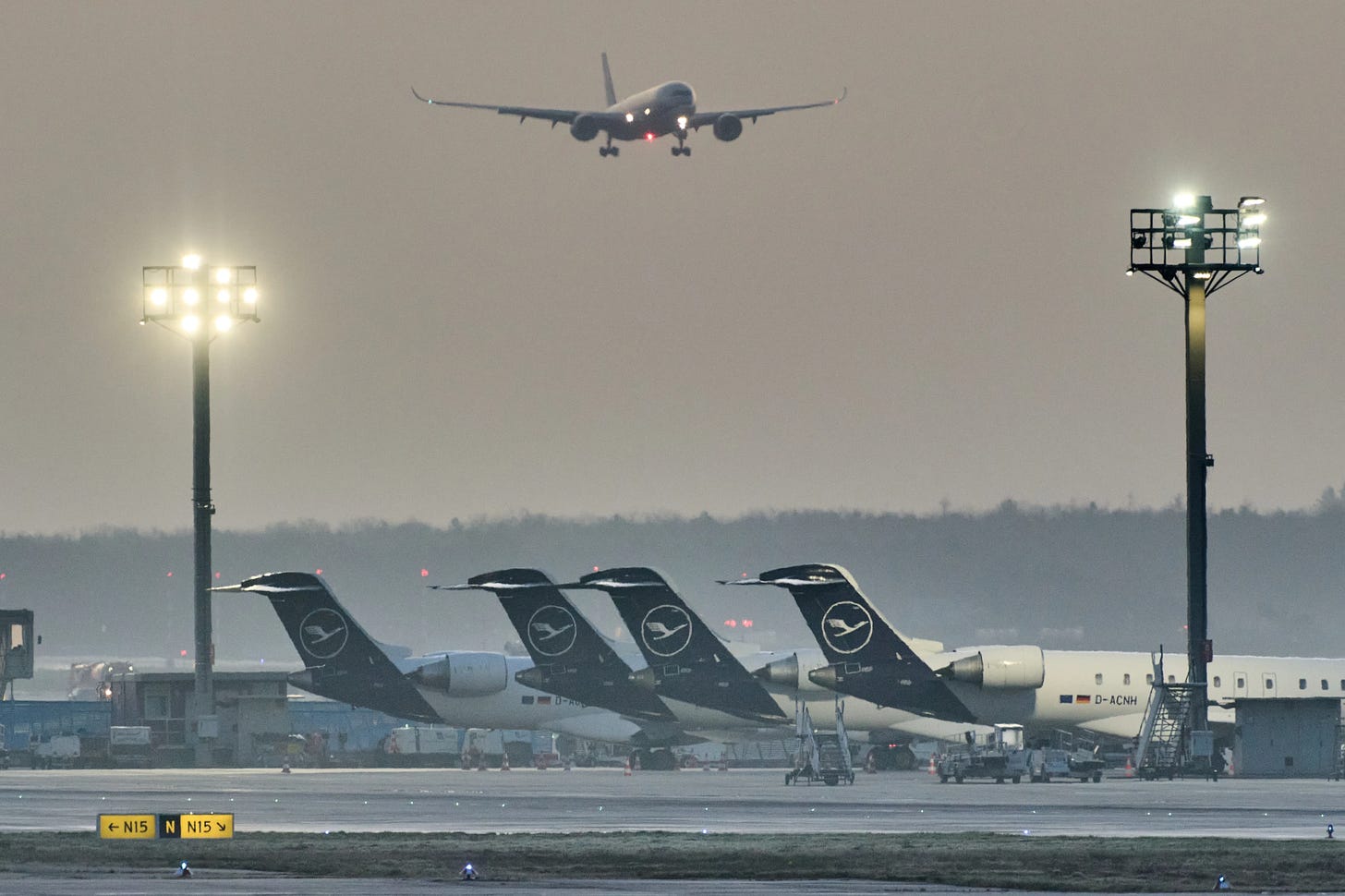
The jet fuel shortage triggered by the Iran war and the closure of the Strait of Hormuz has severely disrupted airline operations worldwide, forcing major carriers like Lufthansa to cut 20,000 flights, Turkish Airlines to suspend service to 23 cities, and United Airlines to slash 5% of its summer schedule. This operational retrenchment is driven by soaring jet fuel prices, which doubled in the U.S. from $2.30 per gallon in February to around $4 by early May, squeezing airline profitability and prompting route suspensions and even airline collapses, such as Spirit Airlines. As Air Canada noted, several routes no longer meet profitability targets amid these elevated fuel costs, illustrating how the crisis is reshaping airline networks and reducing connectivity.
The jet fuel scarcity has rippled beyond aviation, inflating fuel prices at the consumer level due to refinery shifts prioritizing jet fuel over gasoline production. U.S. refineries increased jet fuel output by 26,000 barrels per day but cut gasoline production by roughly 53,000 barrels daily, depleting gasoline inventories to 2% below their five-year average. Consequently, Americans now pay $4.48 per gallon for regular gas—50% more than before the conflict began—demonstrating the interconnectedness of jet fuel shortages and broader energy markets. This dynamic underscores how airline fuel crises can indirectly burden everyday consumers at the pump.
Despite the surge in jet fuel prices and operational cutbacks, airline demand has shown surprising resilience, with consumers tolerating higher fares that help carriers maintain profitability amid the crisis. However, experts warn that markets have yet to fully price in the ongoing conflict’s risk premium, suggesting that if the Strait of Hormuz closure persists, airlines and consumers could face even greater economic strain. The International Energy Agency’s Fatih Birol cautions that the prolonged jet fuel shortage will have dire implications for global economic growth and inflation, as reduced air connectivity and cargo capacity tighten supply chains and disrupt commerce worldwide.
The jet fuel shortage is forcing airlines in Europe and Asia to strategically cut schedules and prioritize flights at high-demand airports, reflecting a scramble for alternative fuel sources amid the Strait of Hormuz blockade. While airlines report coverage of jet fuel needs through early summer, uncertainty looms as the peak travel season approaches, raising concerns about potential further disruptions. This tightly synchronized airline ecosystem leaves little margin for error, as evidenced by stranded passengers and exorbitant last-minute fares following Spirit Airlines’ collapse, highlighting the human and economic toll of the ongoing fuel crisis.



Governments Scramble, Diplomacy Stalls
Emergency fuel stockpiles and diplomatic pressure are proving insufficient, as months of persistent shortages force travelers and airlines to make painful adjustments.
In response to the jet fuel shortage crisis, governments have mobilized a range of emergency measures, with the European Commission coordinating closely with member states to assess the implementation of mandatory minimum jet fuel reserves and exploring alternative imports from the United States. However, experts like Matt Smith of Kpler caution that even if the Strait of Hormuz reopens immediately, jet fuel supply chains will remain disrupted for months, underscoring the prolonged nature of the governmental and diplomatic challenges ahead.
The United States, lacking a strategic aviation fuel reserve, has primarily relied on military and diplomatic pressure to reopen the Strait of Hormuz, a critical chokepoint for global jet fuel flows. Yet, diplomatic progress remains stalled as neither Iran nor the U.S. face sufficient economic incentives to compromise; while Iran endures significant economic pain, its regime maintains leverage over its population, and the U.S. administration, facing an election year, does not perceive a crisis severe enough to force concessions.
Amid these diplomatic stalemates, governments and refineries worldwide are maximizing jet fuel production to alleviate shortages, but this supply-side push is met with emerging demand destruction as consumers adjust travel plans due to soaring fuel prices and scarcity. Anecdotal evidence, such as travelers opting for ferries and trains over flights for summer holidays, highlights the tangible social impact of the crisis and the limits of production increases in offsetting the broader economic fallout.
Geopolitics Drives Oil Chaos
The Strait of Hormuz blockade has injected extreme volatility into oil markets, exposing regional vulnerabilities and fueling speculative price spikes that threaten global economic stability.
The closure of the Strait of Hormuz, a critical chokepoint responsible for roughly 20% of global oil flow and 5% of oil products, has precipitated a sharp surge in oil prices, embedding a significant near-term geopolitical risk premium into the market. Brent futures reveal a $25 spread between immediate and 12-month contracts, signaling acute short-term volatility amid expectations that the disruption may last one to two months, with longer closures threatening even steeper price hikes and potential demand destruction. As one analyst noted, 'If the Strait of Hormuz stays closed for two months, three months, there's definitely an upside risk,' underscoring the fragile balance of global supply in this multipolar geopolitical environment.
The Iran war and resultant Strait of Hormuz blockade have triggered an unprecedented oil supply deficit estimated at 10 million barrels per day, driving prices from $70 to $120 per barrel and creating historic market volatility. Emergency responses, including a coordinated release of 400 million barrels from strategic petroleum reserves—with the U.S. contributing 172 million barrels—and export rerouting have provided temporary relief, yet these buffers are finite. Market watchers warn that if the conflict persists, prices could approach $150 per barrel, levels historically associated with demand destruction and recessionary pressures, highlighting the broader economic risks embedded in this geopolitical crisis.
Regional disparities exacerbate vulnerability to the crisis, with Europe’s limited crude inventory—approximately 380 million barrels with only 130-140 million barrels drawable—compared to the U.S.’s larger buffer, intensifying uneven market volatility. This dynamic, coupled with Iran’s adept use of asymmetric warfare tactics to leverage control over the Strait of Hormuz, amplifies uncertainty and fuels speculative pricing behaviors. Analysts observe that the rapid 70 to 80 cent spike in gas prices post-war announcement reflects not only real supply disruptions but also anticipatory corporate pricing, illustrating the complex interplay between physical market constraints and 'paper prices' driven by futures speculation.
Investor sentiment and market positioning have shifted markedly amid the ongoing geopolitical tensions, with firms like BlackRock moving from overweight to neutral on U.S. equities in response to the heightened risk environment. The path toward resolving the Strait of Hormuz closure remains volatile, hinging on uncertain negotiations and likely nuclear restraints by Iran, which could eventually ease the blockade but not without significant market turbulence. As one market observer put it, 'For investors there's going to be more volatility. So you have to be brave and take a view as to how we're going to end up,' capturing the precarious balance investors face in this multipolar geopolitical landscape.