John deere’s AI revolution spurs right-to-repair breakthrough
The gist
John Deere’s AI-powered farming revolution has triggered a landmark right-to-repair win, forcing the industry giant to unlock its digital toolkits for farmers and independent shops nationwide.
What to know
- By mid-2026, John Deere’s 9Rx830 tractor and AI sprayers use up to 16 cameras and Nvidia Orin GPUs for full autonomy and precision data, tackling labor shortages and slashing chemical use.
- A $99M class-action lawsuit and an FTC mandate now require Deere to provide at least ten years of open access to diagnostic and repair software—including Service ADVISOR—ending years of dealer lock-in.
- Despite a 14% sales slump in ag equipment, Deere remains profitable thanks to recurring revenue from its cloud-based Operations Center and diversification into construction and forestry.
AI Transforms Every Acre
John Deere’s latest autonomous tractors and AI-powered sprayers bring plant-level management, real-time data, and targeted crop care to the field, ushering in a new era of individualized, precision agriculture.
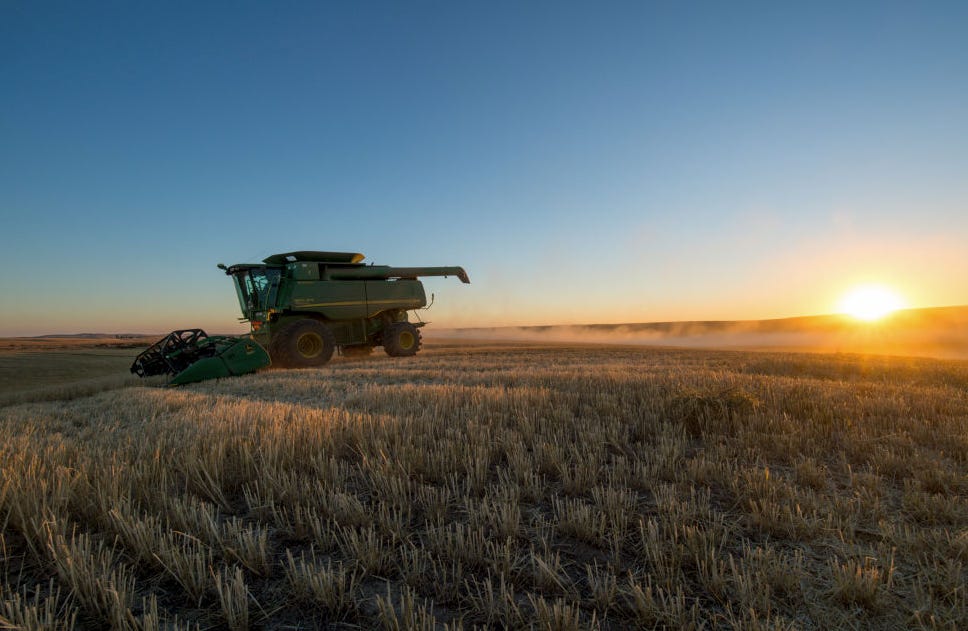
By mid-2026, John Deere has positioned itself at the forefront of precision agriculture through a sophisticated integration of AI, advanced sensors, and machine learning embedded in its farming equipment. The 9Rx830 tractor exemplifies this evolution, utilizing a 16-camera array paired with Nvidia Orin GPUs to achieve full autonomy, allowing farmers to replace themselves in the cab and address critical labor shortages during peak planting seasons. This sensor-driven approach extends beyond autonomy; it captures granular agronomic data such as seed planting depth, density, and exact location, which is uploaded to the cloud and accessible via mobile apps, empowering farmers to optimize in-season decisions and future planting strategies with unprecedented precision.
John Deere’s innovation also revolutionizes crop management through AI-powered sprayers equipped with 36 cameras and nine embedded GPUs that implement 'see and spray' technology. Unlike traditional uniform chemical applications, these sprayers selectively target herbicides and pesticides only where weeds are detected, operating at speeds up to 15 mph. This precision not only reduces chemical usage and environmental impact but also enhances sustainability and operational efficiency, marking a significant leap forward in responsible farming practices.
Taking precision agriculture to the next level, John Deere is pioneering 'plant-level management' that aspires to mechanize the 'master gardener experience' by treating each seed individually with tailored care. Leveraging GPS and GNSS technologies ensures exact seed placement—down to consistent 30-inch rows—eliminating overlaps or missed areas to maximize field efficiency. Moreover, through partnerships like with Interplant, John Deere explores genetically modified plants that fluoresce under specific wavelengths to indicate distinct stresses such as nitrogen or water deficiency, enabling highly targeted, stress-specific interventions that promise to transform crop health monitoring and treatment.
John Deere’s CTO Jahmy Hindman articulates a bold vision for a fully autonomous farm powered by AI, where integrated sensors, data analytics, and machine learning converge to make farms faster, smarter, and more sustainable. This vision, shared on the Pioneers of AI podcast, encapsulates the company’s commitment to transforming agriculture through technology that not only automates labor-intensive tasks but also enhances decision-making at every level—from seed to harvest—ushering in a new era of intelligent farming.


Farming Meets the Cloud
Satellite internet and mobile-ready digital platforms now deliver ultra-precise, real-time agronomic insights to farmers—even in the most remote fields—enabling data-driven decisions at unprecedented resolution.
By mid-2026, John Deere had strategically integrated cloud computing with satellite internet partnerships, notably with Starlink, to overcome connectivity challenges in rural areas. This collaboration enabled the deployment of low earth orbit satellite terminals on farming equipment, allowing for ultra-high-resolution data collection—down to approximately one square meter—facilitating precise yield mapping for crops like corn and soybeans. Such granular data empowers farmers with actionable agronomic insights, informing critical decisions on crop genetics, seed density, and nutrient scheduling to optimize yields in subsequent planting seasons.
Central to John Deere’s smart farming ecosystem is the Operations Center, a versatile digital platform accessible via desktop and mobile devices on Android and iOS. This platform delivers real-time farm logistics and yield data analysis, enabling farmers to monitor operations remotely and make timely management decisions. By providing near-term feature sets optimized for mobile use, the Operations Center ensures that farmers can seamlessly integrate detailed agronomic data into their daily workflows, enhancing operational efficiency and responsiveness.
Digital Repair Revolution
Remote software updates and mandated tool access have shifted right-to-repair from a hardware battle to a digital frontier, giving farmers and independent shops long-denied control over their equipment’s brains.
By early 2026, John Deere had significantly evolved its right-to-repair stance by launching Operations Center Pro, a digital platform that empowers farmers and independent repair shops to remotely update equipment software via smart devices. This marked a pivotal shift from the company’s longstanding focus on mechanical repair support to embracing digital software access, addressing decades of friction where customers previously had to rely on costly dealer tools and in-person visits for software updates. As Deere explained, the right-to-repair debate had primarily centered on software access rather than hardware, reflecting changing technology and customer expectations over the past 25 to 30 years.
In July 2026, the Federal Trade Commission (FTC) forced John Deere to expand farmers’ right-to-repair by mandating full access to diagnostic, software, and repair tools—including the previously dealer-exclusive Service ADVISOR—for at least ten years. This landmark settlement, which followed a $99 million class-action lawsuit over inflated repair costs, prohibits Deere from retaliating against users of these tools and requires ongoing availability of future repair resources. While this regulatory oversight represents a major victory for the right-to-repair movement, it is specific to this case and does not yet constitute a universal mandate.
John Deere’s easing of right-to-repair restrictions aligns strategically with its broader push into digital and automation technologies, including connected solutions like Operations Center and acquisitions such as Tenna. By balancing proprietary technology with enhanced customer empowerment, Deere aims to facilitate wider adoption of its precision platforms, suggesting that expanded repair access may serve as a catalyst for deeper integration of its advanced digital ecosystem within the farming community.
Resilience Beyond the Tractor
Recurring revenue from data platforms and rapid growth in construction and forestry segments have helped Deere weather ag downturns, reducing dependence on new equipment sales and buffering financial volatility.
By mid-2026, John Deere’s financial narrative reveals a company adeptly balancing near-term agricultural sector headwinds with a transformative push into AI-driven precision agriculture and connected technologies. Despite a 14% year-over-year decline in Production & Precision Agriculture net sales and a 39% drop in operating profit, Deere sustained robust profitability, reporting a net income of $5.027 billion on $45.684 billion in revenues for fiscal 2025. This resilience is anchored in Deere’s sophisticated recurring-revenue model, where the Operations Center platform creates significant switching costs by embedding agronomic data and software services into farmers’ workflows, effectively decoupling earnings from new equipment sales and enhancing long-term customer lock-in.
Deere’s strategic diversification beyond traditional farming equipment into construction and forestry segments further cushions the company against cyclical volatility. In Q2 FY2026, these segments grew revenues by 29% and operating profit by 48%, fueled by infrastructure spending and bolstered by acquisitions like Tenna LLC, which adds fleet intelligence and analytics capabilities mirroring Deere’s precision agriculture recurring-revenue model. CEO Brent Norwood emphasized this multi-segment exposure as a key strength, highlighting how large agriculture is currently below trough while construction and small agriculture segments are at healthier points in their cycles, collectively providing a buffer against sector-specific downturns.
While Deere benefited from a one-time $272 million tariff refund that temporarily boosted Equipment Operations margins by approximately 2.5 percentage points in Q2 FY2026, underlying pressures remain significant, with net tariff costs around $900 million annually impacting margins by roughly three points. Management’s proactive cost-cutting, supply chain re-sourcing, and production adjustments have mitigated tariff impacts without passing costs to customers, demonstrating operational agility amid persistent input cost headwinds. Nevertheless, near-term financial performance remains sensitive to North American large agriculture market volatility, underscoring the importance of Deere’s ongoing innovation investments and diversified revenue streams to sustain investor confidence.
Investor sentiment towards Deere is cautiously optimistic, buoyed by a strong order book since April 2024, ongoing R&D investments, and shareholder returns exceeding $635 million through buybacks and dividends. The rapid expansion of precision agriculture technologies, such as the 'See & Spray' system growing coverage from 1 million to 5 million acres within a year, alongside the addition of thousands of new customers to the John Deere Operations Center, signals accelerating adoption of digital services that underpin recurring revenue growth. Analysts project Deere’s revenues reaching between $48.4 billion and $52.7 billion by 2029, with earnings potentially doubling to as much as $10.8 billion, contingent on sustained growth in construction and smart equipment demand driven by Deere’s AI and connected technology integration.

Repair Monopoly Broken
The FTC’s landmark settlement forced Deere to open its once-locked repair software, breaking a digital monopoly that had driven up costs and stifled farmer autonomy for years.
By mid-2026, the Federal Trade Commission's landmark settlement with John Deere fundamentally reshaped the repair landscape for farmers by mandating the company to provide equal access to diagnostic and repair software—including the full Service ADVISOR suite—to farmers and independent repair shops for at least the next decade. This regulatory intervention not only expanded the right-to-repair movement’s victories but also explicitly barred Deere from retaliating against users of these newly accessible tools, ensuring protections that had long been absent in the tightly controlled Deere repair ecosystem.
The FTC's action directly confronted John Deere’s monopolistic grip on aftermarket repairs, which had forced farmers and independent shops to rely exclusively on authorized dealers charging premium rates—reported between $130 and $200 per hour in 2023—for essential electronic control unit (ECU) diagnostics and repairs. Deere’s digital lockout of ECU tools created a chokepoint that not only inflated costs but also eroded farmer autonomy, compelling some to resort to unauthorized hacking of their own machinery. This case highlighted how Deere’s control over repair software was emblematic of a broader corporate strategy leveraging intellectual property laws and digital technology to entrench monopolies across various sectors of the U.S. economy.
While the FTC settlement represents a significant regulatory milestone, it applies specifically to this case and is subject to ongoing monitoring over the next ten years, signaling a gradual and controlled rollout rather than an immediate overhaul of Deere’s repair policies industry-wide. This measured approach reflects the complexities of balancing intellectual property protections with farmers’ rights and suggests that, despite this victory, the broader right-to-repair movement in agriculture will continue to navigate a challenging terrain shaped by entrenched corporate interests and evolving regulatory frameworks.



Autonomous Farms on the Horizon
John Deere’s AI vision is reshaping global food production, promising fully autonomous, resource-optimized farms that minimize environmental impact and maximize efficiency.
By mid-2026, John Deere's CTO Jahmy Hindman articulated a compelling vision for the future of agriculture centered on AI-driven automation. He emphasized how integrating machine learning, advanced sensors, and data analytics will enable fully autonomous farms that operate faster, smarter, and with greater sustainability. This transformation promises to reinvent global food production by optimizing resource use and minimizing environmental impact, positioning John Deere at the forefront of a technological revolution in farming.