Legacy tech and AI collide in november’s meltdown
The gist
November’s twin FAA and Microsoft 365 meltdowns exposed how fragile our critical infrastructure has become as aging tech collides with AI-powered threats and centralized digital choke points.
What to know
- In November 2026, the FAA’s nationwide ground stop was triggered by an overloaded Time-Division Multiplexing system, while over 400 airports still rely on floppy disks.
- A 12-plus-hour Microsoft 365 outage knocked out services in more than 70 countries, with ripple effects far beyond email—including sign-ins, MFA, and device management.
- AI is accelerating attacks: criminal AI adoption is up 40% year over year, and most serious breaches now begin with stolen credentials, not brute force.
When Failure Goes Live
November’s outages proved that decades-old technology still underpins our critical infrastructure, making theoretical disaster models a present-day reality.
November 2026 landed with unusual force because the failures were not theoretical stress tests but live demonstrations of how brittle essential systems had become. Lloyds of London and the University of Cambridge had already modeled how infrastructure shocks can cascade, imagining hackers taking down part of the U.S. power grid so that 15 states plus Washington, D.C., go dark and 93 million people lose power; real precedents made that warning credible, from Ukraine’s 2015 blackout affecting about 230,000 people to the July 2024 CrowdStrike mistake that crashed 8 to 12 million Windows computers, grounded flights, and disrupted hospitals worldwide.
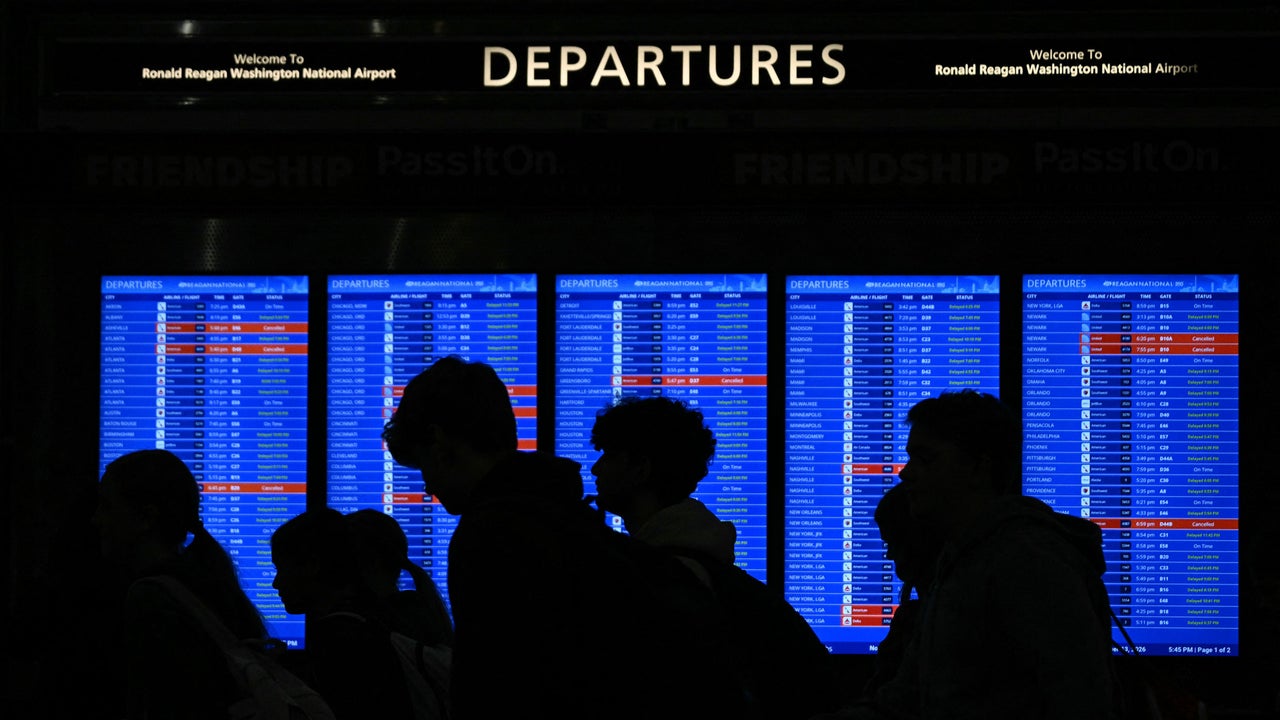
The FAA outage then showed what that fragility looks like inside a legacy baseline that modernization has not displaced: Fast Company reported an old Time-Division Multiplexing analog system became overloaded during upgrades, while CNN said a contractor replacing copper wire with fiber optics overwhelmed older equipment until the FAA imposed a rare nationwide ground stop. That breakdown fit a broader pattern of aging infrastructure still carrying modern workloads, as commentary on legacy tech noted that over 400 airports still use floppy discs and that some industrial equipment is supported for 50 years because, as one manufacturer put it, “These are expensive. They buy them for 50 years at a time.”




Choke Points in a Decoupling World
Legacy systems and new AI-driven threats are converging at digital bottlenecks, turning cyber disruption into a tool of statecraft and exposing vulnerabilities that span nations and vendors alike.
Concentration risk now comes from the way old systems, centralized platforms, and geopolitical cyber strategy reinforce one another. James Azar’s CISO Talk argued that 2026 is the year of strategic decoupling between nations, vendors, and even data itself, while warning that cyber has become an instrument of state power. Security Now described Denmark’s Defense Intelligence Service launching a campaign to recruit cybersecurity specialists to compromise opponent networks and obtain information for Denmark’s security, showing that disruption is increasingly organized, strategic, and aimed at shared digital choke points.
Those choke points are harder to defend because modern attacks reduce visibility just as enterprises layer new AI services onto old estates. Cybersecurity Headlines noted ReliaQuest found LeakNet uses a bring your own runtime attack with the legitimate open source deno runtime and a Deno-based loader to place a JavaScript payload into MEM, minimizing forensic evidence. AI Security Surge said AI use has exploded in the last six months even as big organizations still have old systems, and Quartz showed Microsoft 365 outages reach well beyond Outlook and Teams, from sign-ins and MFA prompts to room bookings, automated flows, and device management. On 29, 2025, Microsoft attributed a widespread Azure outage to an inadvertent configuration change in Azure Front Door, which affected Microsoft 365 along with other services.


AI Supercharges Cheap Attacks
Automated credential theft and rapid-fire, low-cost intrusions are reshaping cyber risk, shifting the advantage to attackers who exploit AI for both scale and stealth.
AI is making intrusion work cheaper not by replacing hackers wholesale, but by automating the parts that once demanded time and craft: deception, credential theft, reconnaissance and exploit preparation. Recorded Future’s 2026 State of Security Report says “AI is contributing to this convergence by accelerating the scale of deception, identity abuse, and uncertainty faster than institutions can adapt,” while warning that in 2026 cyber risk will be defined less by singular events than by “persistent, fragmented pressure”; crucially, it also finds most serious intrusions now begin with stolen credentials, shifting advantage toward scalable, lower-skill identity attacks.
The same cost compression is showing up across the attack chain, from target discovery to weaponization. CISO Talk reported the North Korean-linked “UNC-2970 (Lazarus Group) – Operation Dream Job Campaign” was “relying on AI tools for reconnaissance,” noted that “Patch Tuesday… addressed 83 vulnerabilities across its ecosystem” even as disclosure-to-exploitation windows keep shrinking, and observed that “in addition to structured APT activity, hacktivist groups… have launched more than 149 distributed denial-of-service attacks… These attacks are inexpensive to launch but highly visible…”; by October, OpenAI said frontier AI helped security researchers discover critical PHP vulnerabilities, with Calif using GPT-5.6 Sol, while also acknowledging that the same technology that helps defenders can aid attackers, and TRM reported criminal AI adoption up about 40% year over year.




Centralization Amplifies Outages
The Microsoft 365 and FAA incidents revealed how both modern cloud platforms and legacy networks can instantly ripple failures across borders, even without a common cause or cyberattack.
The back-to-back November failures exposed a common weakness even without a common trigger: essential services now rest on centralized digital systems whose breakdowns can spread instantly across sectors. On November 12, 2026, Microsoft 365 suffered a 12 plus hour cloud outage caused by a tiny internal software stall, with no hackers, no ransomware, and no state sponsored cyber attacks, yet the failure still disrupted businesses across more than 70 countries, knocking out Outlook, Teams, and Copilot and causing downstream impacts in Indian airlines. The Microsoft 365 outage showed that when essential services depend on centralized cloud platforms, a non-malicious internal failure can cascade into widespread operational breakdowns across countries and sectors.
The FAA shock the next day showed the same scale vulnerability from the opposite direction: aging operational infrastructure tied into a centralized communications network can turn a localized fault into a national stoppage. Public evidence reviewed does not establish a shared cause for the FAA ground stop and the Microsoft outage, despite their overlap in time, but FAA acting CTO Rebecca Guy said two places were pinging the network at a very high rate, with a thousand connections over every five seconds, and after the FAA disabled both, it stabilized the network, though more than 8,200 flights were canceled Friday evening and at least another 3,000 on Saturday.