Marketing’s AI player-coach shift deepens
The gist
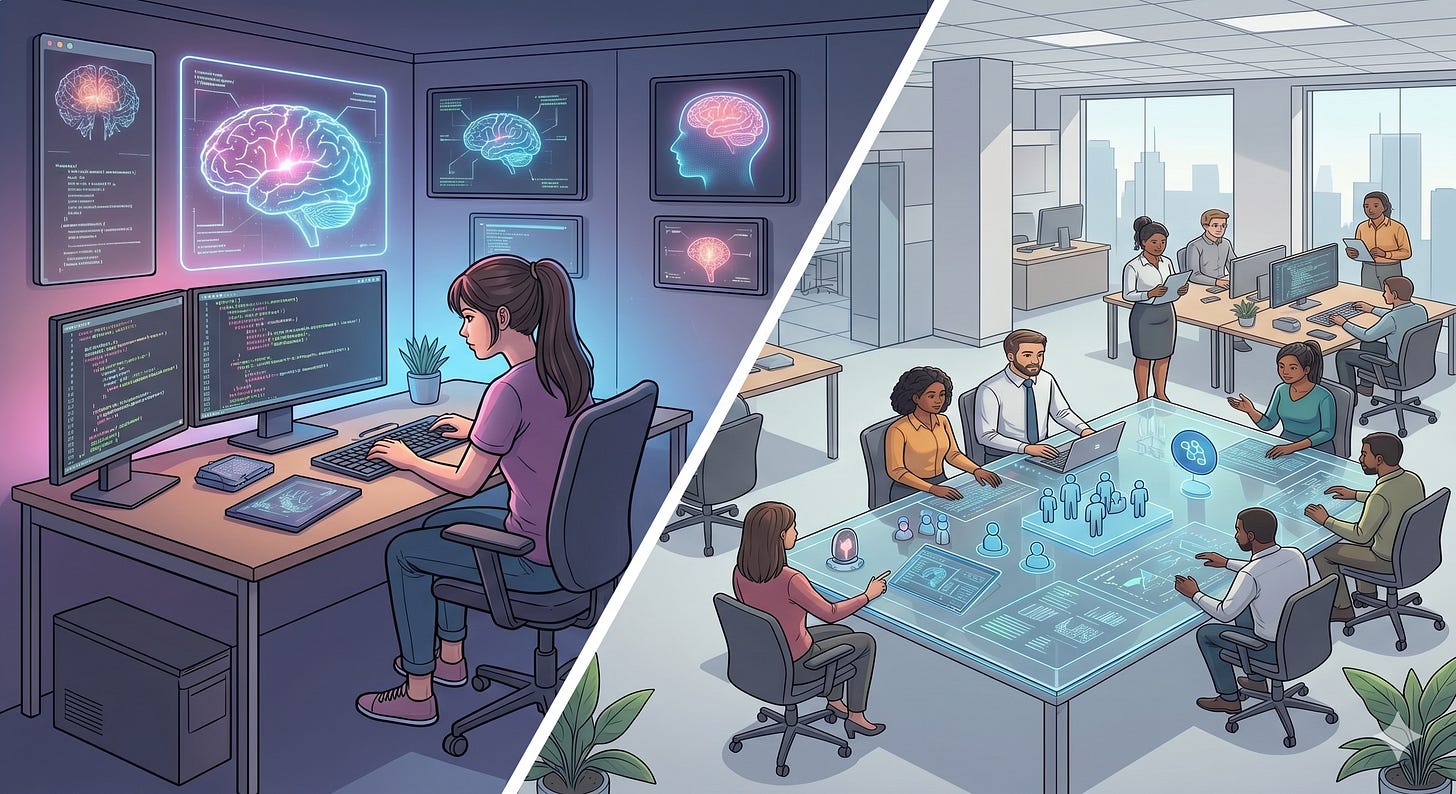
Agentic AI is taking over 95% of marketing grunt work, catapulting humans into strategic 'player-coach' roles and transforming the entire marketing playbook.
What to know
- By mid-2026, multi-agent AI systems like SaaStr's AI VP QB were autonomously running complex campaigns, sending hundreds of tailored communications overnight and optimizing budgets in real time.
- Enterprise-scale adoption relies on robust governance frameworks—think Responsibility-Oriented Agent models and centralized platforms like HubSpot’s Agent Hub—to keep AI autonomy in check.
- As AI automates nearly all routine marketing, marketers now focus on creativity, judgment, and brand stewardship, with trust hinging on human review and oversight.
Marketers Become AI Orchestrators
Agentic AI now automates nearly all routine marketing, but marketers remain essential for nuanced oversight, quality control, and strategic orchestration—spending minutes, not hours, guiding AI agents to deliver brand-safe, personalized campaigns.
Early adopters of agentic AI in marketing and support quickly realized that while these tools could automate up to 95% of routine tasks, significant human orchestration remained essential. As one case study noted, marketers still needed to invest 20 to 30 minutes daily to oversee AI agents, ensuring personalization and quality control—particularly for nuanced outputs like newsletters where the human touch remained irreplaceable. This hybrid workflow model positioned marketers more as 'managers of agents,' shifting their role from manual execution to strategic oversight and AI orchestration.
Agentic AI began breaking down traditional silos by integrating marketing, sales, and support workflows into a cohesive ecosystem. Early implementations in customer support, exemplified by AI agents like Amelia and Jason, enhanced customer experience by maintaining conversational context and reducing human transfers, while simultaneously transforming support into a proactive lead capture and opportunity generation tool. This convergence enabled businesses to rapidly deploy AI agents—such as Deli, which could be implemented in a day—improving both customer engagement and sales pipeline initiation without extensive development overhead.
By mid-2026, companies like Hightouch demonstrated that agentic AI could compress complex, multi-step marketing campaigns—from a traditional 50-step process spanning weeks—into automated workflows completed in days, saving clients like Thumbtack approximately 30 hours per campaign. Success hinged on embedding deep marketing context, including brand guidelines and customer data, to ensure AI-generated campaigns aligned with brand standards and customer needs. This evolution marked a strategic shift where marketers transitioned from campaign managers to orchestrators of AI agents, focusing on defining goals and reviewing AI outputs rather than executing manual tasks.
Building a robust agentic AI foundation within enterprises required deliberate governance and integration with core systems to enable effective cross-functional collaboration. As Brillio’s Kathleen Ulrich and Anuj Mathur emphasized, early adoption was not merely about deploying AI but about transforming talent and technology paradigms—moving from campaign management to orchestrating AI agents across the entire customer journey. These practical first steps laid the groundwork for broader adoption by ensuring structured oversight and seamless integration across marketing, sales, and support functions.

AI Agents Collapse Silos
Multi-agent AI systems autonomously manage end-to-end marketing, sales, and finance workflows, with agents like SaaStr's AI VP QB executing hundreds of tailored actions overnight and cross-functional roles merging for unprecedented campaign speed.
By mid-2026, multi-agent AI systems had evolved to autonomously manage complex marketing workflows end-to-end, seamlessly orchestrating triggered emails, competitive intelligence, and even finance integration within a single ecosystem. For instance, SaaStr's AI VP QB autonomously handled personalized sponsor communications at scale, sending over 80 uniquely tailored emails overnight to reduce manual workload and improve engagement, while the AI VP of Finance operated within the marketing agent to manage financial tasks, reflecting a growing sophistication and collapsing of agent roles. This integration marks a significant leap from traditional segmented automation to fluid, cross-functional AI orchestration that accelerates campaign execution and responsiveness.
The transition from static, rules-based automation to agentic AI orchestration represents a paradigm shift in marketing operations, where AI agents not only execute tasks but reason, decide, and adapt in real time based on integrated data and business context. As Josh Span and Jessica Keehn highlight, these systems continuously optimize campaigns by reallocating budgets, testing creatives, and triggering personalized actions such as retention offers without human intervention, enabling marketing teams to operate at unprecedented scale and efficiency. However, this autonomy necessitates human oversight to set strategic guardrails and prevent brand drift, ensuring AI-driven decisions align with brand tone and governance frameworks.
Agentic AI's impact extends beyond execution to holistic workflow orchestration across the marketing value chain, from planning and personalization to measurement and optimization. Companies like LiveRamp report a 40% reduction in post-campaign reporting time through agent orchestration, while Omneky's fully autonomous system generates, launches, and optimizes campaigns weekly without human input, illustrating rapid progress in AI capabilities. This evolution enables continuous, real-time campaign adjustments—shifting from quarterly reviews to near-instantaneous decision-making—which has driven tangible business outcomes such as a 60% reduction in cost per lead and a 40% shorter sales cycle.
Despite these advances, significant challenges remain in scaling autonomous AI workflows due to fragmented, unstructured data and siloed systems, with over half of enterprises reporting difficulties in real-time data access and utilization. As noted in SAP's Global Engagement Index Report 2026, this 'Engagement Divide' hampers consistent, scalable AI-driven marketing execution. Successful agentic AI deployment thus hinges on integrating rich contextual data—brand guidelines, customer insights, and campaign nuances—into a living, continuously updated framework that supports human-in-the-loop quality assurance and strategic oversight to maintain effectiveness and brand integrity.




Enterprise AI Needs Real Guardrails
Scaling agentic AI requires robust governance frameworks and centralized platforms to overcome data fragmentation, legacy systems, and compliance hurdles, making human-in-the-loop controls and accountability non-negotiable for enterprise reliability.
Scaling agentic AI across large enterprises demands a robust, multi-layered infrastructure that balances immediate operational needs with long-term governance and reliability. This invisible backbone integrates compute, data, model orchestration, and runtime control layers to ensure agents operate safely and remain relevant over time. Frameworks like the Responsibility-Oriented Agent (ROA) model, which combines bounded actors, RBAC-style authority, audit trails, and execution-boundary validation, exemplify how enterprises are embedding accountability and control into complex multi-agent environments.
The transition of agentic AI from personal productivity enhancers to autonomous coordinators reshapes organizational workflows by reducing bureaucratic overhead and enabling humans to focus on strategic tasks. However, this shift challenges traditional governance models, necessitating human-in-the-loop controls and clear role definitions to maintain oversight and accountability. As Jessica Keehn of SAP Customer Experience emphasizes, connecting AI insights to real-time, personalized actions across integrated systems is crucial to translating AI potential into consistent enterprise value.
Enterprise-scale deployment faces persistent hurdles including fragmented data, legacy infrastructure, talent shortages, and unclear governance, which impede consistent AI execution despite growing adoption. Southeast Asian firms like SotaTek highlight the importance of phased deployment strategies beginning with rigorous data readiness audits compliant with regulations such as Singapore’s PDPA. Platforms like HubSpot’s Agent Hub and Agent Builder address fragmentation by centralizing AI agent management, enabling non-technical users to build and govern multiple agents collaboratively, thus enhancing utilization, compliance, and reducing CRM automation failures.
Emerging enterprise platforms such as Harnyss and HubSpot are pioneering centralized AI agent management with layered governance controls that balance autonomy and risk through modes like Approve, Review, and Autopilot. These platforms support extensive integrations—Harnyss connects with over 25 tools including Salesforce and Slack—and emphasize human oversight roles like 'AI operators' to rethink workflows beyond automation. Industry experts like Gartner’s Kathy Ross stress the necessity of real-time monitoring and management to prevent operational failures and protect brand reputation as AI agents become foundational to enterprise operations.


Human-AI Collaboration Redefines Culture
AI-powered automation frees marketers to focus on creativity and judgment, but trust and brand integrity still hinge on human review, with new 'player-coach' roles blending strategic leadership and hands-on oversight.
By early 2026, agentic AI had become deeply embedded in marketing workflows, automating routine and repetitive tasks such as data analytics, campaign brief digestion, and coordination, effectively acting as a swarm of personal assistants. This automation freed marketers to elevate their focus toward strategic judgment, creative development, and governance, with human qualities like taste, accountability, and brand stewardship emerging as the critical differentiators. As Josh Span from Google observed, AI enables brands to autonomously produce and review thousands of assets, accelerating innovation while preserving the irreplaceable human touch.
Human-AI collaboration has become the cornerstone of modern marketing culture, with AI serving as a thinking partner that challenges assumptions, pressure-tests ideas, and generates multiple creative options rapidly. However, trust in fully autonomous AI remains low without human oversight, as highlighted by a UK survey showing trust plummeting from 68% with human review to 26% without it. Leaders like Meghna Shah and Jessica Keehn emphasize that while AI executes workflows and personalization at scale, humans must retain strategic control, brand voice oversight, and accountability to prevent brand drift and ensure alignment with organizational values.
The rise of agentic AI is driving a profound cultural and organizational shift within marketing teams, prompting a re-architecture of operating models, workflows, and talent strategies. Companies like L’Oreal and Zapier illustrate how AI-powered collaboration tools connect thousands of marketers, enabling seamless information sharing and personalized outputs grounded in rich contextual data. This evolution encourages marketers to become orchestrators of AI agents rather than mere executors, fostering a 'player-coach' dynamic that blends strategic leadership with hands-on impact. However, as James Chandler notes, roles like chief AI officer are transitional, with AI integration demanding foundational alignment, clear definitions, and cross-functional collaboration to fully realize its potential.
Despite widespread enthusiasm, only about one-third of marketers and CMOs have significantly transformed their organizations with AI by mid-2026, revealing a gap between ambition and execution. This disconnect underscores the necessity of thoughtful AI adoption that prioritizes quality, guardrails, and strategic goals over chasing the latest models. As Shobha Diwakar advises, a human-first, AI-enabled philosophy that emphasizes judgment and relationship-building is essential to harness AI’s full value. Meanwhile, organizations are recalibrating hiring and talent development to do more with fewer people, viewing AI agents as companions requiring management rather than replacements, thus reshaping marketing culture around collaboration, continuous improvement, and elevated human creativity.


Unified AI Platforms Take Over
Marketing tech giants now offer integrated agent orchestration layers—like SAS’s CI 360 and HubSpot’s Agent Hub—that centralize control, automate multi-step workflows, and ensure compliance, reducing fragmentation and interface overload.
By mid-2026, leading marketing technology firms like SAS and The Trade Desk pioneered unified AI operating systems that integrate multiple specialized agents into a cohesive orchestration layer, streamlining complex campaign workflows and reducing interface switching. SAS’s Customer Intelligence 360 and The Trade Desk’s Koa Agents exemplify this evolution by enabling rapid campaign execution through natural language prompts and human-in-the-loop governance, emphasizing transparency and marketer sign-off to build trust in AI-driven decision-making.
The emergence of comprehensive AI marketing platforms such as PubMatic’s AgenticOS, Adobe’s CX Enterprise, and HubSpot’s Agent Hub reflects a broader industry shift toward seamless integration across enterprise tech stacks, enabling real-time personalization and autonomous campaign management. These platforms not only automate multi-step workflows but also embed programmatic governance and compliance checks, while partnerships with major tech players like Amazon, Microsoft, and OpenAI facilitate a closed-loop ecosystem that accelerates content generation, distribution, and conversion within unified interfaces.
Addressing the operational challenges of AI agent sprawl, HubSpot’s Agent Hub and Agent Builder democratize AI agent management by centralizing control and enabling non-technical users to create and deploy custom agents through natural language. This innovation reduces fragmentation by ensuring all agents operate from a shared CRM data context, improving coordination across marketing, sales, and service functions, and exemplifying the market’s move toward treating AI agents as critical technology tools requiring real-time oversight to mitigate risks and enhance customer journey consistency.
The latest wave of unified AI operating systems, as demonstrated by Auxia’s Agent Studio and Omneky Agent, pushes the envelope by integrating autonomous AI agents that not only execute but continuously optimize campaigns with minimal human intervention. Auxia’s platform, having surpassed 200 billion autonomous personalization decisions, exemplifies the transition from fragmented task execution to outcome-driven marketing operations, while Omneky’s fully autonomous system signals a future where AI can generate, launch, and optimize advertising campaigns end-to-end, fundamentally transforming the marketing ecosystem.

AI Agent Sprawl Meets Its Match
Centralized agent management tools empower non-technical users to build, deploy, and oversee AI agents from a shared CRM context, transforming agents into core technology assets that demand real-time oversight and coordination.
Centralized agent management tools empower non-technical users to build, deploy, and oversee AI agents from a shared CRM context, transforming agents into core technology assets that demand real-time oversight and coordination.