Meta’s AI assistant shakes up SMB marketing, but humans still rule
The gist
Meta’s new AI business assistant is transforming how small businesses market and measure success—without replacing the humans at the helm.
What to know
- Meta’s AI assistant unifies analytics from Facebook, Instagram, Meta Ads, Gmail, and Sheets into a single conversational platform for effortless campaign insights and reporting.
- Marketers can ditch static dashboards and get tailored answers to open-ended questions, driving smarter decisions and seeing results like 20% higher account issue resolution and 12% lower ad costs per result.
- Despite the AI boost, human marketers still make the big calls, as industry leaders stress the need for rigorous governance and creative oversight to keep brand strategy on track.
AI Unifies, SMBs Accelerate
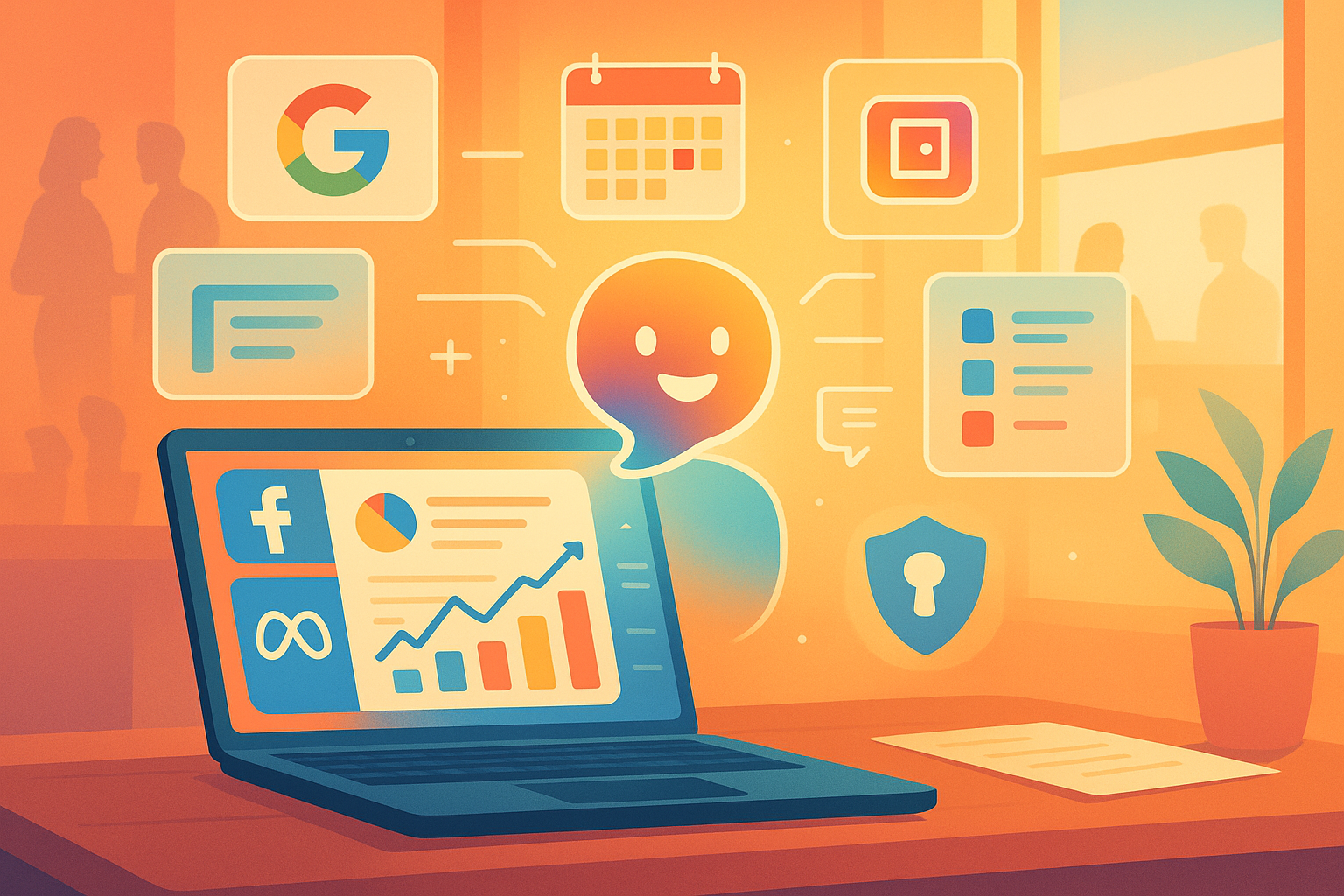
Meta’s AI assistant turns scattered marketing data into a single, conversational command center, letting small businesses automate reporting, optimize campaigns, and act on insights without a dedicated analytics team.
Meta's AI-powered business assistant revolutionizes SMB marketing by integrating multi-platform analytics from Facebook, Instagram, and Meta Ads with external tools like Gmail, Docs, Sheets, and Slides. This consolidation transforms fragmented marketing data into a unified conversational interface, enabling SMBs to intuitively analyze paid and organic campaign performance while generating actionable deliverables such as presentations and recurring reports.
By shifting from static dashboards to a conversational AI model, Meta empowers SMB marketers to ask open-ended questions and receive tailored insights that uncover audience strengths, detect creative fatigue, and recommend budget reallocations. This active interpretation lowers the barriers to data-driven decision-making and reshapes the marketing skill set, allowing businesses without dedicated analysts to optimize campaigns more efficiently.
Meta’s AI assistant not only provides strategic insights but also automates execution by creating slide decks and scheduling performance reports, effectively combining strategy, support, insights, and task automation in one platform. This integrated approach helps SMBs overcome knowledge and labor constraints, leading to measurable improvements such as a 20% higher resolution rate of account issues and a 12% reduction in ad costs per result, underscoring the tool’s impact on campaign optimization and cost efficiency.
Humans Set the Strategy
Even as AI streamlines marketing operations, brand leaders insist that only human judgment can balance creative vision, ethical standards, and strategic growth in an increasingly automated landscape.
Despite the increasing automation of marketing tasks through AI, ultimate control and strategic decision-making firmly remain in the hands of human marketers and CMOs. Estee Lauder’s use of AI to analyze 80 years of brand archives exemplifies how AI can uncover enduring brand elements, yet leaders blend these insights with their vision to reinvent brands thoughtfully rather than be constrained by past performance. As one marketing leader put it, AI reduces operational friction but does not replace the nuanced judgment required to balance targeted reach with audience expansion, ensuring brands avoid missing new opportunities.
Industry experts like Omnicom’s Ben Hovaness stress that AI governance is foundational to effective marketing automation, requiring clean, trusted data and clear oversight to maintain accountability. He emphasizes that while AI can automate planning and optimization, the irreplaceable value lies in human insight to understand client businesses and craft creative strategies. This governance framework extends to onboarding AI systems with the same rigor as human employees, ensuring ethical standards and strategic alignment are preserved amid rapid technological integration.
The rise of AI-driven marketing introduces new ethical and regulatory challenges, as seen with New York’s 2026 law mandating disclosure of AI-generated synthetic performers in ads. Coupled with consumer skepticism—60% of US consumers reportedly find AI-driven brand messaging off-putting—marketers must navigate a delicate balance between leveraging AI for efficiency and maintaining authentic human engagement. This tension underscores the ongoing necessity for human oversight to guide AI’s role in campaign management, ensuring transparency, trust, and strategic differentiation rather than settling for generic, 'strategy-ish' outcomes.
While AI tools like Meta’s Brain Memory and Google’s Gemini automate creative generation and campaign optimization, the marketing industry still faces a significant gap between AI experimentation and full organizational transformation, with only about one-third of marketers having deeply integrated AI. This gap highlights the enduring importance of human agency to orchestrate complex marketing ecosystems, integrating data, creativity, and business goals. Agencies’ competitive edge will increasingly depend not on owning AI technology but on applying it thoughtfully within strong governance frameworks to ask better questions and make superior decisions.
Ethics and Trust Under Scrutiny
With new regulations and growing consumer skepticism, marketers must ensure AI-driven campaigns remain transparent and authentic—or risk eroding brand trust and differentiation.
With new regulations and growing consumer skepticism, marketers must ensure AI-driven campaigns remain transparent and authentic—or risk eroding brand trust and differentiation.