Micron locks in $100b AI memory windfall as strategic deals shield profits amid DRAM crunch
The gist
Micron has locked in $100 billion in AI memory deals through 2030, shielding its profits and market dominance as a global DRAM shortage sends prices soaring.
What to know
- Micron's long-term, take-or-pay contracts with 16 major customers—including Nvidia and Anthropic—secure about half its revenue and guarantee pricing floors through 2030.
- AI demand is fueling a historic DRAM crunch, with prices projected to surge 200% in 2026 and Micron's high-bandwidth memory output already sold out for the year.
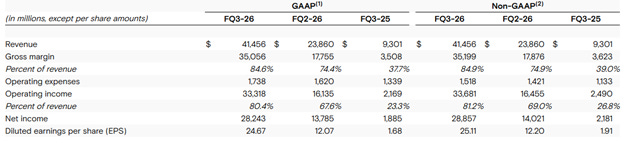
- Despite fierce competition, Micron is balancing aggressive HBM growth with wafer discipline to protect margins, driving fiscal Q3 revenue up 268% and gross margins to a record 81%.
AI Memory’s Power Shift
Micron’s pivot to co-designed HBM with Nvidia and Anthropic signals a high-stakes race for AI-optimized, premium memory, demanding flawless execution to sustain its trillion-dollar ambitions.
Micron's strategic pivot from commodity DRAM to co-designed high-bandwidth memory (HBM) with Nvidia represents a fundamental shift toward specialized, higher-margin products tailored for AI data centers. This collaboration not only propelled Micron to briefly touch a $1 trillion market cap in May 2026 but also demands accelerated development cycles and rigorous performance standards, underscoring the critical importance of flawless execution to sustain its valuation multiples and partnership strength.
Beyond Nvidia, Micron's partnership with Anthropic marks a novel approach in the AI memory market by directly engaging a frontier AI lab rather than traditional hyperscalers, reflecting evolving dynamics in AI workload demands. This alliance focuses on co-developing memory and storage architectures specifically optimized for AI applications, while long-term supply agreements with take-or-pay and floor pricing mechanisms—covering roughly 50% of Micron’s revenue—provide stable demand visibility and protect pricing power amid tightening memory capacity.
Micron’s rapid advancement of HBM4 technology, with production ramping twice as fast as its predecessor HBM3E, demonstrates its technical competitiveness in the AI-driven memory market. Supported by strategic investments in advanced manufacturing facilities in Idaho, Singapore, and multi-year EUV equipment agreements with ASML, Micron is well-positioned to meet surging AI demand while delivering higher-performance, higher-value memory solutions that command premium pricing.

Locked-In Profits, Locked-Out Rivals
Micron’s $100B in take-or-pay contracts guarantees multi-year cash flow and margin insulation, turning volatile memory markets into a fortress of predictable, high-value revenue.
Micron has strategically locked in 16 Strategic Customer Agreements (SCAs) spanning 2026 to 2030, which collectively cover about 20% of its DRAM and roughly one-third of NAND volumes, translating to approximately half or more of the company’s revenue under long-term contracts. This extensive footprint across data center, consumer, and automotive markets provides Micron with unprecedented multi-year revenue visibility, allowing it to plan with confidence well into 2030.
These SCAs are structured as take-or-pay agreements with binding volume commitments and include pricing floors and ceilings, effectively creating a robust margin insurance rather than just revenue guarantees. Fourteen of these contracts guarantee a minimum cumulative revenue of around $100 billion (approximately 1,000 billion CNY) over the contract term, which equates to a stable annual revenue floor of about 10% of current annualized revenue. This pricing mechanism ensures Micron’s gross margins remain significantly above any previous cycle peaks, providing strong financial stability amid market volatility.
By securing these long-term agreements, Micron not only stabilizes its revenue streams but also strengthens customer relationships through guaranteed supply, which in turn locks in demand and margins. The company has already received roughly 18 billion CNY in cash deposits as upfront commitments, reflecting strong customer confidence without impacting free cash flow, and enabling Micron to better navigate competitive and macroeconomic uncertainties while maintaining a solid balance sheet.



Wafer Discipline vs. HBM Hype
By capping HBM expansion to protect overall DRAM margins, Micron risks ceding AI memory share to rivals but ensures its product mix remains profitable amid aggressive industry competition.
Micron is executing a disciplined strategy in the high-bandwidth memory (HBM) market by deliberately aligning its HBM share closely with its broader DRAM market share rather than aggressively pursuing maximum HBM penetration. This approach, highlighted by Sanjay's observation that "HBM 的交易比很高,會消耗大量晶圓、排擠產業的非 HBM 供給," allows Micron to preserve wafer capacity for diverse end markets such as data centers, consumer electronics, automotive, and industrial sectors that rely on non-HBM DRAM. By not overextending into HBM, Micron protects its overall product mix profitability and maintains strong pricing power across its portfolio, supporting sustained operating margins despite competitive pressures and AI-driven demand growth.
While SK Hynix aggressively expands its HBM capacity—holding a dominant 58% market share and deliberately slowing its HBM4 ramp to redirect resources toward higher-margin conventional DRAM—Micron balances its own capacity expansion with pricing discipline to sustain market tightness. This controlled growth is underscored by Micron’s planned capital expenditure of over $25 billion in fiscal 2026, nearly doubling from $13.8 billion previously, reflecting a strategic investment calibrated to benefit from persistent AI-driven supply shortages without sacrificing pricing power. The collective restraint among major players, including Samsung’s reported 146% DRAM ASP surge in Q1 and SK Hynix’s mid-60% increase, exemplifies a market environment where deliberate product share management underpins robust earnings and valuation outlooks.
However, Micron’s cautious stance on expanding HBM share raises strategic questions about whether this restraint might forfeit lucrative AI memory revenues to competitors, especially if HBM unit profits begin to significantly outpace those of standard DRAM. As noted, "美光可能在 AI 記憶體最甜美的區塊,主動讓出部分 HBM 市佔/營收給對手," suggesting that while the current approach safeguards overall gross margins and market stability, it warrants ongoing evaluation to ensure it remains optimal amid evolving profit dynamics in AI-driven memory segments.


DRAM Shortage Becomes Infrastructure
With AI-driven DRAM scarcity projected to last years, memory is no longer a commodity but a strategic asset, fueling Micron’s explosive earnings even as supply lags far behind demand.
A structural DRAM shortage driven by surging AI demand is forecasted to persist through 2027 and potentially into 2028, fundamentally transforming the memory market from a cyclical commodity into a critical infrastructure asset. Deutsche Bank and Citi project DRAM average selling prices could soar by 200% in 2026 alone, supported by spot prices already climbing 52% since January, underscoring the prolonged supply constraints that underpin Micron's robust earnings potential. As one analyst aptly summarized, "Cuando la escasez de un insumo crítico para la IA se mide en años y no en trimestres, el activo que lo produce no es un commodity. Es infraestructura."
Micron’s financial performance and guidance reflect the tight supply environment, with management reporting that its high bandwidth memory (HBM) production for 2026 is effectively sold out, signaling strong pricing power in high-margin AI-related products. Wall Street anticipates fiscal Q3 revenue growth of 268% and earnings growth exceeding 930% year-over-year, while management targets an 81% gross margin and quarterly revenue surpassing $35 billion. Despite a recent 12% stock sell-off, these metrics highlight Micron’s ability to capitalize on the AI-driven memory shortage, even amid competitive pressures from Chinese manufacturers and macroeconomic uncertainties.
Looking ahead, industry experts like Cantor’s CJ Muse emphasize that memory supply will tighten further in 2027, as new fabrication capacity ordered today will not come online until 2028 at the earliest, leaving 2027 supply largely fixed and constrained. This bottleneck supports a bullish earnings outlook for Micron through 2028, with Muse projecting a potential $200 earnings per share next calendar year and suggesting that the current valuation multiple around five times earnings may still have room to expand. However, Muse also flags key risks to this outlook, notably whether AI workload demand continues its rapid growth trajectory through 2029-2030 or if new supply capacity arrives faster than anticipated.
Micron’s recent record revenue and margin expansion have been driven primarily by price increases amid constrained supply rather than cost improvements, with DRAM revenue up 67% quarter-over-quarter despite only modest shipment growth. The company reported a gross margin of 84.9%, the highest among major U.S. tech firms, though management cautions that margin expansion is slowing as price hikes moderate. While this suggests that peak margin levels may be near, long-term customer agreements and the structural nature of the AI-driven memory shortage could help sustain elevated price floors and underpin continued strong profitability.