Micron rises as Nvidia faces AI margin squeeze
The gist
Micron is stealing Nvidia’s AI thunder, turning memory bottlenecks into explosive margins and stock gains as investors rotate from GPU giants to the new memory moguls.
What to know
- Nvidia’s AI GPU revenue soared 85% to $81.6B, but rising memory costs and easing GPU shortages have squeezed its margins and slowed its stock to a 15% gain in early 2026.
- Micron locked in $100B in multi-year HBM contracts, tripled its revenue to $41.5B, and now boasts sky-high 85% gross margins as AI memory demand crushes supply.
- With Nvidia’s stock down 15% since May and Micron nearly tripling, investor focus is shifting to memory suppliers, fueling a $100B AI memory market and fierce competition for advanced packaging and substrates through 2028.
Nvidia's Grip Faces New Threats
Nvidia’s AI dominance is under siege as soaring memory costs and intensifying chip competition erode margins and challenge its once-unassailable position.
Nvidia continues to dominate the AI accelerator market with an impressive 70% to 81% share and robust revenue growth, exemplified by its Q1 FY2027 revenue soaring 85% year-over-year to $81.61 billion, including a 92% jump in Data Center revenue to $75.25 billion. Despite this leadership, the company faces significant margin pressures driven primarily by soaring memory costs, as suppliers like Micron capitalize on constrained high-bandwidth memory (HBM) supply, pushing their gross margins from 37.7% to an extraordinary 84.6% within a year. Nvidia’s long-term agreements with Micron have not insulated it from these rising expenses, squeezing profitability even as Nvidia maintains a commanding position in the AI GPU ecosystem.
The easing of GPU shortages that once buoyed Nvidia’s pricing power has coincided with intensifying competition from AMD, Intel, and cloud giants developing custom AI processors, which collectively are driving down compute prices and challenging Nvidia’s valuation. While Nvidia’s stock still reflects its platform dominance with a trailing P/E of 30x and forward P/E of 23x, it has underperformed peers like Intel and AMD, whose shares surged over 100% in early 2026 compared to Nvidia’s modest 15% gain. This shift is compounded by the emergence of diversified silicon platforms and decentralized compute networks that erode Nvidia’s market control, prompting investors to reassess the premium they assign to Nvidia’s growth prospects amid a more crowded AI semiconductor landscape.

Micron’s AI Memory Windfall
Micron’s multi-year contracts and HBM scarcity have transformed its business into a high-margin powerhouse, but investor skepticism lingers over the sustainability of this AI-driven boom.
Micron has capitalized on the constrained supply of high-bandwidth memory (HBM) to secure a dominant position in the AI memory market, underpinned by $100 billion in take-or-pay contracts with 16 customers that provide exceptional revenue visibility and margin stability. This strategic contract framework, described by CEO Sanjay Mehrotra as 'multi-year Strategic Customer Agreements,' has transformed Micron’s historically cyclical business into a more predictable, AI-driven growth engine, with gross margins soaring to 85% and operating margins reaching 81%, far exceeding typical commodity memory pricing dynamics.
The scarcity of HBM chips, especially HBM4, has created a bottleneck in AI semiconductor supply chains, enabling Micron to quadruple its revenue to $41.5 billion and forecast $50 billion in next-quarter sales, significantly outpacing Wall Street expectations. As Sumit Sadana noted, demand for HBM products not only outstrips supply through 2027 but extends into 2028, fueling a rapidly expanding total addressable market projected to surpass $100 billion by 2027, which cements Micron’s leadership amid intensifying competition from rivals like SK Hynix and emerging Chinese manufacturers.
Despite its commanding market position, Micron faces near-term margin pressures due to rising costs associated with transitioning to higher-performance memory solutions such as HBM and investments in greenfield fabs, which lack the cost leverage of traditional technology nodes. Additionally, while Micron enjoys significant pricing power, investor sentiment remains cautious, reflected in a forward P/E ratio of 8x versus Nvidia’s 23x, signaling skepticism about the sustainability of these elevated margins given the company's capital-intensive, cyclical nature and reliance on a concentrated customer base.
Micron’s growth is further bolstered by its expanding footprint in enterprise SSDs within data centers, where it recently delivered a $5 billion quarter and gained record market share thanks to its robust NAND portfolio. This diversification complements its AI memory leadership and benefits from the massive $2.3 trillion AI capital expenditure wave reshaping hardware supply chains, positioning Micron not just as a memory supplier but as a critical enabler of the broader AI semiconductor ecosystem.



Investor Rotation Shakes AI Chips
The AI semiconductor narrative is shifting as investors move from GPU giants to memory suppliers amid market volatility, valuation fears, and a search for the next wave of sustainable growth.
Investor sentiment in AI semiconductors is undergoing a notable recalibration as the market begins to look beyond Nvidia's GPU dominance toward a broader ecosystem that includes memory suppliers like Micron, SK Hynix, and Samsung. While Nvidia’s stock has declined 15% since May 2026 amid easing GPU shortages and falling compute prices, memory companies have surged, with Micron nearly tripling in value due to constrained high-bandwidth memory supply and long-term contracts that mitigate fears of cyclical price crashes. This evolving narrative reflects a shift from skepticism about AI capital expenditures to cautious optimism, supported by reports that AI revenue is finally catching up with depreciation costs, and recognition that hyperscaler-driven structural demand for memory is not yet fully priced in by the market.
Despite strong earnings—Samsung reported a 19-fold increase in quarterly operating profit driven by AI memory demand—semiconductor stocks have experienced heightened volatility, underscoring investor concerns about valuation saturation and the sustainability of the AI investment boom. This volatility is compounded by hyperscalers like Amazon and Alphabet aggressively raising capital, with Amazon’s recent $25 billion debt raise at favorable rates signaling continued robust AI infrastructure spending even as market participants take profits amid uncertainty. Meanwhile, capital raises by memory manufacturers such as SK Hynix add supply-side pressure, contributing to a complex dynamic where enthusiasm for AI-driven growth coexists with caution about crowded trades and shifting leadership within the AI semiconductor ecosystem.
The concentration of AI-related stocks now accounts for roughly 45% of the S&P 500’s market capitalization, with semiconductors alone making up nearly 20%, highlighting both the sector’s prominence and the risks of theme crowding. This saturation has led to net selling in U.S. information technology stocks, signaling rising fragility and a market that demands more selective investment strategies. As Jim Cramer observes, the critical investor question has evolved from simply identifying beneficiaries of AI to discerning which companies still offer attractive upside after recalibrating growth and valuation assumptions, prompting rotations from pure hardware plays toward megacap hyperscalers and enterprise software firms that underpin AI deployment.
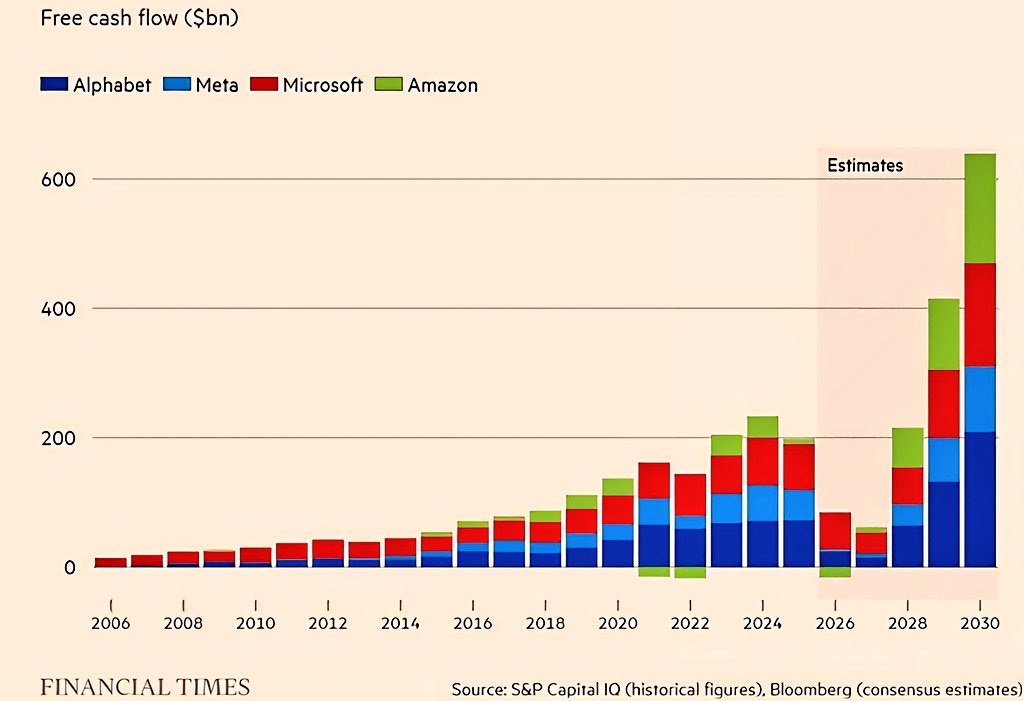
Looking ahead, capital expenditures by hyperscalers are expected to plateau after 2027, transitioning from rapid growth rates of 70–80% annually to a steadier maintenance and refresh phase. This anticipated stabilization could reduce uncertainty and unlock multiple expansions across semiconductor stocks as free cash flow improves, potentially reshaping investor valuations. However, ongoing innovation by hyperscalers themselves—such as Google, Amazon, Microsoft, and OpenAI developing custom processors to reduce reliance on Nvidia GPUs—adds complexity to the compute market and margin pressures, underscoring that the AI semiconductor investment landscape remains dynamic and subject to rapid shifts in leadership and market narratives.





AI Chip Bottlenecks Deepen
Systemic shortages in memory, substrates, and advanced packaging are throttling AI infrastructure expansion, driving up costs and fueling fierce competition for limited semiconductor resources.
The AI semiconductor supply chain is grappling with a widening array of bottlenecks that extend well beyond Nvidia’s GPU leadership, encompassing critical memory and advanced packaging components. As Nomura and Mizuho highlight, shortages now permeate wafer-level substrates, PCBs, IC substrates, capacitors, power management ICs, and optical components, creating a capillary-like spread of constraints that threaten to throttle AI data center infrastructure growth through at least 2028. This systemic scarcity is exacerbated by the mass production ramp of new AI architectures such as Nvidia’s Rubin and Amazon’s Trainium 3, while greenfield capacity expansions lag behind, typically requiring two years to come online, thereby sustaining price pressures and fierce competition for limited resources like TSMC’s CoWoS packaging wafers, where Nvidia alone is forecasted to consume 55% of capacity in 2027.
Memory suppliers, led by Micron, are capitalizing on the persistent high-bandwidth memory (HBM) supply-demand imbalance, with demand visibility extending well into 2028 and a total addressable market projected to surpass $100 billion by 2027. Micron’s Chief Business Officer Sumit Sadana underscores that demand for HBM3E and HBM4 far outstrips supply, while CFO Mark Murphy emphasizes the structural nature of this growth, supported by over $22 billion in non-cancellable Strategic Customer Agreements that secure floor pricing through 2030. However, this surge in demand coincides with rising DRAM bit costs driven by the transition to higher-performance memory and costly greenfield fabs, which, coupled with constrained supply growth, intensifies margin pressures for AI infrastructure players like Nvidia who must pay more to memory giants despite long-term contracts.
The broad-based component shortages ripple beyond AI-specific sectors, squeezing supply chains for consumer electronics and automotive industries alike, signaling a semiconductor ecosystem under strain from multiple angles. Nomura warns that this widespread scarcity, fueled by a surge in global data center projects—including China’s ambitious $295 billion AI computing power initiative and a rise in gigawatt-scale hyperscale deployments—will drive unavoidable price hikes through 2027. While AI CapEx growth is expected to plateau after 2027, shifting toward maintenance and refresh cycles, the entrenched supply constraints and evolving investor sentiment now increasingly recognize the importance of the entire AI semiconductor ecosystem, factoring in memory and packaging bottlenecks that shape infrastructure costs and investment returns.