Mining’s moment: commodities surge as geopolitics and green tech ignite supercycle
The gist
Mining and critical metals are having a breakout moment as supply shortages, green tech, and global conflict ignite a new commodities supercycle—and investors are finally paying attention.
What to know
- By early 2026, mining stocks made up just 1% of the S&P 500 despite surging demand for metals like copper, silver, and uranium vital to electrification, AI, and defense.
- Australian giants BHP, Rio Tinto, and Fortescue are doubling down on copper, lithium, and green iron ore, with billions committed to new projects and decarbonization.
- Geopolitical flashpoints like the Iran war have sent uranium to $85 and defense spending skyrocketing, fueling record gains in energy transition and gold ETFs as investors scramble for exposure.
Capital Flows at a Crossroads
A generational blind spot and chronic underinvestment have left mining stocks undervalued, setting the stage for a dramatic capital rotation as geopolitical risk and supply deficits collide.
By early 2026, the mining and commodities sector was dramatically undervalued relative to its economic importance, with the entire mining industry's S&P 500 valuation hovering around an unprecedented low of 1%, despite mining revenues constituting 7-8% of the market. This stark underweighting, especially in energy stocks which only accounted for 2.5% of the S&P's market cap, highlighted a significant capital rotation opportunity as sovereign wealth funds from the Middle East and Norway grew increasingly concerned about supply security amid rising copper and gold prices relative to crude oil. However, the sector's structural challenges—such as the capital intensity and long lead times required to develop new mines—have historically deterred investors, creating a 'valley of death' phase where capital is scarce despite the potential for explosive gains once commodity bull markets materialize.
The generational shift in capital allocation has further complicated recognition of the commodities supercycle, as many younger investors lack firsthand experience with historic metals bull markets like the dramatic rise of Voysey's Bay shares from $1 to $181, predating the tech boom. This inexperience risks delaying the influx of capital needed to fully capitalize on the structural supply deficits in critical metals and energy resources that are becoming increasingly apparent.
Amid rising yields, escalating debt, and persistent inflation—conditions distinct from the 1970s—smart money is strategically rotating into hard assets that are indispensable regardless of economic turbulence, with uranium and critical metals emerging as prime beneficiaries. Geopolitical tensions, notably disruptions at the Strait of Hormuz, have intensified energy security concerns, positioning nuclear energy and uranium as pivotal to the current energy crisis; as Dr. Nomi Prins emphasizes, 'a very, very tiny amount of uranium… has as much capacity as tons of barrels of oil.' This macroeconomic and geopolitical backdrop supports a long-term investment horizon focused on structural supply deficits in silver, copper, uranium, and gold, while also raising the real possibility of yield curve control policies influencing Federal Reserve actions and bond market dynamics.


Critical Metals’ Supply Squeeze
Soaring demand for copper, silver, and uranium is outpacing mine supply, creating structural shortages and priming the sector for a major market repricing.
By early 2026, the mining sector was markedly undervalued, trading at just about 1% of the S&P 500's valuation despite its critical role in supplying metals essential for electrification, AI, and defense technologies. This undervaluation, coupled with investor preference for tech giants like Nvidia over mining companies such as Ivanhoe Mines and Freeport-McMoRan, sets the stage for a potentially explosive capital rotation into mining once the tech trade falters, highlighting a significant structural mispricing in the market.
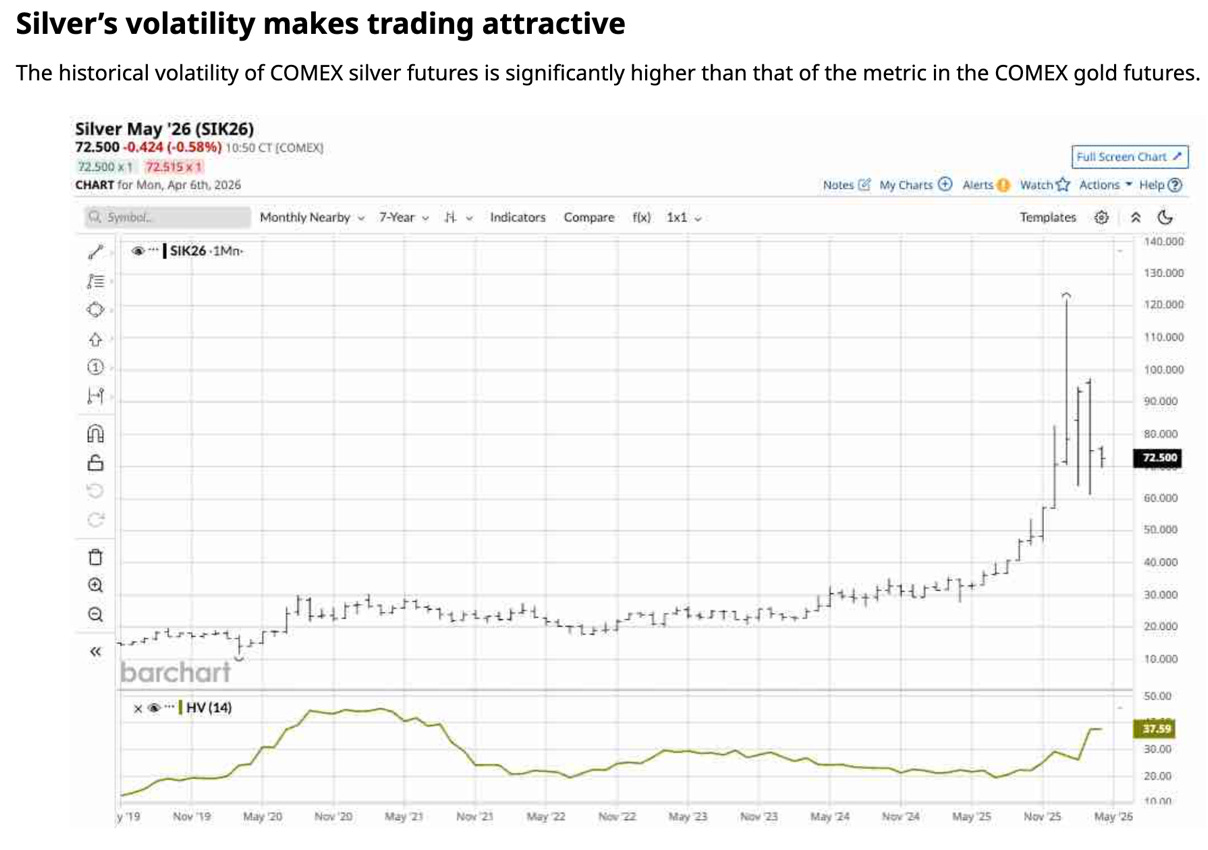
Structural supply deficits in critical metals like silver, uranium, and copper are intensifying amid surging demand driven by electrification, renewable energy buildout, semiconductor manufacturing, and nuclear reactor construction. For instance, silver prices stabilized near $70 as industrial demand outpaced mine supply, while uranium spot prices hovered around $85 due to exhausted clear supply and geopolitical disruptions such as tensions in the Strait of Hormuz, signaling that current mining restarts alone cannot resolve these imbalances.
Copper stands out as a linchpin metal in this emerging supercycle, with S&P Global projecting a 50% increase in global demand by 2040 driven by electrification, energy transition, and the rapid expansion of AI data centers, which alone may require up to 50,000 tonnes of copper per hyperscale facility. However, supply constraints loom large, as the International Copper Study Group forecasts a market deficit exceeding 150,000 tonnes starting in 2026 due to long mine development timelines and insufficient project pipelines, positioning producers like BHP—with its $550 million Olympic Dam expansion—to capitalize on this tightening market.
The convergence of geopolitical uncertainty, rising debt levels, and monetary risks is channeling capital toward real assets with pricing power, particularly low-cost producers in the metals and mining sectors. Analysts like Dr. Nomi Prins emphasize the strategic importance of long-term investment in hard assets, noting that scarcity of critical metals such as copper, silver, uranium, nickel, tungsten, and rare earths is no longer theoretical but embedded in the system, creating compelling risk-reward asymmetries amid Wall Street's short-sighted mispricing and underscoring the need for disciplined accumulation.




Australia’s Mining Power Play
BHP, Rio Tinto, and Fortescue are racing to dominate copper, lithium, and green iron ore, each betting billions on different metals to ride the green supercycle.
By mid-2026, Australia's mining giants are distinctly positioning themselves to harness the commodities supercycle fueled by the green transition, each leveraging their unique strengths. BHP is doubling down on copper, capitalizing on soaring prices driven by electrification and AI data center demand, with its Escondida and Olympic Dam mines at the core; it aims for 3-4% annual copper production growth through 2035, supported by a $550 million Olympic Dam expansion and a strategic 45% stake in the Resolution Copper project, which could supply a quarter of US copper demand. Meanwhile, Rio Tinto aggressively diversifies into energy transition metals, notably lithium through its $6.7 billion Arcadium acquisition, positioning itself as a top global lithium producer alongside its expanding copper assets like Oyu Tolgoi and the recent Simandou iron ore shipments. Fortescue, in contrast, is betting on green iron ore production and sustainability leadership, committing $6.2 billion to decarbonization initiatives including the 200 MW Pilbara Green Energy Project, targeting net zero Scope 1 and 2 emissions by 2030. This strategic trifecta underscores a complementary approach: BHP scales copper, Rio Tinto diversifies across copper and lithium, and Fortescue pioneers green iron ore, collectively capturing the multi-metal demand surge underpinning the supercycle.
The structural demand drivers for copper—electrification, renewable energy, and AI infrastructure—are reshaping BHP’s corporate trajectory from a traditional cyclical miner to a diversified industrial metals compounder. As John Athanasiou of Red Leaf Securities observes, copper’s role in electric vehicles, wind turbines, and data centers creates a robust long-term growth story, with global demand expected to hit 42 million metric tons by 2040. However, supply constraints loom large due to the 15-20 year mine development lag and a projected market deficit exceeding 150,000 tonnes by 2026, amplifying the value of BHP’s existing and expanding assets. This supply-demand imbalance, coupled with BHP’s strong cash flow and conservative balance sheet, provides both growth flexibility and downside protection amid commodity price volatility, enabling sustained dividends and capital management even as iron ore faces Chinese demand uncertainties.
Beyond the majors, emerging players like Unico Silver and Southern Cross Gold are carving out niche growth prospects aligned with the green transition’s metal demand. Unico Silver’s Joaquin project recently boosted its resource base by 143% to 167 million ounces of silver equivalent, tapping into silver’s rising importance in solar and electrification technologies, as highlighted by Medallion Financial’s Philippe Bui. Similarly, Southern Cross Gold’s high-grade gold deposits, with site grades around 9g/t AuEq, present significant upside potential through geological extensions and capacity expansions, promising to extend mine life and enhance returns. These developments illustrate how sector-specific growth is not confined to the giants but is also driven by junior miners capitalizing on structural commodity demand shifts.
Investing Through Commodity Chaos
Disciplined, diversified strategies are crucial as commodities surge, with volatility and market euphoria demanding patience and a sharp focus on scarcity-driven assets.
Investor psychology during the emerging commodities supercycle demands patience and disciplined adherence to a clear investment thesis amid inevitable volatility and market euphoria. As early as January 2026, guidance emphasized the necessity of taking profits during pullbacks and resisting the temptation to time the market, noting that "regime change is messy" with "face-ripping moves" and slow consolidations. This disciplined approach is reinforced by a tactical portfolio construction strategy that diversifies exposure across metals, energy, technology, and emerging markets using ETFs like COPX, URA, and XLE, alongside targeted shares, to capture broad commodity themes while managing risk.
By mid-2026, market sentiment remained cautious amid ongoing volatility, with analysts warning against the dangers of euphoric consensus and crowded equity positioning. The prevailing advice was to favor scarcity-driven assets and commodity-linked equities supported by multi-year supply deficits and durable demand growth, as broad equity markets showed extreme concentration and vulnerability. Gold, despite short-term pressures from macro correlations and systematic flows, was highlighted as a structural bull market opportunity, where any pullbacks due to rising yields or a stronger dollar should be viewed as buying windows rather than sell signals.
Amid Wall Street’s short-sighted mispricing in mid-2026, disciplined accumulation of undervalued commodities emerged as a strategic investor stance rather than capitulation. Copper, in particular, was singled out for its relatively lower volatility and robust demand drivers linked to power grids and data centers, making it a prime entry point. Tactical portfolio construction thus benefits from focusing on well-funded copper developers operating in stable jurisdictions, trading below intrinsic value, to capitalize on the structural demand surge and complement broader commodity allocations.
Active participation in private placement funds targeting underfollowed natural resource companies offers a compelling complement to public market commodity exposure, capturing growth in scarcity-driven themes that are often inaccessible through traditional channels. Over several months, involvement in more than a dozen financings has yielded strong performance since inception, underscoring the value of integrating private investments into tactical portfolios amid the supercycle’s evolving landscape and strategic competition for resources.

ETFs Ride the Metals Wave
Energy transition and gold mining ETFs are outpacing the broader market, fueled by electrification, AI, and geopolitical shocks that are driving investors to thematic commodity funds.
ETFs centered on energy transition metals have emerged as standout performers on the ASX, with the Betashares Energy Transition Metals ETF (XMET) soaring 117% over the past year by tapping into critical minerals like copper, lithium, and cobalt essential for electrification and energy security. This surge is underpinned by structural demand drivers such as AI infrastructure expansion, EV production, and supply chain realignments amid geopolitical tensions, with heavyweight holdings like BHP Group and Pilbara Minerals amplifying returns. Simultaneously, gold mining ETFs like Betashares Global Gold Miners ETF (MNRS) have surged 78%, benefiting from record gold prices and heightened investor appetite for defensive assets amid global market volatility and inflation concerns, illustrating how thematic ETFs serve as strategic hedges against macroeconomic and geopolitical risks.
By mid-2026, technical analyses reveal that ETFs focused on energy transition and precious metals are positioning for sustained bullish momentum, with key indicators showing gold and silver nearing critical support levels and the Magnificent Seven ETF consolidating near all-time highs, reflecting investor confidence in these sectors. This technical strength dovetails with strategic ETF allocations into defense and uranium sectors, where Betashares Global Defence ETF (ARMR) and Global Uranium ETF (URNM) capitalize on soaring defense budgets—such as the US $1.5 trillion FY27 proposal—and the nuclear energy renaissance driven by geopolitical conflicts like the Iran crisis, highlighting ETFs’ role as vehicles to navigate complex, evolving commodity landscapes.
Critical minerals ETFs continue to benefit from a geopolitical pivot aimed at reducing reliance on Chinese supply chains, with XMET targeting companies supplying essential inputs for AI data centers, EVs, renewables, and defense technologies, supported by increased government investments in the US and Australia. This strategic positioning is echoed in Bell Potter’s June 2026 recommendations, which spotlight uranium ETFs (URNM, ATOM), copper miners (WIRE), and gold miners (GDX) as prime beneficiaries of the emerging commodities supercycle, driven by tight supply dynamics, electrification demands, and central bank gold buying. Despite market volatility, the consensus underestimates the 'higher-for-longer' price environment, with copper setting fresh records and miners poised to reap outsized gains, underscoring ETFs’ pivotal role in capturing structural commodity trends.

Geopolitics Fuels Uranium Boom
The Iran war and global defense spending spike have triggered a scramble for uranium and critical minerals, with nuclear energy and defense ETFs soaring amid supply fears.
The Iran war and related geopolitical conflicts, particularly disruptions in the Strait of Hormuz, have injected a significant energy security premium into critical commodities like uranium, pushing spot prices to around $85. This escalation reflects a broader structural supply-demand imbalance, as the gap between uranium production and demand has shifted from theoretical to a market-clearing reality, driven by 70 to 75 new nuclear reactors under construction globally. Consequently, this dynamic has spurred heightened defense and energy security investments, with nuclear energy emerging as a pivotal strategy for energy independence and decarbonization amid the geopolitical turmoil.
Global defense spending has surged dramatically in response to ongoing conflicts such as the Iran war, with the US proposing a $1.5 trillion defense budget for FY27—a 50% increase over FY26—and the EU's defense expenditure projected to nearly double from €218 billion in 2021 to €392 billion in 2025. This spending boom has catalyzed a robust investment megatrend benefiting ASX defense stocks and ETFs, exemplified by the 75% rise in the Vaneck Global Defence ETF since its 2024 inception, despite an 11% dip following the war's outbreak. However, individual ASX defense shares have experienced mixed fortunes, with Electro Optic Systems and Titomic gaining 20% and 17% respectively, while Austal and Droneshield declined by 22% and 18%, underscoring nuanced market reactions to the conflict.
The Iran conflict has reignited global urgency around energy self-sufficiency, accelerating investments not only in nuclear energy but also in critical minerals essential for defense technology and the energy transition. Governments like the US and Australia are expanding strategic reserves and bolstering supply chain resilience, benefiting producers in allied nations such as Australia, Canada, Peru, and Chile. This strategic pivot is reflected in targeted investment vehicles like the Global Uranium ETF and the Betashares Energy Transition Metals ETF, which provide exposure to companies positioned to capitalize on the surging demand for uranium and critical minerals amid heightened geopolitical tensions.
Despite the inflationary pressures and market volatility induced by the Iran war and the effective closure of the Strait of Hormuz—through which about 20% of global oil and gas flows—the ASX 200 defense and energy shares are poised for significant gains. Analysts like UBS have assigned buy ratings to uranium stocks such as Nexgen, projecting a 32% upside, while Morgans upgraded Web Travel despite conflict-related slowdowns, highlighting investor appetite for sectors that serve as hedges against geopolitical risk. This environment underscores a strategic shift toward domestic and nuclear energy sources as nations seek to mitigate supply chain vulnerabilities and enhance national security.