Mobileye’s robotaxi bet rattles investors
The gist
Mobileye is betting billions on becoming a full-fledged robotaxi operator, but investors are slamming the brakes as costs and risks soar.
What to know
- Mobileye plans to launch a 100-robotaxi fleet in a major U.S. city by 2027 and scale to 17,000 vehicles within five years.
- This bold pivot from tech supplier to operator will require capital on par with Waymo’s $30 billion spend, rattling investors and hammering Mobileye’s stock by 7.1%.
- Mobileye aims to disrupt a market dominated by Waymo, Tesla, and Zoox, leveraging its treasure trove of real-world driving data—but profitability may not arrive until 2029.
Mobileye’s Full-Stack Gamble
By merging its self-driving tech with Moovit’s mobility platform, Mobileye is betting on a vertically integrated robotaxi model that demands steep upfront investment and sacrifices near-term profits for long-term dominance.
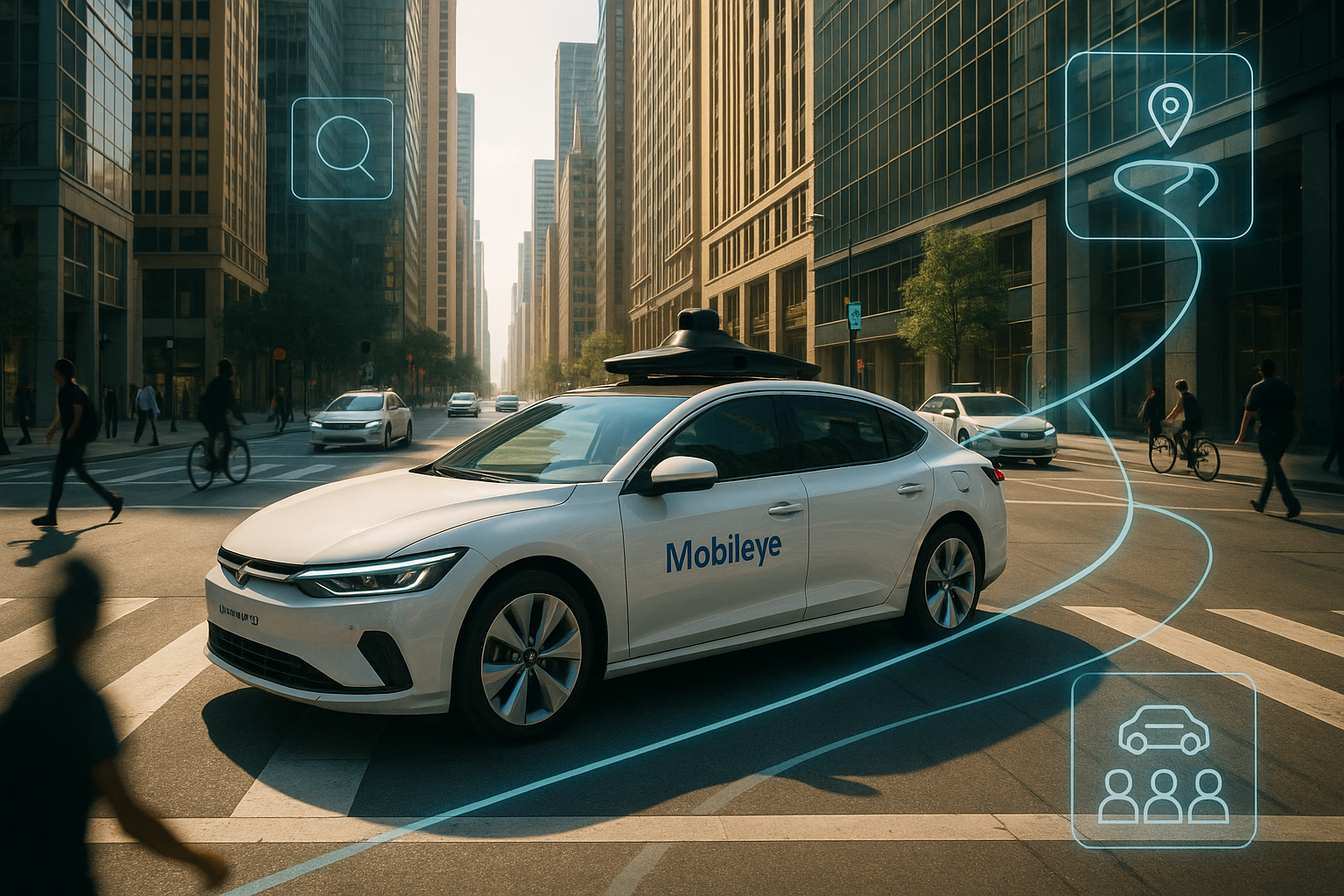
Mobileye is undertaking a significant strategic transformation from being primarily a supplier of autonomous driving technology to becoming a fully vertically integrated robotaxi operator. The company plans to launch an initial fleet of about 100 driverless vehicles in a major U.S. city by 2027, with ambitions to scale this fleet to approximately 17,000 vehicles over the subsequent five years. This move marks a clear pivot from Mobileye's earlier focus on Advanced Driver Assistance Systems (ADAS) toward establishing a direct presence in the autonomous ride-hailing market.
Central to Mobileye’s new operational blueprint is the integration of its Mobileye Drive self-driving platform with Moovit’s extensive urban mobility and fleet management infrastructure. Acquired in 2020, Moovit’s global multimodal mobility platform and large user base enable Mobileye to offer a unified, end-to-end robotaxi service that spans the entire autonomous mobility value chain. This strategic combination positions Mobileye not just as a technology provider but as a comprehensive mobility operator, leveraging synergies between autonomous driving technology and shared urban transit solutions.
While this ambitious shift opens new revenue streams and partnership opportunities—including collaborations with Volkswagen and Mentee Robotics—it also entails substantial research and development investments that have led to negative operating margins and limited growth catalysts in the near term. Mobileye’s financial trajectory reflects the heavy upfront costs associated with building a vertically integrated robotaxi service, underscoring the company’s commitment to long-term market positioning despite short-term profitability challenges.
Investor Jitters and High Stakes
Mobileye’s pivot to robotaxi operator status exposes investors to new operational risks and massive capital demands, fueling skepticism as its valuation remains tied to legacy businesses and future profits hinge on overcoming commercialization delays.
Mobileye's ambitious pivot from an autonomous technology supplier to a fully vertically integrated robotaxi operator demands capital investments on a scale comparable to industry giants like Waymo, which has seen Alphabet and partners pour over $30 billion into development. This massive financial commitment raises critical questions about whether Mobileye's investors will provide the necessary runway, especially if the technology readiness falls short, potentially requiring billions more to bridge gaps. The uncertainty surrounding technological maturity thus compounds the capital intensity, making investor patience and conviction essential for sustaining this high-stakes transition.
Beyond the sheer capital outlay, Mobileye's new business model exposes investors to heightened operational and reputational risks inherent in running a consumer-facing robotaxi fleet. As noted, any incident could escalate into a significant setback, forcing fleet suspensions and eroding public trust, which in turn could destabilize earnings and investor confidence. This operational volatility, layered atop regulatory challenges and the capital-intensive nature of the venture, has already manifested in a 7.1% stock price decline following the announcement, signaling market apprehension about the increased risk profile.
Mobileye's extensive real-world driving data, accrued through its embedded ADAS technology in millions of vehicles, provides a valuable competitive moat that supports its robotaxi ambitions and differentiates it from traditional automakers burdened by low margins and complex manufacturing. However, the company’s current $8 billion valuation largely reflects its legacy ADAS business, with the market yet to fully price in the potential upside from robotaxi and robotics ventures. Analyst forecasts project Mobileye reaching $3.2 billion in revenue and positive earnings by 2029, but these estimates remain highly sensitive to commercialization delays and competitive pressures, underscoring investor caution.
While Mobileye’s core ADAS business growth remains critical to funding and de-risking its robotaxi expansion, the transition involves heavy R&D investments leading to negative operating margins and limited near-term growth catalysts until 2027. Significant new revenue streams and partnerships, including collaborations with Volkswagen and Mentee Robotics expected from 2027 onwards, could shift the company toward recurring revenue and improve valuation prospects. Consequently, analysts recommend a hold strategy until these developments materialize, reflecting prudent investor caution amid current financial pressures and strategic uncertainties.
Robotaxi Race Heats Up
The autonomous ride-hailing battlefield is consolidating around deep-pocketed giants like Waymo, Tesla, and Mobileye, as high costs and technical hurdles squeeze out smaller players and reshape the future of urban mobility.
Waymo currently dominates the U.S. autonomous ride-hailing market as the only at-scale commercial operator, having launched a subscription-based robotaxi service in cities like San Francisco, Los Angeles, and Phoenix by mid-2026. Despite this head start, the sector remains fraught with significant technological and scaling challenges, as even Waymo acknowledges the difficulty of manifesting AI in real-world conditions, underscoring that mass adoption of autonomous vehicles is still years away.
Mobileye is emerging as a formidable competitor by transitioning from a technology supplier to a fully vertically integrated robotaxi operator, with plans to deploy an initial 100-vehicle fleet in 2027 and scale to approximately 17,000 vehicles within five years. Backed by Intel and leveraging its vast real-world driving data collected from embedded systems across numerous vehicles, Mobileye rivals Tesla’s data advantage and positions itself as a disruptive force poised to challenge established players like Waymo and Tesla in the evolving ride-hailing landscape.
The competitive landscape is consolidating around a few well-capitalized tech giants such as Waymo, Tesla, Amazon’s Zoox, and Mobileye, each navigating the high capital burn and technological hurdles that have forced many early entrants like Cruise and Argo out of the market. While these disruptors pursue autonomous ride-hailing, the complete displacement of personal car ownership remains unlikely in the near term, suggesting a coexistence with traditional automakers, who are expected to integrate advanced autonomous systems rather than be sidelined as mere modular suppliers.
Investor enthusiasm for autonomous ride-hailing is resurging as demonstrated functionality and rapid ride volume growth—such as Waymo’s doubling of rides year-over-year across multiple U.S. cities—validate the technology’s commercial viability. This geographic diversification and renewed capital influx create a dynamic and competitive environment where Mobileye’s strategic pivot and aggressive scaling plans could significantly reshape the market’s competitive dynamics over the next several years.