Nvidia bets big on physical AI: $4b pivot powers robotic revolution and humanoid surge
The gist
NVIDIA is betting $4 billion that the future of AI is physical, pivoting from GPU kingpin to orchestrator of a $50 trillion robotics revolution.
What to know
- By early 2026, NVIDIA invested $4B in neocloud infrastructure and went all-in on robotics, locking in major partnerships and positioning itself as the backbone of next-gen automation.
- With high-fidelity simulation tools like Isaac Lab, Omniverse, and Cosmos—and 99% sim-to-real accuracy with ABB—NVIDIA is slashing robot deployment times and accelerating real-world adoption.
- NVIDIA-powered humanoid robots and industrial automation are rolling out globally, supported by the Halos safety system and a three-computer architecture that unites data center, simulation, and edge AI for real-time deployment.
NVIDIA’s Full-Stack AI Play
NVIDIA is transforming from a GPU supplier into the orchestrator of a global AI ecosystem, strategically locking entire industries into its neocloud and robotics platforms as it chases a $50 trillion automation market.
By early 2026, NVIDIA was decisively broadening its scope beyond GPU manufacturing to become a full-stack AI platform orchestrator, targeting industries where customers lack in-house AI capabilities. This strategic diversification included significant investments such as a $2 billion infusion into Nebius Group and participation in Nscale’s $2 billion Series C, aimed at developing neocloud infrastructure that locks customers into NVIDIA’s ecosystem rather than designing their own silicon. The company’s autonomous vehicle platform exemplifies this approach, combining DRIVE AGX hardware, DRIVE AV software, and the Alpamayo open portfolio to offer a turnkey AI solution for legacy car manufacturers.
CEO Jensen Huang has articulated a transformative vision positioning NVIDIA as the 'new operating system for modern AI computing,' integrating hardware, software, and services to pioneer physical AI applications such as robotics and autonomous systems. This vision is embodied in platforms like Isaac for robotics development, the humanoid robot foundation model GR00T, and Jetson edge AI modules, signaling a deliberate pivot from data center GPUs to AI-powered machines in the real world. Huang’s emphasis on physical AI reflects the company’s ambition to capture a slice of the projected $50 trillion market for AI-driven automation.
NVIDIA’s strategic expansion also involves cultivating sovereign AI partnerships and neocloud ecosystems, underscoring a broader ecosystem approach beyond traditional hardware sales. The acquisition of Groq and focus on the inference explosion highlight NVIDIA’s commitment to advancing AI inference hardware and software platforms, while partnerships with manufacturing powerhouses like South Korea leverage regional strengths to accelerate AI-powered robotics and autonomous systems. During his 2026 visit to Seoul, Jensen Huang underscored Korea’s manufacturing prowess as a critical asset in leading the next wave of AI automation.



Simulation Powers Real-World Robots
High-fidelity simulation tools and open-source platforms are enabling companies to train, test, and deploy physical AI at scale, slashing development cycles and accelerating the industrialization of robotics.
By early 2026, NVIDIA had established a robust robotics ecosystem centered on high-fidelity simulation and open-source platforms like Isaac Lab, Omniverse, Cosmos, and Newton, which collectively enable massive synthetic data generation and advanced physics simulation. Collaborations with industry giants such as Disney and DeepMind enhanced NVIDIA's Newton physics solver, running on NVIDIA Warp, allowing robots to better adapt to real-world conditions and effectively close the sim-to-real gap. This comprehensive toolset empowers companies like Paratas AI, Skilled AI, and Foxconn to train and harden AI models across thousands of variations, accelerating the transition of physical AI from research labs into practical industrial applications.
Strategic partnerships have been pivotal in advancing NVIDIA's vision for industrial-grade physical AI, exemplified by its collaboration with ABB Robotics, which integrated NVIDIA Omniverse libraries into ABB's RobotStudio® software. This integration achieved up to 99% simulation-to-reality accuracy and slashed robot setup and commissioning times by 80%, enabling faster deployment in manufacturing environments. ABB's unique virtual controller and Absolute Accuracy technology, potentially augmented by NVIDIA Jetson edge computing, position the company at the forefront of autonomous industrial automation, with early adopters like Foxconn piloting these innovations in consumer electronics assembly.
Further strengthening the ecosystem, NVIDIA partnered with Cadence Design Systems to fuse Cadence's physics engines with NVIDIA's AI models, enhancing the fidelity of robotics training simulations. This collaboration aims to reduce the time robots require to master practical tasks by improving the accuracy of simulated training data, underscoring the critical role of precise simulation in accelerating physical AI proficiency. Such efforts complement NVIDIA’s June 2026 open-sourcing of its entire physical AI stack—including Cosmos, Omniverse, Isaac, and Jetson—as part of the NVIDIA Agent Toolkit, which streamlines AI agent workflows and has already driven substantial efficiency gains for industry leaders like Pegatron and Delta Electronics.
NVIDIA’s Isaac GR00T humanoid robotics platform epitomizes the company’s full-stack approach by integrating key components such as the Jetson Thor computing platform, Isaac Lab simulation, Omniverse digital twins, Cosmos world models, and Isaac ROS Runtime into a closed-loop system. This comprehensive reference design lowers barriers for research institutions and enterprises, enabling them to initiate robotics development without building foundational systems from scratch. By providing an end-to-end development environment, Isaac GR00T accelerates innovation and deployment in robotics, reinforcing NVIDIA’s leadership in physical AI and autonomous systems.





AI Models Get Physical
The leap from narrow task-specific AI to generalist, world-aware robotics is being driven by NVIDIA’s three-tiered architecture and breakthroughs in multimodal, action-conditioned models that bring virtual training closer to real-world performance.
The evolution of robotics AI models has been marked by a significant shift from narrow specialist systems to versatile generalist multimodal frameworks. Initially dominated by convolutional neural networks and transformers focused on specific tasks, the field experienced a transformative leap following the November 2022 ChatGPT breakthrough, which catalyzed the development of vision-language-action (VLA) models by 2024. These VLAs integrated perception with action capabilities, enabling robots to manipulate rigid bodies in structured environments. Building on this foundation, NVIDIA introduced world models that simulate environmental reactions to robotic actions, recognizing that effective physical AI must account not only for a robot's movements but also for the consequent changes in its surroundings, a crucial advancement for realistic interaction.
Central to NVIDIA’s physical AI strategy is a robust three-computer architecture that orchestrates the complex lifecycle of robotics AI development. This system leverages data centers equipped with GPUs like the GB300 and Vera Rubin for large-scale model training, simulation environments powered by RTX Pro 6000 GPUs and the Omniverse platform for high-fidelity validation, and edge devices such as Jetson Thor and Orin for real-time deployment. This triad not only facilitates scalable end-to-end workflows but also enables rapid iteration by reconstructing real-world scenes, generating edge-case scenarios, and evaluating policies in near-realistic conditions, effectively bridging the gap between virtual training and practical robotics applications.
Recent breakthroughs in model integration and simulation fidelity have propelled robotics AI past critical performance thresholds, exemplified by the so-called '10-second mark' achieved in self-driving cars within the past year. NVIDIA’s end-to-end models have supplanted previously stitched-together specialist systems, enhancing reasoning capabilities to handle novel scenarios beyond training data. Complementing these advances, the open-sourcing of Newton—a physics engine co-developed with Disney Research and Google DeepMind—has significantly narrowed the sim-to-real gap, enabling more accurate and scalable simulation. Furthermore, innovations like InstantNuRec accelerate 3D scene reconstruction without per-scene optimization, while frameworks such as AlpaGym and OmniDreams integrate reinforcement learning with photorealistic, action-conditioned world modeling, collectively enabling practical, real-time robotics applications.
Culminating these advances, NVIDIA unveiled Cosmos 3, the world’s first full omnimodel that unifies vision reasoning, world simulation, and action generation within a mixture-of-transformers architecture. This design employs a reasoning transformer to interpret observations and direct generation towers, facilitating the scalable creation of physically grounded virtual worlds for robotics and vision AI. By integrating these capabilities into a cohesive model, Cosmos 3 represents a pivotal step toward fully autonomous physical AI systems capable of sophisticated interaction and adaptation in complex environments.

Humanoids Hit the Factory Floor
NVIDIA’s partnerships and open-source robotics platforms are fueling a surge in humanoid deployments across manufacturing, with real-world pilots proving both the economic promise and technical viability of physical AI.
By early 2026, ABB Robotics had partnered with NVIDIA to revolutionize industrial automation through virtual simulation technologies that achieve up to 99% simulation-to-reality accuracy, drastically cutting robot setup times by 80%. This collaboration, leveraging ABB’s virtual controller and Absolute Accuracy technology alongside NVIDIA’s Jetson edge AI inference, has enabled early adopters like Foxconn and WORKR to deploy AI-driven robotic systems that enhance precision and efficiency in manufacturing environments ranging from consumer electronics to small and medium enterprises.
The real-world deployment of humanoid robots is gaining momentum with companies like Apptronik, Agility Robotics, and Figure demonstrating their machines’ capabilities in human-centric settings. Notably, Figure’s 11-month deployment at BMW’s Spartanburg plant saw robots running extended shifts to load over 90,000 parts, contributing to the production of more than 30,000 vehicles, while logistics providers such as GXO have begun live trials of humanoid prototypes, signaling growing corporate confidence in physical AI’s operational viability.
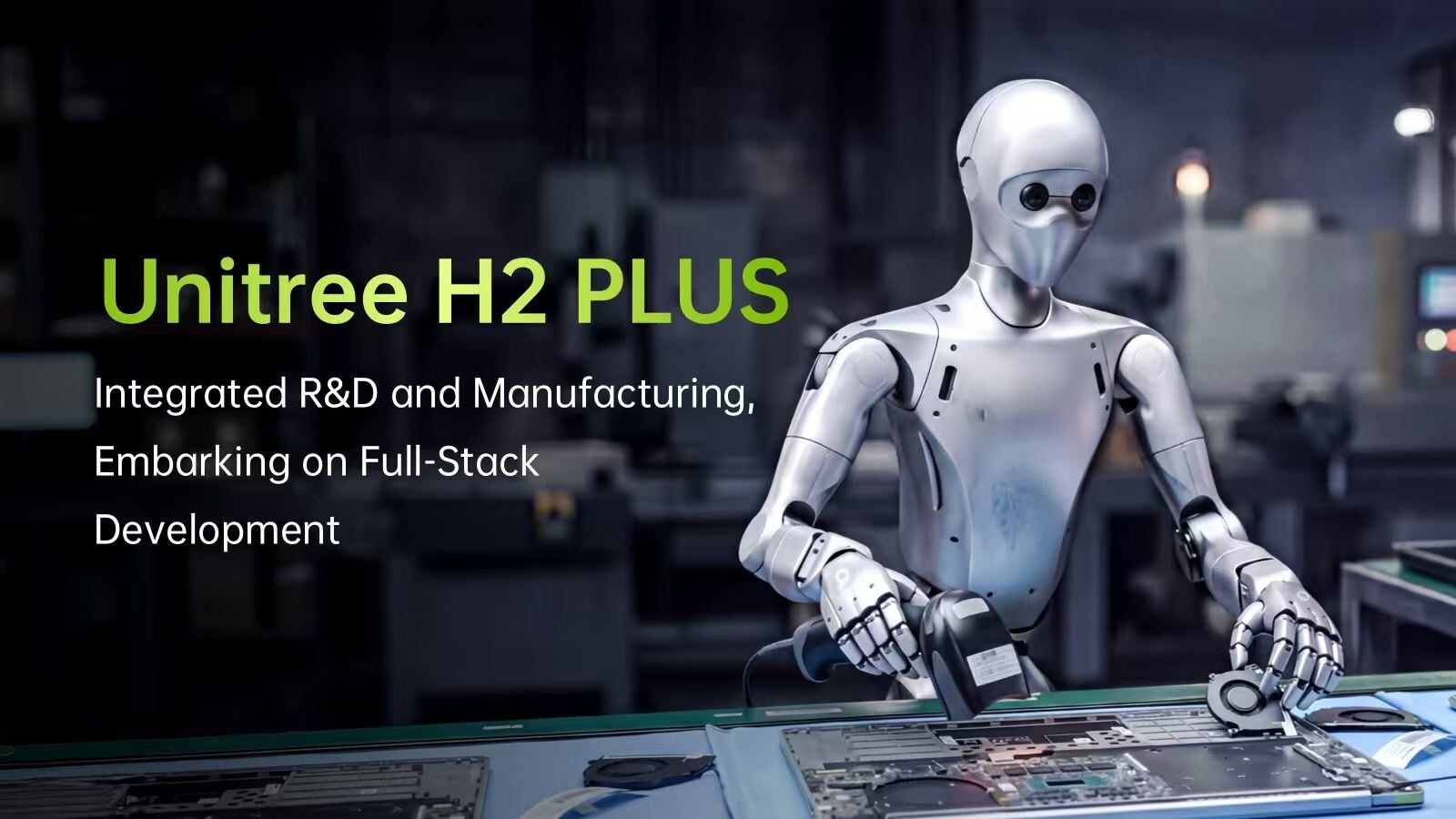
NVIDIA’s unveiling of the H2 Plus humanoid robot on June 1, 2026, marked a significant milestone in democratizing advanced robotics research by integrating a Unitree chassis with Sharpa’s tactile AI hands and powering it with the Jetson AGX Thor T5000. This open-source platform, adopted by leading institutions like Ai2, ETH Zurich, and Stanford, underscores NVIDIA CEO Jensen Huang’s vision of humanoid robots unlocking a multitrillion-dollar economic opportunity by embedding physical AI into major industries.
Addressing safety and operational challenges, NVIDIA launched the Halos full-stack AI safety system in June 2026, integrating industrial-grade AI compute, a robotics safety software stack, and accredited certification processes to enable safer humanoid robot deployment in human-adjacent environments. Agility Robotics became the first to integrate Halos into its Digit robot, targeting logistics and manufacturing clients like Amazon and Toyota, positioning NVIDIA as a foundational technology provider in a humanoid robotics market projected to reach $200 billion by 2035.


Safety Becomes the Standard
NVIDIA’s Halos OS and outside-in safety systems are setting new industry benchmarks, making rigorous, certifiable safety architectures a prerequisite for scaling autonomous robots and vehicles in human environments.
By mid-2026, NVIDIA solidified safety as the cornerstone of autonomous systems with the introduction of the Halos Operating System (OS) and its full-stack safety architecture, initially tailored for robotaxis on the DRIVE Hyperion platform. Halos OS, featuring Halos Core certified to the stringent ISO 26262 ASIL D automotive safety standard, employs a hypervisor to isolate safety-critical functions, ensuring faults cannot compromise vehicle controls. Complementing this, the Halos SDK abstracts sensor integration and vehicle interfaces, enabling deterministic, low-latency operation and simplifying hardware changes—foundational capabilities that establish a unified, production-ready safety framework for AI-driven vehicles.
Expanding beyond vehicles, NVIDIA’s June 2026 launch of Halos for Robotics marked a strategic pivot from pure hardware to integrated AI safety architectures essential for scaling autonomous robots in human environments. This platform combines industrial-grade AI compute via NVIDIA IGX Thor, a robotics safety software stack including Halos OS and Halos Core, and an ANAB-accredited inspection lab to deliver standardized, internationally recognized safety certification. Agility Robotics’ immediate integration of Halos into its humanoid robot Digit—deployed with industry giants like Amazon and Toyota—underscores the system’s critical role in overcoming safety barriers and accelerating the commercial adoption of humanoid robots in logistics and manufacturing sectors.
In parallel, NVIDIA’s collaboration with FORT Robotics unveiled an innovative 'Outside-In Safety' blueprint at Automate Chicago, leveraging external sensors and AI to extend robot perception beyond onboard systems. This approach mitigates the conservative slowdowns typical of traditional inside-out safety systems by dynamically modulating robot efficiency and enhancing proactive situational awareness in mixed human-robot environments. As FORT Robotics CEO Samuel Reeves emphasized, guaranteeing safe operation around people and infrastructure is indispensable for broad robot deployment, a commitment reinforced by NVIDIA’s ANAB-accredited Halos AI Systems Inspection Lab that underpins this scalable robotics safety ecosystem.
Collectively, the Halos initiative represents a pivotal evolution in physical AI safety, integrating hardware, software, simulation, and cloud infrastructure to build credible safety cases from Level 2 to Level 4 autonomy. The platform’s layered design—from deterministic rule-based AI guardrails and explainable models like the Alpamayo family to cloud-based training and validation via Halos Infra—addresses the urgent industry need for verifiable, end-to-end safety frameworks. Experts herald Halos as a milestone that not only ensures reliable autonomous operation but also lays the groundwork for the safe, scalable deployment of embodied AI systems transitioning from controlled settings into complex, real-world environments.
Robotics Reshapes Global Industry
The rapid rise of humanoid and autonomous robots is triggering massive shifts in global labor, supply chains, and geopolitics, as regions and industries race to capture the economic and societal stakes of the new physical AI era.
By early 2026, NVIDIA has boldly positioned Physical AI and robotics as a $50 trillion market opportunity, signaling its ambition to lead the next wave of AI-driven physical systems beyond traditional data centers. CEO Jensen Huang’s vision encompasses not only technological innovation but also a keen awareness of geopolitical and supply chain complexities, such as those involving Iran and Taiwan, which could shape global deployment strategies. Simultaneously, NVIDIA confronts the societal implications head-on, addressing workforce transformation and ethical challenges amid an AI PR crisis, thereby framing its growth ambitions within a responsible and nuanced discourse.
Humanoid robots stand out as a particularly promising frontier due to their human-like form factor, enabling them to perform complex tasks in both industrial settings—like restocking logistics shelves—and private environments, such as outpatient care for seniors. However, unlocking this potential hinges on overcoming significant technological hurdles: current AI systems achieve only about 80% success in natural language and scene understanding, falling short of industrial standards, while mechanical durability and safety remain critical challenges, especially for robots intended to interact closely with humans. Regions like northern Bavaria could capitalize on this emerging market by leveraging their automotive manufacturing expertise to produce robust, complex components tailored for humanoid robotics.
The robotics boom is already reshaping factory automation at an unprecedented pace, exemplified by Amazon’s milestone of employing twice as many robots as human workers in 2026, marking a significant inflection point in industrial automation. This surge is mirrored in China’s aggressive push towards automation, where humanoid and quadruped robots are deployed for continuous operations such as inspection and surveillance, including a 24/7 pharmacy staffed entirely by humanoid robots. These developments underscore a global race to integrate physical AI into real-world applications, signaling transformative economic and operational shifts across industries.