Octagon over oval: UFC’s white house spectacle blurs line between politics and prizefights
The gist
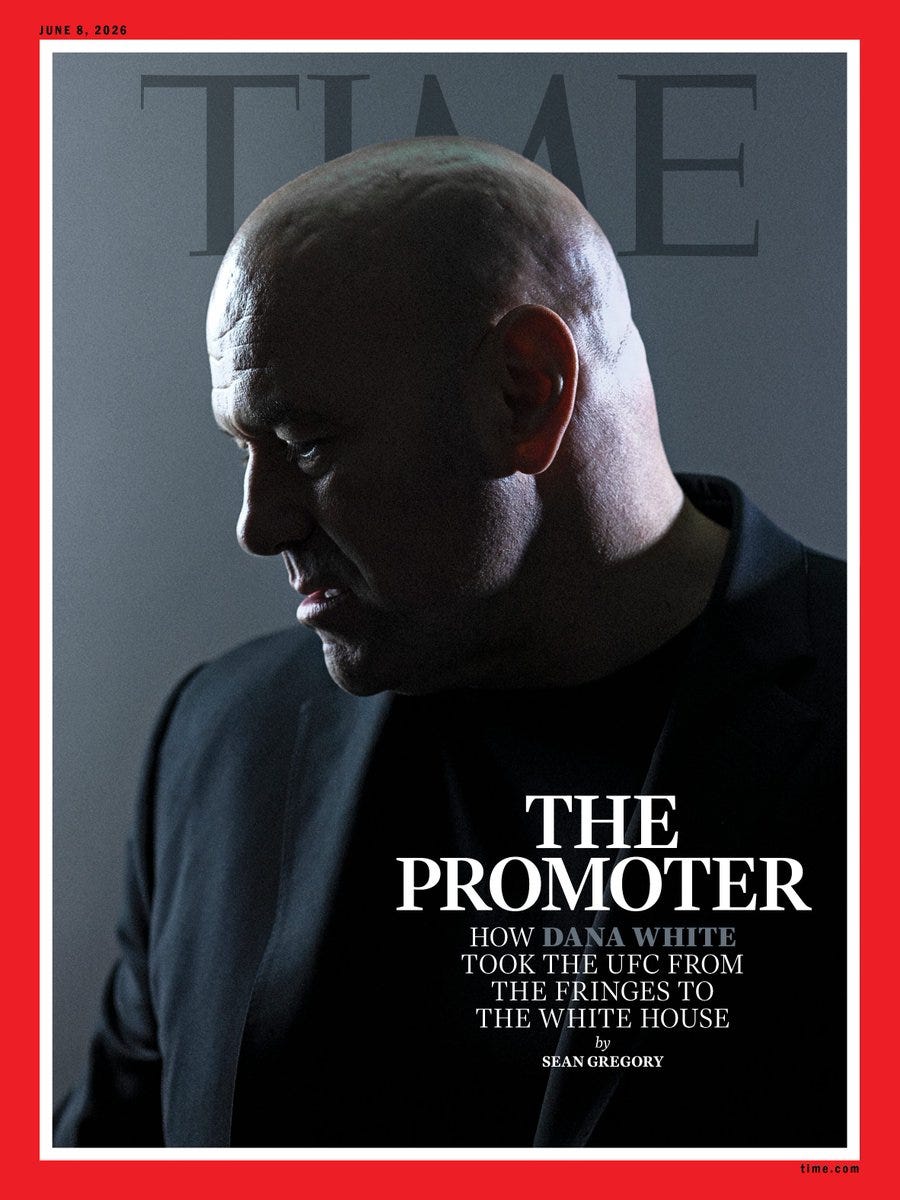
The UFC has traded punches for politics, turning the White House into a $60 million spectacle where Dana White and Donald Trump blur the line between governance and show business.
What to know
- By 2026, Dana White shifted UFC's focus from traditional fights to partisan mega-events like Freedom 250 at the White House, complete with an 87-foot canopy and 4,300 seats.
- President Trump enforced strict appearance rules for military attendees and floated making the UFC cage a permanent White House fixture, recasting the presidency as prime-time entertainment.
- The UFC White House events, masterminded by Ari Emanuel, triggered legal challenges and public backlash over taxpayer-funded political theater and the brazen merger of sports, branding, and power.
Dana White’s Political Pivot
Dana White abandoned traditional fight promotion to become a political showman, leveraging his Trump alliance and media savvy to rebrand UFC as a partisan spectacle.
By early 2026, Dana White’s enthusiasm for traditional UFC fights had markedly waned, as he openly admitted to struggling with motivation and seeking fulfillment beyond the octagon. This personal shift mirrored a broader strategic pivot within UFC leadership, where the promotion increasingly intertwined itself with political spectacle rather than pure sports entertainment. White’s presence at high-profile political events like the White House Correspondents’ Association dinner, instead of UFC fight nights, underscored this departure from conventional combat sports toward a fusion of politics and celebrity culture.
Dana White leveraged his close ties with Donald Trump and political circles to transform UFC’s promotional strategy, aggressively pushing politically charged spectacles that blurred the lines between sport and political theater. His orchestration of Trump’s media appearances—including a record-breaking 62 million-view Joe Rogan podcast—and the ambitious, albeit financially risky, UFC White House event with an $87 million canopy installation on the South Lawn exemplify this new direction. These moves prioritized political messaging and celebrity involvement over profitability, signaling a deliberate shift from traditional fight promotion to orchestrated political-entertainment productions.
White’s role evolved into that of a political operator and media figure, as he actively engaged with mainstream outlets like TIME, NPR, and Rolling Stone to shape political narratives around the UFC brand. He also used his influence with Trump to manage sponsor relations, notably intervening in Bud Light’s sponsorship backlash by framing Anheuser-Busch as a supporter of first responders—a message amplified by Trump on Truth Social to quell conservative criticism. This intertwining of White’s personal controversies, political alignments, and public persona reflects a UFC leadership style that prioritizes political spectacle and celebrity culture over traditional sports leadership.
Image Over Substance at 1600
Trump’s White House UFC events imposed strict appearance rules on military attendees, turning soldiers into props for political optics and redefining presidential entertainment.
By mid-2026, President Trump had transformed UFC events at the White House into highly curated spectacles, enforcing stringent appearance standards for military attendees to project a polished, marketable image aligned with his political brand. This included an infamous ultimatum reportedly barring 'short and fat' military personnel from attending, reflecting Trump's obsession with image and spectacle. The administration’s focus extended beyond mere aesthetics, as figures like Pete Hegseth—known for his telegenic appeal as a Fox & Friends host and then head of the Department of Defense—were strategically positioned to reshape the public perception of American soldiers, even advocating for the removal of 'fat generals' to align with this new narrative.
Trump’s use of UFC spectacles at the White House went beyond traditional presidential sports engagements, signaling a deliberate fusion of political ambition with entertainment branding. Hosting a UFC cage fight on the South Lawn for his 80th birthday, complete with arena seating and complex lighting, marked a stark departure from past presidents’ low-contact activities like T-ball or Easter Egg Rolls. This move not only amplified his personal brand but also suggested a redefinition of presidential norms, with Trump even proposing the UFC cage as a permanent White House fixture—a testament to his vision of politics as a live Hollywood action movie, as industry leaders like Ari Emanuel and Mark Shapiro have observed.
Underlying Trump’s orchestration of UFC events was a broader political-media strategy that prioritized telegenic, socially appealing personalities over traditional qualifications, reinforcing his image-centric approach to governance and public relations. This pattern extended beyond the Pentagon and White House spectacles to his broader hiring practices, favoring media-savvy figures who could effectively blend entertainment with political messaging. As noted, Trump consistently chose 'the hottest attorneys, not the most experienced,' underscoring a consistent theme where appearance and media presence trumped conventional credentials in service of a carefully crafted political narrative.

Freedom 250: MMA Meets Patriotism
The Freedom 250 transformed the White House lawn into a $60 million UFC arena, fusing MMA, nationalism, and Trump’s birthday into a high-risk branding gamble.
Dana White’s $60 million UFC Freedom 250 event at the White House represents an unprecedented fusion of sports entertainment and political spectacle, designed to elevate MMA as a symbol of American patriotism. The production includes a sprawling 4,300-seat outdoor venue with an 87-foot canopy on the South Lawn, a press conference at the Lincoln Memorial, and a two-day fan fest for up to 85,000 attendees at the Ellipse, all fully funded and produced by the UFC. Originally slated for July 4th, the event was strategically moved to June 14—Flag Day and President Trump’s birthday—to maximize patriotic symbolism and media impact, with White calling it a “huge brand play” to make MMA the sport that represents America.
The UFC Freedom 250 is as much a political-entertainment production as it is a business venture, reflecting the unique, personal yet politically charged relationship between Dana White and President Trump. White emphasizes that their bond is “strictly personal, not political,” framing his unconditional loyalty as a patriotic duty despite their history of mutually beneficial crony capitalism. Trump himself praised the event’s temporary structure, likening it to the Eiffel Tower and suggesting it might become a permanent fixture, underscoring the event’s role as a symbolic merging of business interests with political theater.
Embodying his signature high-risk, high-reward approach, Dana White views the Freedom 250 as a formidable challenge that aligns with his ambition to grow the UFC into a $1.5 billion revenue powerhouse. He embraces the potential for financial loss—estimating the event could lose $30 million—as part of the audacity required to push the UFC’s brand into new mainstream territory. The UFC’s full control over production and finances, including deploying nine production trucks’ worth of broadcast equipment and crew, highlights the scale and self-sufficiency of this ambitious undertaking.

Ari Emanuel: The Power Broker
Ari Emanuel quietly engineered UFC’s political-entertainment merger, rewriting history and manipulating media narratives while keeping his influence hidden behind Dana White’s public persona.
By mid-2026, Ari Emanuel had solidified his role as the covert architect behind UFC’s political and media strategies, expertly blending the realms of political spectacle, financial power, and entertainment to maximize media monetization and corporate partnerships. His orchestration of the UFC White House event, involving high-profile figures like Donald Trump and Larry Ellison, exemplified this fusion of American political influence and business interests, with Emanuel and Silver Lake’s Egon Durban banking on visual persuasion to drive Paramount Plus subscriptions.
Central to Emanuel’s media strategy was the deliberate construction of a 'brand-new Zuffa Myth' that rewrites UFC’s history to portray a longstanding alliance between Dana White and Donald Trump, positioning Trump as indispensable to UFC’s survival and rise. This narrative, heavily promoted by Dana White on an Endeavor-curated media tour, serves as a politically charged tool designed to manipulate public perception and monetize the spectacle, despite being factually inaccurate—Trump’s actual involvement was limited to hosting three early events with no lasting impact.
Emanuel’s preference to remain behind the scenes while allowing Dana White to be the public face of this politically infused narrative underscores his sophisticated approach to media manipulation and corporate strategy. By keeping his ownership and influence largely out of the spotlight, Emanuel avoids scrutiny while effectively steering UFC’s political alignments and business dealings, a dynamic that has gone largely unnoticed despite aggressive coverage since 2023.
Backlash and Legal Battles
The White House UFC spectacle triggered public outrage, legal scrutiny, and ethics complaints over taxpayer-funded political theater, military image manipulation, and property damage.
By mid-2026, the UFC fight event staged on the White House grounds emerged as a highly choreographed political spectacle aimed at shoring up Donald Trump's faltering image, particularly among young male voters whose support had plummeted from 49% to just 28%, according to a Harvard/IOP poll. However, this spectacle sparked widespread public skepticism as many viewed it as a superficial distraction from pressing national concerns such as inflation, healthcare, climate change, and foreign policy—issues that no MMA ring could address. The construction of a massive, temporary fighting cage on the South Lawn, visible cranes, and elaborate staging underscored the event’s theatrical nature but also raised serious questions about the legality and appropriateness of using federal property for such politically charged entertainment.
The UFC White House events further ignited controversy through the Trump administration’s enforcement of strict and appearance-based criteria for military attendees, reflecting a politicized image management strategy that prioritized telegenic appeal over merit or inclusivity. Under the direction of Pete Hegseth—a former soldier turned Fox & Friends host favored by Trump for his media savvy—military personnel were subjected to casting-call style rules, including exclusion of those deemed 'short and fat' and the requirement that soldiers pay their own way to attend. This focus on optics, which even led to National Guard members being sent home for not meeting arbitrary physical standards, blurred the lines between governance and entertainment, provoking ethical concerns and public backlash over the superficiality overshadowing substantive leadership.
Legal challenges and ethical criticisms mounted as watchdog groups and the public questioned the use of taxpayer resources and federal property for the UFC spectacle, highlighting potential violations of National Park Service regulations that require congressional approval for private, for-profit events on federal land. The Public Integrity Project’s lawsuit underscored that the giant cage was erected without the mandated sign-off, while Trump's personal financial stake—having purchased stock in UFC’s parent company TKO shortly before the event—raised conflict-of-interest concerns about profiting from government assets. Beyond legalities, the event inflicted tangible damage on the White House South Lawn, with repair costs estimated at $700,000, symbolizing the broader costs of prioritizing political theater over stewardship and effective governance.
Critics framed the UFC White House event as a modern incarnation of 'panem et circenses,' where spectacle serves to dazzle and distract a restless public while substantive governance withers. Echoing historical patterns of demagogues using entertainment to mask neglect, the event’s fusion of political power, financial wealth, and entertainment business interests—exemplified by the unprecedented collaboration among Donald Trump, Ari Emanuel, and Larry Ellison—highlighted a troubling trend of political image-making subsuming the responsibilities of leadership. Even prominent figures like Joe Rogan felt pressured to endorse the spectacle, illustrating how branding gambits can overshadow genuine political discourse and deepen public cynicism.


Betting, Branding, and Political Leverage
Dana White used his political connections to shape gambling policy, orchestrate media blitzes, and stage costly spectacles, cementing UFC’s role at the crossroads of sports, politics, and business.
Dana White has adeptly navigated the intersection of corporate leadership and political maneuvering to advance UFC's business interests, particularly in the burgeoning sports betting arena. In May 2026, he directly urged former President Trump to reverse a tax provision capping gambling loss deductions at 90%, arguing it stifled legal betting and harmed the ecosystem cultivated with state regulators and licensed operators. This intervention briefly swayed prediction markets, underscoring White's capacity to influence legislative momentum and media narratives beyond traditional sports promotion.
White’s political acumen extends to managing public controversies and orchestrating media strategies that intertwine UFC’s brand with Donald Trump’s political narrative. Notably, he enlisted Trump’s support to defend Bud Light amid conservative backlash over its partnership with transgender influencer Dylan Mulvaney, resulting in a supportive Truth Social post that helped quell the controversy. Simultaneously, White engineered high-profile media appearances for Trump—including a pivotal three-hour Joe Rogan interview viewed over 62 million times—targeting UFC’s core young male demographic and reinforcing Trump’s image as a foundational ally of the UFC’s early growth, despite skepticism from analysts like Luke Thomas.
Beyond media and messaging, White invests heavily in political spectacle to cement UFC’s cultural and political relevance, exemplified by the costly $30 million UFC White House event. This extravaganza, featuring an 87-foot canopy to guarantee pristine televised shots of the White House, involved multiple planning trips and expensive logistical efforts such as repairing damaged grass, signaling White’s commitment to blending political theater with UFC branding—even at significant financial loss. His media blitz, including appearances on TIME, NPR, Rolling Stone, and The New Yorker’s politics podcast, often benefits from lenient interviewers, enabling him to propagate narratives that bolster UFC’s political capital.
Despite his media savvy and political connections, White’s dual role is not without challenges, as public controversies occasionally expose vulnerabilities. The 2022 brawl involving White and his wife drew critical scrutiny, with interviews like the one on The Breakfast Club pressing him on whether his position shielded him from consequences. This episode highlights the delicate balance White maintains between wielding influence and managing reputational risks inherent in his intertwined roles as UFC’s business leader and political operator.