Oil choked, data down: Iran crisis exposes tech war’s price tag and global fragility
The gist
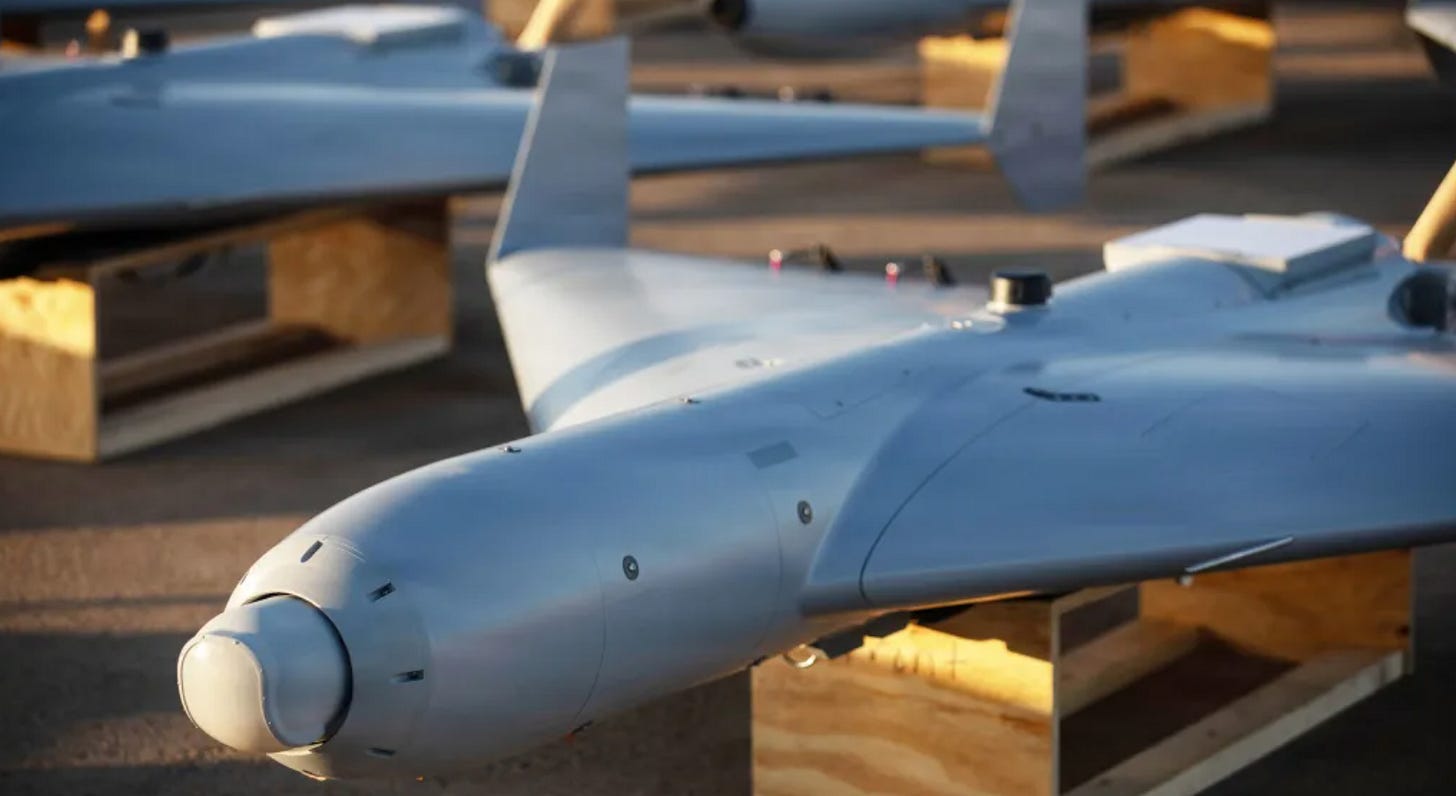
Iran's chokehold on oil and data has exposed a staggering global fragility, with cheap drones and digital warfare outmaneuvering billion-dollar defenses and upending world markets.
What to know
- Iran's control of the Strait of Hormuz slashed global oil transit by up to 80%, triggering historic price surges and paralyzing supply chains.
- AI-powered Iranian drone strikes crippled AWS data centers, freezing banking and payments while revealing just how vulnerable modern infrastructure really is.
- The crisis fueled information chaos—betting markets like Kalshi and Polymarket boomed, executive power soared as President Trump bypassed Congress, and global insurance gaps threaten prolonged market turmoil.
Multipolar Power Strains
Iran’s unexpected resilience and regional alliances’ calls for restraint reveal how the crisis has shattered assumptions about global order and exposed the limits of U.S. influence.
The US-Iran conflict has starkly exposed the limits of multipolar restraint and the fragility of the international order, as Iran’s entrenched regime has proven far more resilient than many Western policymakers anticipated. Despite suffering heavy losses, Tehran’s leadership—embodied by Supreme Leader Ayatollah Ali Khamenei—has framed its survival as a victory against external aggression, complicating any prospects for a swift resolution. With Iran leveraging its strategic position over the Strait of Hormuz, through which nearly 20 to 30 percent of the world’s oil supply flows, and threatening asymmetric retaliation against US assets, the crisis has not only risked broader regional destabilization but also underscored how quickly local conflicts can threaten global markets and security.
International institutions and diplomatic norms have repeatedly failed to contain escalation, as the US’s overt support for Iranian protesters and ambiguous military posturing have emboldened Tehran’s narrative of foreign intervention and repression. President Trump’s vocal backing of regime opponents and threats of economic measures, such as a 25% tariff on countries trading with Iran, have allowed the Iranian regime to justify crackdowns and dismiss internal dissent as externally orchestrated, further complicating diplomatic solutions. Non-kinetic measures like sanctions and cyber attacks have proven largely ineffective due to Iran’s deep entrenchment and the already extensive sanctions regime, illustrating the diminishing leverage of international mechanisms in the face of hardened state actors.
The crisis has also revealed the precarious balance of power among regional and global actors, as US allies—including Israel, Saudi Arabia, Qatar, and Egypt—have privately urged Washington to delay military action out of fear of unleashing uncontrollable regional instability. Israel’s unusual call for restraint, driven by stretched military resources after recent conflicts in Gaza, Syria, and Lebanon, marks a significant shift in regional dynamics and highlights the unpredictability of escalation in a multipolar environment. Meanwhile, the US’s own operational limitations—such as the need to redeploy carrier strike groups and the lack of a clear post-strike plan for Iran’s complex internal landscape—underscore the challenges of managing escalation when both military readiness and alliance consensus are in flux.
As the conflict has metastasized, Iran’s multi-layered cost-imposing strategy—combining direct strikes, proxy warfare, and economic disruption—has further tested the assumptions of multipolar restraint and the effectiveness of international order mechanisms. Iranian actions in the maritime domain, such as live-fire drills and partial closure of the Strait of Hormuz, have triggered systemic economic costs and repricing in global markets, while diplomatic efforts at the UN and indirect negotiations via Oman have done little to stem the tide of escalation. The involvement of major powers like China and Russia, who have increased their naval presence and provided intelligence support to Iran, signals a new era of great power competition where international institutions struggle to keep pace with the speed and complexity of modern conflict.




Tech’s Double-Edged Sword
AI-driven warfare and cheap drones have upended military economics, making high-tech defenses unsustainable and amplifying the risk of catastrophic errors.
The integration of advanced technologies—ranging from AI systems like Claude Opus 4.6 to precision drones and cyber operations—has fundamentally transformed the nature of modern warfare, acting as both a force multiplier and a source of new vulnerabilities. By early 2026, AI platforms such as Claude Opus 4.6 were demonstrating unprecedented capabilities, with METR noting its record-setting time horizon on complex software tasks, underscoring the strategic edge these tools provide. However, the same period saw Iranian drone strikes crippling AWS data centers in the Gulf, paralyzing banking and payment systems and exposing the fragility of civilian infrastructure reliant on digital and cloud services; AWS confirmed widespread outages and elevated error rates, prompting urgent advisories to treat data centers as critical national security assets. This duality—where technology amplifies both power and risk—defines the current era of conflict.
The cost asymmetry between offensive and defensive technologies has emerged as a strategic Achilles’ heel, with inexpensive drones and missiles forcing adversaries to expend vastly more expensive interceptors and resources. Operation Epic Fury and subsequent conflicts highlighted how $25,000 Shahed drones and $500,000 Fattah hypersonic missiles could saturate and overwhelm billion-dollar air defense systems, such as the $1.1 billion radar facility destroyed by Iran. As analysts noted, 'Cheap drones, cheap missiles, cheap harassment. Versus insanely expensive interception and defense... That’s how you lose wars even when you have ‘more money.’' This economic imbalance is further exacerbated by the rapid depletion of advanced interceptors like THAAD and Patriot missiles, with stockpiles halved in weeks and production unable to keep pace, revealing a critical vulnerability in sustaining high-tech defenses.
AI-powered decision-making and autonomous systems are accelerating the tempo and scale of military operations, but they also introduce new risks of catastrophic error and operational fragility. The use of AI in targeting—such as Palantir’s Maven or large language models like Claude—can speed up kill chains and enable mass precision strikes, as seen in Israel’s reported 500 attacks in a single day. Yet, reliance on AI can lead to tragic mistakes, such as the Iranian school missile incident, where outdated or poisoned data caused AI to misclassify a civilian target, and human oversight was compromised by pressure for speed. As U.S. doctrine requires a human in the loop, the push for rapid decision-making may erode the safeguards meant to prevent such errors, illustrating the paradox of technological acceleration: greater power, but also greater potential for unintended harm.
The rapid evolution of cyber warfare, fueled by AI and a fragmented threat landscape, is amplifying vulnerabilities across both military and civilian domains. Iran’s use of public AI modules to automate reconnaissance and access propagation has enabled mass cyber operations, though their sophistication is still developing, as evidenced by failed attacks on U.S. infrastructure. Multiple Iranian entities—including the Ministry of Defense, Ministry of Intelligence, and IRGC—are actively targeting critical sectors like telecommunications, energy, and finance, not just for strategic gain but to project regime strength and maintain internal stability. As cyber threats escalate and AI-enabled attacks proliferate, the imperative for proactive, rather than reactive, defense becomes clear, especially as even robust protections cannot guarantee full security in an environment where data infrastructure itself has become a frontline target.




Oil Choke’s Hidden Fallout
The true bottleneck isn’t just oil flow, but the insurance sector’s paralysis—creating a global trade freeze that could last well beyond the fighting.
The closure of the Strait of Hormuz amid escalating US-Iran conflict has exposed the acute fragility of global energy markets, with nearly 20-30% of the world’s oil supply effectively choked off and crude tanker transits plunging from 24 per day to as low as four. This disruption is not merely a temporary shock; insurance cancellations under war risk clauses and the withdrawal of major reinsurers have created a structural commercial blockade expected to last 12 to 18 months, as documented by NorthStandard and JPMorgan’s $352 billion exposure gap. The resulting supply shortfall—over 8.5 million barrels per day—has triggered historic oil price surges, cascading into inflation, supply chain paralysis, and financial market volatility, with Asian economies like Japan and South Korea, heavily dependent on Hormuz oil, experiencing double-digit market declines and facing existential threats to their AI and semiconductor industries.
Military escalation has revealed a dangerous feedback loop between conflict and economic instability, as Iran’s decentralized missile and drone strategies, proxy warfare, and cyberattacks not only disrupt physical infrastructure but also paralyze digital backbones like AWS data centers, Gulf banking networks, and critical logistics. These asymmetric tactics—where $25,000 Shahed drones force the use of $4 million Patriot interceptors—create a cost imbalance that bleeds defense budgets and strains munitions supply chains, while cyber and kinetic strikes on data infrastructure cause cascading failures in payments, communications, and air traffic. As the conflict widens, market volatility intensifies: defense and energy stocks surge, gold and silver swing wildly, and even cryptocurrency markets emerge as real-time barometers of geopolitical risk, underscoring the interconnected fragility of financial systems and supply chains.
The insurance sector has become a hidden fault line in global trade, as the crisis in Hormuz demonstrates that the reopening of vital shipping lanes hinges less on military might and more on the slow, sequential processes of reinsurance recapitalization and vessel re-underwriting. Historical precedents, such as the 26-month Houthi Red Sea disruption, suggest that elevated premiums and rerouting can persist long after combat operations subside, leaving a $352 billion exposure gap and forcing governments like the US to intervene with risk insurance and naval escorts. This structural vulnerability amplifies the feedback loop between military escalation, market instability, and supply chain paralysis, as even robust naval presence cannot substitute for the confidence of global insurers and reinsurers.
Technological and resource dependencies further compound market fragility, as the conflict exposes Western reliance on adversarial nations for critical minerals, rare earths, and uranium—inputs essential for advanced weaponry, energy infrastructure, and nuclear fuel. China’s export restrictions and extraterritorial compliance clauses have turned allied supply chains into compliance minefields, while Russia and Kazakhstan’s dominance in uranium enrichment and production creates strategic choke points. As military campaigns consume vast quantities of rare earths and high-tech munitions, the inability to quickly replenish these resources threatens both military effectiveness and the stability of global markets, illustrating how geopolitical shocks can trigger enduring supply chain deficits that outlast immediate price spikes.





Betting on Chaos
Weaponized information, financial speculation, and algorithmic censorship are distorting public perception and fueling market volatility as truth becomes collateral damage.
From the outset of the Iran war crisis in early 2026, information asymmetry and media framing have fueled public confusion and polarization, with various actors manipulating narratives to serve their interests. While some sought to downplay the conflict’s scale—despite strikes across seven countries—others amplified the specter of endless war, creating a fractured information landscape. This manipulation not only shaped public perception but also influenced policy debates, as left-wing critics decried the war as expensive imperialism and right-wing voices mobilized their own narratives, ultimately undermining democratic accountability and eroding market confidence.
The rise of online betting markets like Kalshi and Polymarket during the conflict exemplifies the troubling commodification of information, where speculation and news become intertwined. With Kalshi seeing $36 million in bets on regime change and Polymarket handling over $529 million in contracts tied to strike timings, these platforms blur the lines between information and profit, potentially distorting both market and public responses. While Polymarket defends itself as 'an invaluable source of news and answers,' the sheer scale of speculative activity raises concerns about profiteering and the manipulation of public sentiment through financial incentives.
Social media platforms, particularly Twitter, have become battlegrounds for information warfare, where algorithmic curation and active suppression of alternative viewpoints create parallel realities. Experiments with pro-Iranian, anti-American feeds revealed how quickly and thoroughly dissenting perspectives could be erased, with one analyst noting that 'with the snap of a finger, a switch was flipped' and alternative views vanished. This curated information environment not only shapes public perception but also highlights the growing difficulty of accessing diverse perspectives during geopolitical crises.
Amid this fog of propaganda and media manipulation, market indicators—especially in highly liquid sectors like energy—have emerged as comparatively reliable sources of information. As one observer put it, 'It costs money to manipulate markets, especially extremely liquid markets like oil and natural gas,' suggesting that the financial stakes in these arenas incentivize accuracy over spin. While platforms like Polymarket are not immune to distortion, the sophistication and scale of energy markets provide a critical counterweight to the unreliability of social and traditional media during the conflict.
The complexity of the Middle East conflict is compounded by the involvement of multiple state and non-state actors, each wielding propaganda and information warfare to advance their agendas. China and Russia, for instance, have covertly supported Iran with satellite data and drone technology, while regional powers like Turkey, Israel, and the US use information channels to sway public opinion and justify military actions. This multiplicity of competing narratives not only fuels instability but also erodes trust in both domestic and international institutions, trapping populations in cycles of radicalization and disengagement.
The use of powerful imagery and selective messaging has further shaped the conflict’s narrative, as seen in the international outcry over the bombing of a girls’ elementary school in Iran. Iranian Foreign Minister Araghchi’s condemnation—'A primary school for girls, bombed in broad daylight, when packed with young pupils'—underscored how such events become defining moments, eclipsing even satellite imagery in their impact on regional sentiment. Meanwhile, contradictory diplomatic messaging and strategic omissions in military targeting, such as Iran sparing Oman after a diplomatic breakthrough, reveal how information warfare extends beyond words to the orchestration of actions designed to influence alliances and public opinion.



Unchecked Executive War Power
Presidential authority surged as Congress faltered, with rapid tech-driven escalation leaving democratic oversight—and postwar planning—in the dust.
By early 2026, escalating US-Iran tensions exposed the persistent struggle between legislative oversight and executive overreach in American foreign policy. While Congress initially sought to reassert its constitutional authority—advancing a War Powers Resolution to limit presidential military actions—these efforts were repeatedly undermined by the executive branch's unilateral decisions. The surprise Iran strike, which left key lawmakers like Jack Reed in the dark and bypassed broader congressional consultation, underscored a pattern where the president acts with minimal legislative input, reinforcing concerns that the executive 'doesn't get to just act in a vacuum here' but often does.
The balance of power decisively shifted in favor of the executive as President Trump, during his second term, openly framed military escalation as an act of war without seeking congressional approval, a move that commentators saw as emblematic of the 'strengthening of the executive.' Despite bipartisan frustration—exemplified by Mark Warner's demand for a war powers vote—Republican-controlled Congress largely acquiesced, with Senate Republicans voting down efforts to halt the conflict and ultimately rejecting a war powers resolution. This institutional abdication left the president with broad authority to escalate against Iran, raising profound constitutional and democratic accountability concerns as the Senate effectively granted Trump unrestricted military latitude.
The rapid evolution of military technology—ranging from AI-enabled decision-making to precision mass air campaigns—has further complicated institutional checks and democratic accountability. As advanced intelligence allowed for over 500 Israeli strikes in a single day and AI systems like Claude entered operational planning, the velocity and scale of conflict outstripped traditional oversight mechanisms. This technological acceleration not only empowered executives to act swiftly and unilaterally but also left legislative bodies struggling to adapt, with no clear mechanisms for post-strike governance or civil society stabilization, as one analyst noted: 'you gotta have somebody to pick up the pieces and run with them afterwards.'
The erosion of institutional checks in the face of executive overreach has been compounded by the economic and ethical fallout of prolonged, unilateral military engagements. With the US pursuing war against Iran largely without multilateral support—prompting even Britain to hesitate over airfield access—public discontent has grown over ballooning deficits and the specter of another 'forever war.' Meanwhile, the intersection of geopolitical shocks and technological innovation has spawned new forms of profiteering, as seen in the surge of online betting markets like Kalshi and Poly Market, where millions were wagered on regime change outcomes. These developments highlight how traditional democratic accountability is being outpaced not only by executive action but also by the rapid monetization of conflict in global markets.
Amid these shifts, the polarized political environment and legislative gridlock have further weakened democratic accountability. As debates over emergency war funding unfolded, critics like Bernie Sanders lambasted the Pentagon's ballooning budget—'just got nearly a trillion'—while the Senate, reflecting partisan divides, deferred to President Trump's authority with statements like, 'We need one person. We got Donald Trump. Let him make the decisions.' This institutional inertia, coupled with the Senate's rejection of war powers limitations even as oil prices spiked and fears of Iranian retaliation mounted, underscores the growing inability of democratic institutions to maintain effective checks and balances in an era of rapid geopolitical and technological upheaval.