Oil shock roils tech: software and AI stocks suffer as investors flee to safety
The gist
Oil’s surge past $85 a barrel is spooking markets, hammering high-flying tech stocks as investors ditch growth for the safety of energy and defensive plays.
What to know
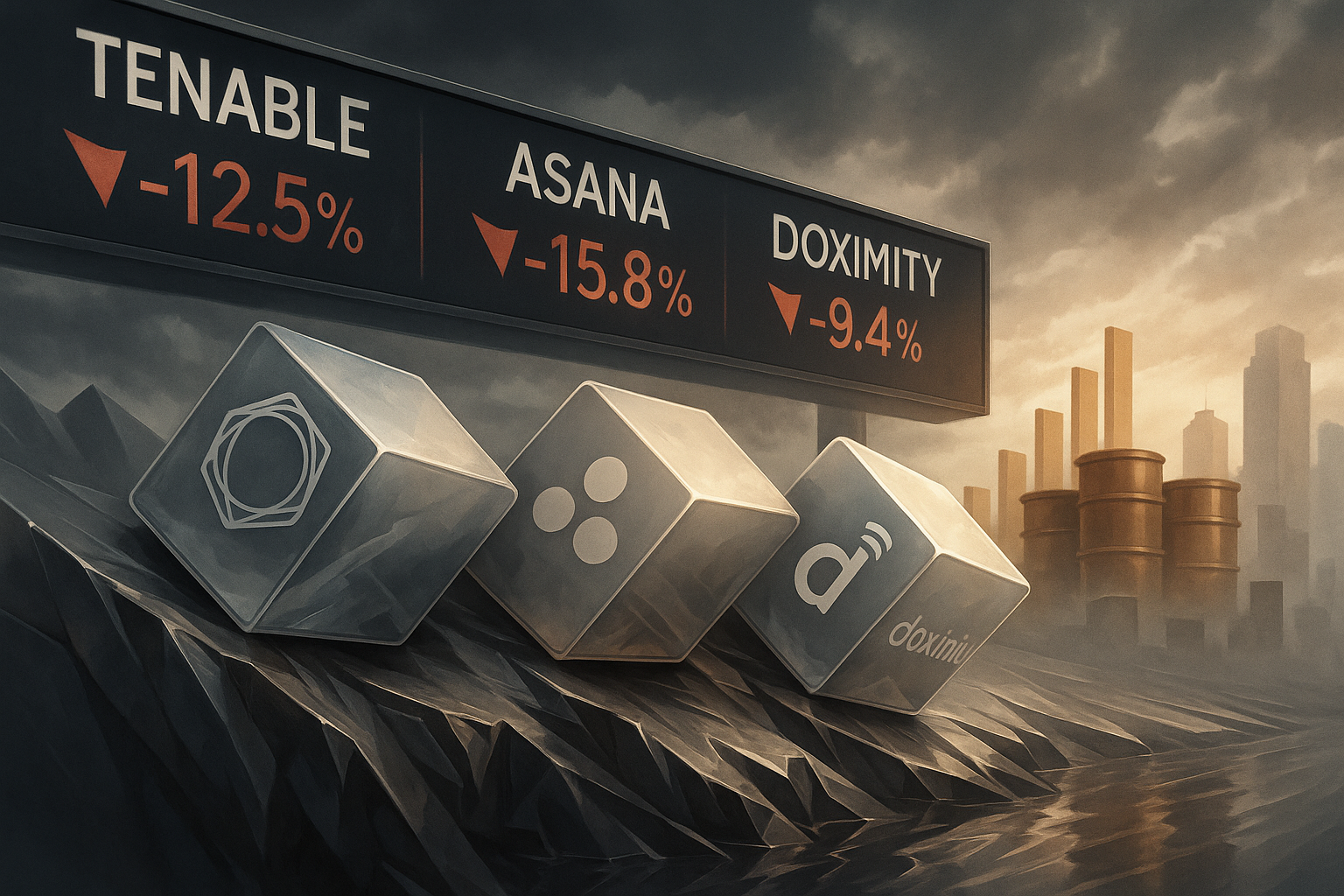
- A U.S. naval blockade on Iran and renewed tensions have sent Brent crude above $85, sparking market volatility and punishing software and AI stocks like Bandwidth, Amplitude, and Toast.
- Rising oil prices are fueling inflation fears and pushing the Fed to hold rates at 3.50%–3.75%, which is squeezing long-duration growth stocks by raising discount rates.
- Investors are fleeing momentum-driven tech—including Unity and The Trade Desk—for energy and defensive sectors, while scrutiny grows over AI spending and funding risks mount.
Geopolitics Drives Market Shakeup
A sudden oil shock from renewed U.S.-Iran tensions is triggering a swift investor exodus from high-multiple tech stocks, fueling a dramatic rotation into energy and defensive sectors.
Renewed geopolitical tensions, highlighted by President Trump's declaration that the Iran ceasefire is over and the reinstated U.S. naval blockade on Iran, have sharply driven Brent crude oil prices above $85 a barrel. This sudden oil shock has injected significant volatility into the markets, triggering a risk-off sentiment that penalizes high-multiple tech stocks such as Bandwidth, Amplitude, and Toast, while boosting energy and defensive sectors. Despite software companies’ limited direct exposure to oil, investors are rotating away from momentum-driven tech names amid the heightened geopolitical uncertainty.
The surge in oil prices has reignited inflation concerns and pushed government bond yields higher, with the Federal Reserve now expected to hold interest rates in the 3.50%–3.75% range. This macroeconomic backdrop increases the discount rate applied to long-duration growth stocks, particularly in software and AI infrastructure, compressing their valuations as investors reassess future earnings potential. Consequently, the interplay of geopolitical shocks and tightening monetary policy is reshaping sector leadership, favoring energy and defensive stocks over richly valued tech names.

Inflation Fears Squeeze Tech
Soaring oil prices and stubborn Fed rates are compressing software and AI valuations, as investors demand clearer returns and tighten scrutiny on costly infrastructure bets.
The recent surge in oil prices, driven by renewed geopolitical tensions and a U.S. naval blockade on Iran pushing Brent crude past $85 a barrel, has intensified inflation fears and elevated government bond yields. This has led to higher discount rates that disproportionately compress valuations of long-duration growth stocks, particularly in the software sector, despite their limited direct exposure to oil costs. Companies like Bandwidth and Amplitude are feeling the squeeze as the increased cost of capital undermines their previously rich valuations and investor appetite.
Heightened expectations that the Federal Reserve will maintain interest rates in the 3.50%–3.75% range amid these macroeconomic pressures have triggered a pronounced sector rotation. Investors are moving away from high-multiple, momentum-driven tech and AI infrastructure stocks—such as Unity and The Trade Desk—toward energy and defensive sectors, reflecting a broader risk-off sentiment. This shift also brings stricter scrutiny to AI investments, as funding for margin-dilutive infrastructure buildouts faces increased skepticism without clear return timelines.
Tech Valuations Face Double Threat
Rising discount rates and looming credit risks are pressuring growth stocks, with any pullback in AI funding or semiconductor earnings threatening a sharp tech sector correction.
Renewed geopolitical tensions, particularly the U.S. naval blockade on Iran pushing Brent crude above $85 a barrel, have sparked a surge in government bond yields that sharply raise discount rates applied to long-duration growth stocks like software companies. Despite having little direct exposure to oil prices, software valuations are disproportionately compressed because these firms are often tapped as funding sources when investors de-risk amid macroeconomic shocks, exemplified by Unity's 33.8% year-to-date decline and trading over 40% below its 52-week high.
This macro-driven repricing has triggered a pronounced risk-off rotation away from high-multiple tech and AI infrastructure stocks toward energy and defensive sectors, with momentum-driven names like Meta and semiconductor firms experiencing volatile swings. While Meta has seen sharp pullbacks, AI capex beneficiaries including memory and neo cloud companies have shown intermittent gains, reflecting investor uncertainty about the sustainability of AI spending amid rising financing costs and tighter credit conditions.
The tech sector faces mounting valuation pressure not only from rising discount rates but also from fundamental risks such as potential semiconductor earnings misses and financing challenges for AI infrastructure buildouts. As one strategist warns, any hiccup in the circular economy of private credit funding data centers could trigger a severe correction, with hyperscaler capex pullbacks—especially from giants like Alphabet—potentially precipitating at least a 10% market correction, underscoring the fragile outlook for sustaining high growth in tech.
Even stellar earnings performances, such as Samsung's 18-fold year-over-year operating earnings surge, have failed to buoy stock prices, highlighting how rising interest rate expectations and macro stress dominate investor sentiment. This environment has led to stricter scrutiny of AI investments, as seen in the sell-offs of companies like Unity, The Trade Desk, and GoDaddy, where investors hesitate to fund margin-dilutive infrastructure expansions without clear return timelines, reinforcing the mechanical nature of the broad rotation out of tech and momentum stocks into defensive sectors.

