Oil stocks sink as strait of hormuz optimism evaporates war-risk premiums
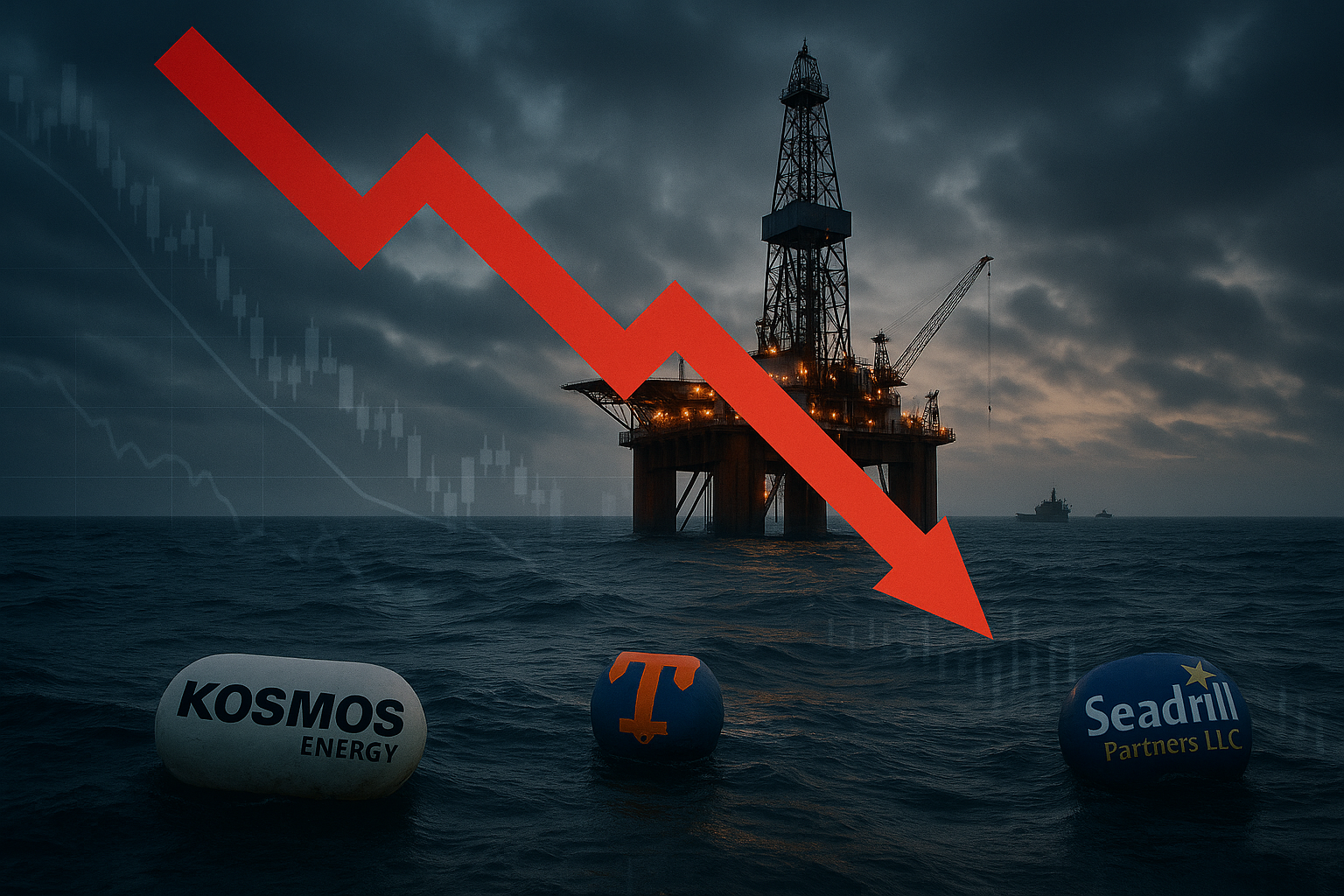
The gist
**Oil stocks are tanking as renewed U.S.-Iran peace hopes erase the war-risk premium, sending crude prices plunging and rattling the entire energy sector.**
What to know
- WTI crude tumbled 4.7% to $92.94 per barrel—well below $100—as optimism over U.S.-Iran diplomacy and reopening the Strait of Hormuz wiped out geopolitical risk premiums.
- Energy stocks like Transocean (-3.3%), Halliburton (-3.8%), and Valaris (-3.4%) sank as producers slashed capex and deferred rig contracts, despite many posting strong Q1 earnings.
- Even with big revenue beats from companies like ConocoPhillips (+12.1%) and Transocean (+19.3%), investor caution over geopolitics is trumping solid fundamentals across the board.
Strait of Hormuz Shifts Market
The sudden optimism over U.S.-Iran talks and a potential Strait of Hormuz reopening erased the war-risk premium, forcing oil markets to rapidly rethink supply security and slash price expectations.
Renewed optimism surrounding U.S.-Iran peace talks and the potential reopening of the Strait of Hormuz—a critical chokepoint for roughly 20% of global oil supply—has sharply reduced geopolitical risk premiums, driving WTI crude oil prices below the $100 per barrel threshold. This shift erased the war-risk premium that had previously buoyed prices, causing a notable 4.7% plunge to around $92.94 per barrel, as markets recalibrated expectations for oil supply stability and security.
The decline in crude prices below $100 has immediate and tangible consequences for the oil industry, particularly offshore drillers and oilfield service companies such as Halliburton. Producers, facing thinner economics—exemplified by Permian shale operators who budgeted drilling plans at $100 oil—are swiftly slashing capital expenditures and deferring rig contracts, leading to revenue contractions over the next two to three quarters. Halliburton’s shares fell 3.8% in response, reflecting investor concerns even as long-term business fundamentals remain under review.

Capex Cuts Hit Service Firms
Oil producers’ swift capital spending cuts in response to falling crude prices are triggering a chain reaction of deferred contracts and revenue pressure across oilfield services and drillers.
Energy stocks across the board, including offshore drillers like Transocean (down 3.3%) and Valaris (down 3.4%), as well as oilfield service firms such as RPC (down 3.6%), faced a broad sell-off triggered by a sharp decline in WTI crude prices below $100 per barrel. This drop was fueled by renewed optimism over U.S.-Iran diplomatic progress and hopes for reopening the Strait of Hormuz, which eased geopolitical tensions and removed the war-risk premium previously embedded in oil prices. The market's reaction, marked by notable volatility in typically stable names like Halliburton (down 3.8%), underscores how geopolitical developments can swiftly reshape investor sentiment and sector valuations.
The plunge in crude prices has immediate operational repercussions, as oil producers rapidly cut capital expenditures—often within weeks—leading to deferred or canceled contracts for rig services, hydraulic fracturing, and completion equipment. This capex contraction directly pressures oilfield service companies’ revenues over the next two to three quarters, intensifying the sell-off in service providers and offshore drillers alike. For example, Halliburton and RPC are expected to feel these effects acutely, reflecting a sector-wide adjustment to lower demand and a more cautious investment environment.
Shale producers such as Crescent Energy and Cactus are particularly vulnerable to crude price declines due to their breakeven economics and steep decline curves that necessitate continuous drilling to sustain output. Crescent Energy’s 3.5% share drop amid the recent sell-off highlights this sensitivity, though its stock remains up 41.4% year-to-date despite trading 13.5% below its 52-week high. This volatility, with Crescent experiencing 35 moves greater than 5% in the past year, illustrates how price swings translate into heightened market reactions without necessarily signaling fundamental shifts in business outlook.
The share price volatility observed in companies like RPC, which has recorded 19 moves greater than 5% over the last year, signals that while the market views the recent crude price drop and geopolitical developments as meaningful, it does not yet consider them transformative to the underlying business fundamentals. This nuanced investor sentiment reflects a balancing act between acknowledging near-term revenue pressures and maintaining a longer-term perspective on operational resilience and sector recovery potential.
Offshore Drillers Under Pressure
Offshore drillers like Borr and RPC are seeing margins squeezed and cash flow turn negative as producers halt projects, despite some posting revenue gains.
Offshore drillers and oilfield service companies such as RPC, Transocean, and Valaris have seen their stocks plunge as oil prices fell below $100 per barrel, triggering producers to slash capital expenditures and defer rig contracts. This rapid cutback in drilling activity directly squeezes revenue streams for these firms, which rely on active well drilling to generate income. For instance, RPC reported a contraction in adjusted EBITDA margin to 11.8% and a swing to negative free cash flow of $932,000, underscoring the margin pressures faced industry-wide amid declining profitability despite some revenue beats.
Borr Drilling exemplifies the operational and financial challenges offshore drillers face in this environment, having missed revenue and adjusted EPS expectations in Q1 despite a 14% year-over-year revenue increase. The delayed start-up of its Odin rig and elevated depreciation costs from recent acquisitions compressed margins sharply, with operating margin falling from 27.6% to 18.6%. CEO Bruno Morand’s cautious stance on fleet expansion—prioritizing employment of newly acquired rigs before further growth—reflects strategic prudence amid market uncertainty and shifting investor sentiment driven by lower crude prices and reduced war-risk premiums.
The broader sector’s decline is also tied to geopolitical developments, notably renewed optimism over U.S.-Iran diplomatic progress that has eased tensions around the Strait of Hormuz, a critical oil chokepoint. This reduction in war-risk premiums has removed a significant price support, pushing crude below $100 per barrel and intensifying pressure on offshore drillers and service firms like Halliburton. Despite Halliburton’s strong Q1 with $5.40 billion in revenue and earnings beats, its shares fell 3.8% initially, signaling investor concerns about near-term revenue declines and the sector’s vulnerability to geopolitical shifts and resulting capex cuts.
Even companies with solid operational results, such as Transocean and Oceaneering, have not been spared from stock price declines, reflecting a market that is increasingly cautious and focused on external factors rather than company fundamentals. Transocean’s 19.3% revenue growth and EBITDA beats could not prevent a nearly 10% stock drop, while Oceaneering’s modest revenue gains were met with flat stock performance. This divergence highlights how reduced war-risk premiums and the resulting drop in oil prices have shifted investor sentiment, creating a challenging environment where capital discipline and competitive pressures compound the headwinds for offshore drillers and oilfield service providers.
Earnings Beats, Stocks Retreat
Strong Q1 results are being ignored as investor anxiety over geopolitics and falling oil prices drives energy stocks lower, revealing a market dominated by macro fears over fundamentals.
Despite a generally strong Q1 earnings season marked by revenue and EPS beats across many energy and oilfield services companies, including Transocean’s 19.3% year-on-year revenue growth and ConocoPhillips exceeding revenue expectations by 12.1%, share prices have paradoxically declined. This disconnect is exemplified by Transocean’s nearly 10% stock drop and ConocoPhillips’ 10.5% decline post-earnings, underscoring a market dynamic where solid operational fundamentals are overshadowed by broader investor caution. The trend extends across sectors, with 26 oilfield services stocks collectively beating revenue estimates by 3.8% yet falling on average 4.7%, reflecting a pervasive wariness despite financial outperformance.
Investor sentiment appears heavily influenced by geopolitical developments, particularly renewed optimism over U.S.-Iran diplomatic progress, which has eased war-risk premiums and contributed to crude oil prices slipping below $100 per barrel. This shift has dampened enthusiasm for offshore drillers and oilfield service companies, as seen in Borr Drilling’s share price decline from $6.18 to $5.07 despite management’s emphasis on fleet utilization and regional demand tied to energy security. Similarly, companies like RPC and Clean Energy Fuels posted strong earnings beats yet experienced stock declines of 8.7% and 10%, respectively, highlighting how external geopolitical factors are recalibrating market valuations irrespective of quarterly results.
The cautious investor outlook is further reflected in mixed or offshore upstream E&P stocks, where even companies with solid earnings beats such as Tidewater and Seadrill faced notable stock price declines—15.6% and 2.7%, respectively—post-reporting. Despite Tidewater beating revenue estimates by 1.2% and Seadrill surpassing EPS and EBITDA forecasts, their share prices fell, signaling that market participants remain skeptical amid uncertain geopolitical conditions. This pattern suggests that while operational execution remains strong, valuation dynamics are increasingly driven by macro factors like geopolitical risk reduction and shifting energy market expectations rather than pure financial performance.