Oil wars whiplash: market seesaws as hormuz drama fuels historic sector split
The gist
A historic split has rocked markets as oil’s wild ride—driven by Strait of Hormuz chaos—catapulted energy stocks sky-high while consumer sectors nosedived.
What to know
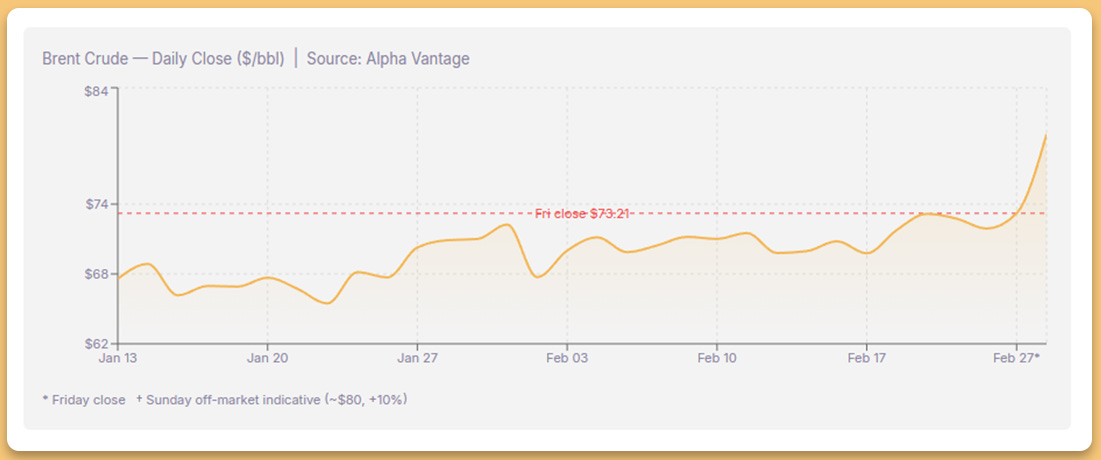
- Operation Epic Fury and Iran’s retaliation in March 2026 sent Brent crude surging 10% to $80/barrel, sparking a sector stampede into energy and defense stocks as airlines and travel plunged.
- By mid-April, energy stocks soared 33% YTD while consumer discretionary fell 12%, creating an unprecedented 45-point gap just as oil topped $100 and the Hormuz blockade squeezed supply.
- Ceasefire twists and renewed Middle East tensions have kept Brent crude swinging between $80 and $111, fueling whiplash in markets and investor pivots from oil giants to AI growth names like Nvidia.
Hormuz Crisis Sparks Market Havoc
Operation Epic Fury and Iran’s swift retaliation unleashed a weekend-driven volatility storm, sending Brent crude surging, gold to record highs, and Bitcoin plummeting as global investors scrambled for safe havens.
In late March 2026, the geopolitical landscape sharply deteriorated following Operation Epic Fury, a coordinated U.S.–Israeli strike that killed Iran’s supreme leader and targeted its nuclear and military infrastructure. Iran’s retaliatory missile strikes and the Revolutionary Guards’ closure of the Strait of Hormuz—a critical chokepoint for roughly 20% of seaborne crude oil—triggered a roughly 10% jump in off-market Brent prices to about $80 a barrel from $73.21. This disruption, compounded by the inability of OPEC+ spare capacity to quickly fill the supply gap, fueled renewed war-flation fears, pushing Treasury yields higher and sparking significant market volatility driven by shifting headlines about Hormuz security and potential backchannel diplomacy.
The immediate market response favored sector rotations into energy exploration and production, defense contractors, and gold, as investors sought refuge amid heightened geopolitical risk and inflation expectations. Integrated oil majors like Exxon, Chevron, Marathon Petroleum, Valero, and SLB benefited from improved production profitability and strategic refinery capabilities, while defense stocks such as Lockheed Martin gained traction—up 2.56% on the Friday following the escalation. Conversely, consumer-sensitive sectors including airlines, travel, emerging markets, and rate-sensitive financials like Mastercard and Visa faced pressure, with the airline ETF JETS dropping nearly 4%. Notably, gold traded near $5,353 an ounce, attracting safe-haven flows, whereas Bitcoin underperformed dramatically, falling over 25%, underscoring gold’s enduring role as a crisis hedge.
Market volatility was particularly pronounced over weekends, as geopolitical developments often unfolded after market close on Fridays, leading to sharp Monday drawdowns or rallies depending on oil price movements. This episodic volatility, while unsettling, was tempered by the macro backdrop that still favored supply outpacing demand in 2026 under normal conditions. Saudi Arabia’s strategic pre-positioning of inventory and the existence of global strategic petroleum reserves provided a buffer against a prolonged energy crisis, framing the current turmoil as a systemic risk perception rather than an immediate supply shock. Meanwhile, international bodies like the IEA and G7 began preparing for potential energy market interventions, signaling the global stakes involved.





Sector Gap Hits Record High
A historic 45-point performance gap split energy and consumer stocks as the Hormuz blockade sent oil giants soaring and travel companies crashing, despite strong earnings from financial heavyweights like Goldman Sachs.
During the peak conflict period in early to mid-April 2026, the stock market exhibited unprecedented sector divergence, with the S&P 500 Energy sector soaring 33% year-to-date while Consumer Discretionary sectors, particularly airlines and travel companies like Carnival, plunged 12%, creating a staggering 45-percentage-point gap in a single quarter. This sharp contrast was driven by soaring fuel costs and disrupted travel routes, which devastated consumer discretionary stocks even as energy producers and defense contractors thrived amid escalating geopolitical tensions.
Energy stocks surged dramatically as geopolitical tensions intensified, notably with the naval blockade of the Strait of Hormuz—through which roughly 20% of global oil supply passes—pushing crude prices above $100 per barrel. Major oil companies such as ExxonMobil, Chevron, and ConocoPhillips led the rally, with ExxonMobil posting its largest quarterly gain on record, while oilfield services firms like Transocean and Nabors Industries saw shares skyrocket, with Transocean alone rising nearly 79% year-to-date and hitting new 52-week highs despite ongoing risks. This surge was compounded by a sharp decline in U.S. crude inventories, which heightened supply concerns and fueled bullish investor sentiment.
Despite strong corporate earnings such as Goldman Sachs’ impressive $17.55 EPS in Q1, broader market sentiment remained cautious and volatile amid the conflict, with major indices like the S&P 500 and Nasdaq edging lower. Goldman’s stock fell 4.1% even as it beat expectations, illustrating how geopolitical risks and inflation pressures overshadowed positive economic data, leading to widespread selling pressure outside the energy and defense sectors. This dynamic underscored the market’s rotation towards sectors perceived as safe havens or direct beneficiaries of the conflict, reinforcing the extreme divergence in performance.
The energy sector’s volatility extended beyond major producers to specialized service providers such as Helix Energy Solutions, Atlas Energy Solutions, TechnipFMC, and Tidewater, whose shares surged sharply amid the crisis. Atlas Energy Solutions exemplified this trend with its shares more than doubling since the start of the year and hitting a 52-week high despite a GAAP loss, buoyed by strong revenue and EBITDA beats. This broad-based rally across both upstream and service segments highlighted the market’s rotation into energy amid supply disruptions and geopolitical uncertainty, while consumer discretionary sectors remained under sustained pressure.


Ceasefire Triggers Relief Rally
A fragile US-Iran ceasefire and partial reopening of the Strait of Hormuz unleashed a dramatic rebound in risk assets—Bitcoin and tech stocks surged while oil tumbled—even as new Middle East flashpoints kept markets on edge.
The announcement of a two-week ceasefire between the US and Iran on April 8, contingent on Iran reopening the Strait of Hormuz, sparked a sharp market rebound. Bitcoin surged from below $68,000 to $72,700, while oil prices plummeted over 20%, reflecting relief over eased supply concerns. Analysts highlighted the reopening of the Strait as a critical catalyst, potentially pushing Bitcoin toward $90,000 by providing the Federal Reserve much-needed breathing room amid persistent market volatility.
This ceasefire-induced optimism extended beyond oil and cryptocurrencies, with US stock futures rallying strongly—S&P 500 rose 2.6% and Nasdaq 3.5%—and bonds also gaining modestly. The US dollar weakened as investors rotated into riskier assets, signaling a broader shift in market sentiment. Nevertheless, Brent crude, despite falling approximately 13%, remained 26% above pre-conflict levels, underscoring lingering caution given the prior surge in energy costs impacting sectors like air transport and agriculture.
Despite the partial reopening of the Strait of Hormuz and the temporary easing of Iranian attacks on Gulf energy sites, the ceasefire remained fragile with accusations of violations from both sides and escalating tensions in Lebanon involving Israel. Market participants, including JP Morgan strategist Stephanie, expressed cautious optimism, viewing the ceasefire as a potential near-term end to conflict that supports a constructive setup for equities—especially in the tech sector where valuations have meaningfully contracted and earnings expectations remain resilient amid geopolitical headwinds.
By mid-April, the ceasefire persisted despite stalled negotiations, with the US Navy securing controlled passage through the Strait of Hormuz, effectively reversing Iran’s blockade and easing oil flow concerns. This strategic move contributed to a significant market rebound, propelling the S&P 500 to consecutive all-time highs and erasing the nearly 10% selloff triggered by the Iran conflict. The market’s resilience amid these geopolitical developments highlights investor willingness to price in de-escalation, even as uncertainties remain.




Ceasefire Jitters Fuel Oil Swings
Shifting Middle East diplomacy and renewed attacks repeatedly whipsawed oil prices and energy stocks, with each ceasefire twist sparking sharp rallies or reversals as supply fears and fragile negotiations dominated market sentiment.
From late April through mid-May 2026, the energy sector experienced pronounced volatility as geopolitical tensions surrounding the Iran ceasefire extension and the continued closure of the Strait of Hormuz kept oil markets on edge. Initially, President Trump's indefinite extension of the ceasefire sparked optimism, lifting U.S. stock futures despite lingering doubts about Iran and Israel's acceptance, while oil prices remained elevated due to persistent supply concerns, with WTI crude rising nearly 7% to $89.61 per barrel amid fears of a global energy crisis. However, as the ceasefire expiration neared, market sentiment shifted sharply from cautious optimism to heightened threats and accusations, underscoring the fragile diplomatic landscape and fueling price swings that reflected the precarious balance between conflict escalation and peace prospects.
By mid-May, escalating tensions—including President Trump’s stern warnings to Iran, a drone attack on the UAE’s Barakah nuclear plant, and the ongoing Strait of Hormuz closure—propelled crude oil prices above $100 per barrel, with Brent nearing $111 and WTI around $108. This surge invigorated energy stocks such as Seadrill, ProPetro, NOV, and Calumet, which rallied between 2.6% and 3.2%, highlighting the sector’s acute sensitivity to geopolitical developments and supply disruptions. Compounding these pressures, U.S. crude inventories plunged 4.3 million barrels below the five-year average, intensifying concerns about dwindling global supplies and contributing to the market’s jittery dynamics during this tense ceasefire and negotiation phase.
As diplomatic negotiations between the U.S. and Iran showed tentative progress by late May, including President Trump calling off planned attacks and Tehran submitting a fresh peace proposal, oil prices and energy stocks experienced significant fluctuations. Crude prices, while remaining elevated above $110 per barrel, saw brief pullbacks amid hopes for de-escalation, which pressured WTI below $100 and triggered declines in stocks like Murphy Oil, APA Corporation, and Matador Resources by around 3.2-4.3%. Despite this volatility, some companies such as ProPetro and Murphy Oil maintained strong year-to-date gains and traded near their 52-week highs, reflecting investor recognition of ongoing geopolitical risk and the complex interplay between supply expectations and market sentiment.
The easing of Middle East tensions during this period reduced the oil price risk premium, challenging the profitability of higher-cost U.S. shale producers and narrowing margins, particularly for marginal wells. This dynamic was evident as shares of Granite Ridge Resources, Riley Exploration Permian, Chord Energy, Northern Oil and Gas, and Matador Resources declined alongside falling crude prices, illustrating the market’s acute sensitivity to geopolitical developments and supply outlooks. While diplomatic optimism fostered hopes for normalized tanker flows and increased supply, it simultaneously introduced uncertainty for energy companies reliant on sustained high prices, underscoring the delicate balance between geopolitical risk and operational viability in the sector.


Earnings Reveal Oil Patch Divide
Integrated oil majors thrived on war-driven price spikes, but natural gas and E&P firms saw a split between operational winners and margin-squeezed laggards, spotlighting the sector’s uneven resilience to geopolitical shocks.
In Q1 2026, major integrated oil companies such as Exxon, Chevron, Marathon Petroleum, Valero, and SLB reported improved profitability driven by higher oil prices amid escalating geopolitical tensions with Iran. This environment fostered a perception of systemic risk rather than immediate supply disruption, which mechanically enhanced production profitability and elevated the strategic importance of refiners like Marathon and Valero, capable of processing heavy crude amid quality-specific supply constraints. The sustained high prices also incentivized increased investments in exploration and field optimization, underpinning the sector's outperformance as oil prices surpassed critical thresholds.
Despite the initial optimism, renewed geopolitical pressures on Iran and the resulting elevated energy prices introduced significant headwinds for 2026 earnings across the energy sector. Sarah Hunt of Alpine Sachs highlighted the dual challenge of rising energy costs squeezing both corporate earnings and consumer spending, cautioning that quick resolutions to geopolitical tensions were unlikely. This uncertainty tempered enthusiasm for valuation compression and complicated sector rotation strategies, with investors advised to adopt a longer-term horizon of three to five years to navigate the expected volatility.
Earnings among upstream natural gas and diversified E&P companies revealed a mixed landscape shaped by operational resilience and cost pressures amid geopolitical uncertainty. While companies like Antero Resources and Range Resources delivered strong revenue growth—43.4% and 20.6% year-over-year respectively—and beat analyst expectations, others such as Devon Energy and Comstock Resources suffered notable revenue declines and stock price drops. Riley Exploration Permian exemplified this dichotomy by posting revenue growth and strong free cash flow despite missing EPS estimates due to margin compression, with insider selling signaling cautious investor sentiment.
Investor preferences in Q1 2026 increasingly favored energy companies demonstrating strong operational fundamentals and sustainable profitability amid ongoing geopolitical tensions. Firms like CNX Resources and Vitesse Energy stood out with premier gross margins of 68% and 80%, respectively, and improved EBITDA margins, supporting robust free cash flow and capital deployment options. Conversely, companies such as Halliburton and Atlas Energy Solutions faced profitability challenges due to high costs and declining margins, underscoring a sector rotation that prioritized valuation discipline and operational efficiency as key determinants of market performance.


Investors Pivot Amid Oil Turmoil
Surging energy prices and narrative whiplash drove investors toward resilient producers and AI growth stocks like Nvidia, as market sentiment shifted away from energy’s short-term boom to technology’s long-term promise.
Investor sentiment in early April 2026 was marked by heightened caution as geopolitical tensions with Iran drove energy prices upward, pressuring corporate earnings and dampening enthusiasm for valuation multiple expansion. Sarah Hunt of Alpine Sachs highlighted the challenge of rising energy costs, noting that as the oil back curve climbed, earnings growth for 2026 appeared unlikely. This environment fostered narrative whiplash and volatility, with investors grappling with uncertainty over the timing of conflict resolution and its impact on market normalization, resulting in tempered enthusiasm for sector rotation despite some attractive valuations emerging from multiple compression.
By May 2026, easing geopolitical tensions and a sharp decline in crude oil prices—spurred by President Trump's pause on the Strait of Hormuz military escort and progress toward a U.S.-Iran peace deal—prompted a rotation away from energy stocks such as Texas Pacific Land and World Kinect. Despite positive analyst upgrades and rebranding efforts, World Kinect underperformed, reflecting investor caution amid shifting macroeconomic and geopolitical dynamics. Concurrently, investors began identifying market-beating opportunities outside traditional energy, turning toward undervalued AI application stocks with strong usage metrics, signaling a strategic pivot toward growth and technology sectors amid ongoing uncertainty.
Amid the volatile geopolitical landscape, high-quality energy companies like Crescent Energy have attracted investor favor due to their resilient business models and robust financial performance. Crescent Energy’s shares surged 42.4% over six months, underpinned by a 41.5% compounded annual sales growth over five years and superior profitability metrics—including a 59% gross margin and 14.8% free cash flow margin—that enable stability even when oil prices fluctuate. This preference for structurally advantaged producers reflects a broader market rotation strategy balancing exposure to resilient energy assets with growth-oriented investments flagged by AI-driven stock selection tools, such as Nvidia and Palantir, which have delivered exceptional returns.
Investor strategies in mid-May 2026 increasingly emphasized market-beating stocks characterized by strong sales growth, rising margins, and robust free cash flow generation as a hedge against geopolitical and macroeconomic uncertainty. Notable examples include ConocoPhillips and Chord Energy, whose substantial revenue bases and double-digit growth rates support their appeal within sector rotation frameworks responding to fluctuating oil prices. Additionally, companies like Cintas exemplify the value of stable cash flow and shareholder returns, with nearly 10% annual revenue growth and earnings per share enhancements via share buybacks, underscoring investor preference for firms that combine growth with financial discipline in a dynamic market environment.